By Falk Scheinhardt, Senior Product Manager at ABB
In many industrial facilities, the reliance on fossil fuels for processes such as heating, glass and metal melting, annealing, and drying poses a number of challenges. Escalating costs, supply instability, and environmental concerns stemming from CO2, NOX, and SOX emissions underscore the need for sustainable alternatives.
This article examines the transformative power of electric heating, a paradigm that not only reduces environmental impact but also enhances precision and efficiency.
Challenges of fossil fuel heating systems
Conventional fossil fuel heating systems, while pervasive, come with an array of drawbacks. Achieving precise temperature control proves arduous, and the associated equipment often exhibits low efficiency, high installation and maintenance costs, and a hazardous, noisy working environment. Additionally, the rising costs and geopolitical uncertainties surrounding fossil fuel sources amplify the need for a more sustainable and resilient solution.
Electric heating emerges as a superior alternative, offering a trifecta of benefits: reduced energy costs, decreased reliance on geopolitics, and heightened efficiency. The elimination of flammable gases contributes to a safer working environment while concurrently addressing environmental concerns. When powered by renewable energy, electric heating systems become entirely sustainable. Furthermore, these systems demand less maintenance, resulting in lower operating costs. Advanced controllers enable automated heat control, ensuring consistent temperatures and minimizing energy waste.
The evolution of electric furnace control
Historically, traditional electric furnaces used power supplies based on variable-reactance transformers (VRTs) and saturable-core reactors.
However, these technologies operated at a low power factor (PF), indicating inefficient electricity usage. To overcome this limitation, modern alternatives, such as thyristor-based systems, have gained prominence. These systems offer benefits like lower peak power demand, improved load management, and enhanced user-friendliness.
Modern thyristor-based heating controllers boast highly accurate inputs and outputs, combined with advanced control algorithms. This combination maximizes energy efficiency and resolves common heating issues. In facilities with multiple heating elements, the absence of control can lead to high peak power demand, escalating energy costs, and potentially causing grid instability. Introducing programmable logic controllers (PLCs) and proportional–integral–derivative (PID) controllers allows for optimal load management, preventing spikes in power demand.
Maintaining power quality remains pivotal. Modern controllers, such as ABB's DCT880, offer a range of control methods, such as phase-angle control, full wave/burst control, half wave control, and I-, I2-, U-, U2-, and P control. This ensures adaptability to demanding applications with short rise times or challenging hot-cold ratios.
Even with full wave/burst mode, an impact on the grid persists. Simultaneous on-off switching of several DCT880 units could create large cyclic power peaks, jeopardizing energy supply stability. ABB's DCT880 addresses this challenge through the Power Optimizer feature. By placing peaks in series, this feature creates a steady load for the grid, which is particularly effective in heating applications where timing variations do not affect the heating element.
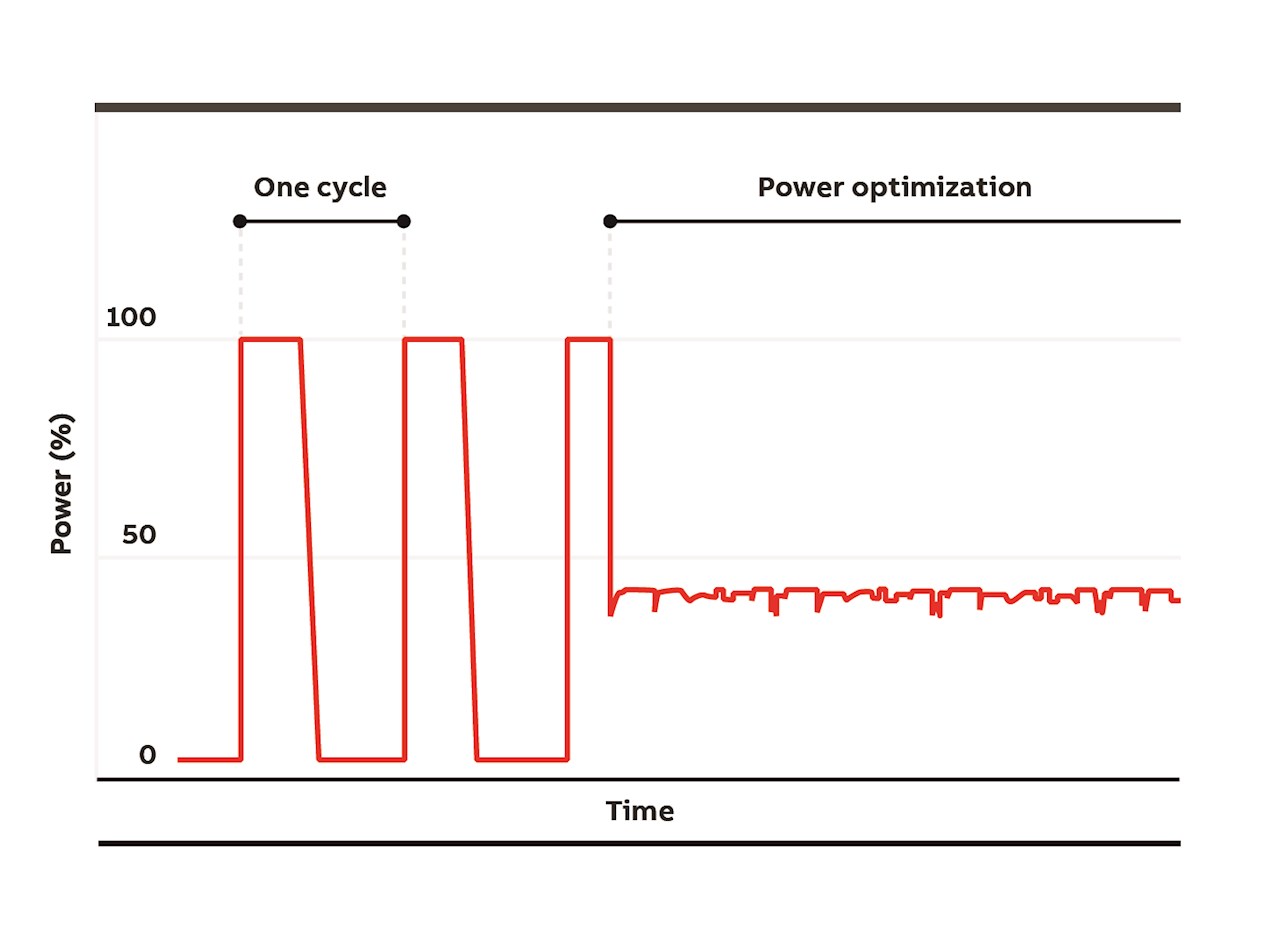
The diagram above shows the contrast in curve volatility before and after implementing the Power Optimizer feature. In one instance, peak power draw reduced to below fifty percent of the installed capacity.
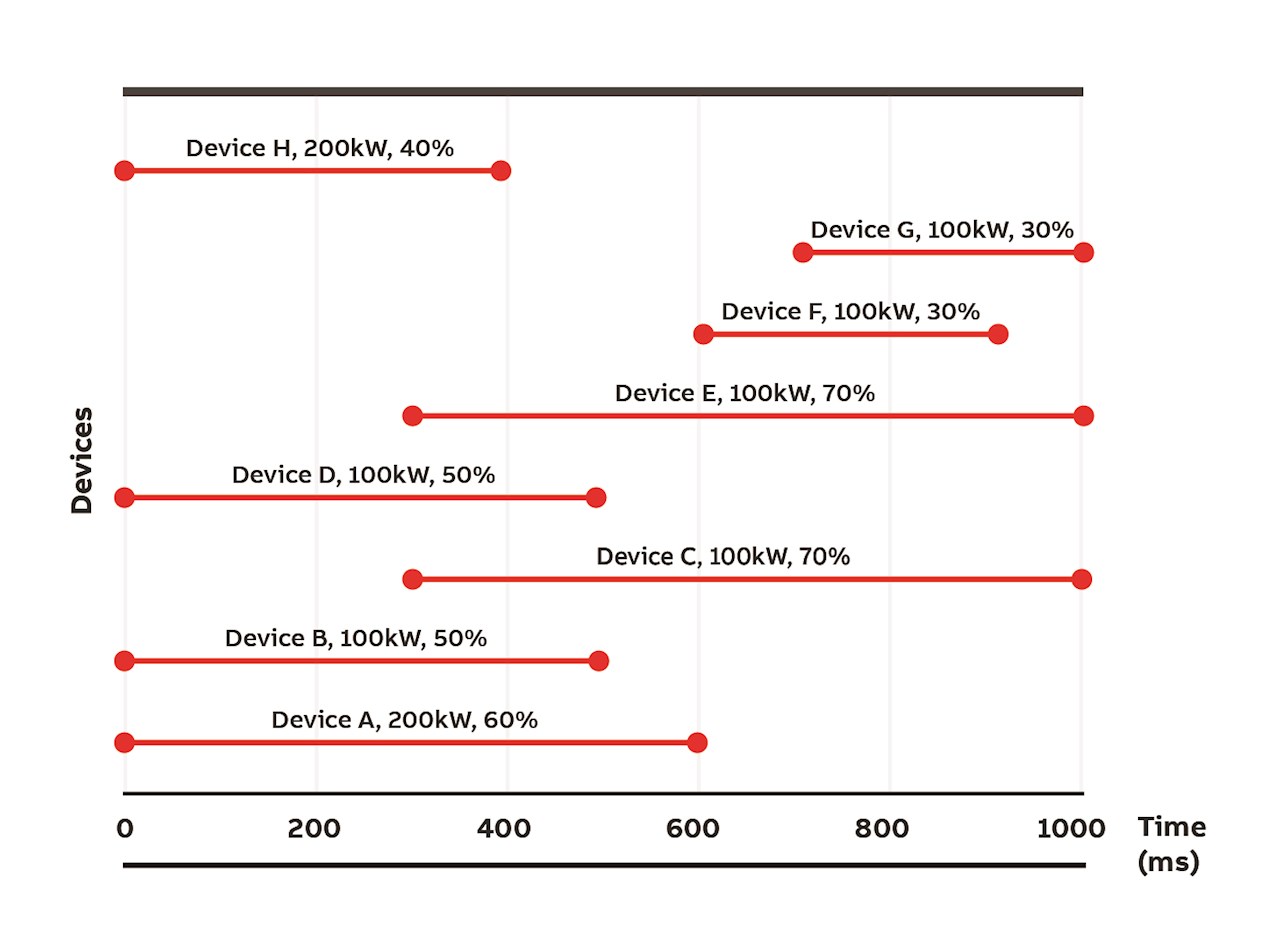
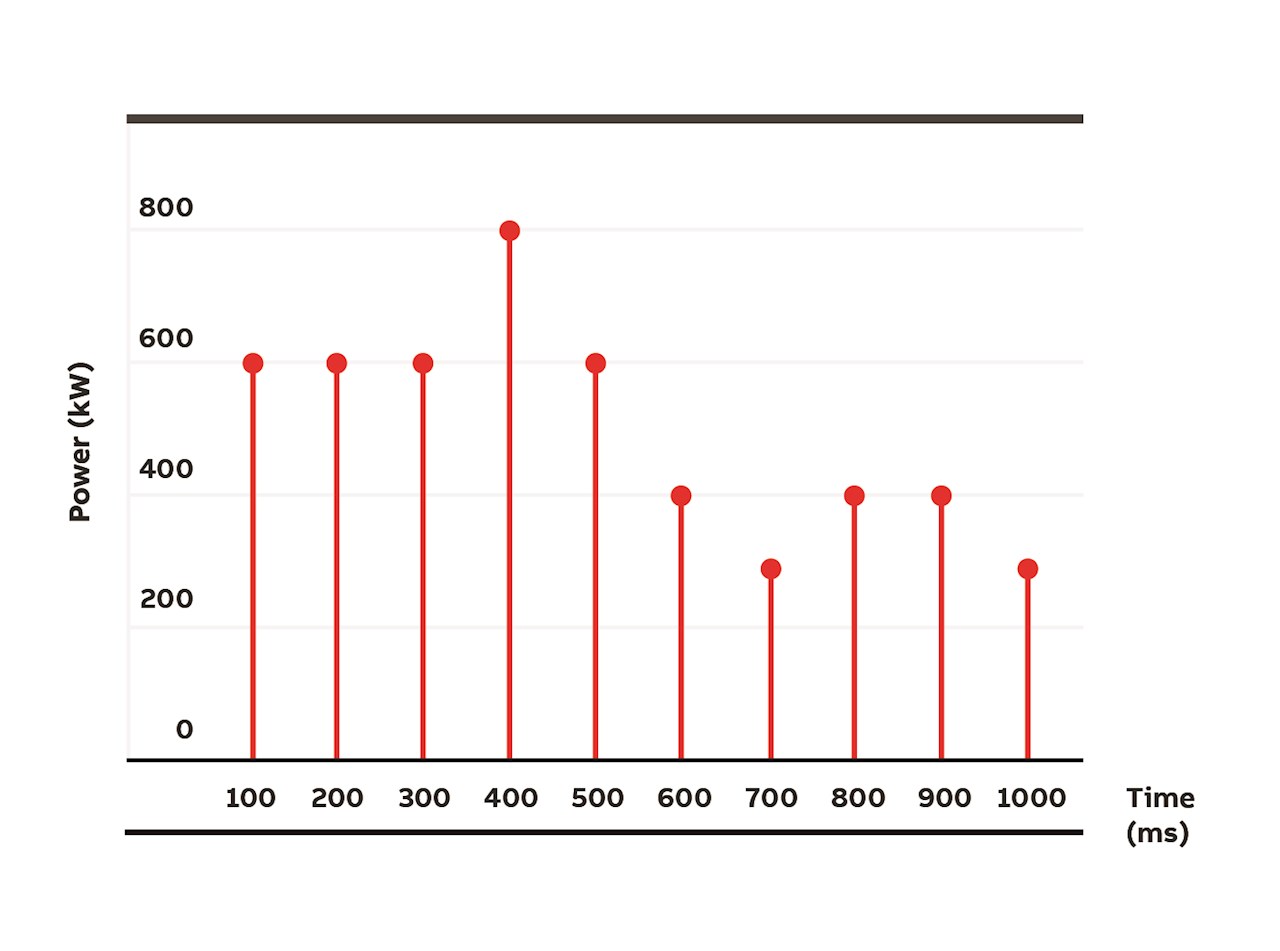
The next diagram above shows eight heat consumers operating at power levels of 100 kilowatts (kW) and 200 kW. During a one-second cycle, these consumers utilize between 30 percent and 70 percent of the maximum available power. This uneven consumption pattern results in a peak after 300 milliseconds (ms) and a low point after 600 ms.
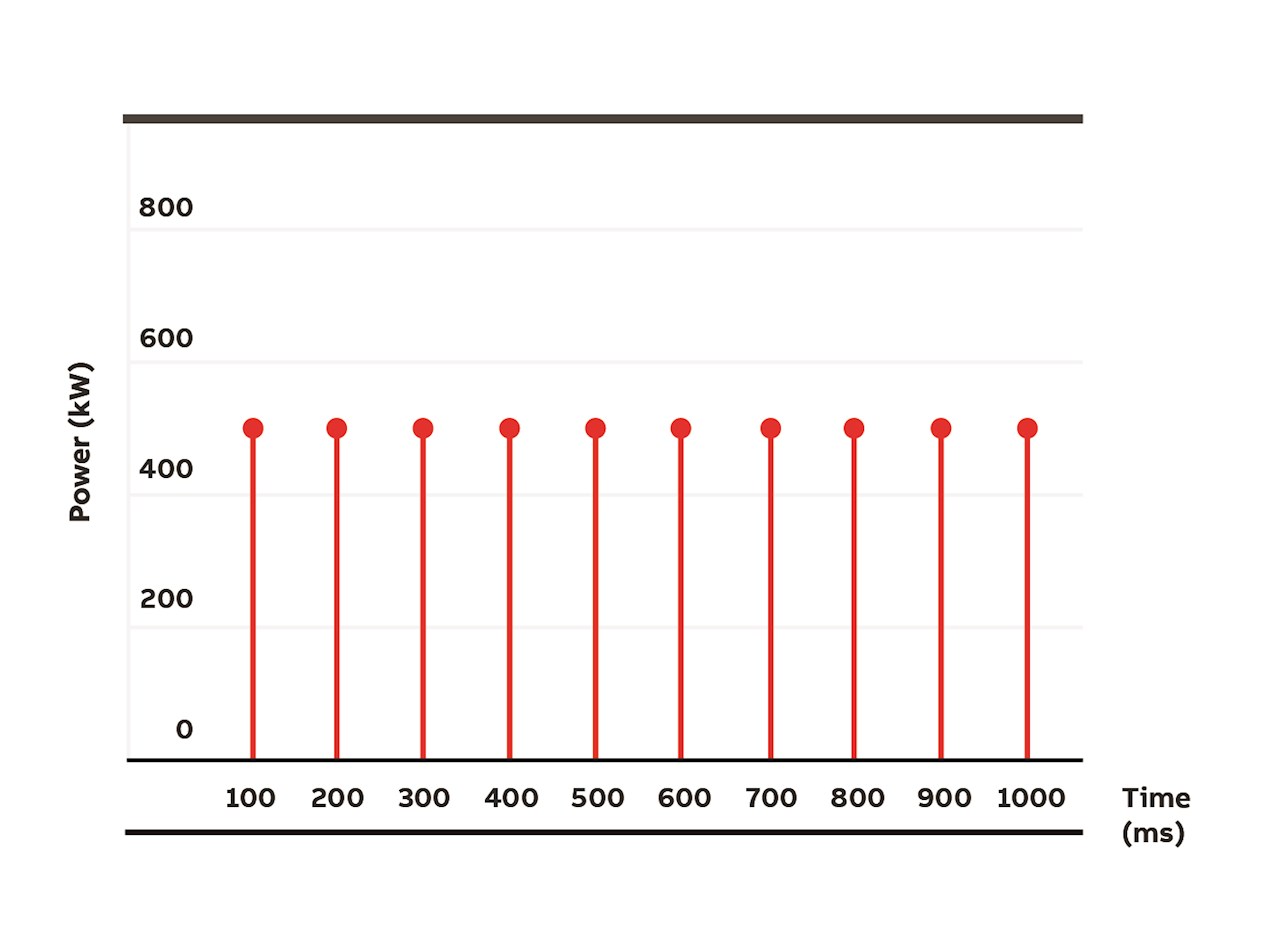
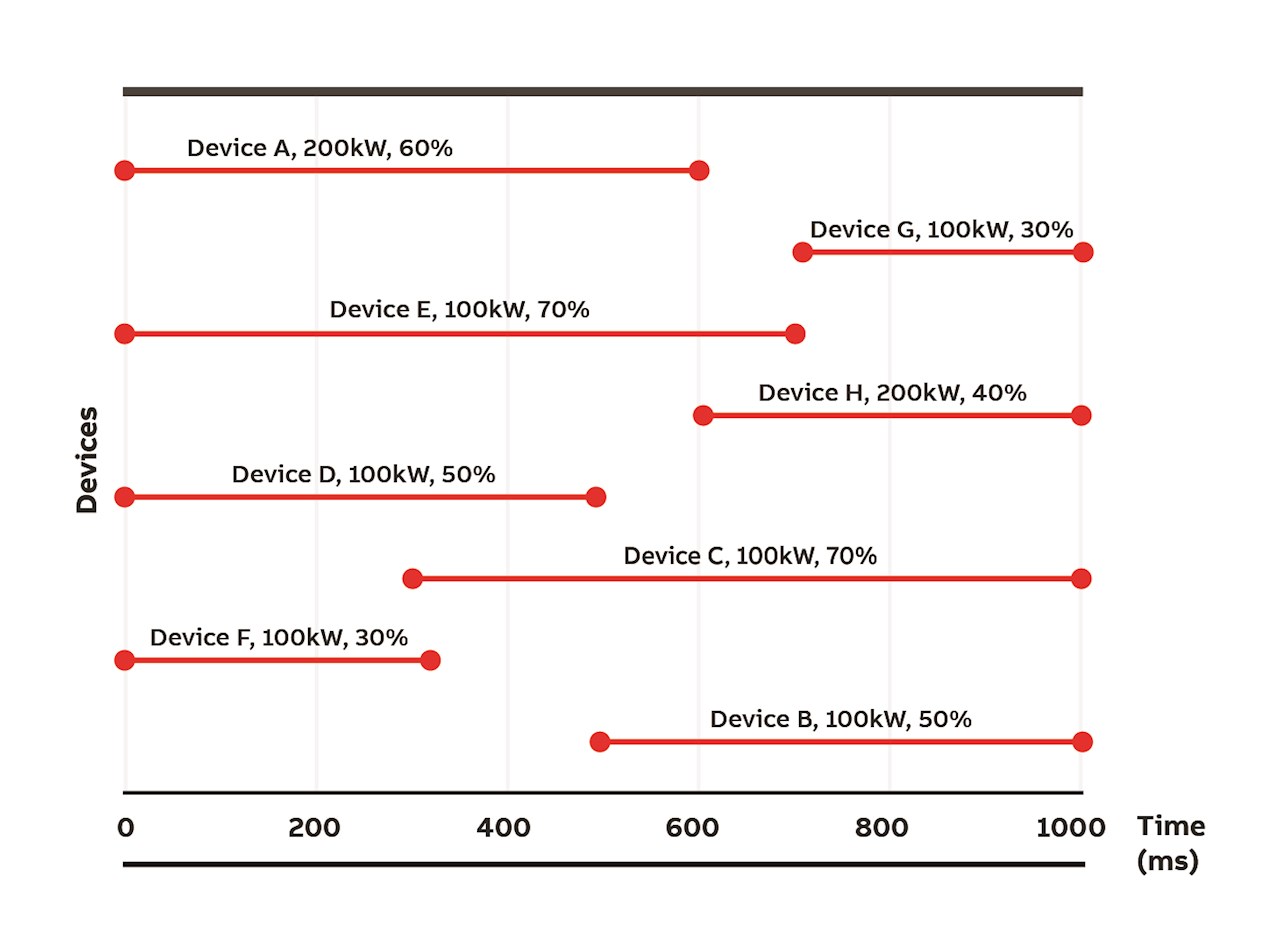
This last graph demonstrates the operation of the same eight heat consumers in a mathematically optimized solution, facilitated by the Power Optimizer. With this optimization, power consumption remains constant at 500 kW, ensuring a steady load on the grid.
This optimized performance can also be achieved in challenging mid-load scenarios. For instance, when multiple devices operate at over half utilization, a peak can occur at some point during the cycle. However, by splitting some of the on-cycles and toggling a consumer on and off twice within one optimization cycle, optimal consumption can still be achieved.
Vafos Pulp's success story
A tangible example of thyristor control in action is evident at the Kragerø plant of Norwegian unbleached pulp producer Vafos Pulp. In 2022, Vafos Pulp made a decision to replace their nine-megawatt (MW) oil-fired boiler with electric heaters. To ensure safety, operational efficiency, and minimal downtime, they opted for five ABB DCT880 power controllers, each rated at 2.2 MW.
The controllers, housed in containers at the Kragerø facility, facilitated precise control over the drying process, surpassing the capabilities of the previous oil-based system. Beyond operational enhancements, the shift to electricity eliminated the need for on-site oil storage. The integration of the DCT880 Power Optimizer ensured a steady load on the local electricity grid, mitigating disruptions.
By utilizing renewable electricity from hydropower, Vafos Pulp achieved an annual reduction of approximately 14,000 tonnes of CO2. This reduction is equivalent to removing 7,000 combustion-engine cars from the road, demonstrating the tangible environmental impact which is achievable through thyristor-based electric heating systems.
Conclusion: the long-term economic benefits of precision control systems
While precision electrical heating control systems may require higher initial investments, the long-term total cost of ownership (TCO) is markedly lower due to substantial energy savings. Additionally, these electronic control systems contribute to product quality by providing precise and rapid temperature control.
Thyristor power control technology stands as a key solution for achieving precise, sustainable, and efficient electric heating. The integration of advanced controller like the ABB DCT880 helps facilities to optimize energy usage, reduce peak power demand, and contribute to a greener future. The user-friendly interfaces and comprehensive control capabilities of these controllers position them as an ideal choice for an array of industrial applications.


