For proof of Mexico’s commitment to advancing its transition to sustainable energy, look no further than the high-stakes action coming to the Autódromo Hermanos Rodríguez in Mexico City on January 13. That’s when the opening round of the ABB FIA Formula E World Championship goes green for its tenth fully electric season of zero carbon motorsport.
As one of the world’s leading vehicle producers, and a hub for the boom in electric vehicle factories and battery plants, Mexico is already a force in the rapidly expanding movement to decarbonize transportation. Still, the efforts to improve efficiency and extend electrification reach well beyond vehicles, with ABB leading key drives to optimize industrial processes and accelerate smart building technology.
ABB’s transformer plant in Nogales, situated in Mexico’s far north, serves dual purposes – a supplier of components vital to electrification as well as a big-picture demonstration site where the benefits of digital transformation are showcased. Under the company’s Mission to Zero concept, which establishes a path to neutrality in greenhouse gas generation by 2030, the plant added systems for monitoring and controlling energy consumption. Those analytical systems, in turn, communicate with the ABB Ability™ Energy Manager solution to identify opportunities for reducing energy use.
The savings, along with measures like the installation of 130 solar panels in the plant’s parking lot, enabled the ABB Nogales site to deliver emissions reductions of 86 percent. That’s not the end point: obtaining ISO certification for energy efficiency is in process, and the plant’s status as an example of the company’s Lighthouse Program provides a model of smart building technology for other companies – and existing ABB facilities – to embrace.
Facilities such as the Nogales plant offer inherent sustainability advantages, by bringing manufacturing efficiencies closer to North American customers as part of the recent trend toward nearshoring.
Also in Nogales, ABB’s expertise in sensors, control technology and energy monitoring brought operational improvements and precision to the climate systems installed by Solueza Automation for the clean rooms of a medical equipment company.
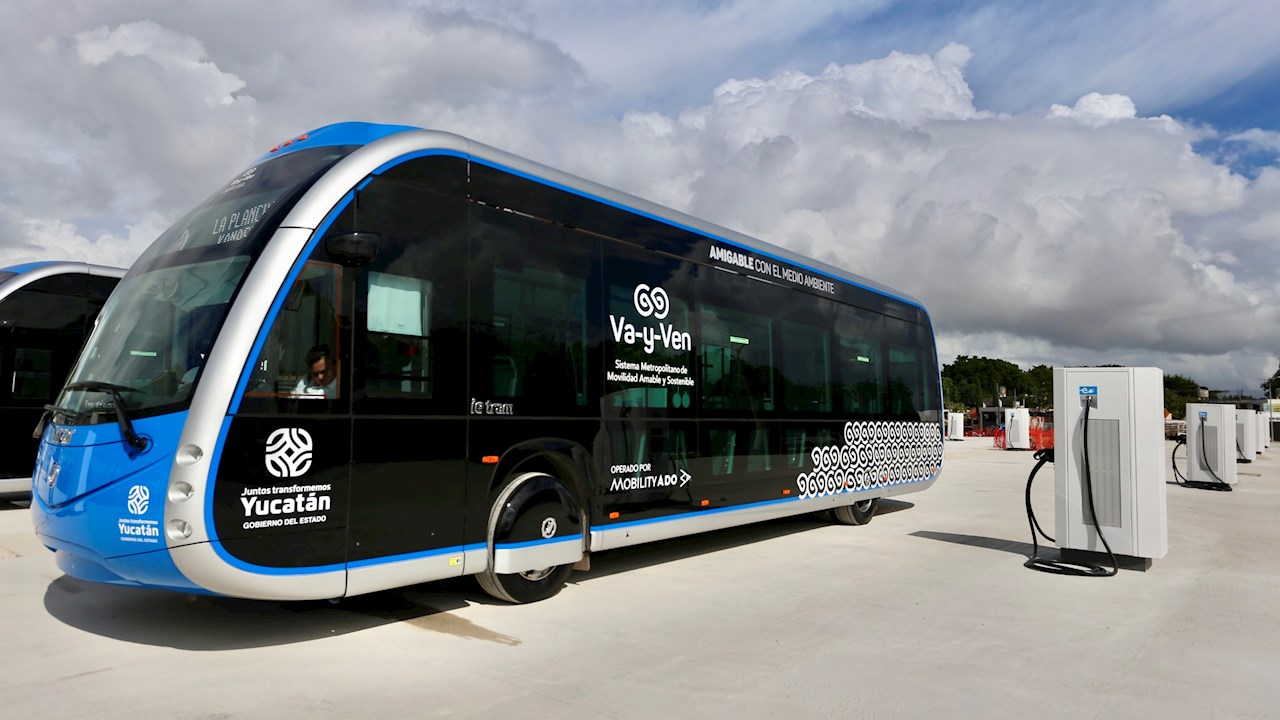
Meantime in Mérida, capital of the Yucatan state, innovations such as the tram system will depend on ABB charging infrastructure to service a fleet of sleek 105-passenger low-floor buses. Not only will the ie-tram buses have conventional overnight charging, they will also refresh the batteries along daytime routes using an overhead connection for “opportunity charging” of four to six minutes at strategic stops on their route.
Another climate-smart collaboration links the Grupo Xcaret tourism company with Scania Mexico, maker of the first fully electric bus assembled in Mexico, and ABB. The initial five-bus Xcaret EcoBus fleet will replace 10 fossil-fueled buses. The buses will have a range of more than 180 miles and incorporate features like pedestrian and cyclist detection, and regenerative braking.
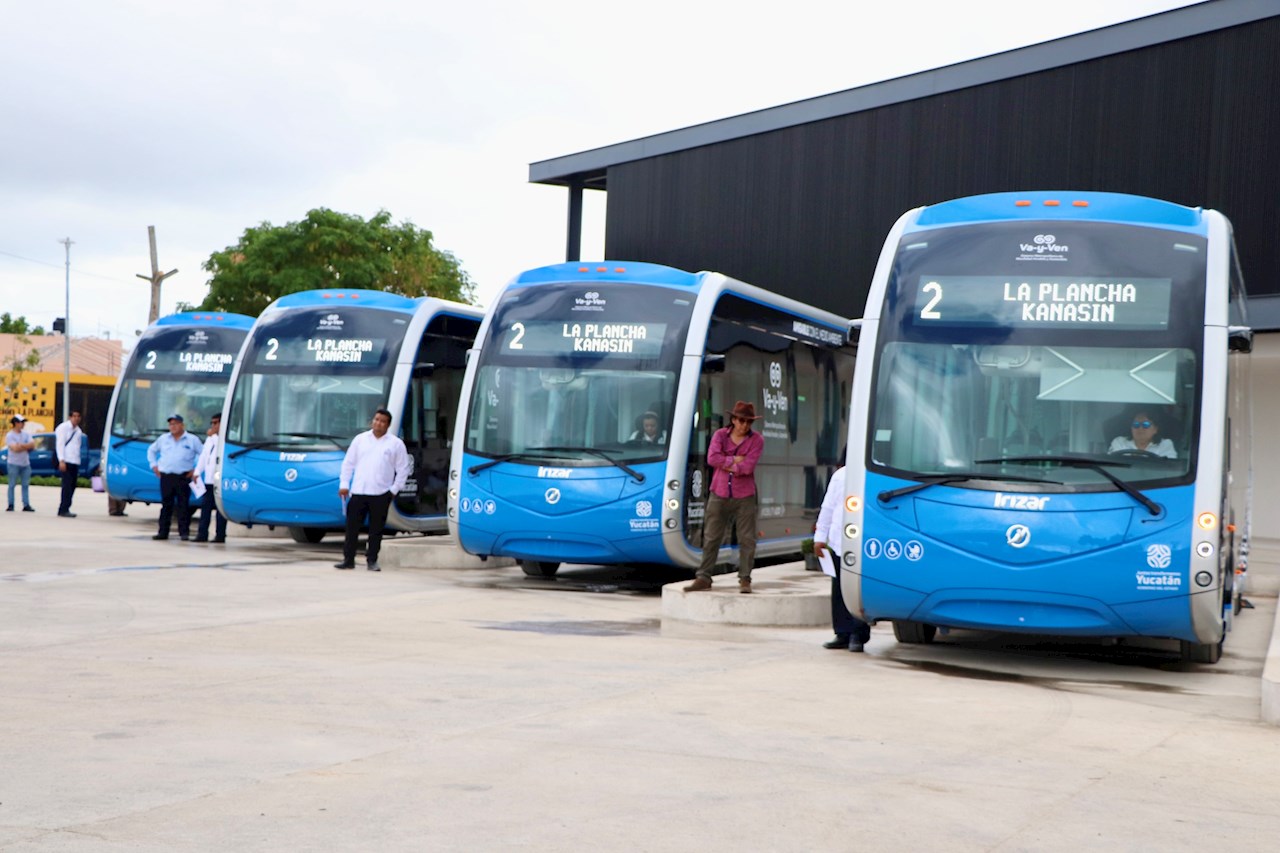
The e-mobility transition is central to this weekend’s Mexican E-Prix, where spectators witnessing the on-track battles in Mexico City will readily grasp the performance edge afforded by the electric powertrains of the Formula E cars. Performance can mean more acceleration and top speed – it also applies to the speed of charging depleted batteries. DC fast chargers made by ABB, deployed at public stations around the world as well as in the Formula E garages, assure that new electric bus services in Mexico have access to leading-edge equipment.
From the lofty elevation of Mexico City the series travels to the historic city-street circuit in Diriyah, Saudi Arabia to showcase the race for the energy transition in the Middle East region.


