Dennis Haberer, Busch-Jaeger, an ABB company Smart Buildings Lüdenscheid, Germany dennis.haberer@ de.abb.com
ABB is addressing these trends through the introduction of a far-sighted smart home control platform, and the acquisition of Eve Systems, a leader in home connectivity.
Considering the fact that buildings account for almost 40 percent of global carbon emissions [1], Busch-Jaeger, a brand of the ABB Group, has responded to the above-mentioned trends with the introduction of ABB-flexTronics® wireless, the starting point of a smart home control platform based on a 2.4 GHz wireless mesh-network. Capable of addressing the control needs of anything ranging from a single room to a complete smart home system, the platform benefits from ABB’s state-of-the-art encryption and cyber security standards.
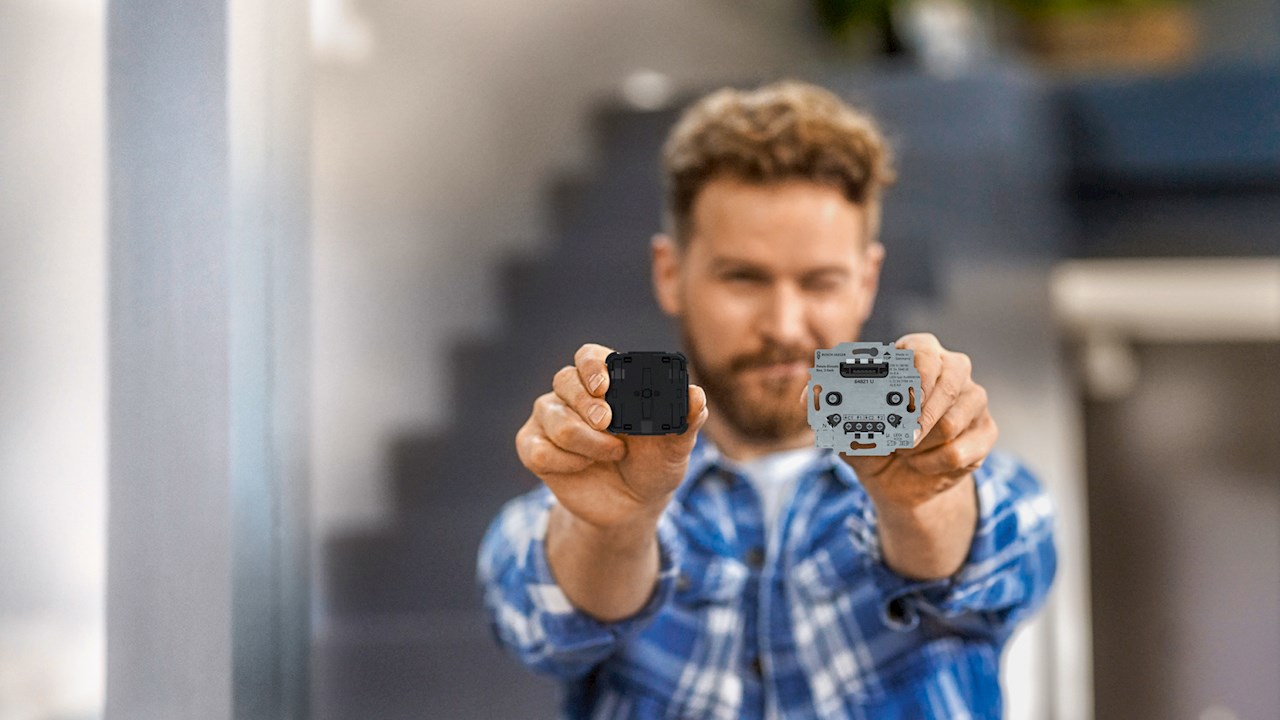
Given that the ABB-flexTronics® wireless system is based on wireless technology, it can be used flexibly anywhere and requires only a conventional 230-volt electrical installation. It is therefore attractive for upgrades and renovation projects and allows individual devices, rooms, or an entire system to be designed according to the occupants’ personal requirements and later expanded or adapted. This gives electricians immense flexibility, even if the customer has last-minute requests →01.
Form follows function
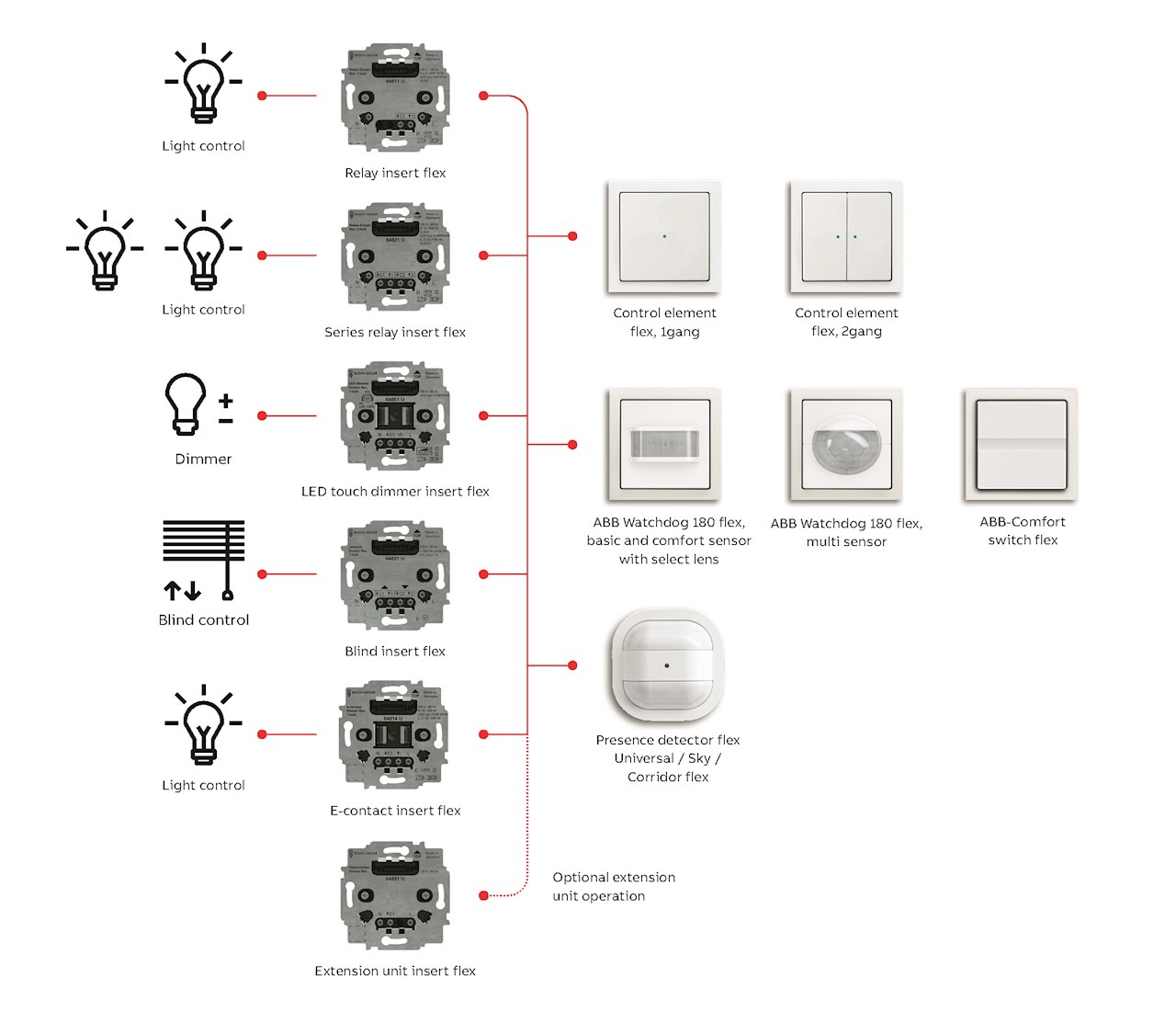
One of the major advantages of ABB-flexTronics® wireless technology is the modular concept of its platform, which consists of a range of fitted flush-mounted inserts for controlling lighting and shading applications as well as different push buttons and sensors for standard switching operations or automatic light control via motion sensors →02. The sensors are compatible with almost the entire Busch-Jaeger range of switches and thus offer maximum flexibility in terms of design.
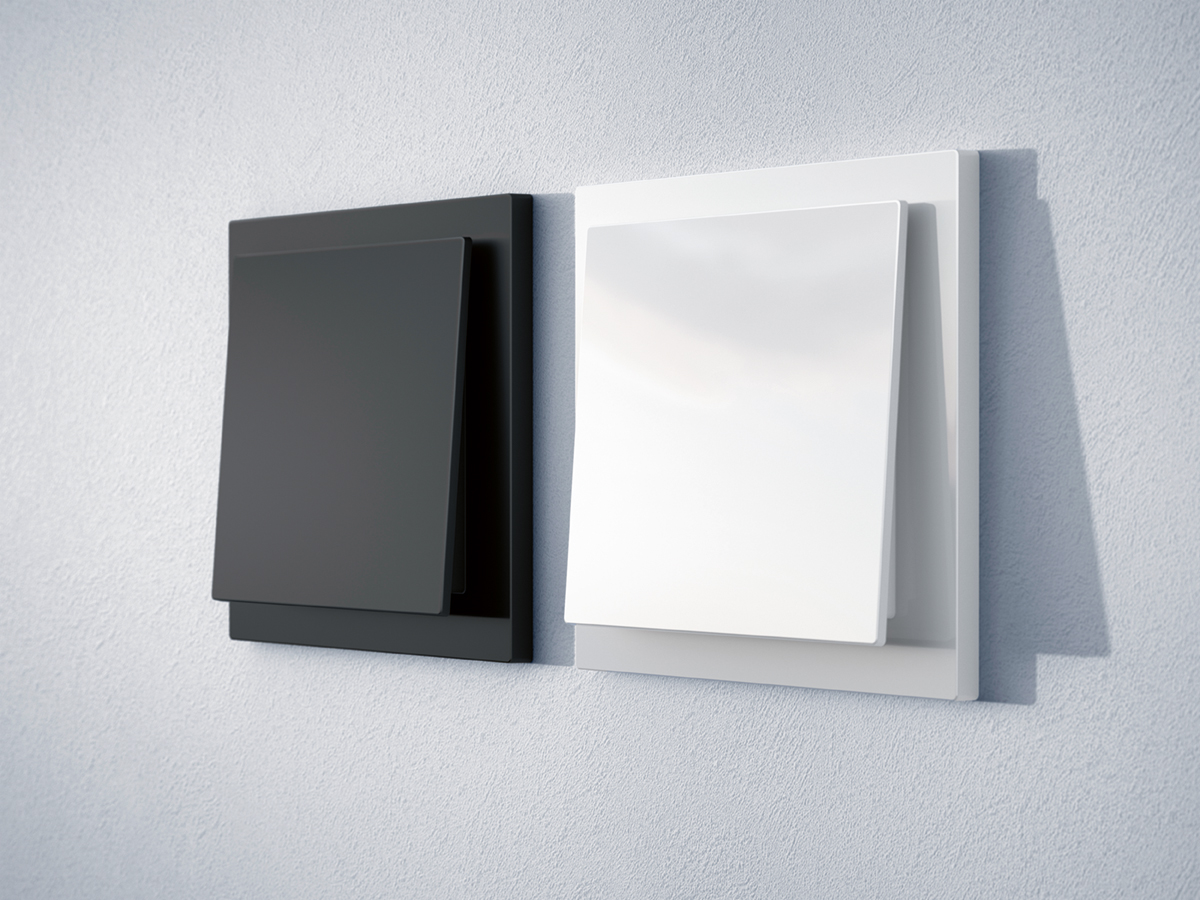
But the beauty of the platform’s components is far more than skin deep. The newly introduced ABB art linear® switch series →03 is an example of a range of industrial products based on a uniquely sustainable design. The series consists of recycled and recyclable materials. That may sound unspectacular, but in point of fact, 98 percent of the series’ black switches and 92 percent of its white switches are made of recyclate – resulting in an 82 percent reduction in the amount of CO₂ generated for their production.
In addition, the System Access Point, a power-ful control center for the entire ABB-free@home® platform, can be easily extended to accommodate up to 150 wireless sensors or wired devices. Its premium and high-end functions include the integration of the ABB--Welcome® door communication system, as well as household and multimedia devices.
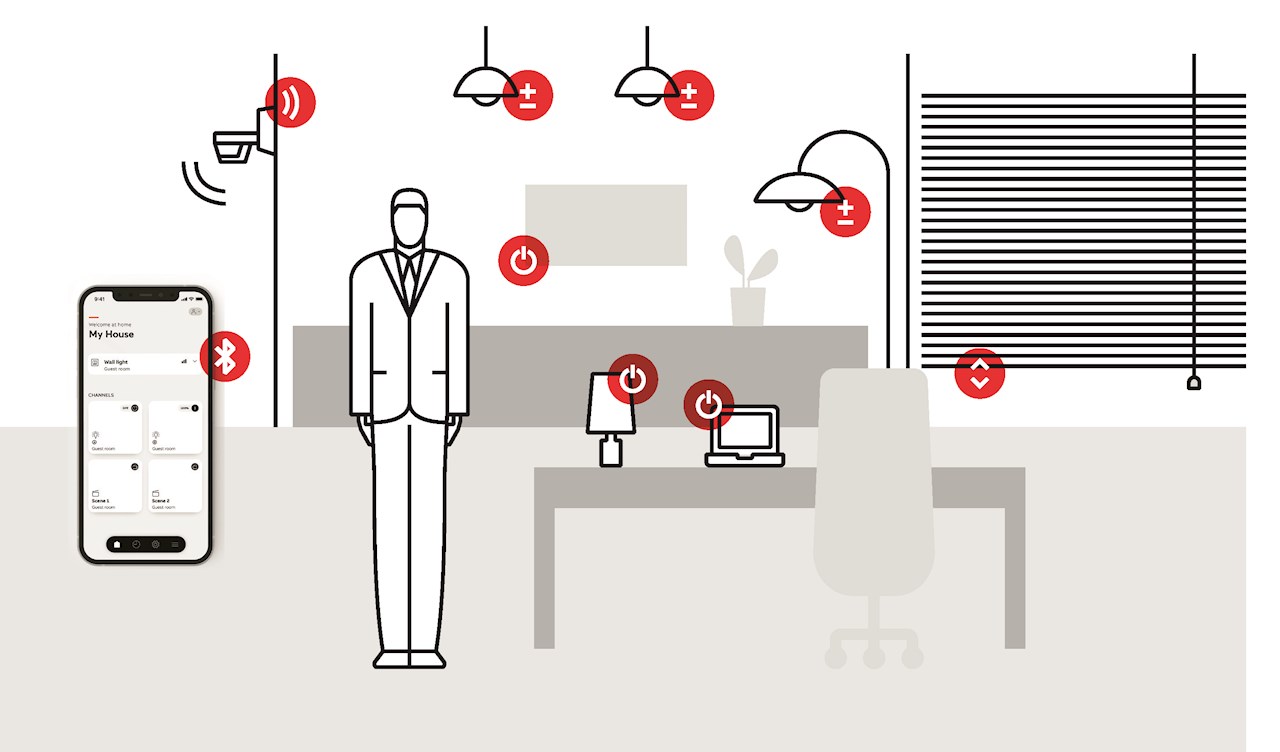
With its focus on saving energy, the smart home platform addresses a full range of electrical installation applications →04, including smart lighting control, automated deactivation of all unnecessary devices when no one is at home, day-night heating reduction, intelligent sun-heat protection through automatic blind control, door communication, and third party integration.
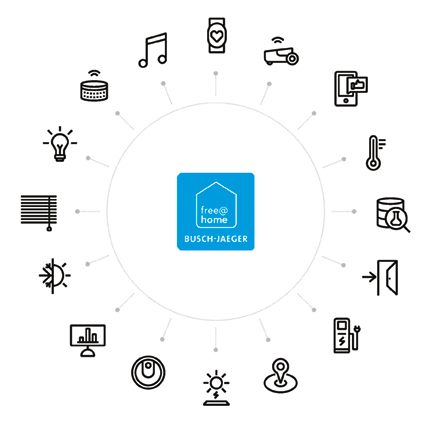
Furthermore, a home equipped with the ABB- free@home® platform can be remotely accessed via ABB’s certified cyber security cloud service by means of an app on the user’s mobile device. Transparency extends to the doorbell via the ABB-Welcome® door communication system, which allows the user to communicate via video with anyone who rings the bell.
How safe are ABB-flexTronics® wireless’s connections? Very safe. If, for instance, the system’s radio connection is interrupted, the user is not left in the dark. At worst, some functions such as scenes (combinations of lighting and blind positions for specific moods) or group controls could be affected, meaning that it might not be possible to manage several blinds at the same time. However, direct operation is always possible, and all devices can be activated manually.
Also, based on customer needs and a growing web of partnerships, the System Access Point itself is designed to evolve into an ecosystem of add-ons. Add-ons are software modules that customers can easily install or discard. Three levels of add-ons are planned:
- Those that are developed and maintained by ABB itself to help smart home customers respond to changing needs.
- Those that are not provided by Busch-Jaeger but are developed and maintained by partners and then tested by Busch-Jaeger.
- Those that are developed by third parties.
Customer and partner support is available through different channels such as phone, mail, social media, and new tools such as the Busch--Jaeger Community, an online exchange and support platform that uses artificial intelligence (AI) and machine learning (ML) to solve queries. These technologies are designed to streamline the resolution of customer requests and improve user satisfaction. The technologies leverage data sources from manuals, product documentation, and online communities to train AI engines and advanced ML to resolve recurring support requests.
In addition, with a view to this year’s Light & Building fair, ABB is working on expanding its ABB-free@home® platform to integrate information from and visualization of energy use to actively manage residential energy demand. This feature will provide information from wallboxes for electrical vehicle charging, solar panels and heat pumps – areas of particular interest for customers.
New standard
Parallel to the ABB-free@home® system’s emphasis on energy savings is a wider trend that promises to consolidate the world market for smart home technologies. Major players such as Apple and Google have created a new wireless smart home connectivity standard and wireless protocol called Matter and Thread that is set to be a significant milestone in terms of the interoperability of smart home solutions. However, rather than merely playing follow the leader, ABB intends to play an active role in shaping this trend through its recent acquisition of Eve Systems →05, which will become the company’s inhouse developer of Matter knowhow. Already considered to be a leader in Matter and Thread, Eve’s technology allows different devices and services to integrate flawlessly, intuitively, and securely, making it possiblefor users to manage their energy use and surroundings conveniently and safely.
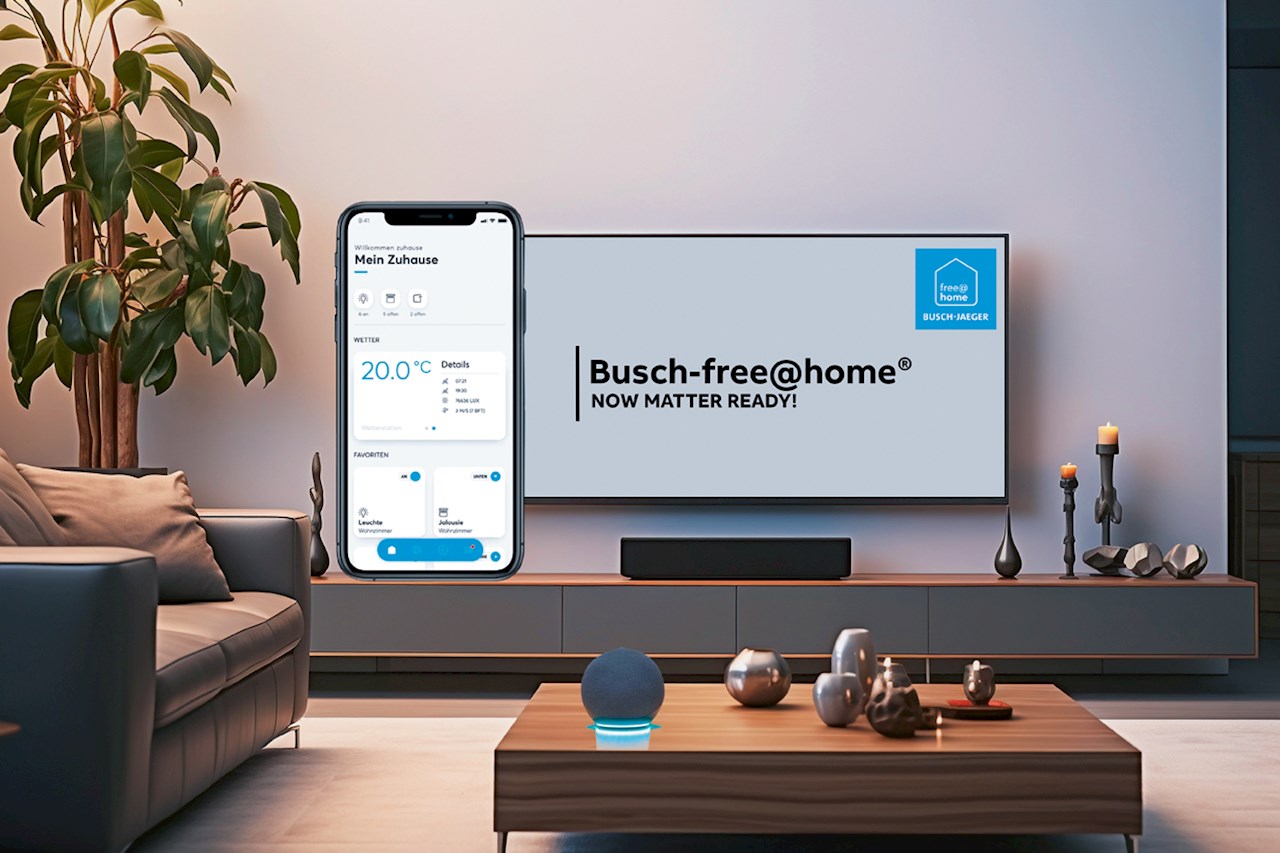
All in all, ABB’s Smarter Home Solutions enable quick and flexible device configuration and digital remote control of a range of functions. Collectively, they contribute to making buildings smarter, safer, more comfortable, and increasingly energy efficient.
References
[1] Architecture2030 Why the built environment. Available: https://architecture2030.org/why-the-built-environment/ Accessed January 20, 2024
[2] ABB. ABB strengthens smart home technology portfolio with acquisition of Eve System. Available: https://new.abb.com/news/detail/104038/abb-strengthens-smart-home-technology-portfolio-with-aquisition-of-eve-systems Accessed January 20, 2024
Eve Systems: strengthening ABB’s smart home portfolio
In mid-2023 ABB announced the acquisition of Eve Systems GmbH, a Munich-based leader of smart home products with operations in Europe and the United States. The transaction is designed to make ABB a leader in smart home products based on Matter and Thread, the new standard for building system interoperability and wireless connectivity. The combined offer will accelerate ABB’s delivery of safe, smart and energy efficient home and building technologies through Eve’s extended complementary range of consumer-facing products tailored to the retrofit market.
Established in 1999, Eve Systems has developed a reputation as a company focused on the user experience and the quality of its smart home products, which include an extensive range of home automation, energy management, security, and appliance-monitoring devices.
Furthermore, Eve is a pioneer in the new Matter connectivity standard, which enables smart home products to be fully interoperable, irrespective of the manufacturer and user operating system, via Thread wireless technology. With a view to meeting growing consumer demand for products that support energy efficiency, over half of Eve’s consumer products help households with aspects of energy management.
Indeed, Eve’s culture of innovation has resulted in a first mover advantage derived from its ability to develop and harness Matter and Thread protocols. Its acquisition by ABB is considered to be a significant advance into the fast-growing smart home technology market as demand increases for building stock retrofitting to address growing demand for greater comfort, convenience, and energy efficiency.


