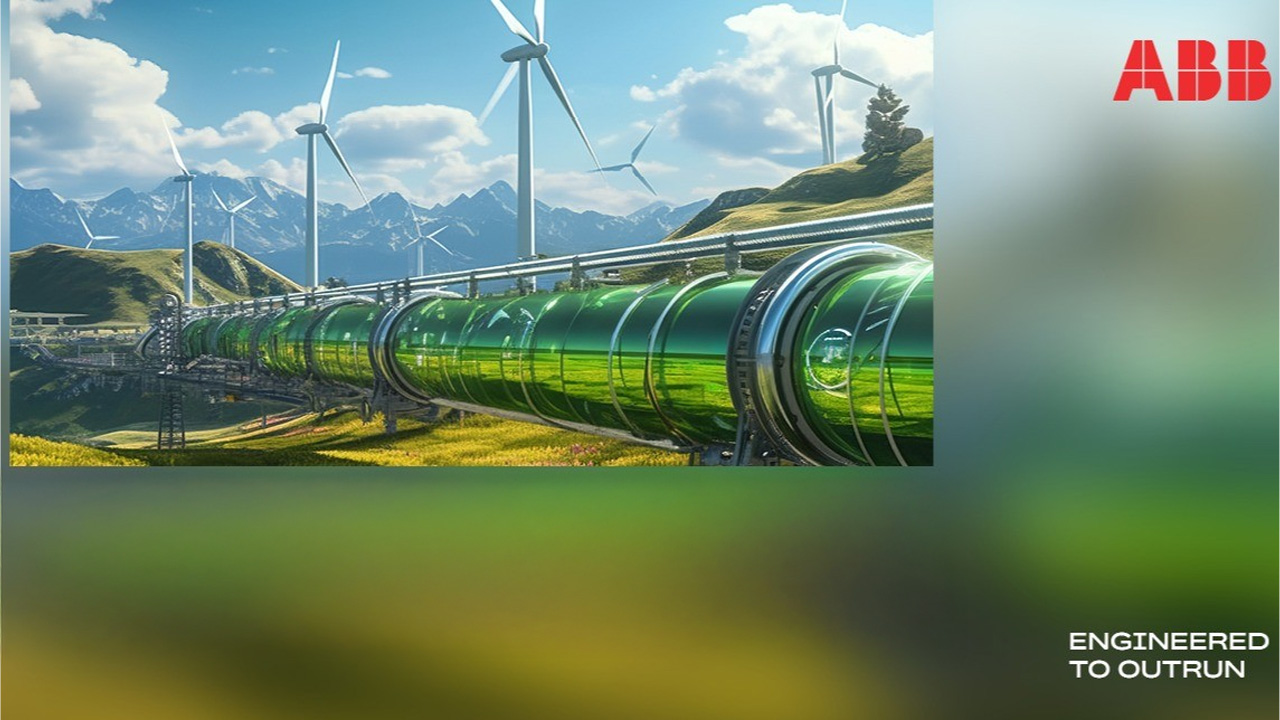
How to navigate technical challenges and achieve financial viability
As an energy vector, green hydrogen holds significant potential to play an important role in the global energy transition, offering a sustainable alternative to fossil fuels. However, the path to successful green hydrogen production faces both technical and financial challenges. Most notably, green hydrogen production is an electrical challenge, one that hinges on integrating variable renewable energy sources effectively for cost-competitive production of hydrogen.
To ensure cost-effective and reliable green hydrogen production, developers must take a well-thought-out and structured approach. This involves optimizing design, integrating the right technologies, and leveraging modularized and standardized production building blocks. There are several enabling factors that contribute to the success of a green hydrogen project, given that each project requires a specific design because of the intermittent behavior of renewable energy.
Addressing the electrical challenge of green hydrogen production
Unlike the other colors of hydrogen, green hydrogen production relies entirely on renewable energy to power electrolysis, which splits the water molecules into hydrogen and oxygen. This means that the financial and operational success of green hydrogen projects is directly connected to how well renewable energy sources are integrated to provide a stable electrical supply.
Currently, most green hydrogen production is expected to come from projects that directly connect renewable energy sources, such as wind and solar, to electrolysis systems. This method is key for green hydrogen producers to achieve low-carbon hydrogen production. While it reduces reliance on fossil fuels, it also introduces challenges due to the intermittent nature of renewable energy, which can cause instability in the energy supply.
The key challenge lies in integrating renewable assets in a cost-effective way to ensure energy stability either naturally or through energy storage solutions so that the supply of energy to electrolyzers remains stable and predictable, as grids are not fully available. Developers must optimize the Levelized Cost of Hydrogen (LCOH), the cost per unit of hydrogen produced over the project’s lifetime, by mitigating energy fluctuations, reducing dynamic operations, and improving system efficiency (IRENA – Renewable Hydrogen).
Key design principles for successful green hydrogen projects
To address the challenges of renewable energy integration and minimize LCOH, green hydrogen projects should adhere to four fundamental design principles:
1. Efficiency: Minimizing Energy Losses
Electrical infrastructure plays a crucial role in determining overall production efficiency. Energy losses due to inefficient transmission and distribution can significantly impact costs. To mitigate these losses, high-voltage and medium-voltage architectures must be optimized, ensuring that more power reaches the electrolysis process with minimal energy waste.
According to the U.S. Energy Information Administration (EIA), improving the efficiency of electrical transmission can reduce unnecessary energy expenditure and enhance overall system performance. With transmission losses reaching up to five percent and over 70 percent of generated energy directed toward electrolysis, improving efficiency can lead to significant cost savings and performance gains over a project's lifespan
(EIA – Transmission and Distribution Losses).
2. Grid Stability: Managing Variable Renewable Energy
Many renewable energy sources are inherently intermittent and variable, with seasonal and daily fluctuations that lead to variations in available power and subsequent impact on electrical parameters, such as frequency and voltage, inertia, short-circuit capacity, reactive power compensation, and affecting black-start strategies. These fluctuations may cause system instability which if not managed could lead to operational failures. To enhance grid stability, green hydrogen projects must incorporate the correct technologies and designs to optimize production. Here, energy-storage solutions play a vital role in buffering to compensate for supply fluctuations. Additionally, smart grid and grid-forming technologies play a crucial role in smoothing power variations and maintaining reliability
(IEA – Energy Storage).
3. Predictability: Maximizing Electrolyzer Utilization
Electrolyzers account for a significant portion of capital expenditure (CAPEX) and operational expenditure (OPEX) in hydrogen projects, making their lifespan, efficiency, and utilization rates critical to financial viability. Direct integration of renewables in off grids system is a challenge, due to the uncertainties of the energy profile. When utilization rates are low, the cost per kilogram of hydrogen produced increases, making the project less economically sustainable. To maximize electrolyzer utilization, energy storage solutions can be implemented to smooth out supply variations, ensuring more stable and predictable operations while expanding the base load. As the larger the base load, the more opportunities for capex reduction on the electrical architecture and the electrolyzer Balance of Plant, providing also further operational efficiencies. Additionally, adopting an operational strategy that emphasizes reliability and system resilience helps maintain continuous performance, reducing downtime and optimizing overall hydrogen production efficiency. Electrolyzer utilization is critical to managing the capital and operational costs of green hydrogen projects. Research suggests that optimizing utilization rates can drastically reduce CAPEX and OPEX, enhancing overall project economics
(Hydrogen Council Report).
4. System Flexibility: Adapting to Uncertainties
Green hydrogen projects face multiple uncertainties, including fluctuations in weather conditions, grid availability, and technological complexities. To navigate these challenges, process digital twins can be used to simulate real-world conditions, allowing project developers to de-risk designs, validate system architecture, and optimize reliability. Incorporating flexible system designs ensures that hydrogen projects can adapt to unexpected shifts in energy demand and supply constraints, enhancing resilience, operational efficiency, and safety.
As the world accelerates toward a clean energy future, green hydrogen is emerging as a crucial solution for decarbonization. However, scaling production efficiently remains a challenge. One of the key enablers of large-scale hydrogen production is modular plant design for the balance of plant and its integration into the electrical architecture, which ensures flexibility, reliability, and cost-effectiveness. Modular systems allow different sections of a hydrogen plant’s electrical architecture to be replicated for the same purpose. This means that as demand grows, additional units can be seamlessly integrated without redesigning the entire system. This modular approach supports both base load and dynamic operation, making it adaptable to varying energy inputs, such as renewable sources.
A three-step approach to green hydrogen project conceptualization
To structure a green hydrogen project successfully, developers should follow a three-step methodology:
Step 1: Define the Business Case
Establishing the project's purpose is essential, as it influences key design decisions and investment strategies. Developers must determine whether the hydrogen will be used for industrial applications, energy storage, or the production of fuel derivatives.
Additionally, assessing expected production capacities and identifying the acceptable level of grid dependency helps shape the project's overall direction. Understanding the end-use case is critical in determining the optimal approach to development and ensuring that the project aligns with industry demands and regulatory requirements.
Step 2: Optimize Electrical Design
Apply the four fundamental design principles: efficiency, stability, predictability, and flexibility. Developers must evaluate the ideal renewable energy mix and energy storage strategies to ensure a stable and reliable power supply. Effective grid integration strategies are crucial for mitigating instability and preventing operational disruptions. A well-structured electrical system not only reduces costs but also enhances overall project resilience, ensuring long-term viability and sustainability in a rapidly evolving energy landscape. Here, the electrolyzer should be seen primarily as a means of efficiently evacuating energy rather than merely a midstream asset for hydrogen production.
Step 3: Standardize and Modularize
Leveraging standardized Balance of Plant (BoP) components streamlines project development and reduces engineering complexity. Modularization ensures easier maintenance, facilitates scalability, and optimizes cost control, allowing projects to expand efficiently as demand increases. Using pre-engineered building blocks accelerates deployment while enhancing overall project efficiency, enabling hydrogen production facilities to be more adaptable and responsive to market and regulatory changes.

Navigating the complexities of green hydrogen projects requires deep expertise
Green hydrogen can play a pivotal role in the energy transition, but its success depends on structured planning and execution. The primary challenge is not simply producing green hydrogen but effectively integrating variable renewable energy sources into the production systems.
To overcome these challenges, developers must prioritize efficiency by reducing energy losses, ensure grid stability by managing renewable energy variability, maximize electrolyzer utilization for greater predictability, and design systems with flexibility to adapt to uncertainties.
By following a structured approach that includes defining the business case, optimizing electrical design, and standardizing key components, project developers can mitigate risks, reduce costs, and enhance reliability. A well-designed green hydrogen system is more than just an energy solution it is a strategic investment in the future of clean energy.




