By Andrea Menti, Business Line Leader, Energy Distribution ABB Electrification’s Smart Buildings Division
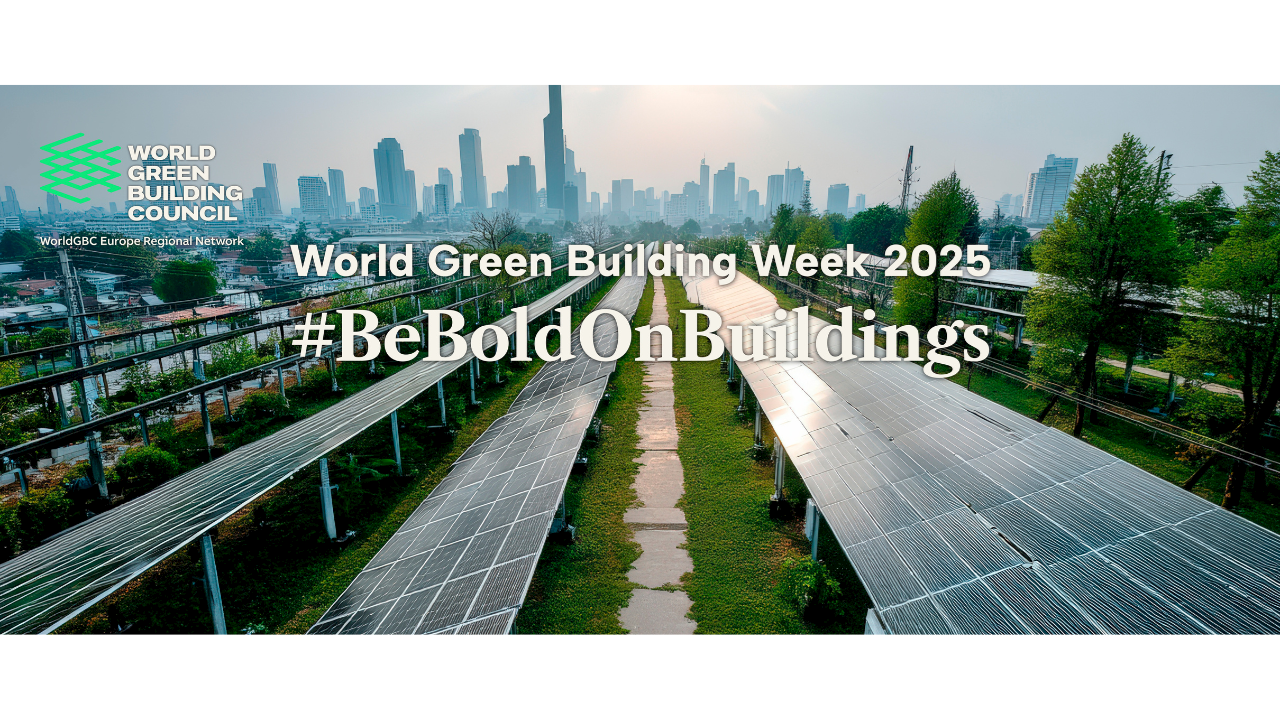
This week, as part of World Green Building Week, we’re exploring what it really means to be bold on buildings. Yesterday, our President, Mike Mustapha set the scene, reminding us that electrification is the great enabler of the transition. Today, I want to look at why electrification is both universal and deeply local – and why the intelligence in our distribution systems will determine how successful we are.
Two grids, one lesson
Over my career, I’ve worked with energy distribution systems at both ends of the spectrum. In Europe, networks are stable, regulated, and deeply embedded in historic cities. The challenge is upgrading them seamlessly – integrating renewables and electric vehicles (EVs) alongside ongoing grid development.
In contrast, there are regions where infrastructure is being built at record speed. Here, the opportunity is different: design for the future from day one, making grids renewable-ready, capable, resilient, and digital by default.
The lesson is clear: electrification is global, but success depends on specific needs and solutions.
Designing for diversity
Electrification isn’t a one-size-fits-all journey. In Lisbon, modular distribution systems are helping to integrate rooftop solar into historic neighborhoods. In Jakarta, scalable solutions are enabling new EV charging hubs to expand quickly as demand surges. Only adaptable systems can bridge such different realities.
Globally, electricity already supplies 37 percent of building energy demand – up from 31 percent just over a decade ago1 – and it’s rising fastest in emerging markets. By 2050, as much as 80 percent of building energy2 could come from electricity. But this potential only matters if distribution can keep pace.
Digital intelligence at the edge
It’s not enough to simply deliver power. We need to manage it intelligently – closer to where it’s generated and consumed.
Smart monitoring and analytics let buildings actively participate in grid stability: balancing loads, integrating multiple sources (solar, storage, grid supply, even on-site generation), and cutting both emissions and costs in real time.
The growth of smart building management shows what’s possible: studies suggest demand could be cut by nearly 50 percent3 through efficiency and digital controls compared to a ‘business as usual’ path.

The proximity principle
Managing energy at the edge reduces losses and improves resilience. That’s true for neighborhood initiatives in Europe and equally true for global data centers, where distribution must sit close to demand to ensure efficiency and uptime. Through our work with Cleanwatts, for example, we’re helping create integrated energy communities where distributed generation, storage, and intelligent load sharing operate in harmony.
And this is where partnerships come into their own: No one can electrify the future alone. Partnerships with utilities, regulators, and OEMs are essential to meet diverse safety and performance standards – building the trust that enables adoption at scale.
At ABB, we’re proud to work with partners from global leaders to innovative start-ups. One example is our collaboration with Lookthrough, the Swiss start-up that won this year’s ABB Smart Buildings Startup Challenge. Their AI-powered software for real estate decarbonization integrates with our InSite Energy Pro platform, enabling real-time monitoring and reporting of energy use across multiple sites. Together, we’re helping building owners plan retrofits more effectively, model scenarios, and deliver sustainability outcomes that are measurable, regulatory-ready, and long-term.
Partnerships like this show how innovation at the edge can accelerate faster than any single player could alone.
Bold electrification means local intelligence
Whether it’s a heritage European city electrifying without overloading its grid, or a new urban district in Asia designed to be renewable-ready from the start, the principle is the same: bold electrification isn’t about imposing one model everywhere. It’s about tailoring intelligence to each place – and then connecting those solutions into a global network for change.
Tomorrow, my colleague Lucy Han, Business Line Leader for Building Automation, will continue this conversation, sharing what her moves from Zurich to Singapore taught her about automation as the bridge between efficiency and electrification.
About the author
Andrea Menti
Business Line Leader, Energy Distribution, ABB Electrification’s Smart Buildings Division

Andrea Menti is the Business Line Leader for Energy Distribution within ABB Electrification’s Smart Buildings. In this role, he oversees global operations, driving innovation and efficiency in energy distribution solutions that enhance safety, reliability, and sustainability.
With nearly three decades at ABB, Andrea has held multiple leadership positions across operations, supply chain, and general management, gaining deep expertise in complex, global environments. Before his current role, he served as Head of Operations for ABB’s Electrification Business Area, where he led strategic transformation initiatives and optimized business processes across multiple regions. He has also held key leadership roles within ABB’s Smart Power and Motors & Generators divisions, managing large-scale businesses from innovation, sales and development to manufacturing, logistics, and supply chain operations.
Andrea is passionate about innovation, change management, and people development. He believes that empowerment, collaboration, agility, and customer-centricity are the cornerstones of a successful business. His leadership is defined by a forward-looking approach, turning challenges into opportunities to drive continuous growth and progress.
Andrea is based in Italy and holds a Master’s degree in Mechanical Engineering from Politecnico di Milano.
Sources:
[1] https://globalabc.org/sites/default/files/2025-03/Global-Status-Report-2024_2025.pdf
[2] https://www.energy-transitions.org/new-report-etc-presents-complete-picture-of-global-building-sector-emissions-and-pathways-to-decarbonisation/


