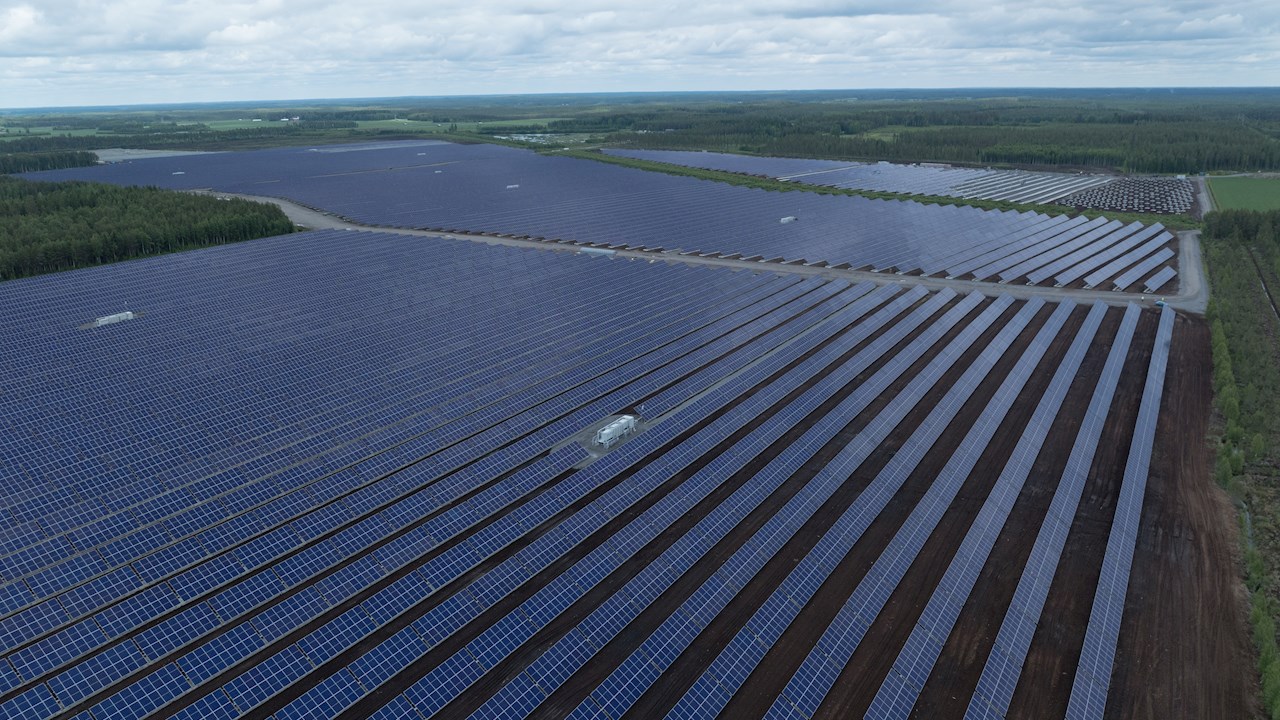
This fall Finnish energy company, EPV Energy Ltd, will take its first industrial-scale solar park into production in Heinineva, Lapua. The site, formerly used for peat production, now hosts 123,000 solar panels.
EPV Energy has over 70 years of experience in responsible energy generation and supplies around 5% of Finland’s electricity. The company focuses on low-emission and renewable energy, aiming for carbon-neutral electricity generation by 2030. In 2024, 96% of its electricity came from emission-free sources.
The Heinineva solar park’s automation and control solution relies on ABB’s advanced technologies. ABB also delivered the transformer station for the park's pilot tracker field, which consists of rotating solar panel racks – designed to optimize energy capture.
This project marks an important step forward in Finland’s transition to a more sustainable energy mix. By expanding solar capacity alongside wind power, EPV is helping to diversify the country’s renewable energy portfolio and support national climate and energy targets. Finland has set the bar high in climate action, and targets achieving carbon neutrality already by 2035.(1)
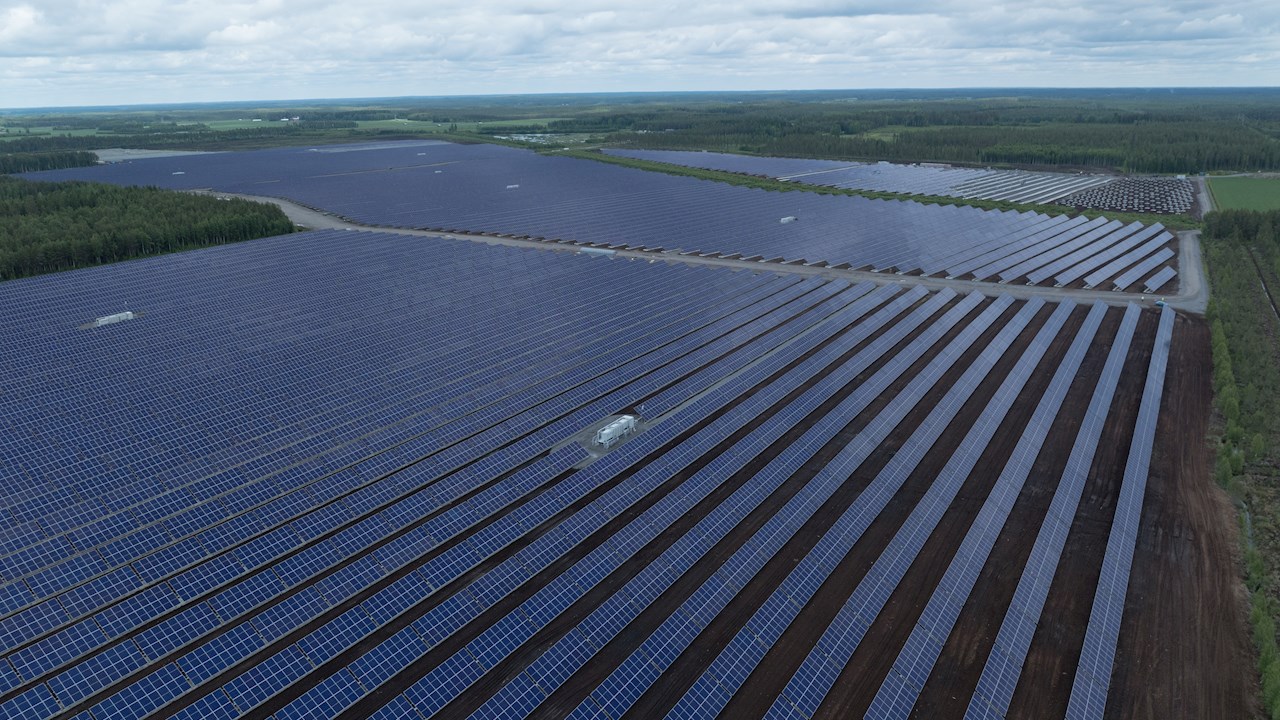
EPV Energy’s new solar park is set to become one of Finland’s largest, featuring 123,000 solar panels. 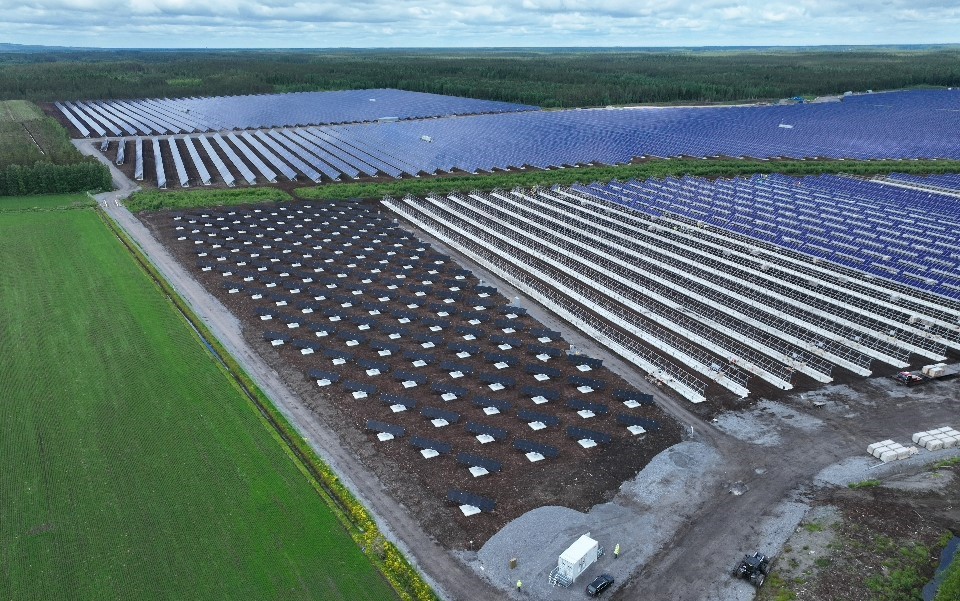
The site's pilot field includes a tracker section with 1,155 solar panels. 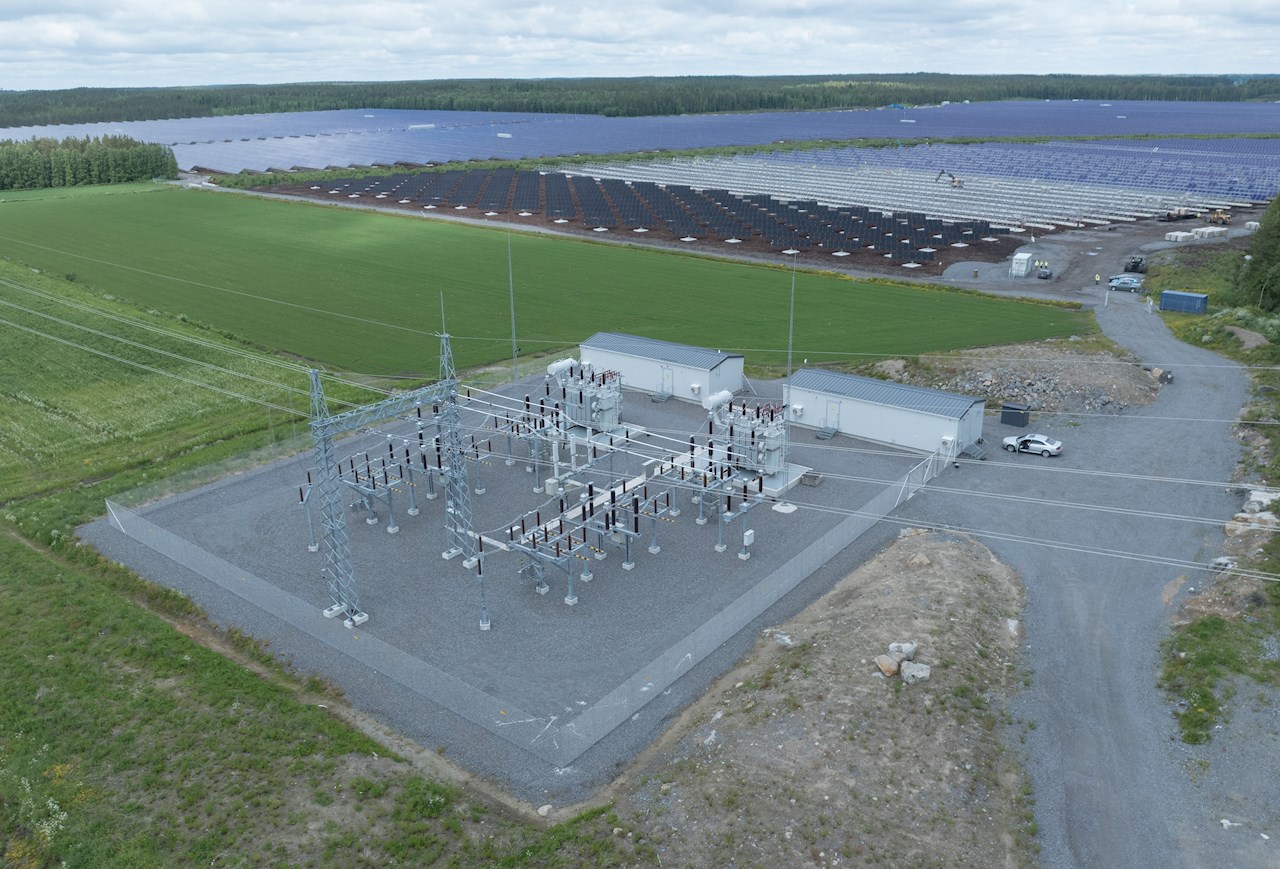
A new substation was built on the site to ensure power availability.
From peat to panels – EPV’s strategic solar investment
Ari Soininen, Managing Director of EPV Solar Power, a subsidiary of EPV Energy, explained the strategic decision behind the solar investment:
“We already have substantial wind power capacity. Solar energy complements this by offering a summer-oriented production profile. As panel prices became competitive and the Heinineva site became available, we saw the opportunity to invest in an industrial-scale solar park”.
The Heinineva site was ideal for solar development thanks to its proximity to existing high-voltage power lines. After a competitive bidding process, ABB was selected as the supplier. ABB’s local presence – it is only 80 kilometers from ABB’s Vaasa premises to Lapua – was also seen as a big plus.
“It was important for us that ABB is a company that operates in Finland, and to have ABB’s team close by for smooth project execution” said Jari Heinilä, responsible for automation at EPV. “Equally important was ABB’s global solar park expertise.”
Tapio Kotola, Segment Sales Manager at ABB in Finland, echoed his sentiment: “Solar parks of this scale are rare in Finland, and we gained valuable insights throughout this project. ABB's local presence and deep understanding of domestic regulations were key advantages, especially in navigating operational and compliance matters”.
Despite being built in stages, the project progressed smoothly with ABB’s support. Heinilä noted:
“It has been a long project, and many hours of work. We have all learned a tremendous amount. This is a Class D facility(2), so regulatory compliance was demanding. But the collaboration with ABB was professional and productive throughout.”
Smart automation and centralized control with ABB’s solar park controller
For this project ABB provided a tailor-made solar park controller, based on ABB’s ZEE600 platform, to manage the solar park’s operations. The solar park controller communicates with inverters to regulate energy production and integrates with EPV’s SCADA (supervisory control and data acquisition) system for remote monitoring and participation in the electricity reserve market. Joakim Hjort, Sales and Marketing Manager at ABB, described the controller as: “The brain of the solar park – enabling smart, responsive energy management”.
ABB’s solar park controller acts as the glue for efficient production, and the ability to operate the solar park from EPV’s central control room has been a game-changer. According to Jari Heinilä:
“Our goal was to centralize data and control to the central control room. This maximizes output and enables us to make predictions, without needing on-site personnel”.
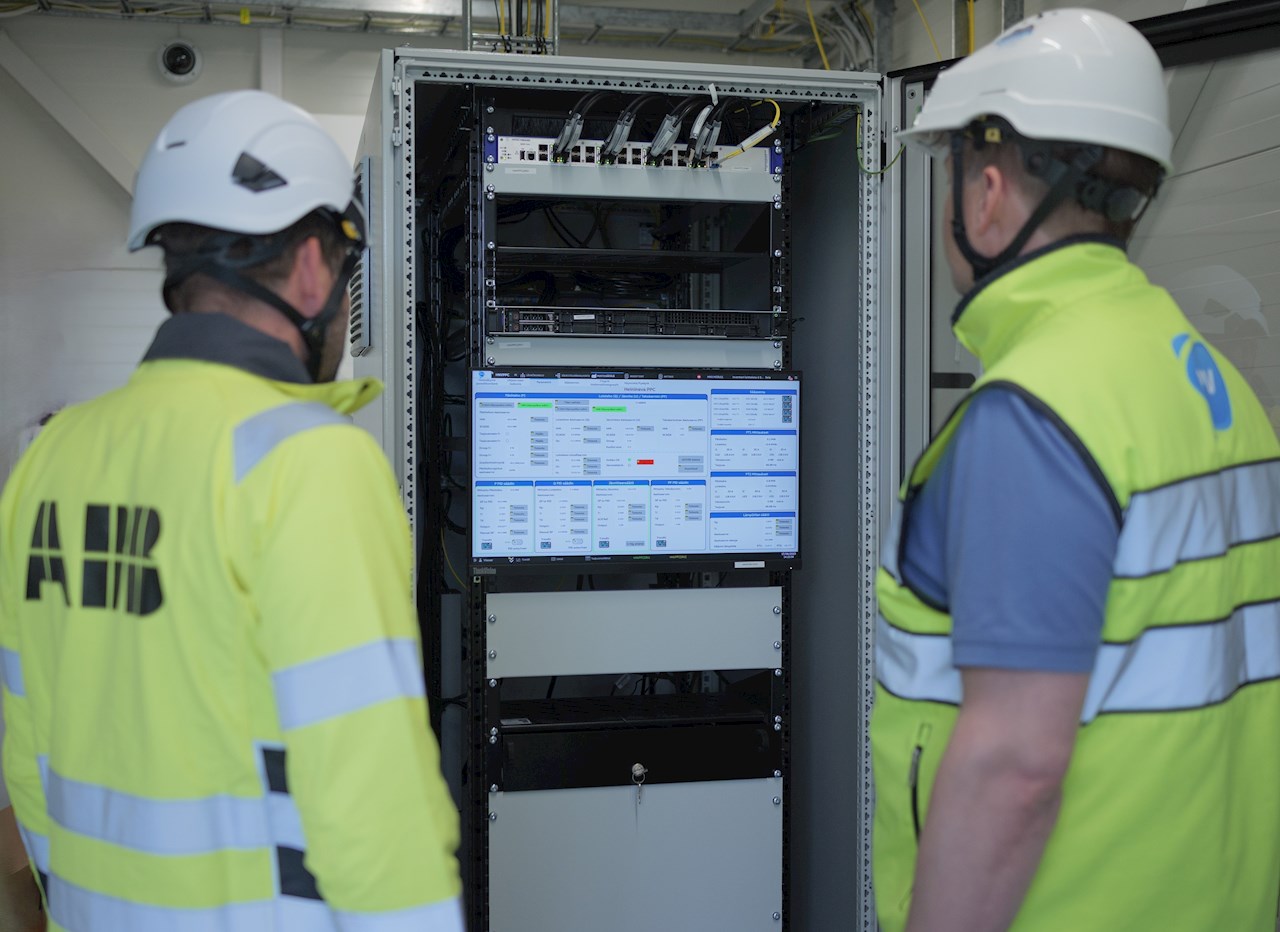
Joakim Hjort (to the left) described the solar park controller as: “the brain of the solar park – enabling smart, responsive energy management”. 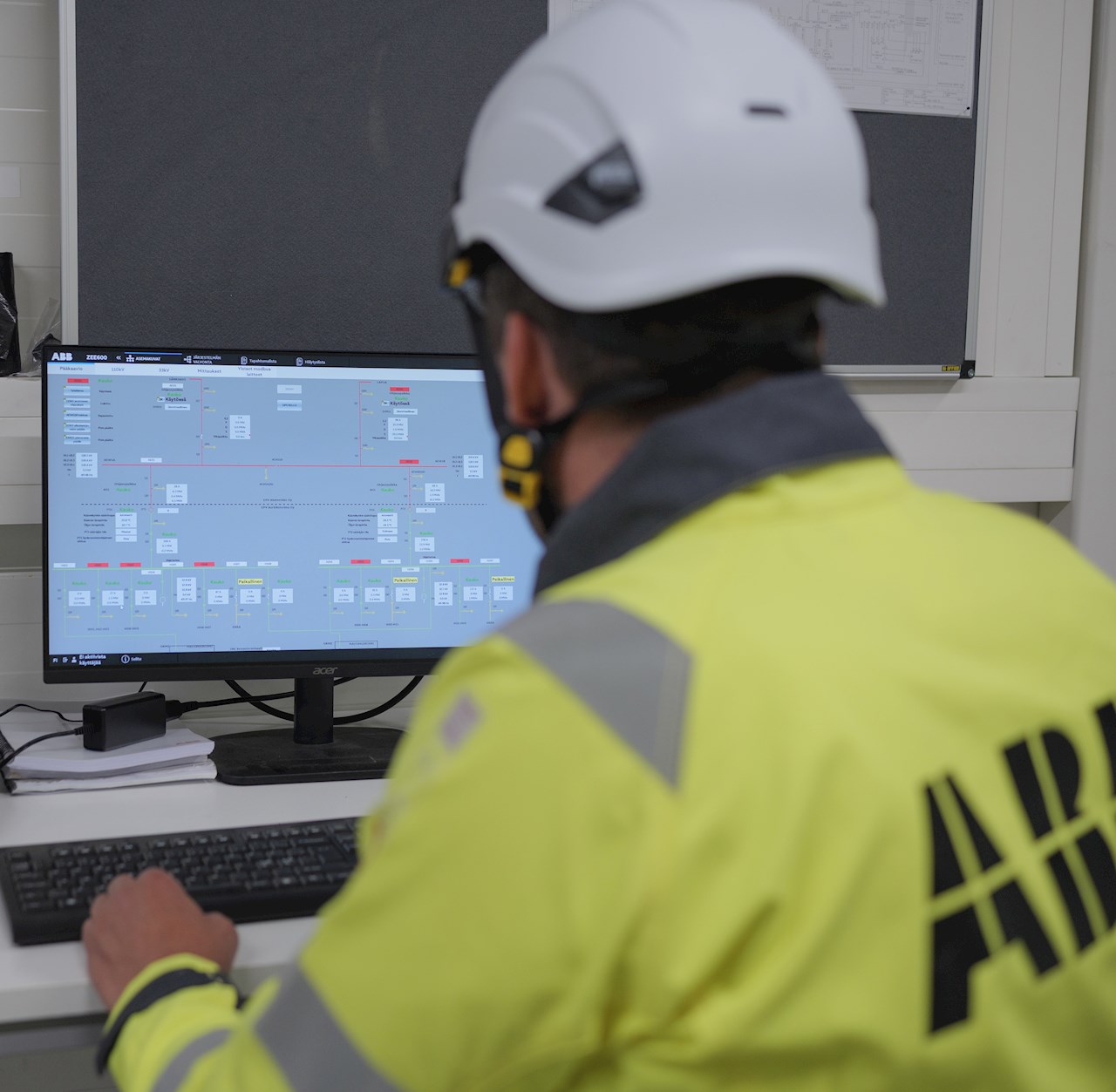
The tailor-made solar park controller is based on ABB’s ZEE600 platform.
ABB infrastructure powers reliable operations
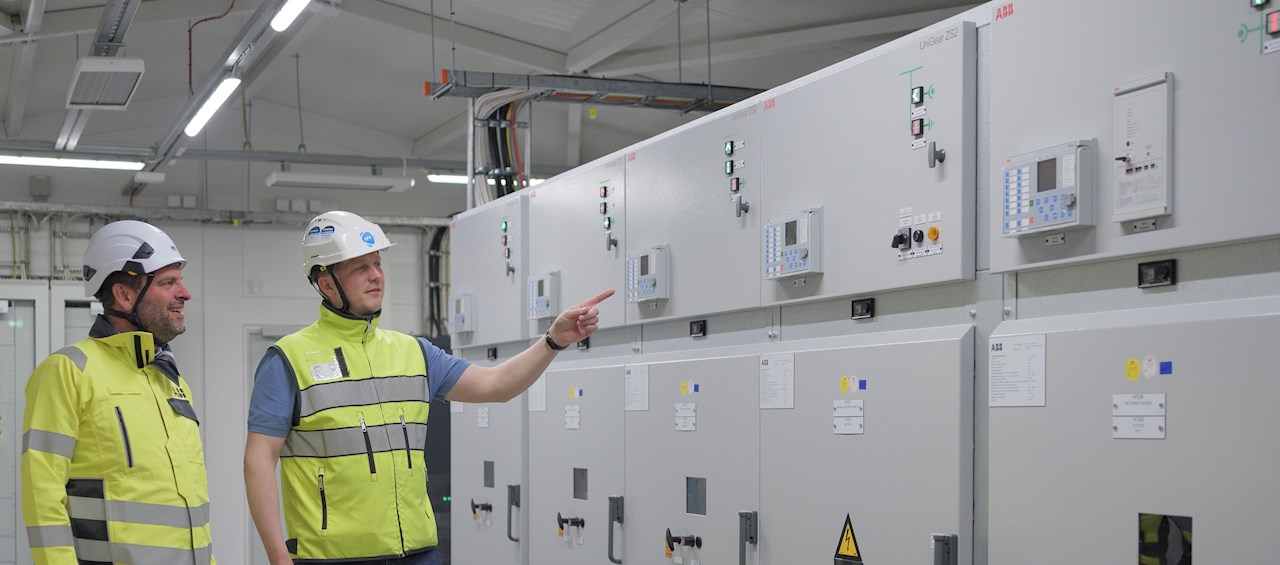
To support the site’s power needs, a new substation was constructed. Substations enable efficient conversion of voltage levels and safe integration of solar power into the grid. Substations house key components, such as transformers and switchgear, ensuring stable and reliable power distribution. For the substation, ABB delivered 15 panels of medium-voltage air-insulated switchgear UniGear ZS2 equipped with Relion® protection relays.
At the site’s pilot tracker field, which features rotating solar panels, EPV is evaluating how much performance improves when the panels dynamically adjust their orientation to follow the sun throughout the day. For the tracker field, EPV selected ABB’s Ecoflex container transformer station. The transformer station ensures efficient and safe transmission of electricity to the power grid. On top of the transformer, the station houses ABB’s SafePlus medium-voltage gas-insulated switchgear for secondary distribution, which is also equipped with a Relion protection relay.
Jani Aurell, Electrical and Automation Manager at EPV Energy, said:
“EcoFlex was a smart choice – the delivery time was quick, procurement was well-managed, and design adjustments were handled efficiently. The entire process ran smoothly and stayed on schedule.”
The six-month delivery timeline allowed foundation work before frost, with installation and electrification completed swiftly in early December 2024.
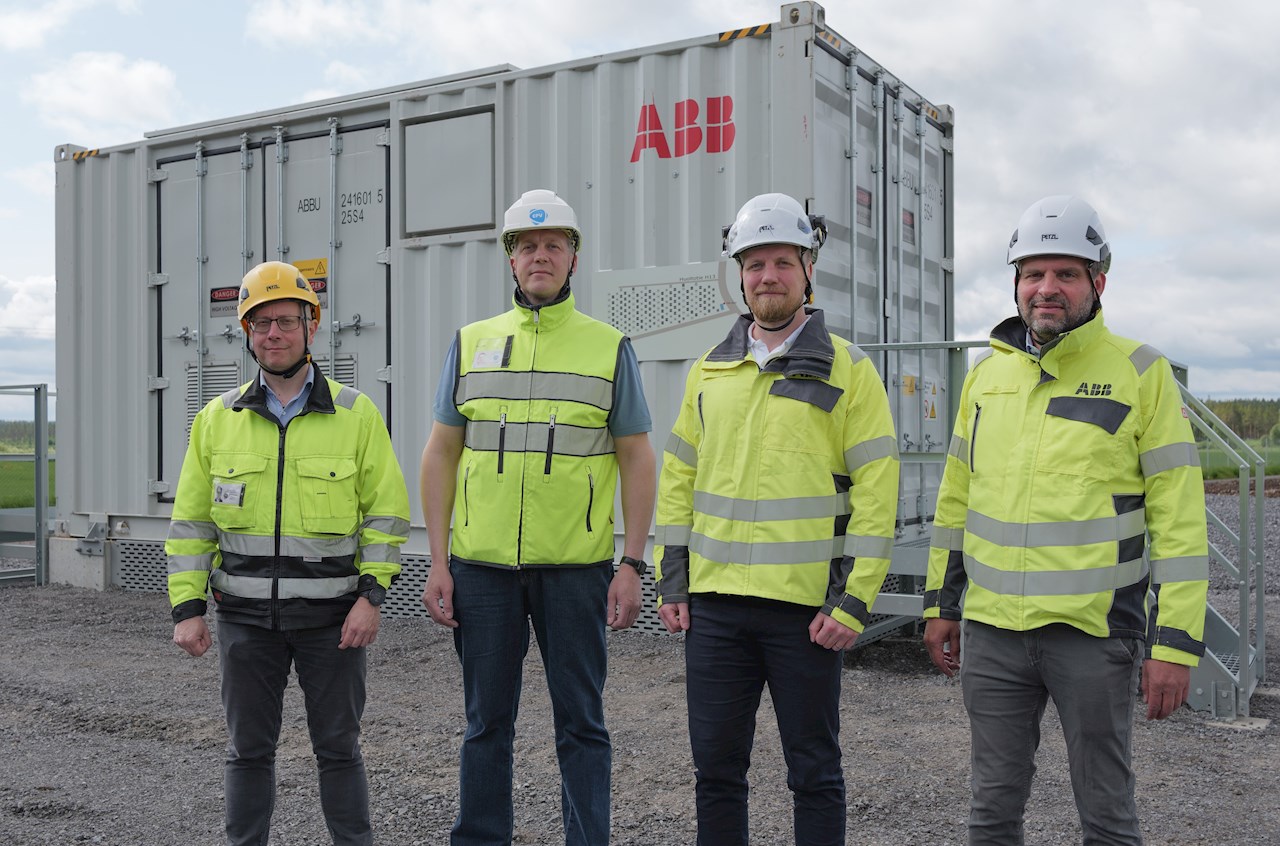
ABB technology at Heinineva solar park
- Solar park controller
- UniGear ZS2 medium-voltage air-insulated switchgear
- Relion 620 and 615 series protection relays (REF620, REF615)
- EcoFlex container medium-voltage transformer station
- SafePlus medium-voltage gas-insulated switchgear
1) Ministry of Economic Affairs and Employment of Finland. “Carbon neutral Finland 2035 – national climate and energy strategy”. Online. Retrieved 18 August 2025. [https://julkaisut.valtioneuvosto.fi/handle/10024/]
2) In Finland, energy facilities are classified from A to D based on their size and grid impact. A Class D facility typically refers to large-scale installations with a rated capacity of at least 30 MW or a connection point voltage level of 110 kV or higher. These facilities are subject to stricter technical and regulatory requirements, particularly regarding grid integration and operational reliability. Source: Fingrid. Online. Retrieved 18 August 2025. [https://www.fingrid.fi/globalassets/dokumentit/en/customers/grid-connection/instruction---application-of-the-grid-code-specifications-to-hybrid-power-plants---2023_10_17.pdf]


