
Initially published on https://www.therockwrangler.com/ on 18 August 2025.
How Integrated Digital Systems Boost Efficiency and Cut Energy Use in Mining by Jamie Wade, The Rock Wrangler
From the outside, the conversation around digital mining often gets framed in broad terms - automation, Information of Things (IoT), Artificial Intelligence (AI) but for those working underground or in control rooms, the real question is more practical: how do these tools actually solve the daily challenges?
For Stewart Johnston, Account Manager - Mine Electrification and Automation at ABB Australia, the key lies in making information usable, timely, and connected across the mining value chain. Speaking with The Rock Wrangler, Stewart shared how mining companies are applying integrated digital systems to address some of the industry’s most stubborn issues: bottlenecks, inefficiency, high energy use, and the challenge of upgrading operations without major disruption.
The integration gap
In many brownfield sites, systems have been bolted on over years - or decades - creating a patchwork of operational technology, IT systems, and manual processes. This can make it difficult to share data in real time or to respond quickly when something changes.
“Many mines still deal with information silos,” Stewart says. “Planners might be working with one set of data, dispatchers another, and operators may not get updates until much later. That delay makes it harder to stay on target.”
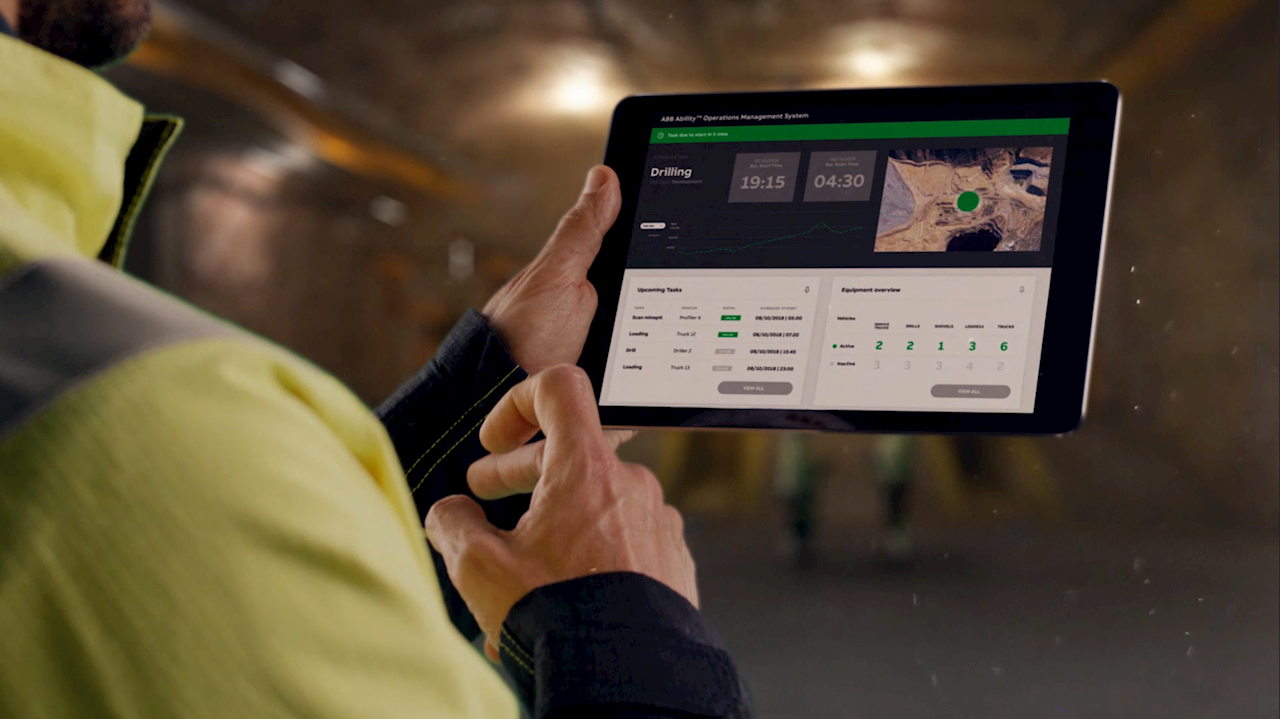
This is where ABB’s Ability™ Operations Management System (OMS) comes into play. It links planning, scheduling, equipment management, and production data in near real time, creating a single operational picture. By closing the loop between plans and execution, mines can identify and act on issues before they escalate into costly delays.
Real-time coordination in practice
One of the clearest operational gains, Stewart explains, comes from Short Interval Control - the practice of reviewing and adjusting operational plans multiple times in a shift instead of waiting until the next day’s meeting.
OMS enables this by digitising shift plans, giving operators and supervisors instant access to updates. Mobile Operator Stations replace paper instructions, while in-built messaging tools keep crews and managers connected.
“When everyone can see what’s happening in near real time, they can reassign tasks, adjust the fleet, and fix disruptions before they cause a chain reaction,” Stewart says. “It’s not about replacing people - it’s about giving them the right information at the right time.”
Where energy savings hide in plain sight
While the operational benefits of better coordination are clear, some of the biggest gains come from energy management, particularly in underground ventilation.
Ventilation can account for up to half of a mine’s total power demand. ABB’s Ability™ Ventilation Optimizer and Ventilation on Demand (VOD) systems use sensor data on vehicle and personnel locations to dynamically adjust airflow to match actual activity underground.
Stewart notes that this targeted approach can deliver substantial reductions in airflow requirements - in some cases by up to 40 per cent - without compromising air quality. It also speeds blast gas clearance, reducing downtime and improving conditions underground.
Lessons from the field
Examples from mines around the world show how integration and operational visibility can translate into measurable improvements. In Canada, a mine reduced annual overtime by 20 per cent after centralising dispatch through OMS and adding analytical support. In Sweden, ABB worked with Boliden to replace paper-based records with digital production scheduling, enabling quicker corrective action when KPIs drifted. In India, multiple-site integration connected 11 mines and concentrators to business systems, improving maintenance, safety, and material recovery.
While the specific tools differ - from ABB’s Fleet Management System to customised OMS deployments - the common factor is the ability to capture, share, and act on data across different functions without delay.
Overcoming legacy system barriers
A recurring challenge for mine managers is the perception that upgrading to digital systems means replacing everything. In reality, many sites are taking a staged approach that builds on existing infrastructure.
ABB’s MineOptimize platform is designed with this in mind. It connects new capabilities - such as IoT sensors, analytics, and remote support - to legacy systems without forcing a full replacement.
Stewart says the focus is on interoperability. “If you can connect your existing systems to a central platform, you can get the benefits of integration without the cost and risk of a full system replacement. It’s about adding capability rather than ripping out what already works.”
The role of edge computing and analytics
Edge computing - processing data at or near the source - is becoming increasingly important in mining because it reduces delays in decision-making. ABB’s Genix™ Edge AI processes operational data on site, while the Genix™ Omni Source Integration Hub aggregates inputs from ABB and third-party devices.
“Whether it’s analysing equipment performance for predictive maintenance or running optimisation models for scheduling, doing that analysis on site means operators get answers faster,” Stewart says. “You don’t have to wait for data to travel back and forth.”
When combined with Genix’s advanced analytics and digital twin capabilities, sites can simulate different operating scenarios and compare them with actual performance to refine operations.
Security in an interconnected mine
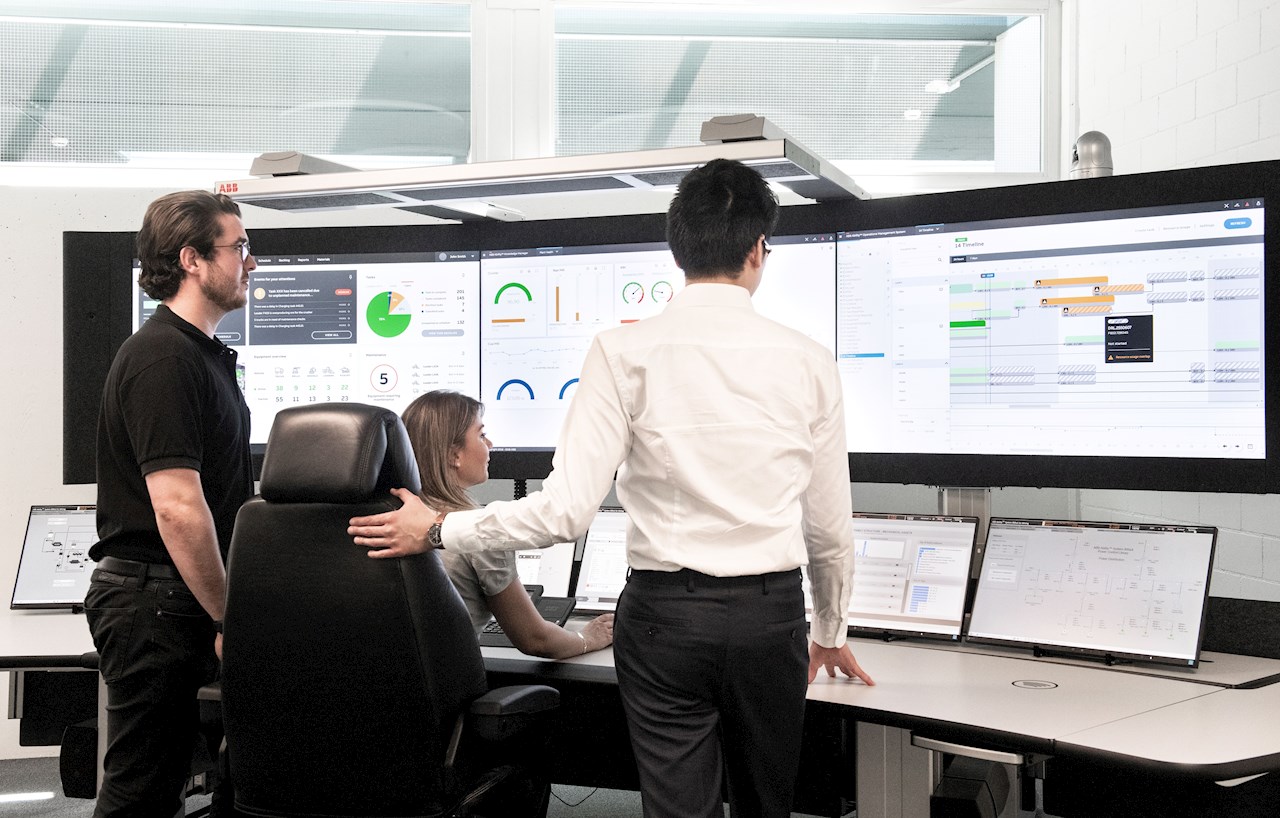
With more systems connected to the network, cybersecurity becomes a core operational concern. ABB integrates its cybersecurity workplace and monitoring tools into its mining systems to help ensure operational resilience.
“It’s not just about protecting against external attacks,” Stewart says. “It’s also about ensuring the integrity of operational data so that people can trust the information they’re using to make decisions.”
A shift in operational culture
While much of the focus is on the technology, Stewart emphasises that these changes often bring a cultural shift too. Real-time transparency means issues can be spotted and addressed sooner, but it also changes the way teams work together.
“When dispatch, planning, and operations are all working from the same live data, there’s less second-guessing,” he says. “It creates a more collaborative environment because everyone can see the same picture.”
What mining professionals can take away
For mining professionals considering more integrated operations, there are clear lessons from these examples. The most successful projects tend to start with existing systems and build outward, targeting specific bottlenecks rather than attempting to overhaul everything at once. Prioritising areas with the highest operational impact - such as ventilation control, fleet management, or scheduling - often delivers the fastest results.
Making data usable in real time is essential. The faster information reaches the people who need it, the more value it delivers. Cybersecurity should be treated as a core function rather than an afterthought, and integration projects can be used as an opportunity to improve collaboration across teams that may previously have worked in silos.
Closing thoughts
In mining, the pressure to lift productivity, cut costs, and meet safety and environmental obligations is constant. But as Stewart points out, the tools to address those pressures don’t have to arrive all at once - and they don’t have to disrupt what’s already working.
“The most effective projects we’ve seen are the ones that start with a clear operational problem, bring the right people together, and then integrate the right technology to solve it,” he says.
From ventilation optimisation and energy management to real-time fleet coordination and edge-based analytics, ABB’s suite of digital tools is already helping mines streamline operations, improve decision-making, and maximise the value of their existing infrastructure - one operational challenge at a time.


