
• 83 percent of industry decision makers agree that unplanned downtime costs a minimum of $10,000 per hour, with 76 percent estimating an hourly cost of up to $500,000
• However, a full third (33%) have not undertaken any motor or drive modernization projects in the last two years, suggesting that many of these sudden stoppages could be avoided
• With rising material and energy costs, a new ABB study details the bottom-line impact of system breakdowns and explores how industries can shift from crisis-mode repairs to intelligent, life cycle-led planning
A new global report from ABB, developed in partnership with Sapio Research and based on a survey of 3,600 senior decision-makers across multiple sectors, finds that just over half of respondents (55%) have a strategic and proactive plan to modernize facilities and manage out obsolete components like old motors and drives.
Despite growing awareness, the data highlights that 44 percent of leaders experience equipment-related interruptions at least monthly, with 14 percent reporting stoppages every single week – implying major financial and operational risks. The majority estimate these sudden disruptions cost anywhere from $10,000 up to $500,000 per hour. For 7 percent, the figure climbs even higher.
The report reveals key gaps between planning and execution. While 55 percent of industry players claim to have a proactive modernization strategy, only one in five of those grappling with weekly interruptions actually implement such a plan. Likewise, among the 30 percent who are dealing with monthly issues, just one third (34%) actively manage life-cycle processes for their facilities and assets.
“Unplanned downtime is costing industry up to half a million dollars per hour – yet one in three businesses hasn’t modernized their motor-driven systems in the last two years. That’s more than a missed opportunity, it’s a silent crisis,” comments Oswald Deuchar, Global Head of Modernization Program, ABB Motion Services. “Our research shows that those who shift from reactive firefighting to forward-looking life-cycle strategies experience fewer failures and greater resilience. A key challenge, though, remains in justifying the up-front investment. With some applications, upgrading obsolete, inefficient equipment can generate return on investment in less than two years, but leadership buy-in is often hard-won.”
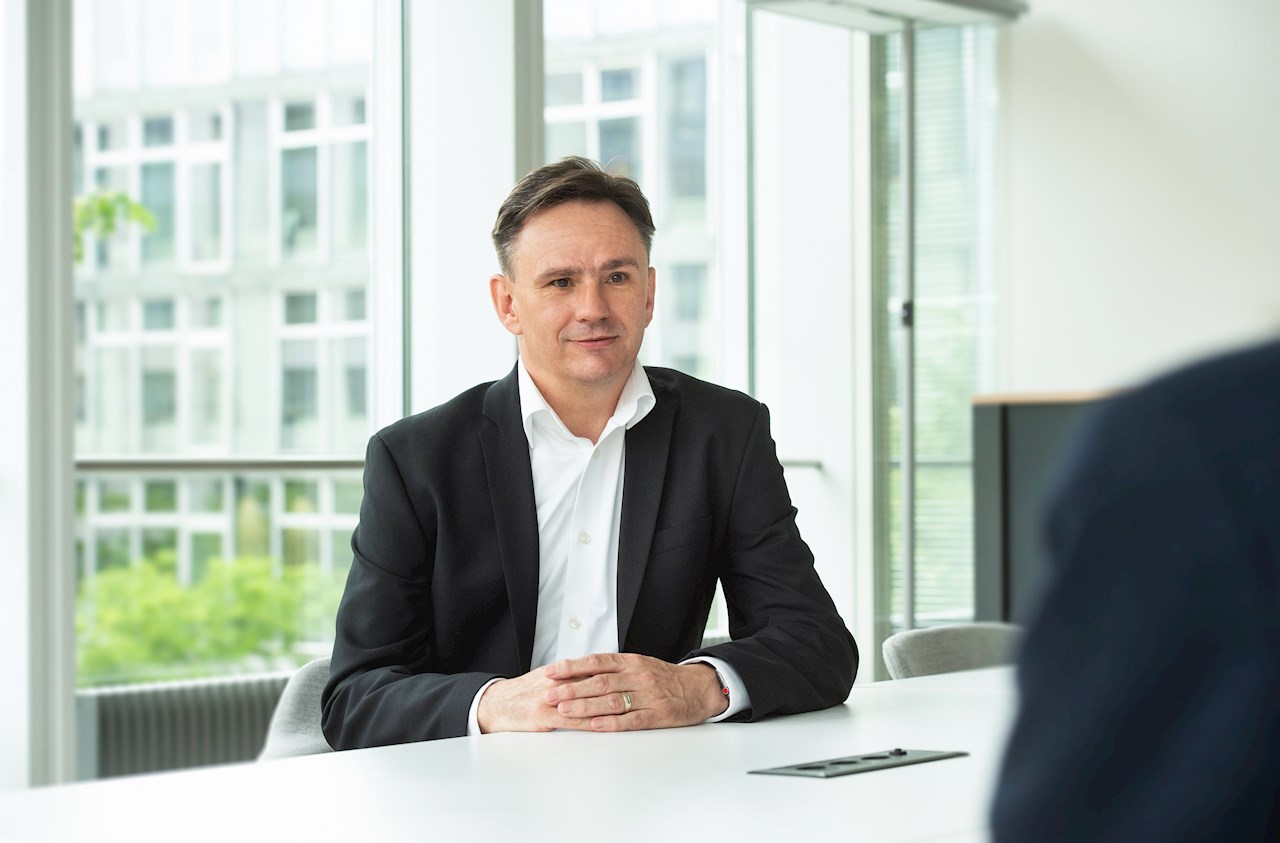
Oswald Deuchar, Global Head of Modernization Program, ABB Motion Services 

Communication gaps remain. Despite the strikingly high hourly cost of unplanned downtime, over a third of respondents find it somewhat difficult or very difficult to articulate the return on investment (ROI) of modernization projects to senior leaders. Meanwhile, 17 percent of businesses “rarely or never” include the impact of lost productivity in their capital investment decisions.
Cost remains the top barrier to modernization for 28 percent of industrial players. Among the 66 percent who have undertaken an upgrading and retrofitting project in the last two years, just over one quarter explicitly did so to reduce stoppage risks – highlighting that the link between continuous life-cycle management and operational reliability is still not fully understood or acted upon, even by many modernization proponents.
“We’re hoping this report opens some eyes. Modernization isn’t just about replacing old parts, it’s about rethinking performance. With 44 percent of industrial players facing monthly setbacks, the case for smarter asset management has never been more urgent,” continues Deuchar. “ABB’s approach combines digital intelligence, modular retrofits, and circularity principles to turn yesterday’s equipment into tomorrow’s high performers. This is how we enable clients to trade last-minute fixes for long-term foresight. Because today uptime is a mandate for a more competitive future.”
Full report accessible at this link.
ABB is a global technology leader in electrification and automation, enabling a more sustainable and resource-efficient future. By connecting its engineering and digitalization expertise, ABB helps industries run at high performance, while becoming more efficient, productive and sustainable so they outperform. At ABB, we call this ‘Engineered to Outrun’. The company has over 140 years of history and around 110,000 employees worldwide. ABB’s shares are listed on the SIX Swiss Exchange (ABBN) and Nasdaq Stockholm (ABB). www.abb.com
ABB Motion, a global leader in motors and drives, is at the core of accelerating a more productive and sustainable future. We innovate and push the boundaries of technology to contribute to energy efficient, decarbonizing and circular solutions for customers, industries and societies. With our digitally enabled drives, motors and services we support our customers and partners to achieve better performance, safety and reliability. To help the world’s industries outrun – leaner and cleaner, we deliver motor-driven solutions for a wide range of applications in all industrial segments. Building on over 140 years of domain expertise in electric powertrains, our more than 23,000 employees across 100 countries learn and improve every day. go.abb/motion


