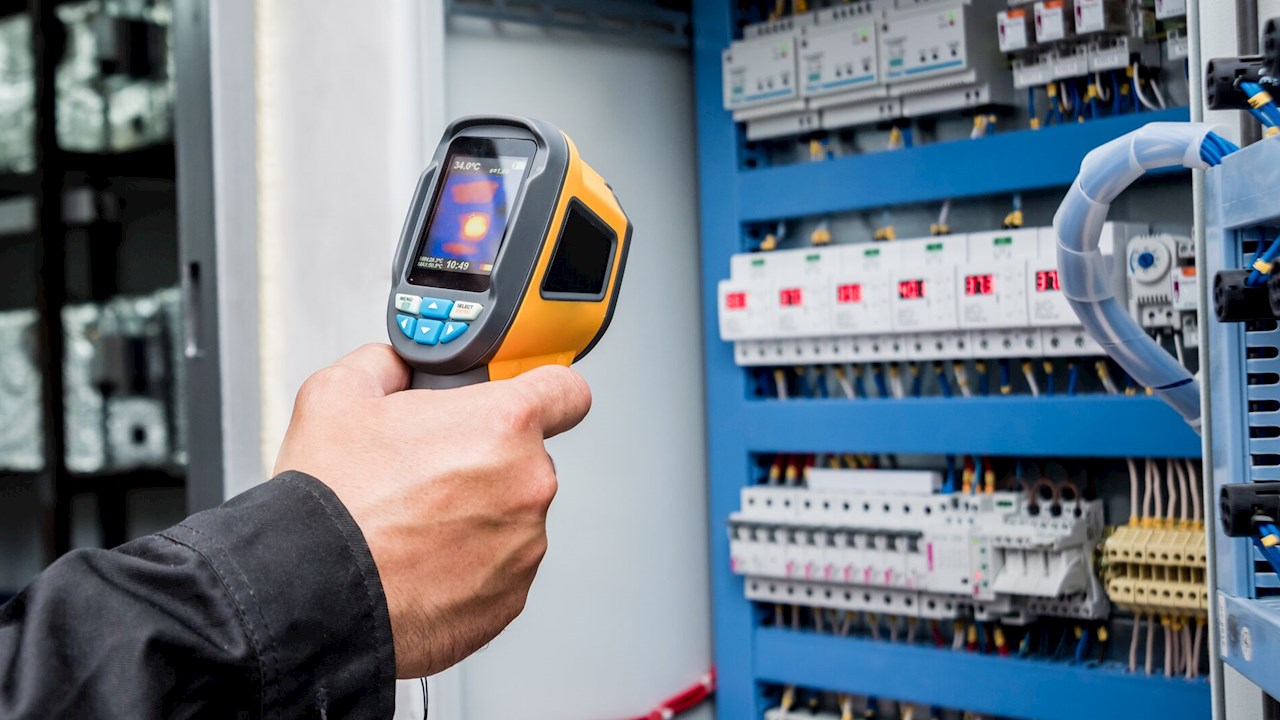
Infrared thermography provides a powerful, non-invasive method to detect subtle temperature variations—deviations from normal operating conditions—to prevent near misses, arc flash incidents, costly fires, and unplanned downtime. By identifying inefficiencies that waste energy, infrared thermography also drives sustainability and supports the effective deployment of limited technical resources.
Infrared inspections: A pillar of predictive maintenance and sustainability
A robust infrared inspection program delivers significant benefits that align with an organization's core goals for safety, reliability, and sustainability:
- Early fault detection: Pinpointing minor-to-critical issues before they escalate.
- Enhanced workplace safety: Identifying hazardous conditions like poor connections that could lead to electrical fires and arc flashes.
- Increased equipment lifespan: Allowing for timely, planned repairs that extend the life of electrical assets.
- Operational reliability: Preventing sudden failures that disrupt production and downstream operations.
- Cost savings and sustainability: Minimizing energy waste and reducing carbon emissions by proactively addressing thermal issues that indicate wasted electricity.
- Regulatory compliance: Meeting safety standards, such as the National Fire Protection Agency (NFPA) 70B standard for electrical equipment maintenance, and the NFPA 70E standard for electrical safety in the workplace.
How infrared thermography works
Functioning electrical components generate heat as a natural byproduct of operation. Under similar loads, comparable parts should produce a consistent amount of heat. Variations from this normal temperature range strongly indicate a problem—such as a high-resistance connection, a failing component, or an overload. This increased heat is a direct indicator of wasted energy.
Infrared thermography inspections involve a qualified technician scanning an asset with specialized equipment. The resulting image uses colors to visually map different heat levels, allowing technicians to diagnose issues and pinpoint flawed or degrading components.
Driving reliability and sustainable resource deployment
For over 50 years, infrared thermography has been a proven, cost-effective tool for maintenance programs, resulting in increased workplace safety and reduced risk of failure. An effective predictive maintenance strategy requires a well-designed, intentional program that moves beyond ad-hoc checks.
The power of infrared lies in its ability to enable condition-based maintenance, a superior approach to reactive strategies. Reacting to failure typically involves costly downtime, wasted product, and unplanned deployment of limited technical resources. By contrast, a proactive infrared program provides critical data that allows you to:
- Realize energy savings: Address high-temperature faults that correlate directly with wasted electricity and unnecessary carbon emissions.
- Optimize resource deployment: Deploy limited technical resources to identified issues based on their criticality, rather than scrambling to fix emergencies.
- Avoid costly failures: Schedule necessary repairs at a convenient time, preventing the cascading financial and environmental costs of unexpected shutdowns.
The NFPA 70B standard sets guidance for the infrared inspection of electrical assets every 12 months, setting a minimum standard for frequency.
Best practices for maximizing infrared effectiveness
- Establish a baseline: The first step in any predictive maintenance program is creating a baseline measurement. Safety technicians should observe new or recently repaired devices to gauge their operation under normal conditions. This baseline image for every piece of equipment is crucial for comparison over time.
- Maintain a digital history: Saving all infrared images and data in a digital repository is a critical best practice. This allows for the observation of operational changes over time, facilitating the development of a strategic, proactive service, repair, and replacement schedule.
- Leverage digital data management: Proper data capture, analysis, and accessibility are key to maximizing the value of predictive maintenance tools. ABB delivers infrared thermography inspection results through a digital application that enables end users to combine and analyze data gathered from infrared, vibration, ultrasound, and other testing methods, creating a holistic view of asset health. This digital approach standardizes visibility, supports a history across multiple assets, sites, regions, and even your entire portfolio of inspected assets.
Effective electrical asset management can be an overwhelming task. If maintaining inspection protocols internally stretches your team's capacity, consider partnering with a specialist in predictive maintenance.
Relying on "fresh eyes" from a third-party partner who specializes in infrared thermography and other predictive tools can help your company systematically identify safety risks, safeguard electrical assets, and ensure a safer, more reliable, and more sustainable work environments.


