
By Adam Mease, Business Line Leader, Energy Distribution NEMA, Smart Buildings
Cities are shaped by the buildings where people live, work, and connect. As we celebrated World Cities Day on October 31, we were reminded that sustainability starts in the spaces that power daily life. Every apartment and townhouse shapes how we use energy, cut emissions, and adapt to change.
By 2050, nearly nine in ten Americans will live in urban areas1. That means serious pressure on the systems that keep daily life running. Space is shrinking, demand is climbing, and the way we power homes has to change. Developers, contractors, and city planners need to build homes that can grow with us, tap into clean energy, and help homeowners lower bills and emissions.
Meeting the challenge of denser cities
Urbanization isn't slowing down, and neither are the demands on the people building our homes. In dense developments, every inch matters. Contractors and developers have to deliver more power, better connectivity, and higher safety standards in tighter spaces, all while staying on schedule and meeting code.
Homeowners and tenants increasingly want greater visibility into how they use energy and how to reduce costs – making efficiency a key driver of sustainability in new developments.
Traditional electrical systems weren't built for this. Today’s buildings demand flexible, space-saving infrastructure that can adapt as needs change. ABB's ReliaMod™ modular metering system is compact and scalable, making installation easier in multi-unit housing and creating electrical infrastructure that can grow with the building.
Combined with pre-wired panels and compact solutions designed for tight spaces, these systems help cities build faster, cut down on rework, and create homes ready for EV charging, solar panels, and whatever comes next.
Making homes as intelligent as the cities around them
Cities are only as smart as the buildings within it. In dense areas, being able to see what's happening with your energy matters.
Equity matters too. Reliable, affordable residential power ensures vulnerable communities aren’t left behind in the energy transition. ABB's smart panels turn standard electrical systems into connected networks that track energy use, catch problems early, and stop outages before they start. It's a shift from passive infrastructure to something that actively manages and protects itself.
The payoff? Neighbourhoods that are safer and more resilient, where homeowners, contractors, and planners can all see what's going on and keep power running efficiently and make smarter choices about their energy use and costs.
Built for net-zero
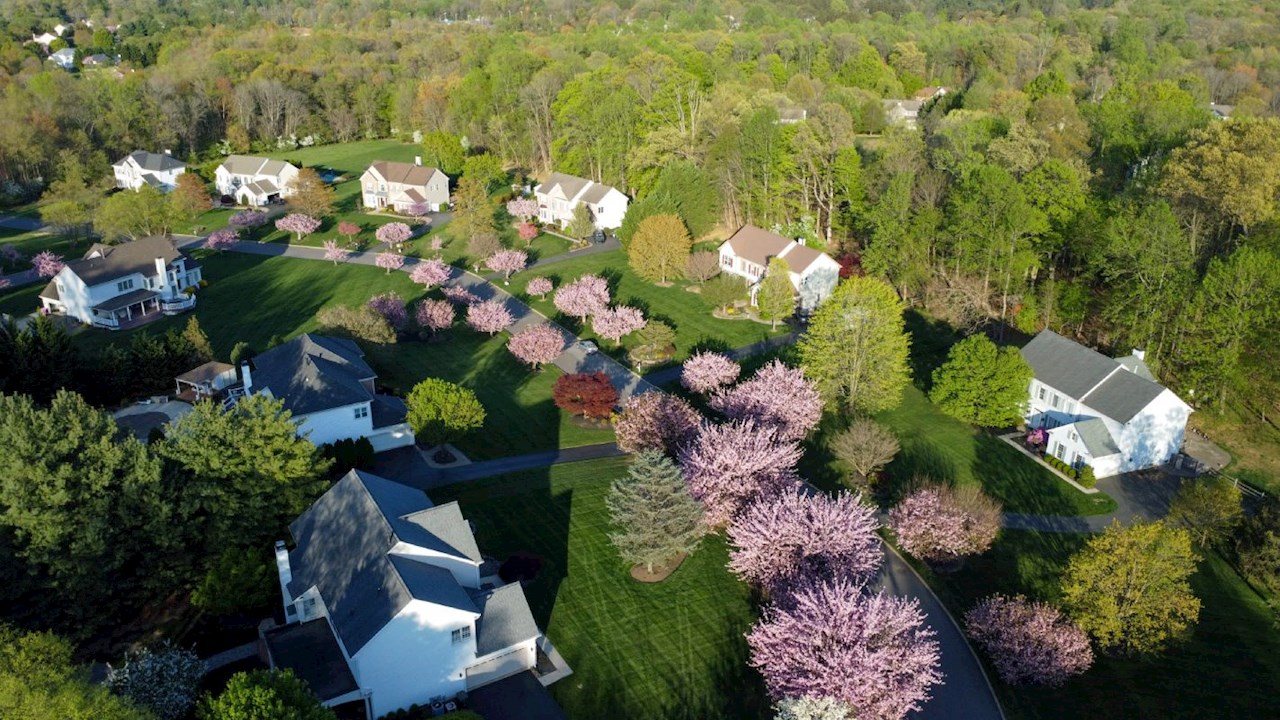
Nearly half of American homes were built before 19802, long before anyone was thinking about solar panels, EV chargers, or heat pumps.
More US cities are setting decarbonization goals, and Canada is requiring all new buildings to be net-zero-ready by 20303. With more electrification in heating, cooling, and transportation, homes – both old and new – need systems that can handle today's technology.
ABB's electrical solutions support two-way power flow, simplify renewable integration, and eliminate expensive upgrades down the line. They're designed to grow with the grid, not against it.
Proof that small can be powerful
Big innovation doesn't need big space. In Asheville, North Carolina, a solar-powered tiny home was built for a family displaced by Hurricane Helene.
At the center is ABB's ReliaHome™ smart panel, which combines solar, storage, and intelligent load management. The homeowners can keep the lights on during outages, lower their energy bills, and power their home with solar, all managed automatically from one system.
It's proof that modular, connected design works at every scale – from a single home to an entire community.
Designing for the cities of tomorrow
As cities grow, the systems that power them need to grow too. Smarter electrical infrastructure helps communities build sustainably, efficiently, and safely, one home at a time.
Because the future of urban living doesn't start in the skyline. It starts at home.
ABB is helping power that shift, building the backbone of communities that are more resilient, connected, and ready for what's ahead.
About the author

Adam Mease
Adam Mease is the Business Line Leader for Energy Distribution NEMA within ABB’s Smart Buildings division. In this role, Adam leads global strategy, operations, products and solutions development, and business performance for the business line, helping customers adapt to evolving energy demands.
With nearly two decades of experience at ABB and General Electric, Adam brings deep product expertise, global leadership experience, and a strong customer focus. His career has spanned sales, product management, and business leadership roles across multiple product lines and international markets. Throughout, he has built a reputation for developing high-performing teams and delivering growth in complex, fast-evolving industries.
Adam holds a Bachelor of Science in Industrial Engineering from Penn State University and an MBA with concentrations in Finance and Marketing from the University of Connecticut. Based in the United States, Adam balances his professional role with a busy family life – alongside his wife and three young children – and remains a passionate Penn State football fan.
Sources:
1. https://css.umich.edu/publications/factsheets/built-environment/us-cities-factsheet
2. https://eyeonhousing.org/2025/04/almost-half-of-the-owner-occupied-homes-built-before-1980
3. https://www.efficiencycanada.org/building-codes/net-zero-energy-ready-buildings-in-canada/


