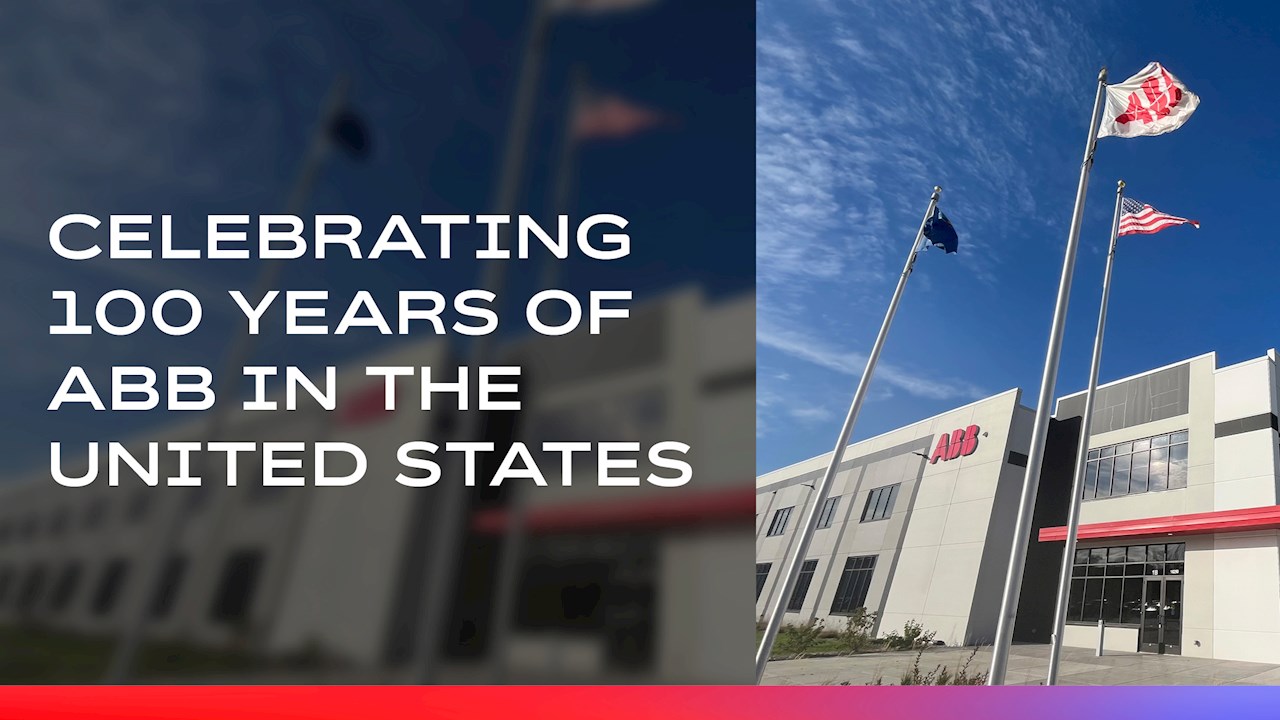
This year marks ABB’s 100th anniversary in the United States, a century defined by dedication, progress and the people who shaped our journey. Over the past century, ABB has grown alongside American industries and communities, fueling new ideas, advancing technology and driving a more sustainable future. Sustainability remains a core part of ABB’s mission, guiding our long-term progress and impact.
A Century of Milestones
Innovation has always driven ABB’s success. From early breakthroughs in electrification to leadership in automation, the company has continually reimagined what’s possible and helped shape the way people live and work. Here are a few highlights over the past 100 years.
The U.S. chapter of our story officially began in 1925, when the American Brown Boveri Electric Corporation was founded with a significant investment to acquire manufacturing plants along the Eastern Seaboard and in the Midwest. Centered around the New York Ship Building Company in Camden, New Jersey, the enterprise shifted from shipbuilding to producing steam turbines, generators and traction equipment. These early innovations laid the groundwork for the energy-efficient systems we continue to build today.
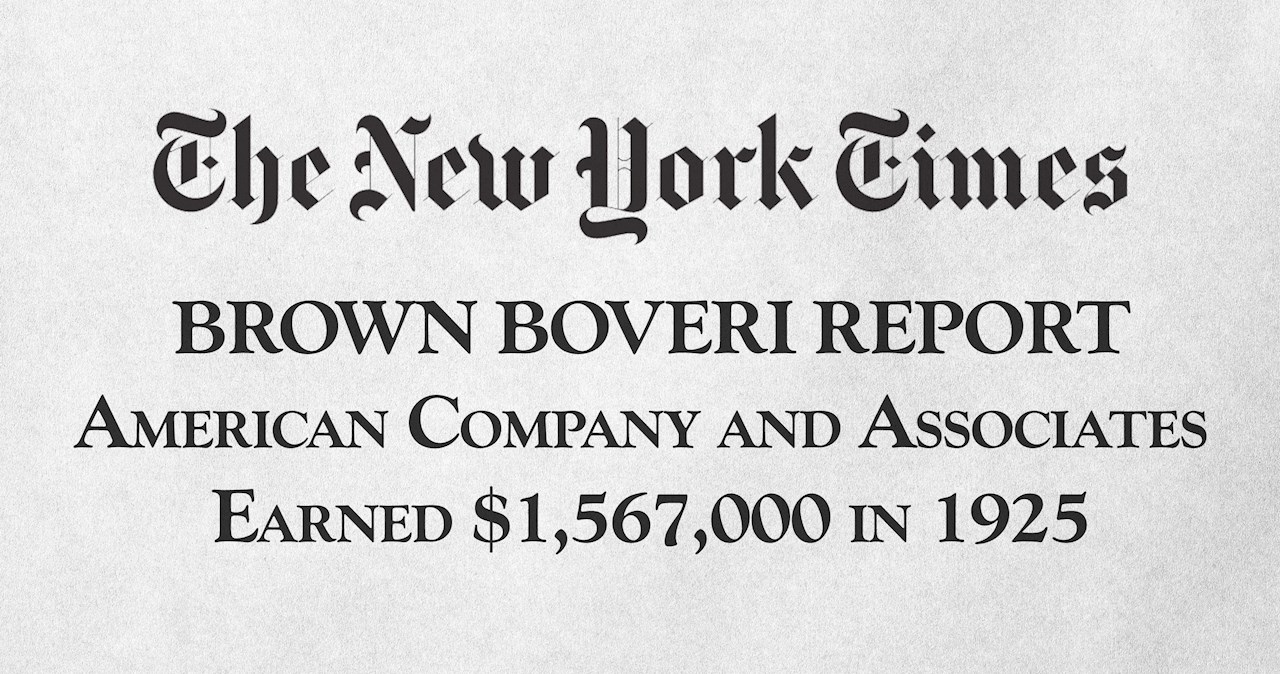
1925: American Brown Boveri Electric Corporation, the Swiss forerunner to today’s ABB, was formed following an investment to acquire manufacturing plants along the Eastern Seaboard, the Midwest and beyond, with the goal of becoming the leader in manufacturing and electrical equipment supply to American industries. The core for the new enterprise was the New York Ship Building Company in Camden, N.J., which produced ships and ship engines. Production later shifted towards steam turbines, large generators and traction material, while ship building operations continued. 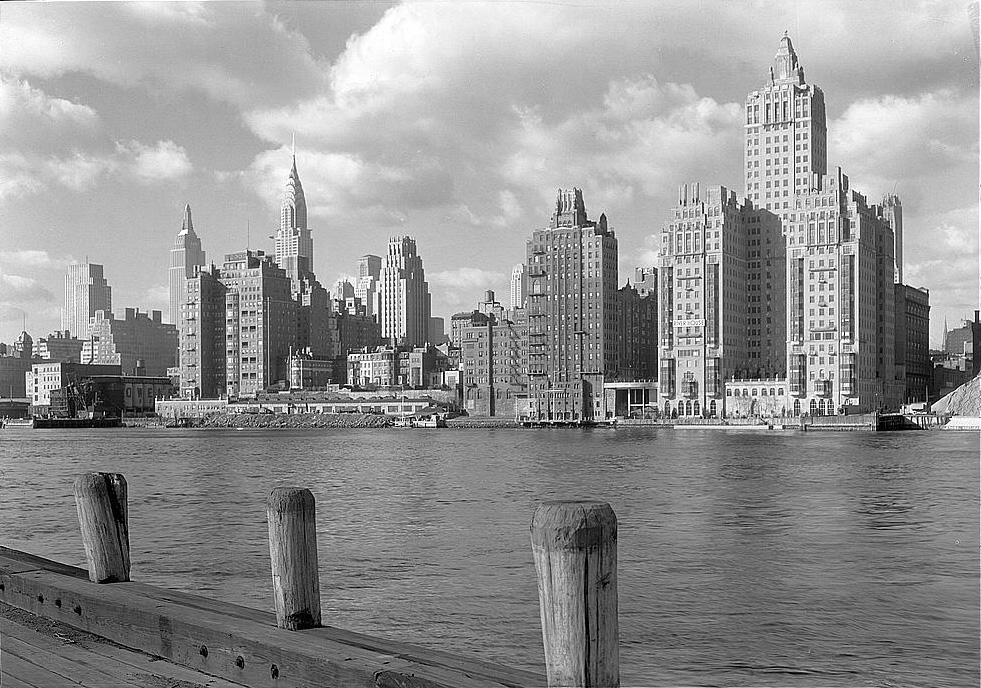
1940s: In 1945, BBC’s engineering office in New York notched years of successful sales and the company and founded the Brown Boveri Corporation (BBC) in New York. Its purpose was to sell BBC products manufactured to U.S. companies, as well as to supervise the installation of BBC equipment on site in America. In 1949, ASEA AB of Sweden opened a small office in Manhattan to market its products to potential customers in the U.S. 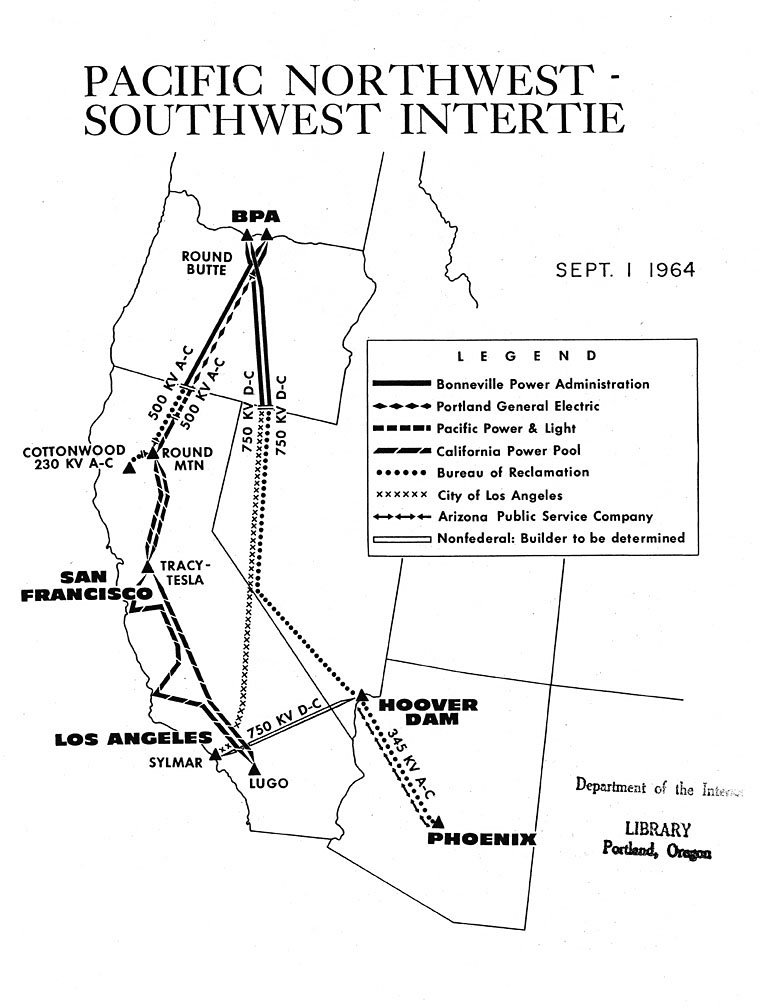
1963: ASEA won a contract to build the first High Voltage Direct Current (HVDC) system in the U.S., the Pacific Intertie, that connected hydroelectric power in Oregon to Los Angeles, providing more affordable, renewable energy to consumers in Southern California. This important link is still in use today and has received several major upgrades over the years by ABB.
In 1963, ASEA won the contract to develop the first U.S. High Voltage Direct Current (HVDC) system, the Pacific Intertie. This pioneering link carried hydroelectric power from Oregon to Southern California and is still operational today, demonstrating ABB’s long-standing role in advancing sustainable energy infrastructure.
Another turning point came in 1988, when ASEA and Brown Boveri Electric Corporation merged to form ABB. By combining expertise in automation and power technology, the new company established itself as a global leader and strengthened its presence in the U.S. This partnership accelerated innovation that enabled cleaner energy and more efficient industries nationwide, setting the stage for today’s sustainability solutions.

1988: ABB was formed from the merger of Sweden’s ASEA and Switzerland’s BBC, combining ASEA’s automation expertise with BBC’s power technology strengths. Headquartered in Zurich, it generated $17 billion in annual revenue. 
1989: ABB acquired the transmission and distribution business of Westinghouse. This transaction positioned ABB as a leading producer of transformer components, power and instrument transformers, high- and medium-voltage breakers, reclosers, surge arresters and capacitors. 
2011: ABB acquired Baldor Electric Company in a transaction valued at $4.2 billion. The acquisition of Baldor advanced ABB’s strategy to become a leader in the North American industrial motors market. 
2012: ABB completed the acquisition of the Thomas & Betts Corporation for $3.9 billion. The merger gave ABB instant access to their complementary product line, a sophisticated North American distribution system, and greater access to global markets.
A Legacy of Teamwork
For a century, ABB’s achievements in the U.S. have been shaped by the creativity, dedication and teamwork of our people. As we celebrate this anniversary, we honor our colleagues past and present whose contributions built our success and inspire our future. Together, we carry forward a legacy of progress and partnership that continues to strengthen communities and protect the planet.
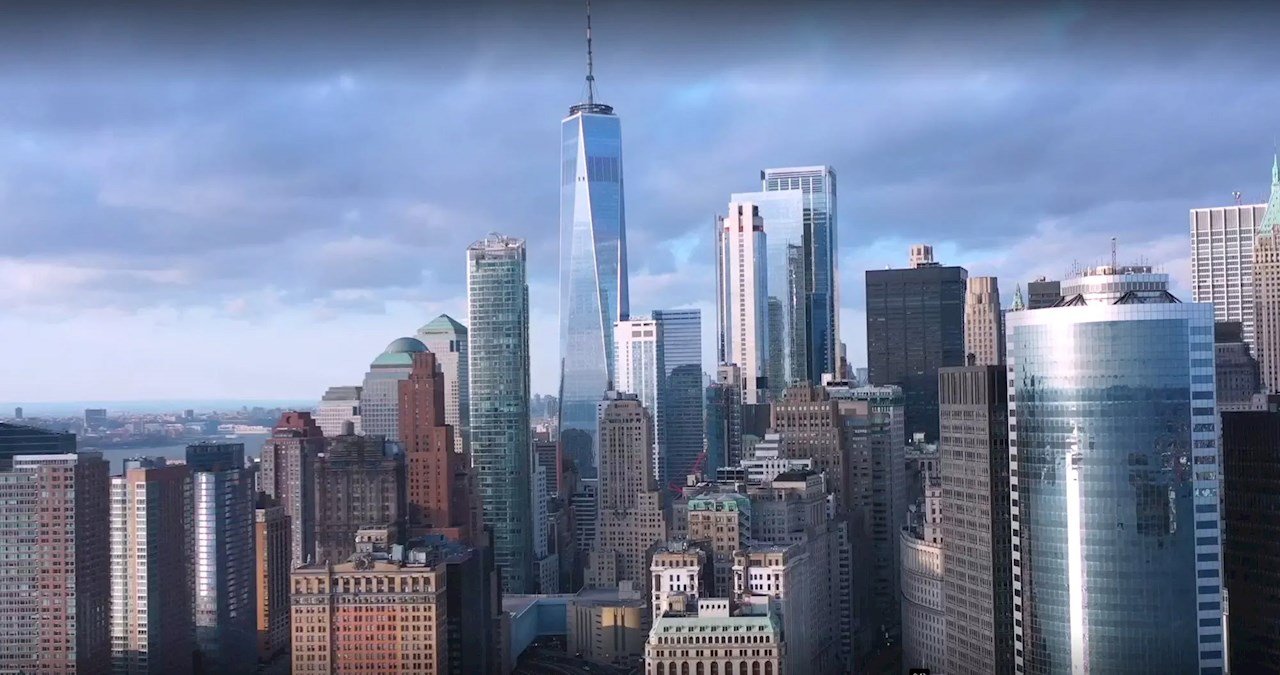
2014: ABB provided advanced electrical infrastructure and energy-efficient solutions for One World Trade Center, ensuring reliable power distribution, sustainability and operational efficiency for the iconic skyscraper. 
2018: ABB completed the acquisition of GE Industrial Solutions for $2.6 billion. The transaction strengthened ABB's market leadership in electrification and expanded its access to the North America market. By integrating GE Industrial Solutions, ABB enhanced its portfolio with advanced technologies, deepened customer relationships and accelerated growth opportunities in key sectors. 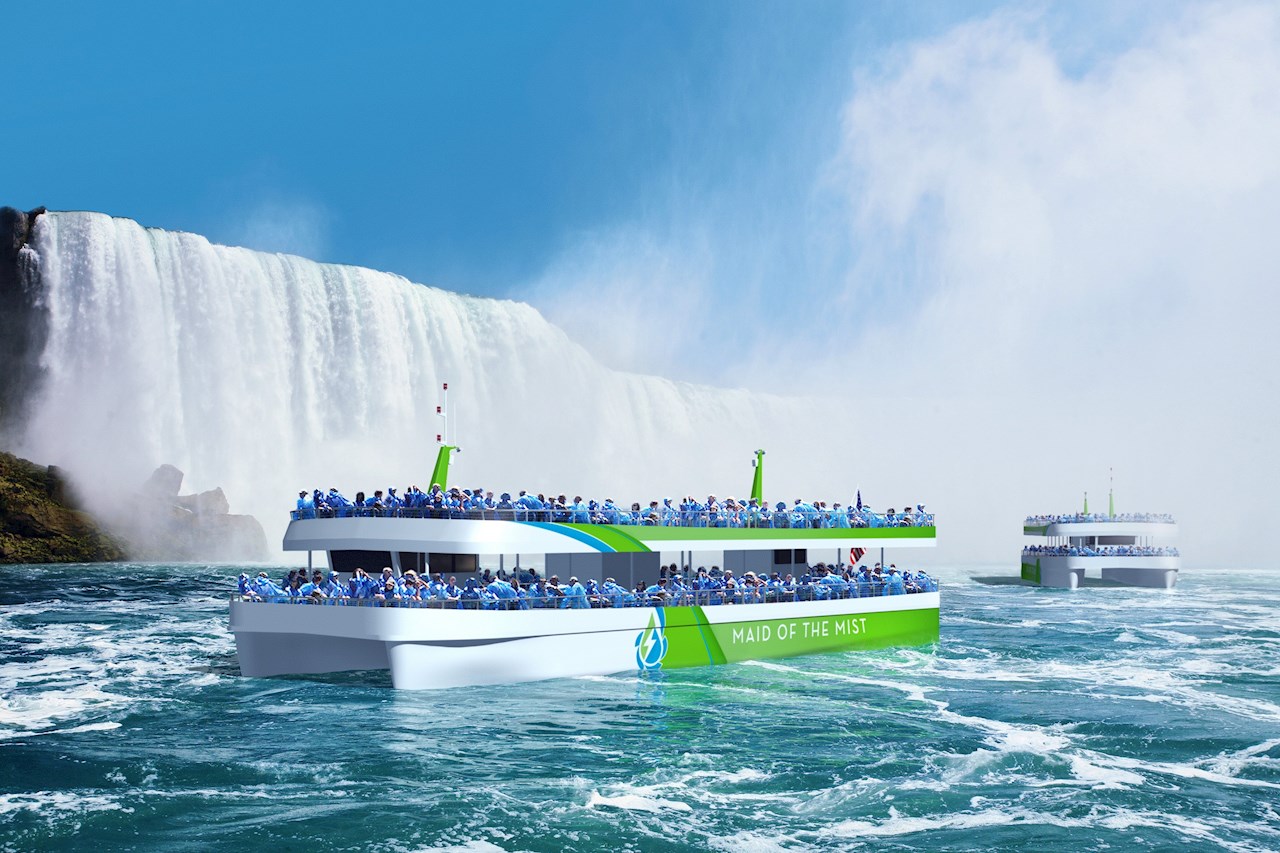
2020: ABB began powering the Maid of the Mist's first all-electric tour ferries, the James V. Glynn and Nikola Tesla. These zero-emission vessels, the first of their kind in the U.S., draw energy from ABB's high-capacity battery packs and feature an integrated power and propulsion system – including onshore charging – for a cleaner, more reliable journey through Niagara Falls. 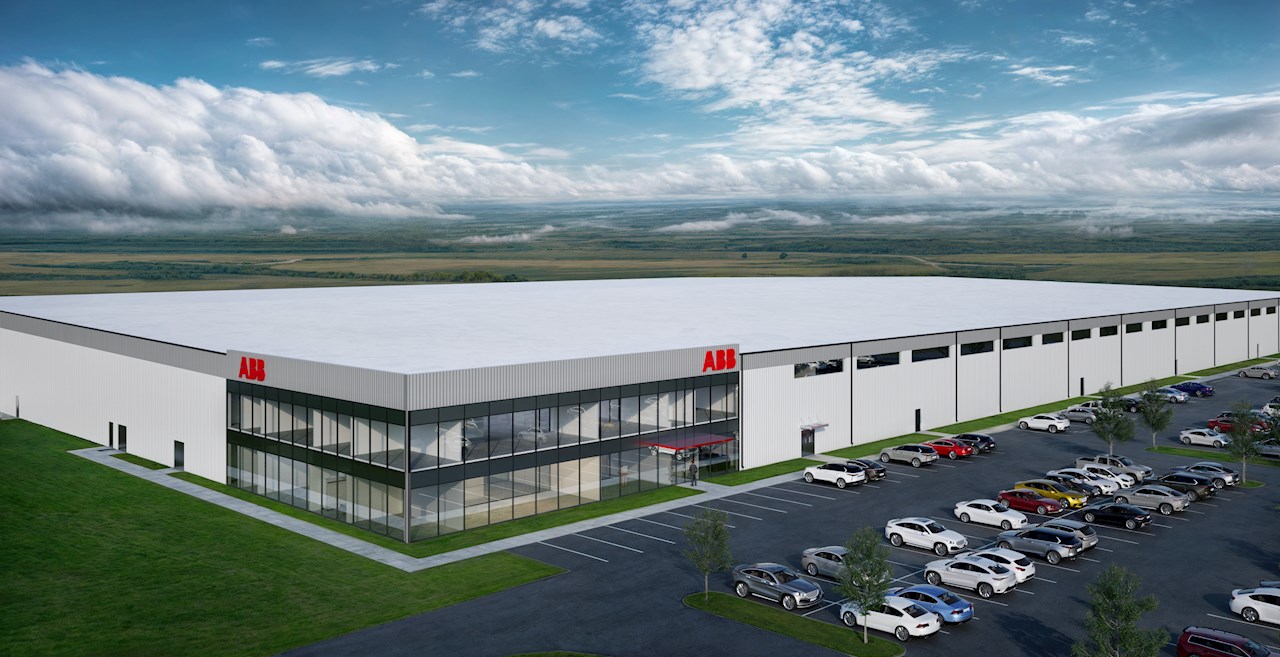
2025: ABB is accelerating growth in the U.S. with investments totaling $230 million to expand manufacturing and research and development to meet the rising demand in industries like data centers, utilities and grid modernization. The investments will create more than 400 jobs and increase production of advanced electrification technologies, including low-voltage products and cutting-edge Emax 3 circuit breakers. ABB’s local-for-local strategy is helping drive energy efficiency, resilience and innovation in its largest global market. It also builds on the company’s momentum from 2022 to 2024, when it invested approximately $500 million in U.S. operations, including a $100 million manufacturing facility and innovation lab in New Berlin, Wisconsin and a $40 million factory in Albuquerque, New Mexico.
Looking Ahead to the Next 100 Years
ABB’s recent $230 million investments in U.S. manufacturing and research and development builds a solid foundation for continued growth. These initiatives expand capacity to meet rising demand in rapidly developing sectors such as data centers, utilities and grid modernization, while creating hundreds of new jobs and sparking innovation. They also accelerate the transition to cleaner, more resilient energy systems.
As ABB’s largest market, the U.S. revenue was close to $9 billion in 2024, accounting for ~27% of the ABB Group total. With approximately 17,000 people across the U.S., ABB has nearly 40 manufacturing, distribution, and operational facilities across 20 states, including nine major R&D centers, and presence in all 50 states. Today, approximately 75-80% of the revenues ABB generates in the U.S. are from products manufactured in the U.S.
Our 100-Year Timeline celebrates ABB’s legacy in the U.S. Which moment stands out to you the most?


