
Opened in February 2025, CWIT was already handling around 100,000 TEU per month by August. According to CEO Munish Kanwar, this is well ahead of expectations.
"The new facility plays a critical role in serving the transshipment economies of scale associated with deep-sea container shipping, as well as accommodating India’s annual growth rate of over six percent. This makes it essential for regional businesses and east-west trade."
“CWIT is not just another container terminal; it's a strategic turning point for Colombo, Sri Lanka, and the region,” says Kanwar.
With a deep draft of 20 meters to accommodate even the largest container ships, facilities at CWIT are part of overall plans for Colombo to increase its capacity to 24 million TEUs by 2040. If proposals go ahead to develop ‘North Port’, ambitions could broaden to an increased capacity to 35 million TEU.
More immediate needs converted the CWIT project from a Build-Operate-Transfer agreement to first phase operations within three years – “record time” according to Kanwar. The “fastest ever commissioning phase”, between November 2024 and February 2025, brought 1.6 million TEUs of annual capacity on stream along 800 meters of berth.
Facilities will expand to a 3.2 million TEU capacity in phase 2 along 1,400 meters of quay, with commissioning due in December 2026 – three months ahead of schedule.

“CWIT is not just another container terminal; it's a strategic turning point for Colombo, Sri Lanka, and the region,” says Munish Kanwar, CEO of Colombo West International Terminal. Image credit - CWIT 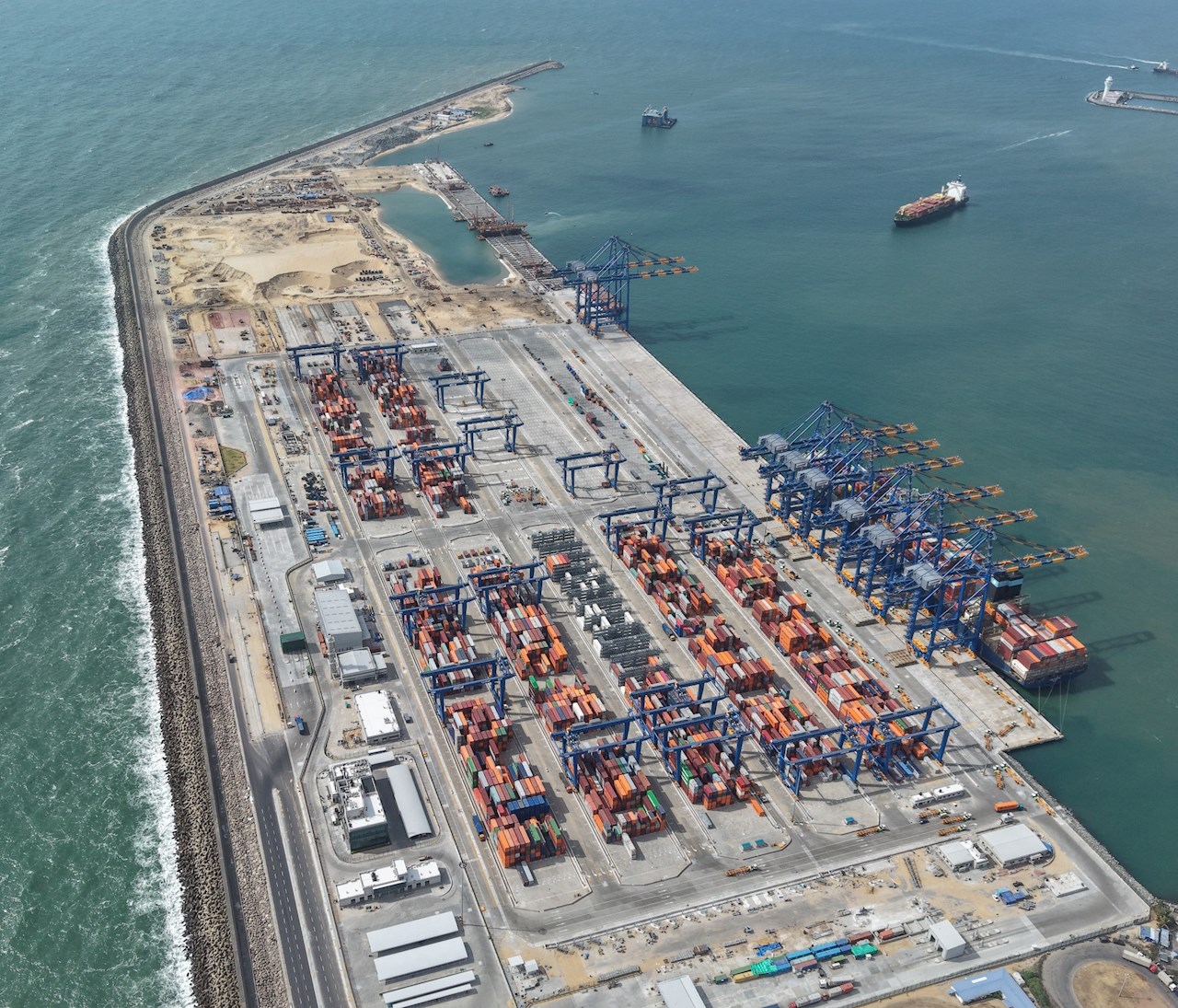
Facilities will expand to a 3.2 million TEU capacity in phase 2 along 1,400 meters of quay, with commissioning due in December 2026 – three months ahead of schedule. Image credit - CWIT
The speed reflects the need to add capacity to a port last benefiting from new facilities in 2014. Transshipment accounts for over 80 percent of Colombo’s container traffic, where throughput increased from 6.86 million TEUs in 2022 to 7.78 million TEUs last year.
“Transshipment involves a logistics cost for shipping lines and no extra revenue, so they don’t want to waste time waiting for their vessel or box due to port capacity issues,” comments Kanwar. “We had a bold vision to develop Sri Lanka’s first highly automated terminal to serve transshipment needs. Growing demand, increasing ship sizes and fresh competition meant CWIT needed new levels of efficiency, as well as capacity.”
Eight remotely controlled ship-to-shore cranes entered operation in phase 1 (reaching 14 in phase 2) and work with tractor-chassis combinations to transfer containers to/from 18 automated stacking cranes (30 in phase 2) in the storage yard.
We had a bold vision to develop Sri Lanka’s first highly automated terminal to serve transshipment needs. Growing demand, increasing ship sizes and fresh competition meant CWIT needed new levels of efficiency, as well as capacity.
In large part, Kanwar attributes CWIT’s readiness to perform from day one to automated solutions from ABB Ports. Consistency, as well as efficiency, is integral to the plans for growth. The first phase implementation at CWIT moved forward without any need for adjustments after trials, he says.
“Automation brings uniformity and predictability, which shipping lines need to optimize planning and especially appreciate when a new terminal is ramping up.”
Demonstrably high efficiency has drawn shipping lines to CWIT. The 153,000 TEU CWIT handled February-July shadowed Colombo’s overall 160,000 TEU growth in the first seven months of 2025, notes Kanwar.
This is the first time crane automation, as well as remote operation, has featured at a Sri Lankan port, although Kanwar points out that the Foreign Direct Investment, greenfield development is creating jobs, not replacing them.
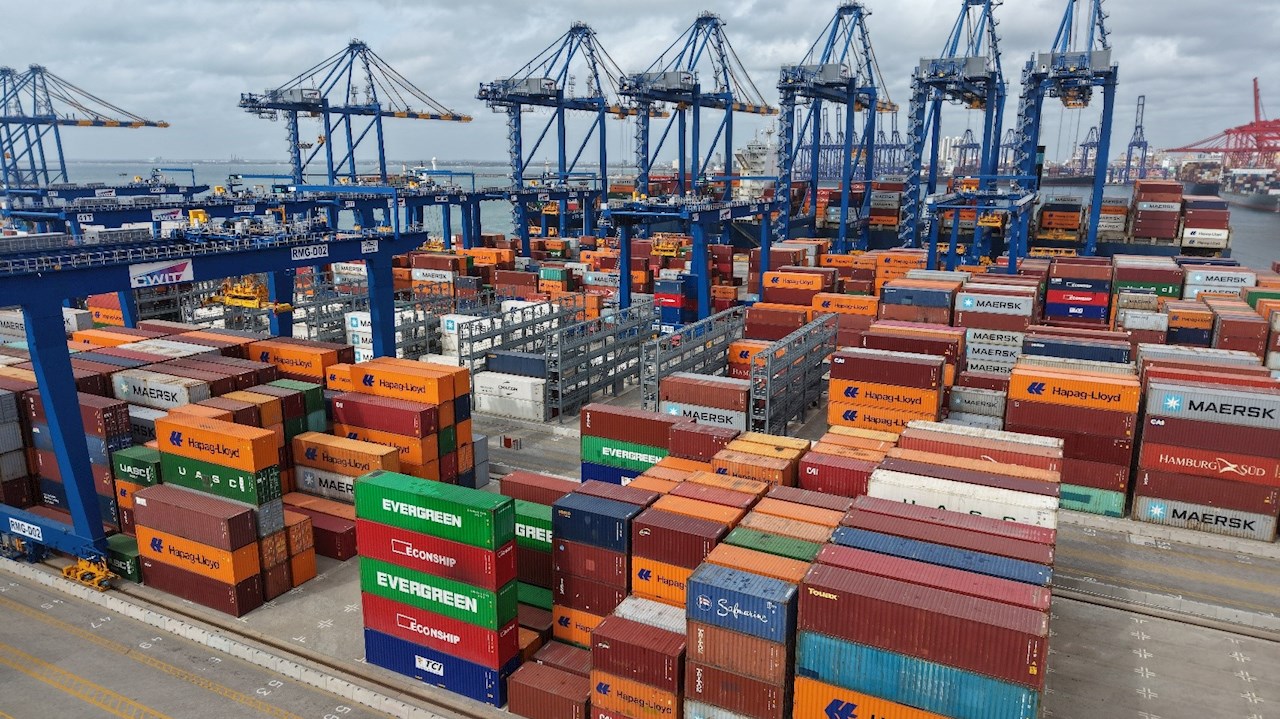
ABB is the master of its game on yard automation, and its collaborative approach was another key reason for its selection. We want a partner who is ready to experiment with us as CWIT becomes an innovation ground for automation – and even AI.
“Younger people prefer to work with colleagues in air-conditioned offices, and what strikes me when I enter the control room is the camaraderie and good-humored competition on moves per hour. We should also look at this as an opportunity. Now crane operatives could seek posts overseas, for example, while technology is gender neutral: 25 percent of our control center staff are women.”
Automation has plenty more to offer in enhancing efficiency, notably in the internal transfers needed in Colombo because transshipment containers landing at one terminal often need reloading elsewhere. For automated systems, ‘non-standardized’ external vehicles are harder to handle, with the process currently requiring control center intervention. However, work is ongoing with ABB to automate chassis recognition.
Automation brings uniformity and predictability, which shipping lines need to optimize planning and especially appreciate when a new terminal is ramping up.
“That will be a game-changer: by removing manual interventions, we will avoid multiple unnecessary stoppages. We could cut truck dwell time in half,” says Kanwar.

Younger people prefer to work with colleagues in air-conditioned offices, and what strikes me when I enter the control room is the camaraderie and good-humored competition on moves per hour.
“Automation at the vessel side is also a struggle today, but we intend to work with ABB to develop an automated crane cycle that accommodates the ship geometry, wave and current patterns, and the structure’s movement into the system,” Kanwar adds.
“ABB is the master of its game on yard automation, and its collaborative approach was another key reason for its selection. We want a partner who is ready to experiment with us as CWIT becomes an innovation ground for automation – and even AI.”


