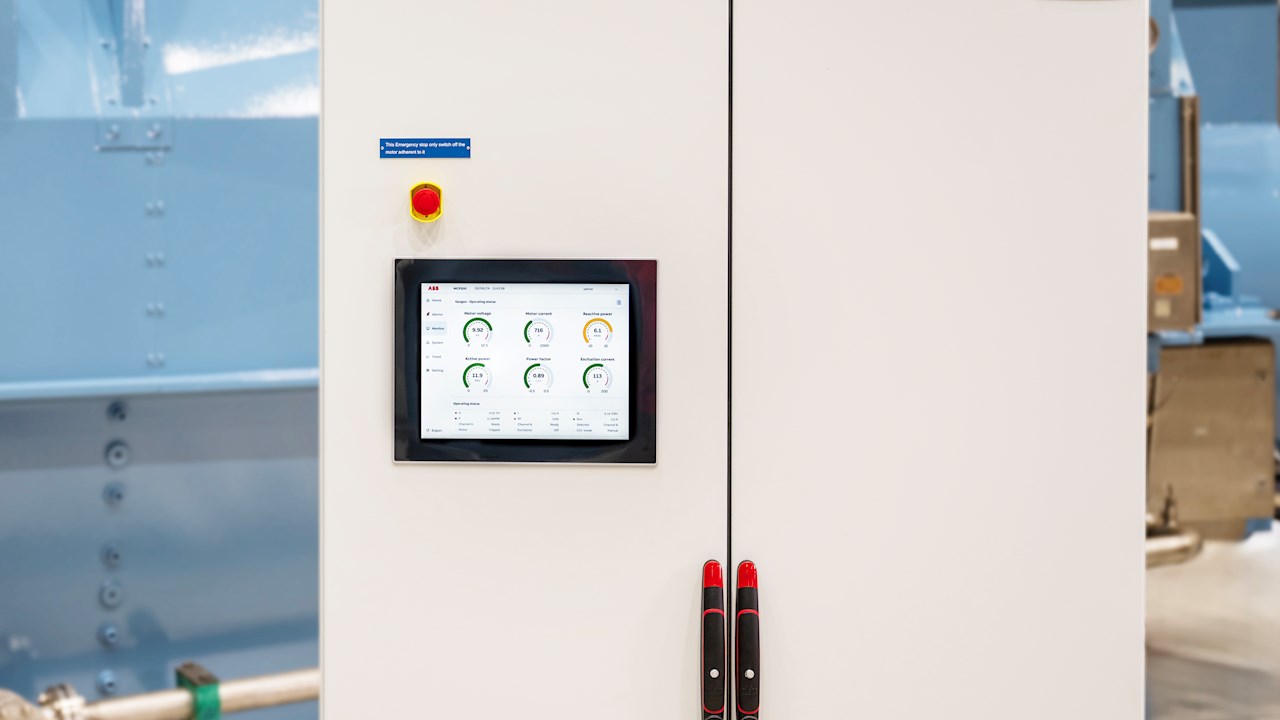
ABB Machines is a global supplier of large synchronous motors, generators and synchronous condensers — but that’s only part of the story. They also supply the world with the most efficient machines on the market. And alongside them, they offer excitation systems for efficient control and supervision.
The CP600 panel has been an established, scalable tool for on-site operation, particularly in motor applications. The early versions of the CP600 were largely designed for engineering performance, with limited attention to modern user experience. This wasn’t a problem for experienced engineers, but it was challenging for operators who used the panel only occasionally. In many cases, machines were operated remotely through SCADA systems, and the local panel would sit untouched for weeks.
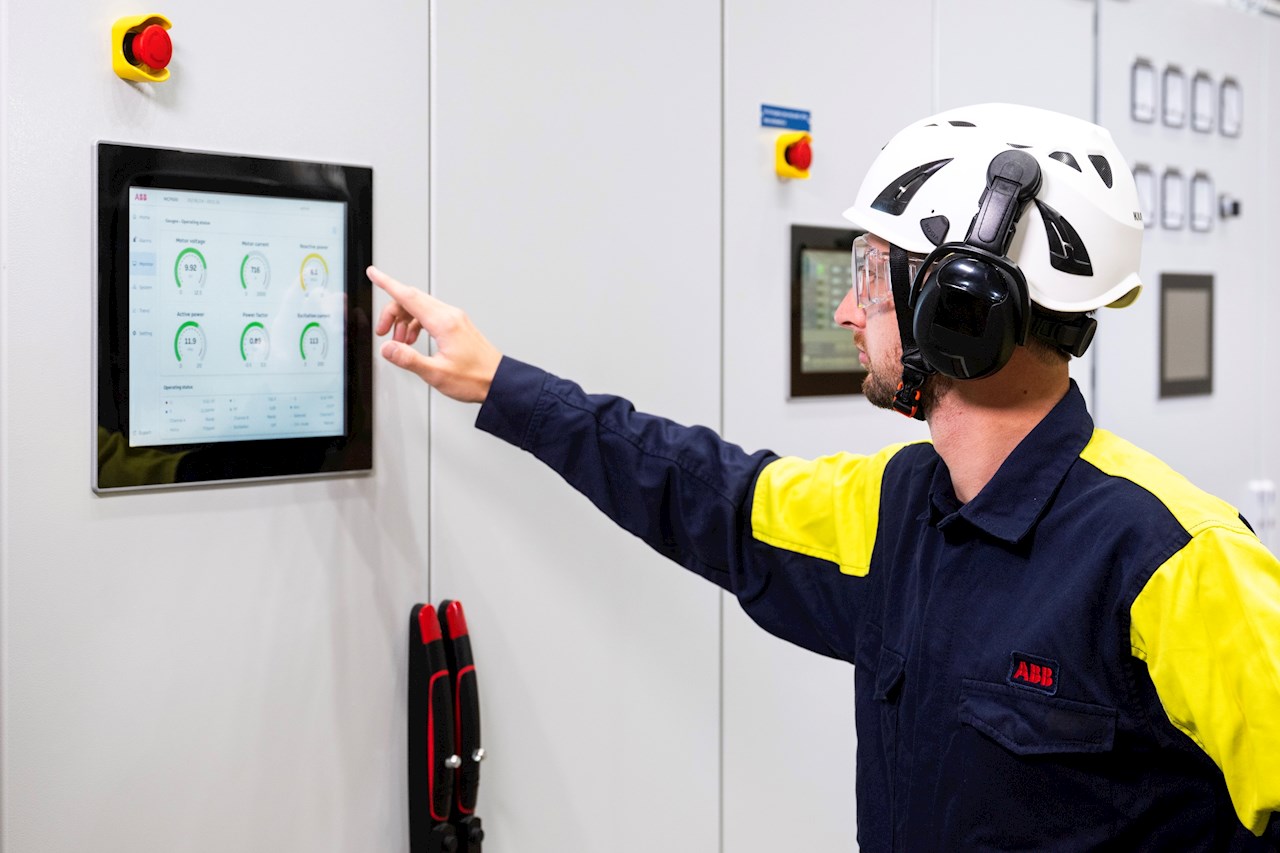
For operators working with synchronous machines, HMI isn't something they use every day. But when they do, it needs to work seamlessly. The HMI experience in CP600 control panels had the potential to be improved to make local operation simpler and more aligned with today’s usability expectations.
Erik Arnsten is a Product Manager Control System at ABB Machines in Västerås, Sweden. Erik joined ABB in 2001 and works with excitation systems for large synchronous machines. Over the years, ABB’s control cabinets, used in motors, generators, and synchronous condensers, have become essential to reliable machine operation. Control panels that accompany machines have grown in importance, especially for customers seeking local control functionality. Erik and his team have played a key role in the evolution and improvement of the CP600 control panel.
Engineering a new vision
To improve the HMI experience in CP600, ABB took a user-first approach. Interviews were conducted with internal commissioning teams, and design input came from the ABB User Experience group, which collaborates across ABB Motion, Robotics, and Electrification to create consistent UI standards. The redesign began with interviews and feedback sessions involving internal teams, commissioning engineers, and customers.
An external agency helped develop interactive prototypes in Figma. Figma is a web-based design tool that enables users to create, collaborate, and prototype user interfaces for websites and applications in real-time. Development involved user testing to capture real-time feedback and refine navigation, button clarity, and information hierarchy. Operators were filmed using the new interface in simulated environments, helping the team capture their real reactions and refine the user journey.
One major challenge was translating the Figma-based design into CP600’s Panel Builder. The CP600 has a widget-based programming environment, so the Figma application could not directly be deployed to the panel. The basis of the application could be realized based on the wide selection of widgets. To stay true to the design vision, ABB engineers created custom widgets using JavaScript, demonstrating the platform’s flexibility and ABB’s commitment to UX. This customization allowed the panel to reflect ABB’s design language while serving all customers, not just ABB applications.
Something new: a modern user experience
Thanks to its versatile redesign, the CP600 platform now has many features that improve user experience. Among the new benefits is the easy-to-use local panel, which makes on-site operation more intuitive, even for operators who typically use central control and don’t interact with the HMI every day. The modern user interface creates a smoother user experience and reduces the need for technical support.
Among the new and improved features is the better navigation of the panel. Before the navigation upgrade, operators used standard look-and-feel buttons throughout the entire project, even to change screens — but now, there is a much more defined button hierarchy. Navigation is more intuitive, thanks to a clear visual distinction between buttons used for navigating between screens and those that trigger functions.
Another benefit is the enhanced trend viewer, which allows users to filter specific data points. Operators can now isolate data trends, real-time or historical, for easier analysis, or isolate and analyze one parameter at a time for more granular insights. This enables both faster diagnostics and more effective monitoring of performance over time.
Better data management and cybersecurity are also among the important new features. The entire CP600 HMI portfolio provides high level of cybersecurity, and it features encrypted project files to prevent unauthorized access or manipulation. This ensures safe machine operation and maintenance. Up-to-date cybersecurity standards also prevent tampering, and support with compliance.
The new user interface includes the ability to download or upload configuration files securely. Operators can also capture screens and share the screenshots directly with technical support teams. In future updates, the PDF manual will be accessible directly from the panel, streamlining on-site troubleshooting.
In Erik’s opinion, perhaps the most important improvement is the alarm list enhancement. Whereas the old control panel screen cut off some of the alarm text when displaying it, it now enables text to scroll and give complete visibility of descriptions. Crucially, this reduces the risk of misinterpretation. Without cryptic abbreviations, operators can understand alarms faster and speed up recovery, without the need for technical support.
“The alarm list will make it easier to understand and act according to the alarm, meaning less need for technical support,” Erik says.
Rethinking the interface
While most machine operations are done remotely via SCADA systems connected to the AC500 PLC, local access through the CP600 remains vital for commissioning, maintenance, or troubleshooting. Usability matters, even when the panel is used infrequently. With the new HMI, operators who don’t use the panel daily can still navigate it easily. Upgrade kits offer customers a modern experience, even on existing machines.
These improvements enhance safety, reduce training time, and give operators confidence, even during rare on-site interventions. For customers upgrading existing systems, the modern interface makes the entire machine feel brand new. With these updates, ABB has brought modern design and intuitive control to the CP600, delivering better user experience without compromising industrial robustness. It’s another step in ABB’s mission to combine performance and simplicity in every solution.


