
Can you think of a place where electricity must never fail?
Hospitals everywhere depend on resilient and uninterrupted power infrastructure.
And yet: many face a perfect storm of challenges — aging electrical systems, surging demand and climate-related threats. There is also pressure to decarbonize, as the healthcare sector contributes roughly 5 percent of global greenhouse gas emissions. (1)
The reliability paradox
Equipment that has served reliably for 30 or 40 years must now support digital operating rooms, robotics and ever-expanding diagnostic technology — all of which draw more power and demand higher reliability.
Yet as hospitals embrace a more digital future, their carbon footprints are growing at an alarming rate. The challenge? How to reduce emissions without dimming a single lamp in the ICU.
Across Europe and beyond, hospital power distribution networks are approaching the limits of their original design, but modernization isn’t as simple as flipping a switch.
Hospitals can’t shut down for upgrades. Every replacement, every test, every cable pull must happen while operations continue — uninterrupted.
Resilience in practice: two snapshots
Hospitals are working to cut emissions, but patient safety remains the first and constant priority. That’s why many are turning to hybrid power solutions that combine clean electrification, automation and redundancy.
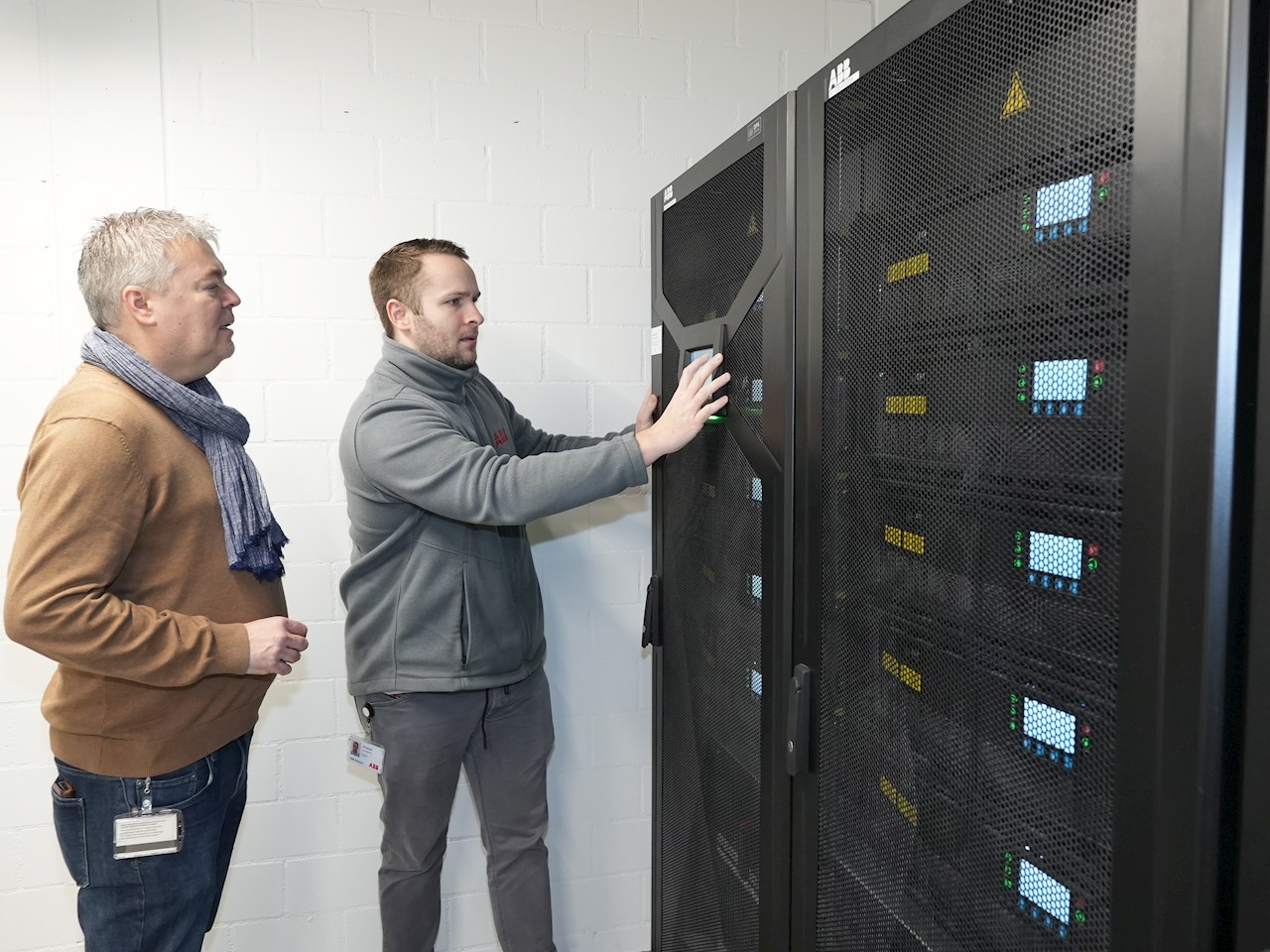
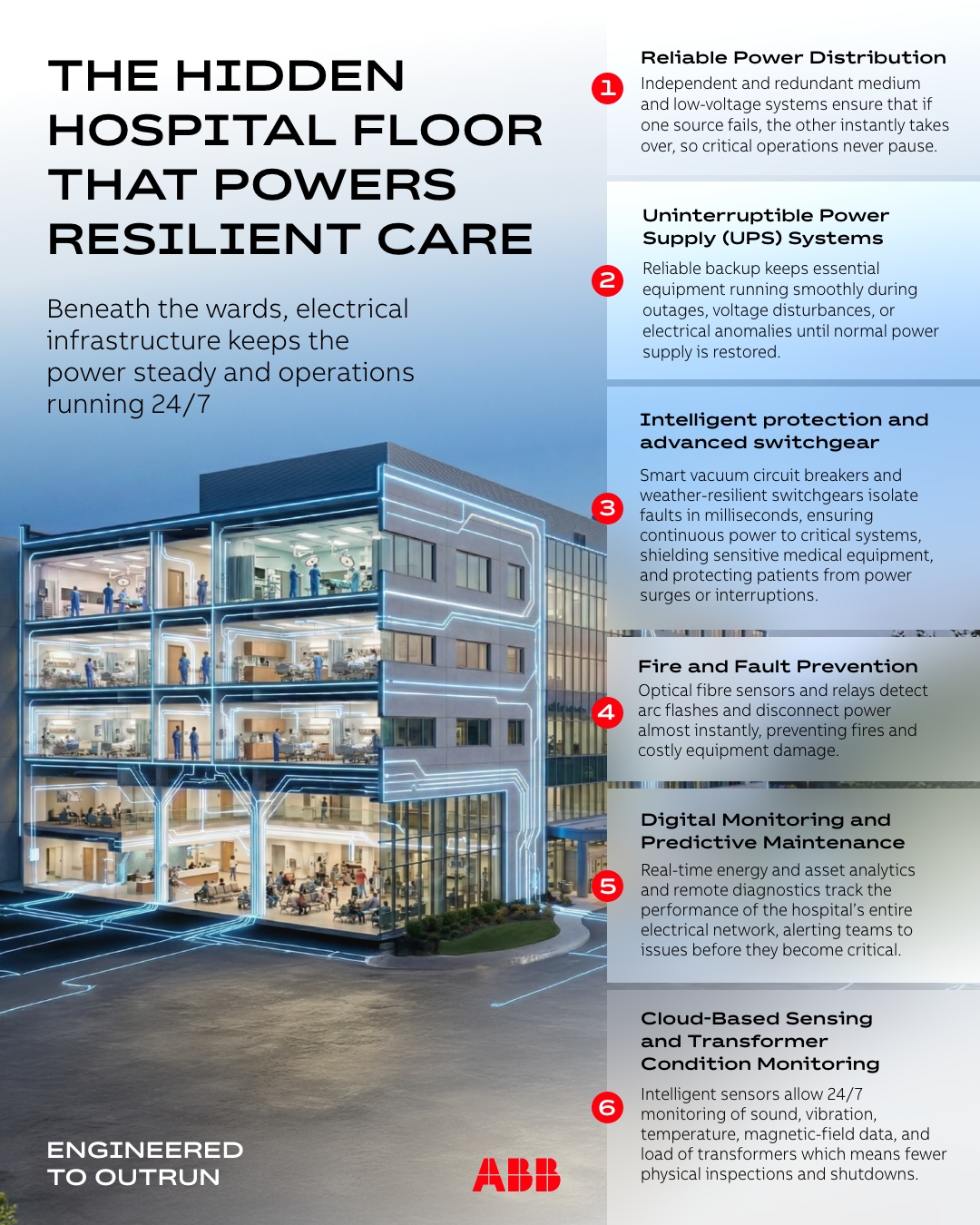
At Kantonsspital Baden (KSB) in Switzerland — a large regional hospital with around 400 beds, eight operating theatres, and roughly 1,700 births each year — that strategy takes shape in a brand new facility. ABB supplied the entire medium- and low-voltage distribution system and state-of-the-art UPS systems. These UPS units ensure the hospital remains powered for up to 20 minutes during a grid failure, providing a comfortable safety margin ahead of the automatic start of three generators within 15-30 seconds.
Lynn Erlinghagen, ABB’s project manager for the UPS at KSB, highlights another advantage:
“With an efficiency of 97.6 percent, it’s one of the most efficient UPS systems on the market.”
More than half a million patients are treated each year at the Meilahti Hospital Area, in Helsinki, where the electrical load rivals that of a small town. Supporting this output is a network of transformers, which require regular inspection and occasional shutdown – an almost impossible task in a hospital requiring 100 percent uptime to safeguard patients’ lives.
“We have transformers scattered across this massive site,” says Jari-Pekka Korhonen, Operations Manager for the hospital. “My team can’t physically be everywhere, so we needed to be able to monitor and supervise remotely.”
In less than an hour, the hospital installed and activated ABB’s cloud-based monitoring system, switching from on-site inspections to real-time oversight. The digital platform now gives Korhonen’s team access to live data on each transformer — from performance trends to early warnings — all visible in one dashboard. They can proactively plan maintenance, optimize resources and fix issues before they cause disruption.

Hospitals are changing: becoming more digital, more connected, more electrified. The resilience of their electrical systems is a form of care in itself—supporting the equipment, technology, and environments that clinical teams rely on to diagnose, treat, and monitor patients around the clock.
Most patients will never think about what powers their care — and that’s precisely as it should be.
Notes:
1: The role of the health care sector in climate change mitigation | Health Care Climate Action


