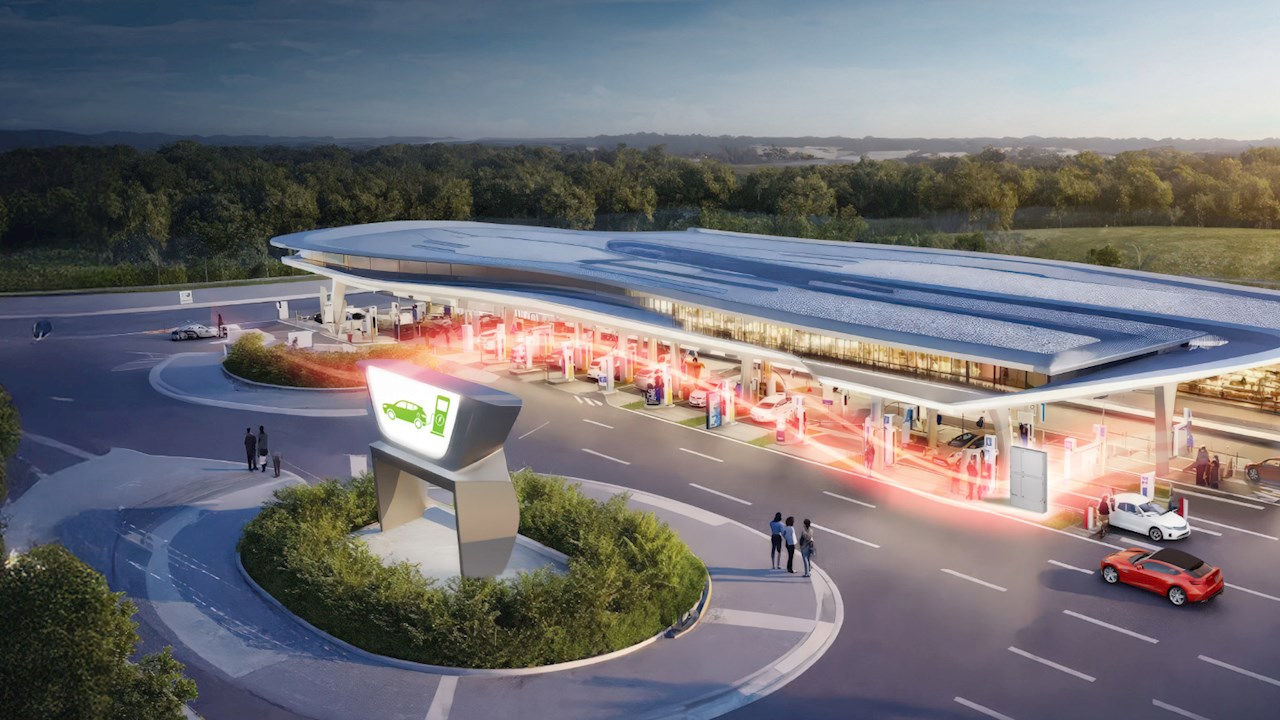
As electric mobility accelerates worldwide, businesses and infrastructure providers face new challenges in scaling reliable, efficient charging solutions. ABB’s latest eBook, ‘Reliable Power from Grid to Charge’, explores how organizations can navigate grid impact, optimize load management, and prepare for future demands.
In this Q&A, Giulia Giuffredi, Market Development Manager at ABB Electrification, shares insights on global EV trends, the role of dynamic load management, and ABB’s vision for building resilient, interoperable charging networks.
How can EV charging infrastructure keep pace with E-mobility growth?
Electric mobility is accelerating worldwide, driven by climate policies, technological advances, and growing consumer demand. By 2030, global EV electricity demand will increase by 830 TWh.
This shift is more than a change in vehicles—it’s a transformation of how energy is generated, distributed, and consumed. As adoption scales, new opportunities emerge for innovation across transportation and energy ecosystems.
What impact does EV growth have on the power grid?
The rise in EV adoption is reshaping energy demand patterns. As an increasing number of vehicles convert to electric power, the need for electricity—particularly for high-capacity DC fast charging—is rising, creating peak loads. However, these peaks vary by location and time. Designing systems to handle rare peak events can be costly and inefficient. Instead, smart planning and load management are essential to maintain grid stability and optimize infrastructure investment.
How does load management improve EV charging performance?
Load management ensures charging sites operate efficiently as demand grows. Without it, sites risk exceeding contractual power limits, incurring penalties or requiring costly grid upgrades.
Effective load management ensures:
- Continuity of operations even during peak demand
- Optimized energy distribution across multiple chargers
- Lower CAPEX and OPEX by avoiding unnecessary infrastructure redesign
ABB’s solutions like C-Kit and InSite SCU200 controllers offer both dynamic and static load management, allowing sites to prioritize business continuity, while addressing end-users charging needs.
What is ABB’s vision for the EV charging infrastructure segment?
At ABB, we’re engineered to help industries run leaner and cleaner, and that includes the fast-evolving world of electric mobility. Our aim is to empower every stakeholder to move forward with confidence, resilience, and impact. In practice, this means:
- Rapid deployment: Innovative, configurable solutions from grid to charger
- Interoperability: Seamless integration with backend platforms for payments and user experience
- Tailored offerings: Solutions for buildings, workplaces, fleets, highways, and destination charging
How can businesses future-proof their charging investments?
The key is flexibility. EV technology and user needs are evolving fast, so businesses should look for solutions that can scale without major redesigns. That means choosing modular hardware, integrating dynamic load management to keep energy costs under control, and ensuring systems work with different standards and platforms. Connectivity also matters—remote monitoring and software updates help keep infrastructure efficient over time. By planning for growth and interoperability now, businesses can avoid costly upgrades later and stay ready for what’s next.
Explore our eBook to learn how our solutions can help navigate EV infrastructure with confidence.

About the author

Giulia Giuffredi is a Market Development Manager at ABB Electrification, where she focuses on business strategy and innovation in the E-mobility Infrastructure and Microgrids sectors. She holds a Master’s degree in Management Engineering from the Polytechnic Institute of Turin, enriched by international study experiences at Eindhoven University of Technology in the Netherlands and Universidade de Coimbra in Portugal. Since joining ABB in 2019, she has held various roles in business strategy and innovation, contributing to the company’s growth in sustainable energy solutions.


