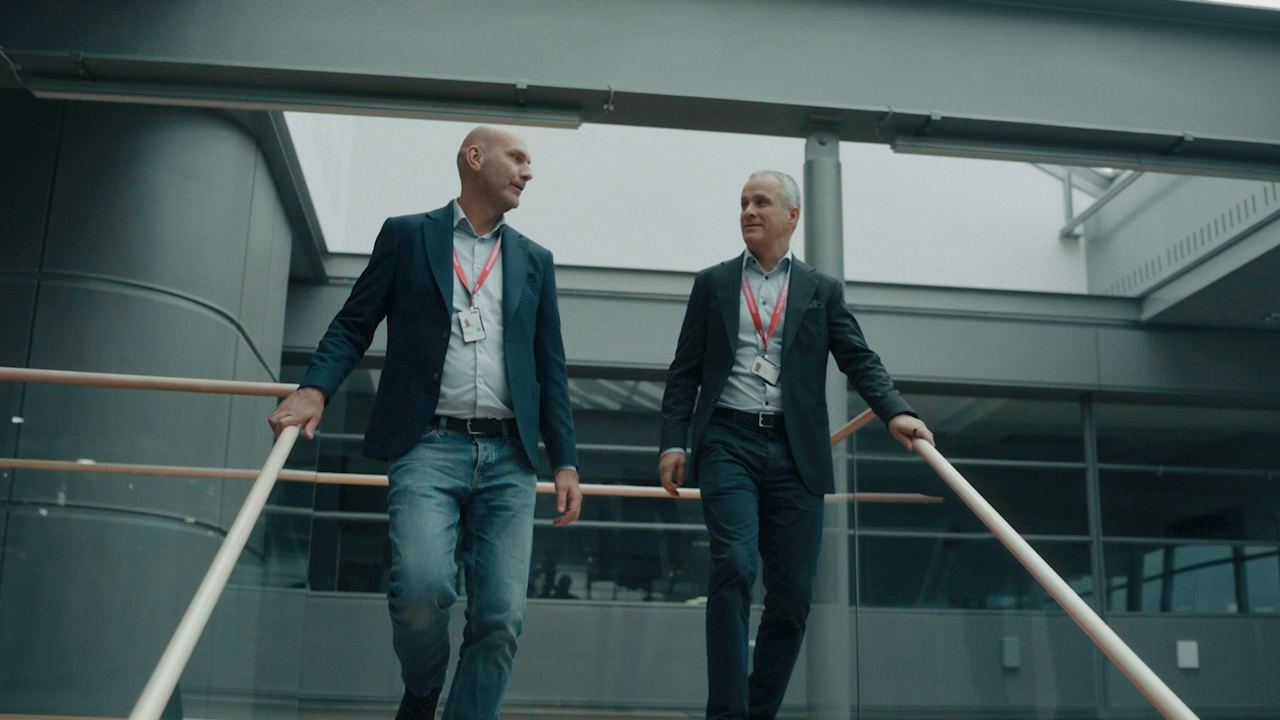
A transition is coming at the top of ABB’s Marine & Ports division, as Juha Koskela moves on to lead ABB’s Motion High Power Division and Rune Braastad takes the helm.
Well known to each other, the two executives are long-serving leaders at ABB – Koskela completing his M.Sc. in 1996, as he started his ABB career, and fellow electrical engineering graduate Braastad joining in 2001.
“We both started as ABB commissioning engineers working on drives,” observes Koskela.
Koskela was appointed Marine & Ports President in 2016, and the direct working relationship was formalized a year after when Braastad became HUB Division manager, for Marine & Ports US, responsible for leading the division’s operations in the United States. In 2021, Braastad was appointed Senior Vice President, Global Business Line Manager, Marine Systems.
In conversation in the run up to the handover, both executives place an understandable emphasis on continuity for a division which has never performed better.
Part of ABB’s Process Automation business area, ABB’s Marine & Ports division financials are not reported separately. However, half-year Group results note “highest on record” divisional order intake in Q2, and “the strongest customer activity linked to the segments of marine and port automation & electrification” for the first six months of 2025.
“Given the performance levels, I approach the new role with humility, but also with the motivation to continue building on what has been achieved over the last decade,” says Braastad.
Empowering the maritime business
ABB’s Marine & Ports division has achieved transformative milestones over the past 10 years, driving the maritime industry toward electrification, automation and digitalization. Some major achievements include the success of the Azipod® propulsion business with new product launches such as the Azipod® M series for ferries and RoPax vessels. ABB has also significantly expanded its marine service network to 28 locations. The expansion facilitated local support to our customers in addition to offering remote diagnostics, and predictive maintenance through the ABB Ability™ Remote Diagnostic System.

“It is challenging, or even impossible, to name just a couple of key contributors to the overall business success,” Koskela notes. “Our growth has been driven by a wide range of vessel segments and geographic markets, with our solutions making a far-reaching impact on the industry.
“Advancements in automated vessel control solutions and collaborations with shipbuilders and classification societies have led to pilot projects in autonomous shipping, including remote-controlled tugboats and ferries,” adds Braastad.
“Autonomous technologies such as ABB Ability™ Marine Pilot solutions complement human strengths, offering the crew better situational awareness, easier, safer and more efficient operations and predictable, consistent control.”
Shore power installations, e.g. in the Port of Toulon in France and Portsmouth International Port in the UK. Our shore-to-ship power technology has already been integrated into multiple ports around the world to drive decarbonization, improving local air quality and reducing noise pollution.
“We have also played a pivotal role in advancing hybrid and fully electric vessels by delivering integrated propulsion, automation, and energy management systems that enhance operational efficiency and help to reduce emissions. These systems are used in vessels like P&O Pioneer and P&O Liberte, the world’s largest double-ended ferries, which operate on Europe’s busiest short sea route between Dover and Calais,” Koskela adds.
The success is all the more remarkable considering for example the downturn of the offshore oil & gas shipbuilding market that halted new ship construction early in Koskela’s tenure. ABB also navigated the challenges of COVID-19, a period during which the global cruise industry was brought to a near standstill which had an impact also on service business.
“We recovered and we came back stronger,” says Koskela, with justifiable pride.
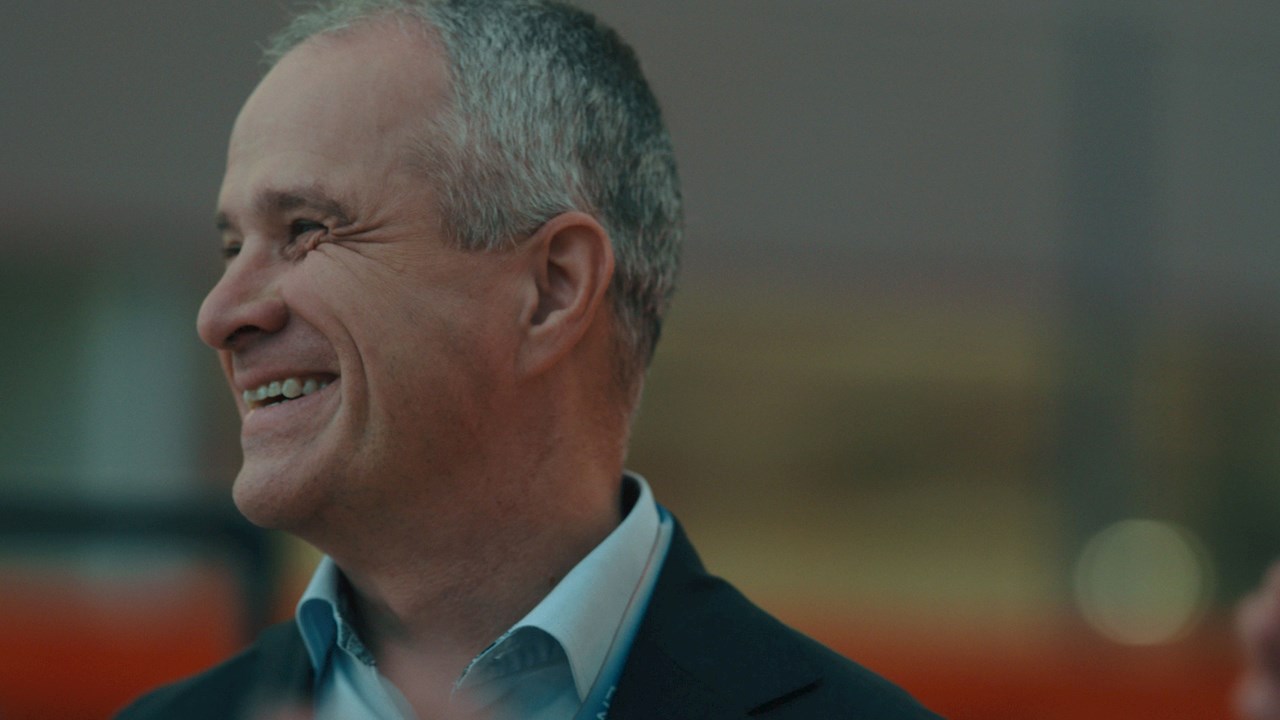
Koskela points out that 10 years ago the division was dependent only on few segments – cruise, icebreakers, offshore oil & gas, and crane automation. Since then, the business has become much more diversified with a good foothold in several new segments, such as the recent expansion into naval vessels, cargo shipping, and port electrification. For example, notable contributions have come from the breakthrough in cargo ship segment with permanent magnet shaft generator orders and greater uptake of the Onboard DC Grid™ modular power system.
Upgrades to high-tech container terminals in Europe, a key role in greenfield and expanded port developments in Asia and Latin America, and global uptake of new automated handling solutions from ABB showcase its ports business has also developed significantly during the last years. Efficiencies enabled by ABB port technologies are often integral to terminal operator ambitions. For example, Colombo West International Terminal, opened in 2025 as Sri Lanka’s first highly automated terminal, complete with ABB crane automation systems. Optical character recognition (OCR) solutions gain ground in new geographies, and have been taken to next level by advanced AI, which has become an integral part of ABB’s offering for ports.
Koskela says the steps that “empowered the maritime business to reinvent itself” over the last five years are of great consequence.
The transformation of Marine & Ports from a division held within matrix reporting hierarchy into one with fully accountable global business lines has proved liberating for the division. Aligned with Group strategy, but given special impetus by Koskela, the set up enables faster decision-making and greater market responsiveness. It is also key to elevating the level on which ABB engages in maritime as a whole.
“In digitalization, ABB Marine & Ports first focused on its own installed-base by providing remote support globally,” Braastad explains. “Now we have expanded to a wider scope and market with digital offering in vessel and voyage performance.”
Digital elevation
Broader engagement with ship owners, for example, followed a conscious decision to use ABB’s experience to optimize vessel performance overall, including voyage performance.
Tasked with adding to organic growth through acquisition, in 2024 ABB acquired the ‘DTN Shipping’ weather routing business, substantially expanding its maritime software portfolio and establishing itself as one of the market leaders in ship route optimization1.
ABB has also collaborated with CMA CGM Group on a groundbreaking container ship safety solution2 to predict parametric rolling, and formalized the OVERSEA collaboration, a combined digital solution and ‘fleet-support-center-as-a-service’ offering as a joint venture with Wallenius Marine3.
Braastad takes the helm for each of these initiatives at a key moment. Going forward, he will ensure they move toward commercialization and scaling up effectively.
ABB and Wallenius Marine have already established the first OVERSEA™ Fleet Support Center in Stockholm, serving currently around 50 ships,” says Braastad. “Now it's a matter of growing that to hundreds of vessels.”
ABB will also continue to invest in core areas for innovation – as the launch of the ABB Dynafin™ propulsion concept in 2023, last year’s addition of Compact Onboard DC Grid™ and work to apply DC technology to larger vessel segments show. “And we constantly seek opportunities and to identify ‘white spots’ in our technology portfolio,” Braastad adds.
But during the pre-handover discussion, the two ABB executives also seek opportunities to steer the conversation back to the different position the division occupies in the maritime space a decade after Koskela’s appointment.
For Koskela and Braastad, retaining sight of the big picture of an organization which connects with stakeholders globally across industry, commerce, government, research, academia and regulation is vital.
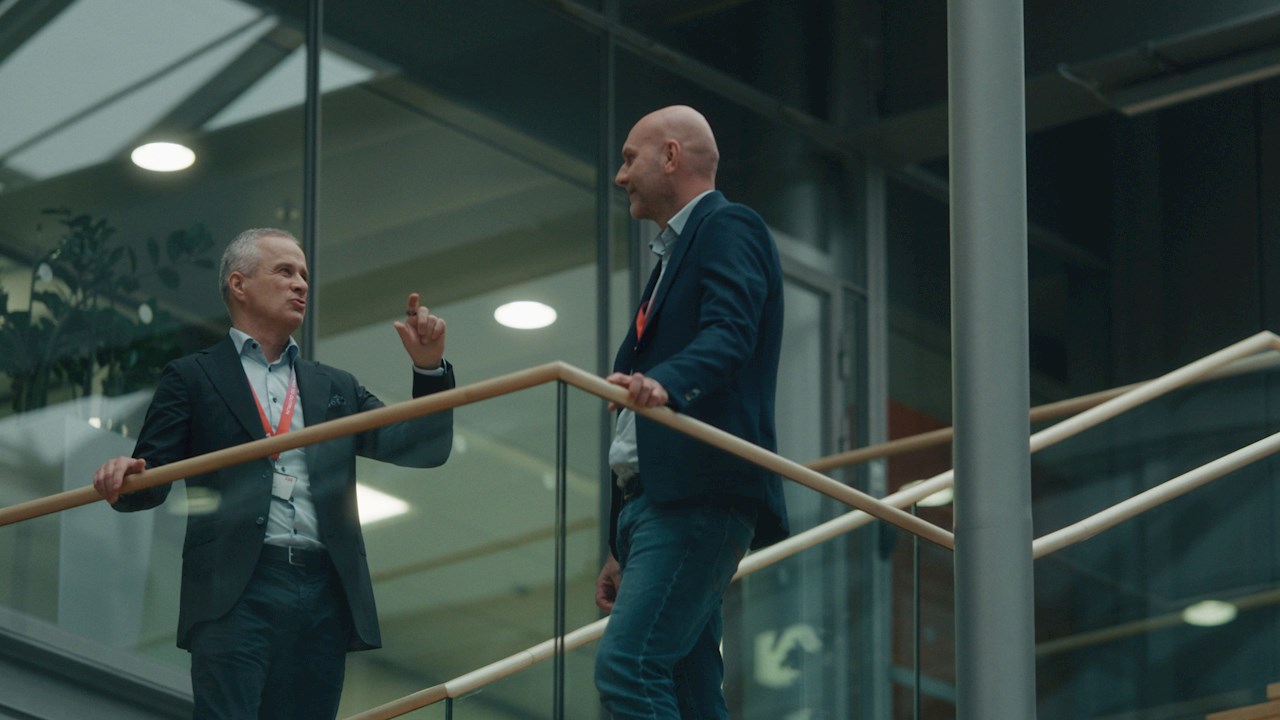
This is the context to view ABB’s approach to the International Maritime Organization’s postponing action to finalize a mandatory Net Zero Framework.
“We acknowledge the significance of the postponement for many stakeholders in shipping, but it does not diminish ABB’s focus on the benefits of improved energy efficiency,” Koskela observes.
“Our relationships with maritime regulators remain an area of focus, and we will continue to engage on innovations that run ahead of the regulations, on the insights we can offer on harmonizing standards and effective rule-making,” Braastad adds.
Future-proofing
ABB’s fuel-agnostic approach centers around modular, flexible power architectures that allow shipowners to choose or switch between energy sources without overhauling the entire system.
“Owners build ships to last 20, 30 or 40 years,” adds Braastad. “They are likely to choose future-proof solutions to accommodate changing energy sources, and the electrical backbone will be essential for integration – whether it’s for dual fuel engines, batteries, fuel cells, nuclear or something else.”
ABB’s strategic collaboration with shipyards showcases the company’s critical part in systems design, engineering and installation, but also reinforces its key role in enabling the efficiency-led shift to hybrid propulsion, diesel-electric setups, and shaft generators.
“As a system integrator, we’re also a main player in shore power, and in the adoption of shipboard batteries as an energy optimization technology,” says Braastad. “I also look forward to learning more about the Ports business, which has interesting and advanced technologies and where ABB has a leading position in many areas.”
“While we have led the way in integrating hybrid-electric propulsion on cruise ships, ferries, offshore vessels and container ships, some other segments have traditionally been more conservative. However, they will also meet the pressure to decarbonize, and, the Emissions Trading Scheme, EU's joint tool to reduce climate emissions, will have an impact on the priorities in due course.
“This market is on the move and ABB Marine & Ports has multiple points of contact with its stakeholders to make sure that it uses energy with the utmost efficiency.”
At this transition point, both executives express confidence in the division’s future, citing a solid foundation and continuity that support sustained growth.
“I believe we have a very similar approach and leadership philosophy when it comes to people – making them accountable and empowering them. Collaboration is something we both have been driving so that will not change,” says Koskela.
Braastad concludes: “Our strategic focus remains firmly on advancing technologies that enable automation, electrification, and – increasingly – energy efficiency and decarbonization. We are well positioned and committed to making the maritime industry leaner and cleaner.”
References:
[1] https://new.abb.com/news/detail/116174/abb-completes-acquisition-of-dtn-weather-routing-business-for-shipping
[2] https://new.abb.com/news/detail/124338/cma-cgm-and-abb-collaborate-on-parametric-roll-algorithm-to-enhance-ship-safety
[3] https://new.abb.com/news/detail/128589/abb-and-wallenius-marine-establish-oversea-joint-venture


