Introduction
As part of their climate protection strategy, Heidelberg’s municipal utilities (Stadtwerke Heidelberg) are committed to building a future-proof heat supply and have installed an innovative combined heat-and-power system at the Pfaffengrund Energy Park. Ultra-low harmonic drives from ABB play an important role in this project. They control the air-to-water heat pumps and other plant components within the system and ensure that no issues arise from electrical harmonic distortion.
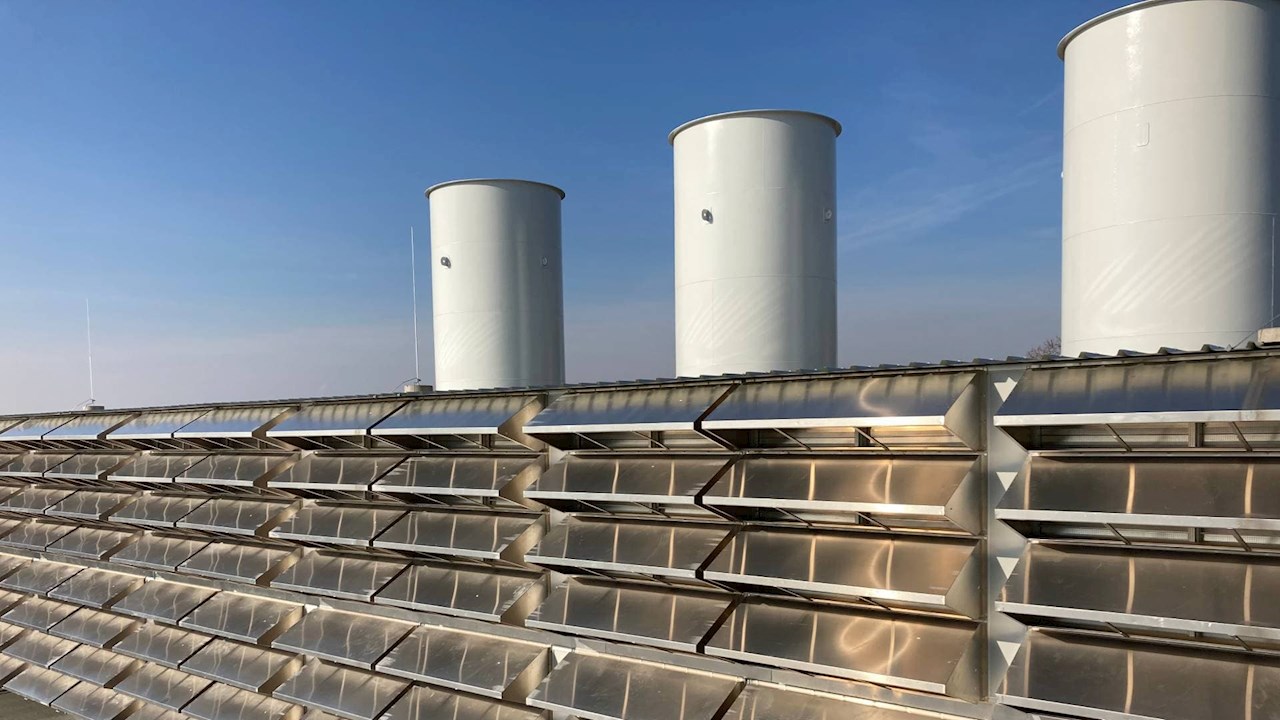
The City of Heidelberg has set the goal of becoming climate neutral. One of the most important and challenging sectors in achieving this is heat supply. Since 2011, Stadtwerke Heidelberg have been working to expand green district heating. A key milestone is the innovative combined heat-and-power system – iKWK – in their Pfaffengrund Energy Park, which consists of three development stages and was officially inaugurated in July 2023.
In the iKWK system, a combined heat-and-power (CHP) plant is linked with an innovative renewable heat source and an electric heat generator to form an integrated system. The Heidelberg iKWK consists of:
- Three CHP units with a total electrical output of 6,000 kW and annual generation of 21,000 MWh of heat and 21,000 MWh of electricity
- Three large air-to-water heat pumps as renewable heat generators with a total output of 4,500 kW and a combined heat generation of 7,800 MWh
- A power-to-heat unit serving as an electric heat generator to supplement the other heat sources, with an output of more than 1,800 kW
EEB Enerko GmbH from Aldenhoven, North Rhine–Westphalia, participated in the project as the planner for the heat pump system, the CHP units, and the electric boiler. Ben Kochs, an electrical engineering planner at Enerko, was responsible in Heidelberg for the electrical integration of the power and heat generation systems. He highlights the innovative aspect of the concept: “This is not just a conventional CHP plant. Together with the heat pump system and the electric boiler, all load cases can be covered. Thanks to the intelligent interconnection of the various heat generators, the iKWK system can respond flexibly to fluctuations in the electricity grid and help stabilize it.”
In Heidelberg, the renewable heat source is ambient air: the three large air-to-water heat pumps extract heat from the outside air and transfer it to water. Each pump circulates around 500,000 cubic meters of air per hour. As low-temperature systems, they can extract heat even from cold air. In Stadtwerke Heidelberg’s operational planning, the heat pumps are primarily intended for use during the transitional seasons between summer and winter.
Ultra-low harmonic drives for the heat pump system
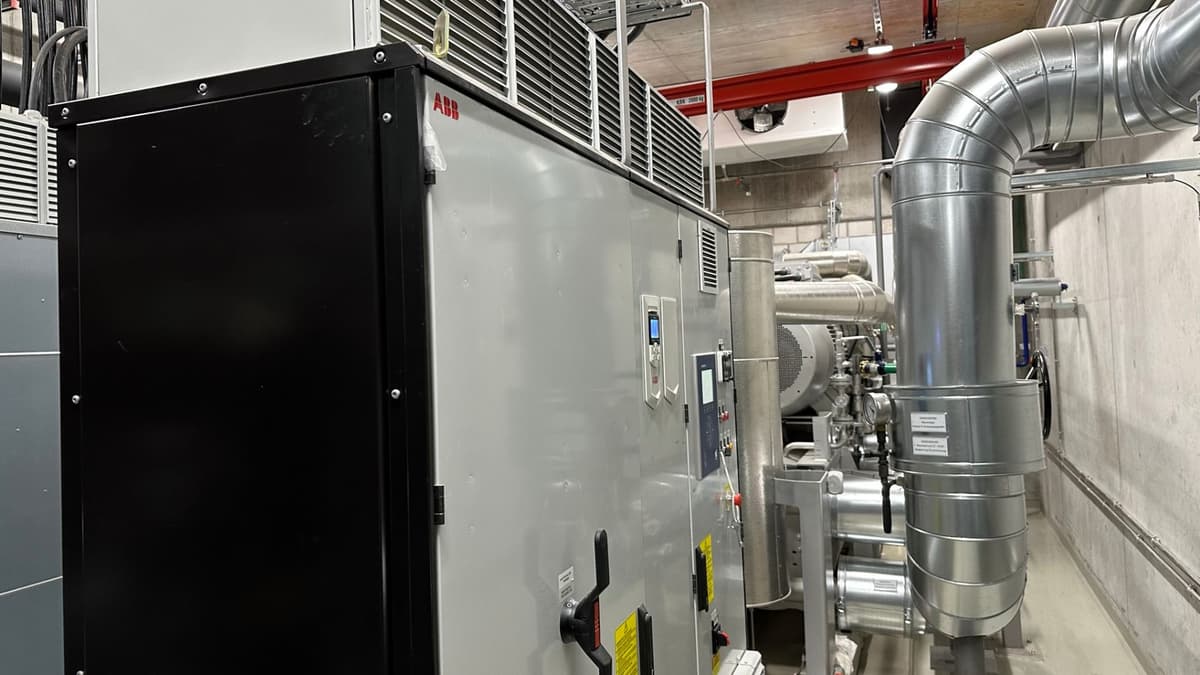
Twenty two ABB ultra-low harmonic drives control the motors of various components in the air-to-water heat pump system.
Marco Unger, project engineer for heat transformation at Stadtwerke Heidelberg, explains: “For several years now, we have been using ABB ultra-low harmonic drives for larger frequency converters in this project, and we also specify them in our tenders.”
The equipment used includes ACS880-37 cabinet-built units and ACS880-31 single drives for cabinet integration.
“For us, the key criteria for frequency converters are functionality, durability, and longevity. We frequently use ABB drives in Stadtwerke Heidelberg facilities,” he adds.
Thomas Lösch, head of maintenance for district heating systems and responsible for electrical engineering at Stadtwerke Heidelberg, has many years of experience with ABB variable speed drives. In addition to their ease of use, he praises ABB’s service:
“Because ABB is located nearby, we have good access to technicians when problems occur.”
Output ratings from 4 kW to 355 kW
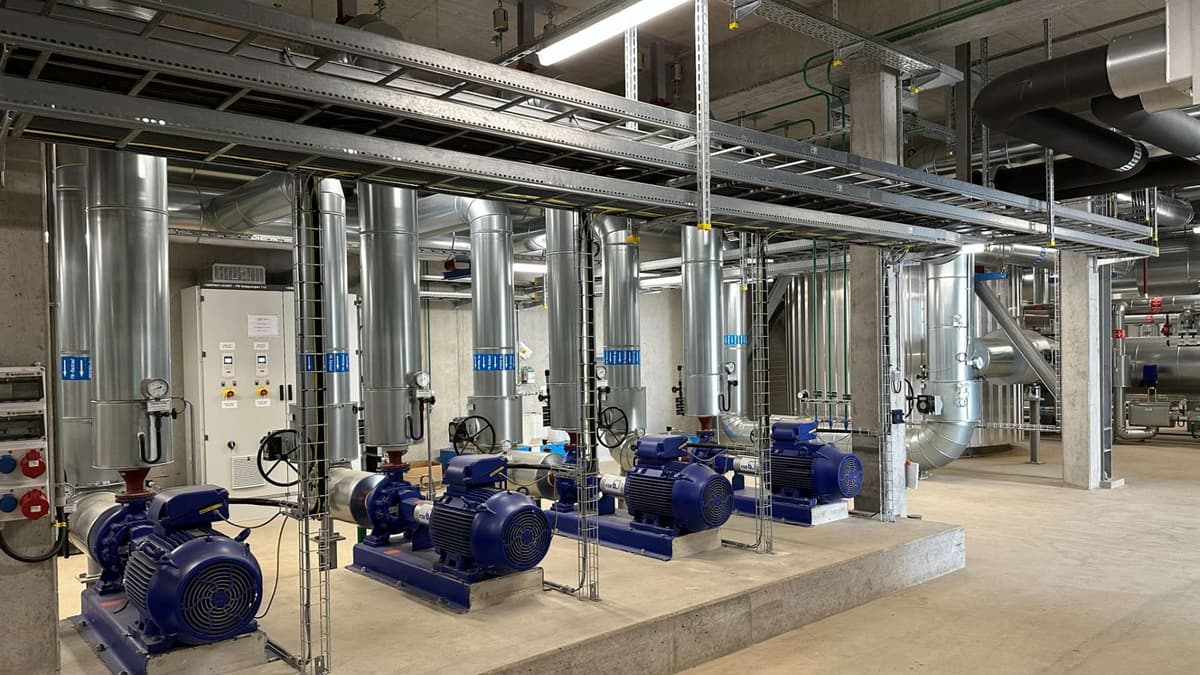
Four ACS880-31 drives, each rated at 45 kW, regulate the network pumps that transport the generated heat into Stadtwerke Heidelberg’s district heating grid.
Twelve ACS880-31 units with outputs between 4 and 15 kW control the hot-water circuit pumps, the brine circuit pump, and other applications.
The three air-to-water heat pumps are a special focus of this installation, as they are the first of their kind and currently the most powerful in Germany. The ventilation setup required for this system was developed specifically for the project and is unique. Each heat pump is paired with two ACS880-37 units rated 250 kW and 355 kW to enable variable-speed control of the heat pump’s two stages.
Keeping harmonic levels low
The ABB drives ensure that no harmonic-related problems occur in the applications. Ultra-low harmonic drives reduce electrical harmonics to below 3% without additional components such as external filters or special equipment. They feature an active front end and an integrated harmonic filter.
Marco Unger explains why ultra-low harmonic drives are essential in this system:
“The heat pump installation includes 180 EC fans – 60 per heat pump – that draw in outside air and push it through the air cooler. This alone generates a harmonic load that should not be increased further. That is the task of the ultra-low harmonic drives in the other applications. We have had very good experience with ABB devices in our district heating storage system, which also uses large pumps. In addition, we operate our own medium-voltage network at the Pfaffengrund Energy Park and want to keep network disturbances at the grid connection point as low as possible.”
About Stadtwerke Heidelberg (Heidelberg’s municipal utilities)
Stadtwerke Heidelberg supply Heidelberg and neighboring partner municipalities reliably with electricity, gas, district heating, drinking water, street lighting, and broadband networks. They also operate the city’s indoor and outdoor swimming pools and parking garages, and – on behalf of the city – the Heidelberg mountain railways. Additionally, they handle organizational and financial responsibilities for public transportation in Heidelberg. As a 100% municipally owned company, Stadtwerke Heidelberg are one of the city’s most important partners in fulfilling Heidelberg’s ambitious climate-neutrality goals.


