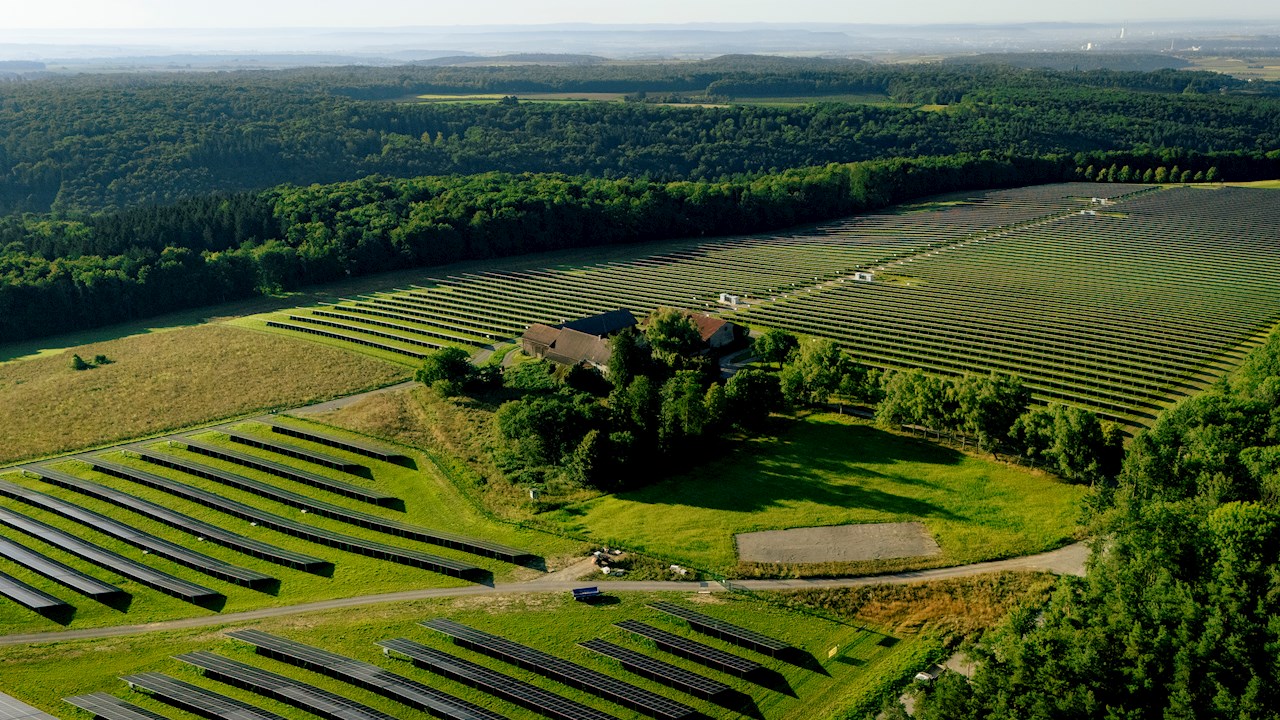
Powering Gundelsheim’s solar ambitions
Germany’s energy transition is driven by ambitious national targets, including achieving net greenhouse gas neutrality by 2045 and transforming the power sector to deliver 80 percent renewable electricity by 2030 and 100 percent by 2035. These goals are reshaping the grid, with utilities racing to integrate renewable sources while maintaining reliability and compliance. For EnBW Energie Baden-Württemberg AG, one of Germany’s largest integrated energy companies, this transformation is more than a mandate - it is a mission. The company aims to achieve net zero by 2040 and is investing heavily in renewable energy like solar and wind, and hydrogen-ready gas-fired power plants.
In July 2025, EnBW commissioned the Gundelsheim solar park in the Heilbronn district. Covering 64 hectares, with 105,000 photovoltaic modules generating approximately 58 million kilowatt-hours annually – enough to power around 22,000 households and cut nearly 54,700 metric tons of CO₂e each year. Gundelsheim isn’t just a solar park - it‘s the first stage of a hybrid energy park combining solar, wind, and battery storage to balance fluctuations and optimize grid feed-in.
The challenge: high output, local compliance
To connect Gundelsheim’s solar power to the grid, EnBW needed a solution capable of delivering a high output of 7,000 kVA per Skid Unit while meeting strict German regulations, including water protection requirements. The customer also sought a provider that could manage both project execution and service delivery locally.
ABB’s solution: Secondary Skid Unit
ABB responded with nine Secondary Skid Units (SSU 7000), a complete solution designed for solar applications. Each unit transforms power from 0.8 kV to 30 kV and connects up to 40 string inverters to a distribution transformer. The SSUs integrate ABB’s SafePlus switchgear equipped with a Relion® protection relay (REF615), ensuring reliable performance and real-time visibility. Communication with both the high-voltage substation and EnBW’s control center enables remote monitoring and control.
Installed in Germany for the first time, these SSUs posted an attractive alternative to conventional transformer stations, reducing the need of secondary switchgear (Ring Main Units) by 50 to 75 percent compared to a park layout with conventional transformer stations.
ABB’s team of German experts managed installation and commissioning, ensuring compliance with local standards and meeting EnBW’s planned commissioning date.
"ABB’s SSU solution allowed us to optimize costs and resources while meeting all regulatory requirements. Their local expertise and project management were key to delivering on time and with confidence” said Max Schneider, Project Manager Photovoltaic Implementation, EnBW.
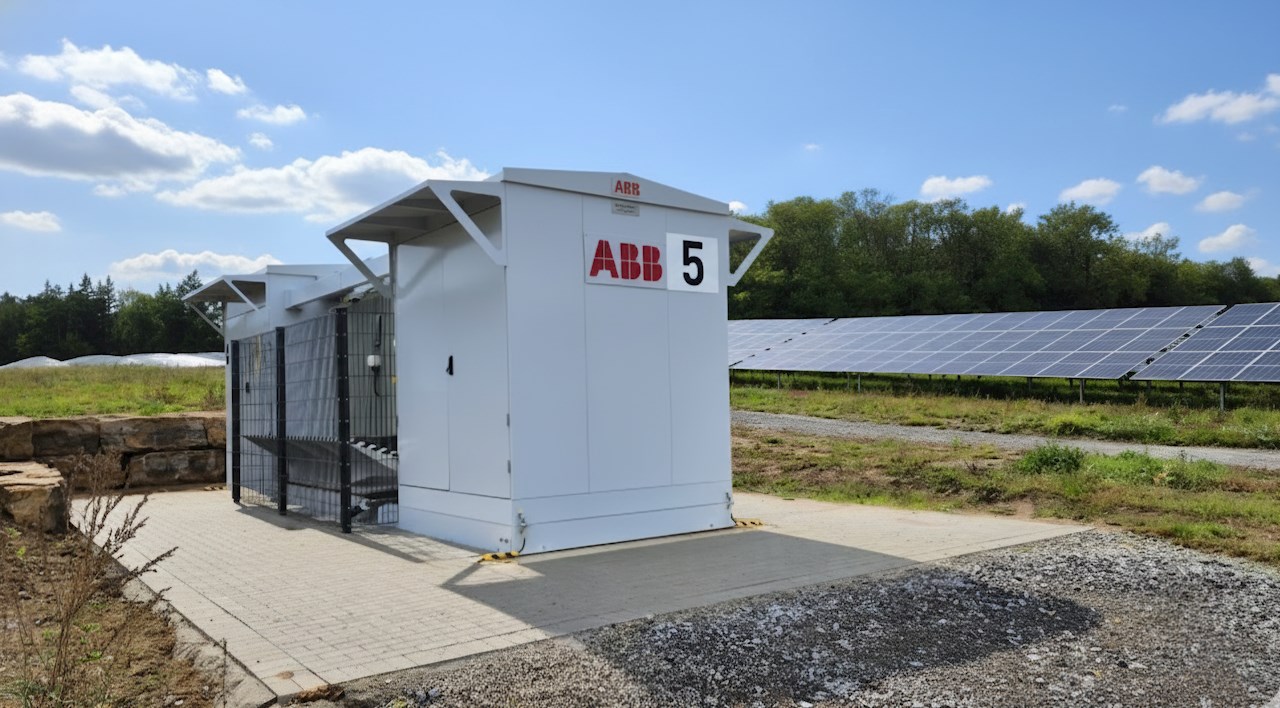
Secondardy skid unit (SSU 7000) at EnBW's solar park in Gundelsheim. 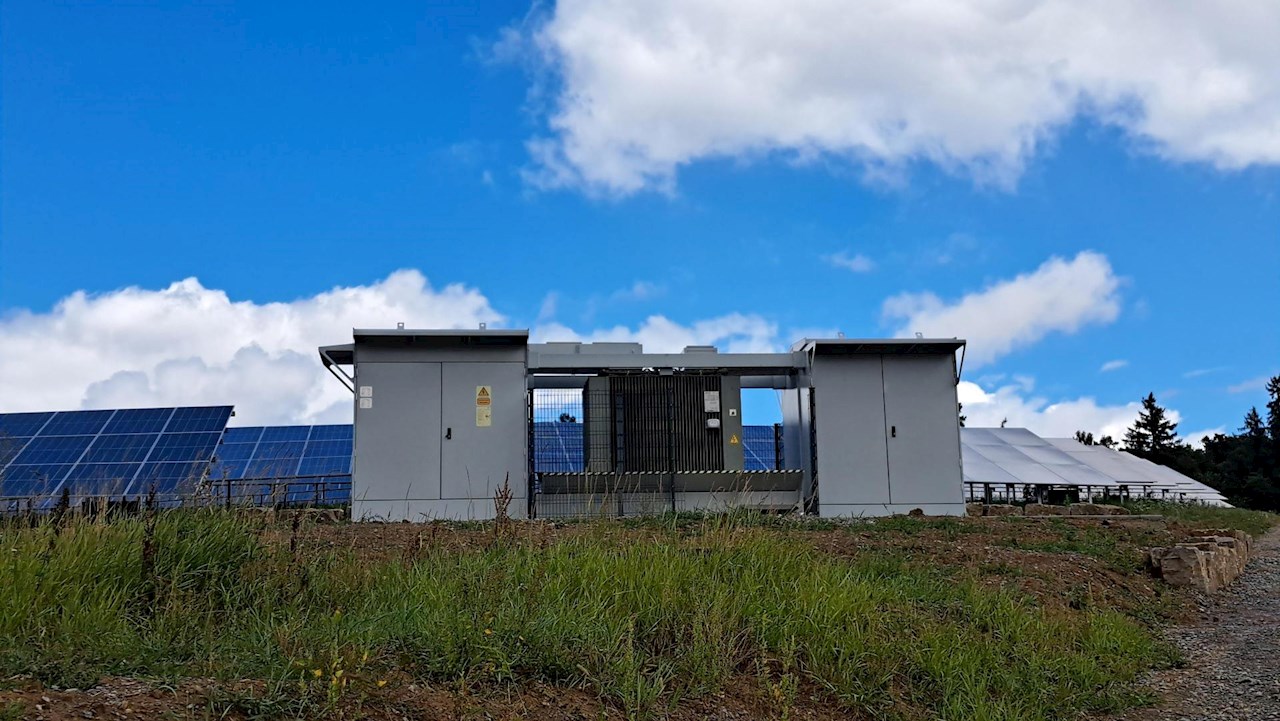
The SSUs provide permanent power for the solar park 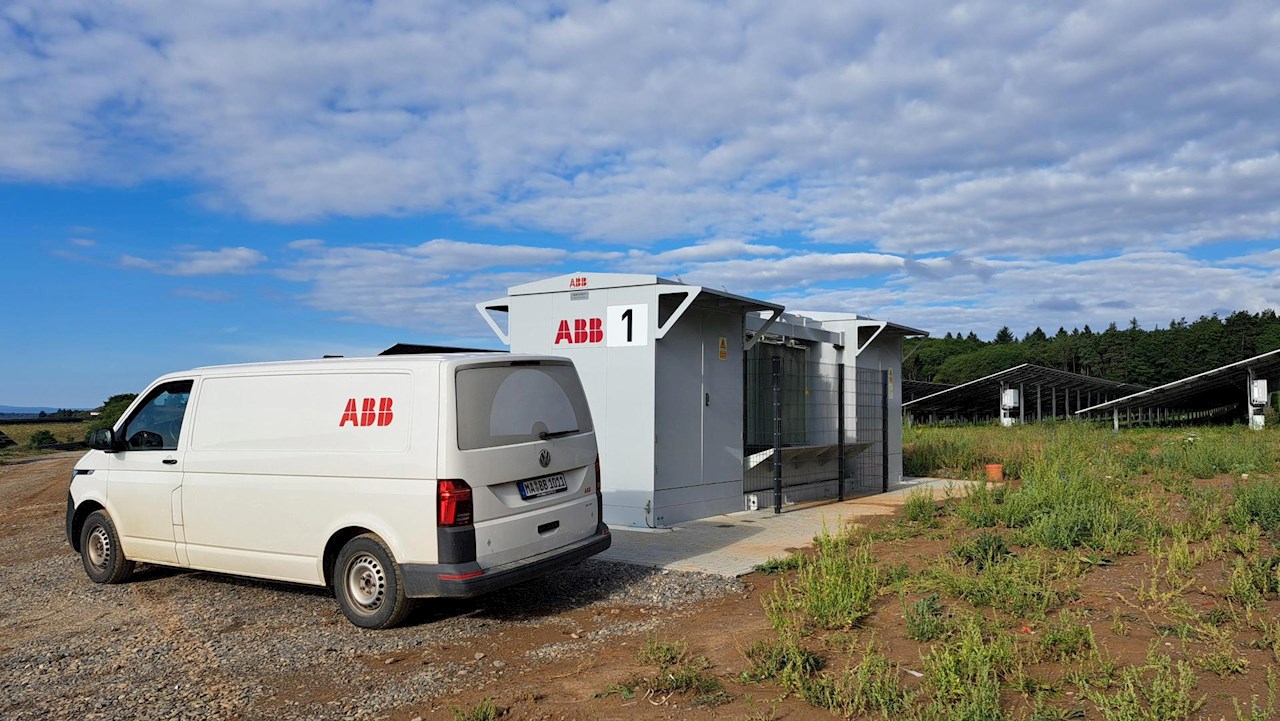
SSUs are an attractive alternative to conventional transformer stations 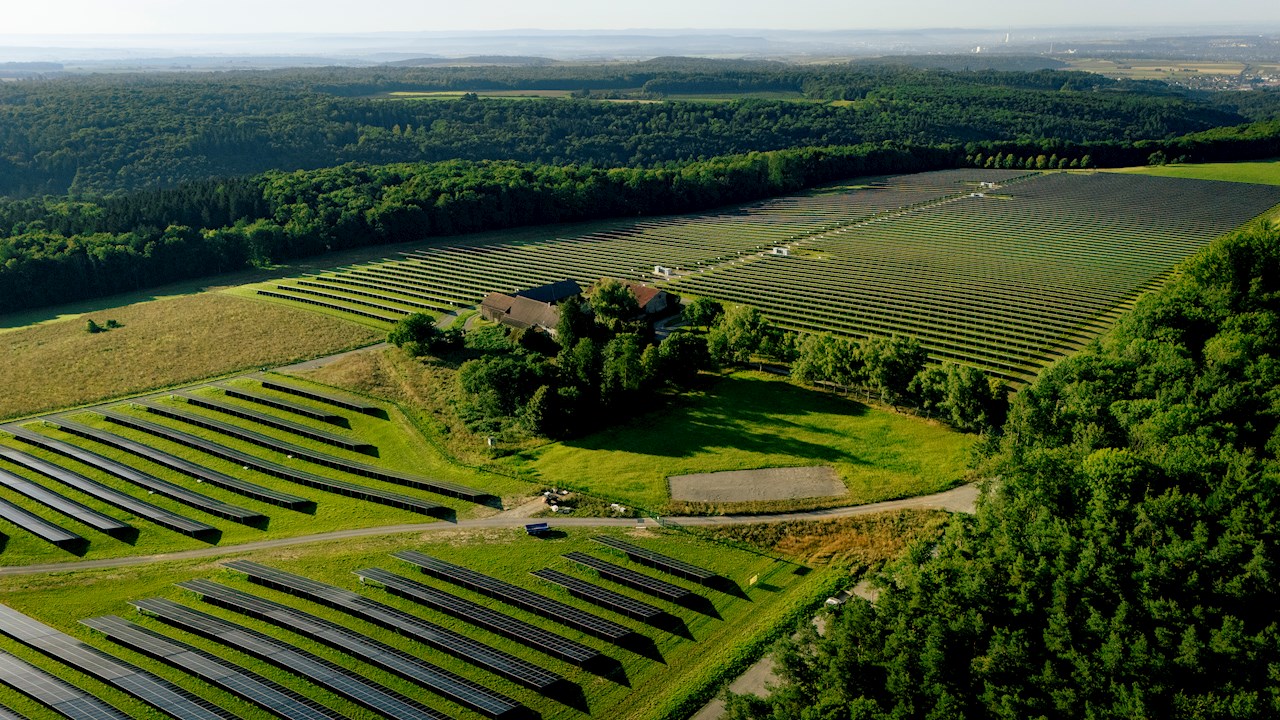
EnBW solar park Gundelsheim with ABB's SSUs. Photo courtesy of EnBW. 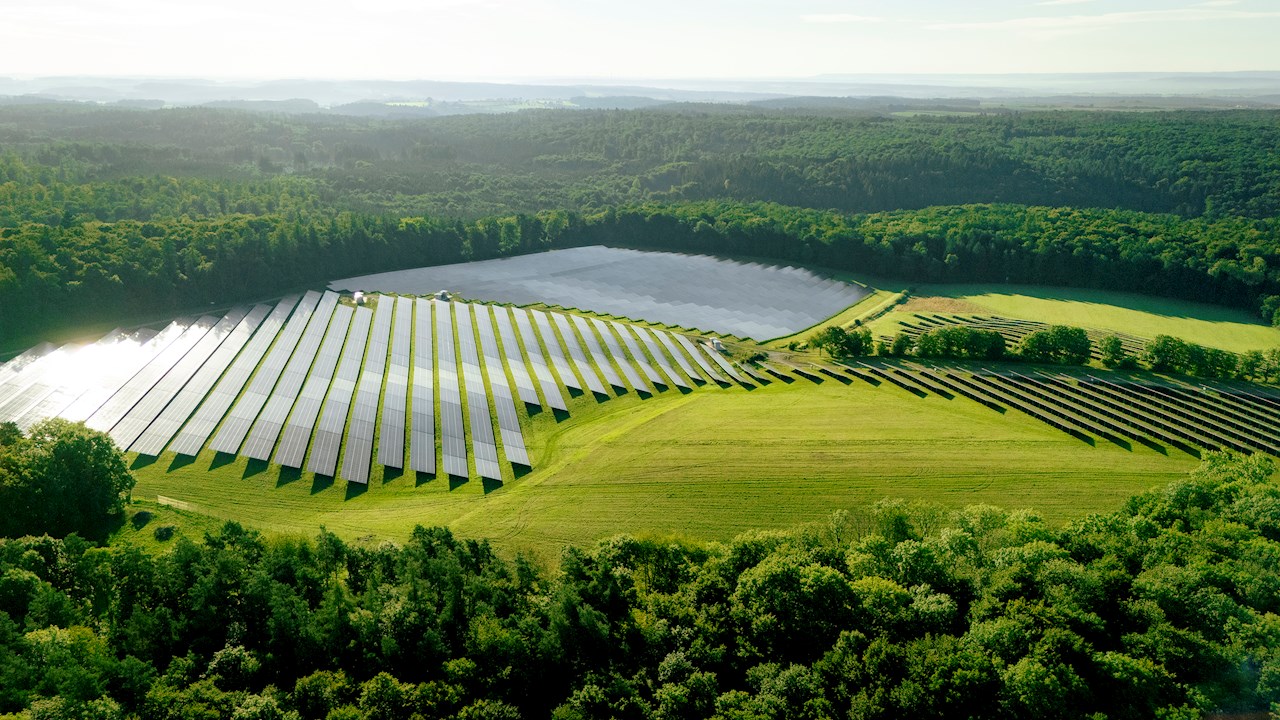
Gundelsheim is at the first stage of a hybrid energy park combining solar, wind, and battery storage. Photo courtesy of EnBW.
Results: efficiency and sustainability gains
By replacing two to three traditional stations with one SSU, EnBW achieved a cost advantage of around 15 percent and improved price per kVA. The solution supports Gundelsheim’s role as a pioneering hybrid energy park, showing how solar, wind, and storage can complement each other for a resilient, low-carbon grid.
Beyond technical performance, ABB’s ability to combine global manufacturing with local service delivery gave EnBW flexibility and confidence. Familiarity with German regulations and environmental standards ensured smooth execution without delays.
Looking ahead: shaping the future energy system
Gundelsheim isn’t just a solar park – it’s a blueprint for Germany’s evolving energy infrastructure. With ABB’s scalable solution in place, EnBW is ready to expand the site with wind turbines and hybrid storage, reinforcing its commitment to climate neutrality and grid resilience. Together, ABB and EnBW are powering partnerships that enable a smarter, more sustainable energy future
Fact boxes
ABB's delivery
- Nine Secondary Skid Units SSU 7000
- Integrated SafePlus switchgear and Relion® protection relay (REF615)
- Installation and commissioning by ABB’s team of German experts
- Output capacity: 7,000 kVA per station
- Reduced need for secondary switchgear (Ring Main Units) by 50–75 percent compared to a park layout with conventional transformer stations
Customer snapshot
- Company: EnBW Energie Baden-Württemberg AG
- Industry: Energy (generation, distribution, renewables)
- Location: Karlsruhe, Germany
- Profile: One of Germany’s largest integrated energy companies, committed to net-zero emissions by 2040


