
Mexico is becoming one of Latin America's most dynamic data center hubs. What’s happening here is a powerful snapshot of global trends—hyperscaler expansion, skyrocketing cloud adoption, and the relentless rise of AI—all converging in a single market.
With its strategic location bridging North, Central, and South America, Mexico has emerged as a natural digital corridor for the region. The country now ranks second in Latin America for both total data center capacity and square meters of built space, trailing only Brazil.

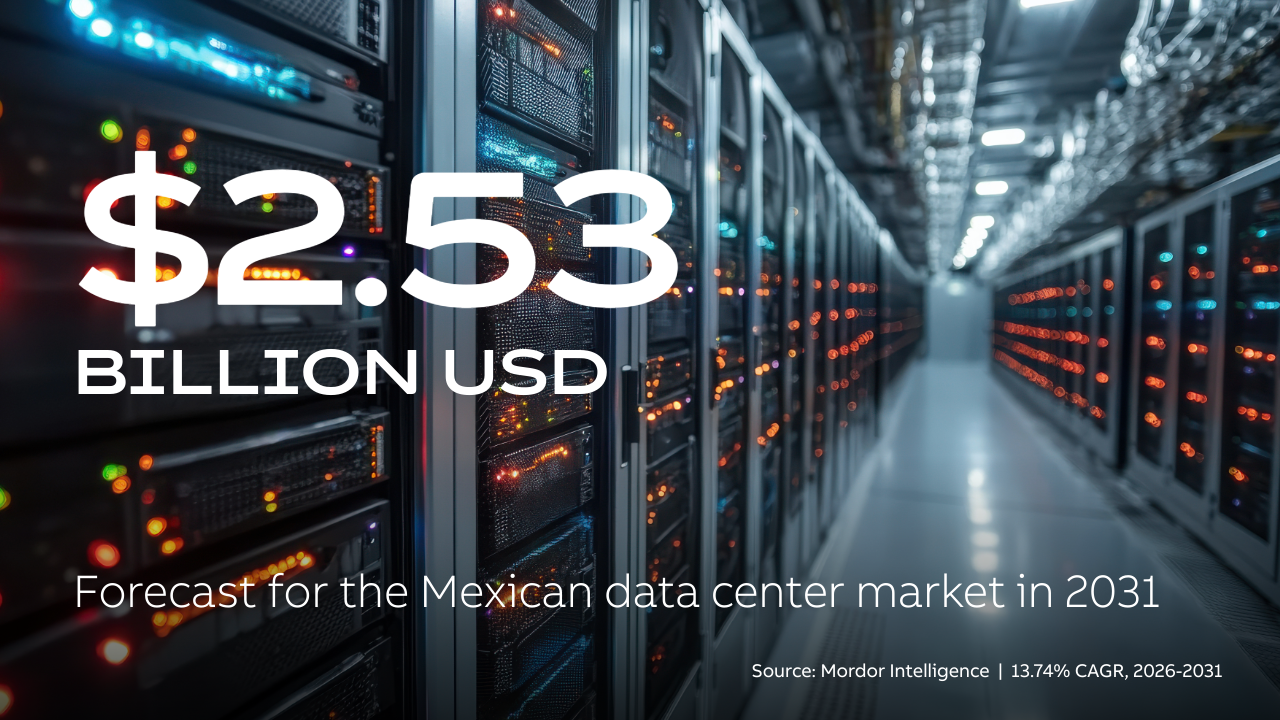
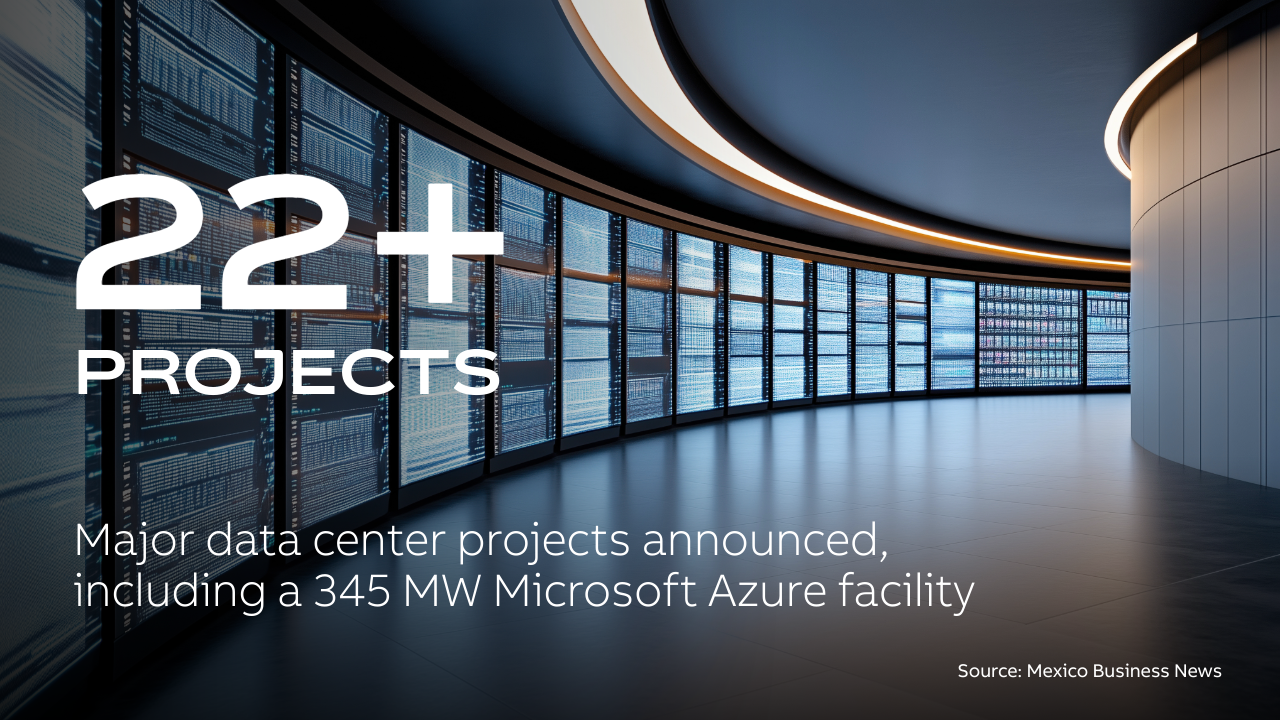
This scale of growth is not just impressive—it’s resilient. “The data center industry is a well-shielded industry,” says Alejandro Cantu, Director of LBS Power Technologies, electrical supplier to the data center market and ABB’s channel partner for over 10 years. “The demand for more computing power will always be there. Just think of how AI has rapidly become embedded in our day-by-day.”
Cantu speaks from experience. With more than 20 years in the industry and a Vice-President role at MEXDC, the Mexican Data Center Association, he’s seen how demand patterns evolve. But today’s wave feels different. The pace is faster, the investments are bigger, and the expectations are higher than ever before.
Growth pains: the power to keep up
“Power has been the problem out there for as long as I can remember; says Alejandro Cantu. “But the scale of growth has certainly changed.”
Mexico has increased its electricity generation capacity by 65% in the past 20 years. But to meet the level of demand fueled by data centers, and especially AI-optimized data centers, which require 4 to 8 times more energy, it will need to grow generation capacity further. Querétaro alone, the epicenter of the data center market in Mexico thanks to its connectivity, skilled labor, and infrastructure, needs 50% more generation capacity.

Mexico is the second country in Latin America (besides Brazil) to host all three major cloud operators: Amazon Web Services (AWS), Microsoft Azure, and Google Cloud.
These hyperscalers aren’t just big—they operate at a scale that redefines “demand.”
To put in perspective: Amazon transfers over 13 exabytes of data daily for customers: enough to play non-stop music for half a million years.
Generating the electricity and sending it where it’s needed is what’s stretching grids—and grid operators—to their limits worldwide.
Partnership, product knowledge, and accountability
In this challenging, high-stakes environment, Alejandro Cantu says customers want the assurance of knowing their project will unfold exactly as promised. They are looking for more than equipment. They want someone who can help them plan, build, deliver and maintain the best solutions.
That’s why, as a distributor, LBS holds its partners to the same high standard. Manufacturers that share his company’s goals and values enable him to sign sales contracts with confidence.
“As a supplier ourselves, we need partnership, product knowledge and accountability,” he says “I need to know that when I pick up the phone, someone at ABB will be there with the right answer and a sense of urgency. And they always are.”
That urgency is deliberate, says David Barragan, National Channel Manager at ABB Electrification. “When a project is on a tight schedule—and they usually are—we can’t afford delays. We are very invested in our partner’s success and do whatever it takes to support them.”
That level of collaboration is part of what makes LBS such a strong link in ABB’s ecosystem. “They go beyond selling products,” Barragan adds. “They have field service engineers who support customers directly, and they invest in continuous training. Together, we make sure their teams are equipped to respond quickly and solve problems where it matters most— on the ground.”


