
By Andrea Menti, Business Line Leader, Energy Distribution, ABB Electrification’s Smart Buildings Division
Across buildings, industry, and communities, the way we produce, distribute, and use energy is changing faster than the systems designed to support it. Electrification is rising. Digitalization is maturing. Regulation is evolving. And the value now lies in how well everything works together.
In electrical distribution, this shift is especially clear. As electrification accelerates and digitalization matures, our industry is moving from selling components to enabling connected, flexible, and intelligent energy ecosystems. Partnership-based models will outperform product-led ones on safety, resilience, cost, and carbon because the requirements on energy infrastructure are increasingly complex and better addressed through collaborative provider ecosystems.
Energy distribution today is a system, not a set of products
Buildings today face pressures that didn’t exist even five years ago:
- Electrification is accelerating everywhere: heat pumps, electric vehicles (EVs), rooftop solar, storage, fast charging, and data centers1.
- Loads need to be managed dynamically, efficiently and in a balanced way.
- As an example, in the U.S., peak electricity demand is forecast to grow 26 percent by 2035, with data centers alone potentially reaching 176 GW – five times today’s levels2.
- Globally, building emissions are still rising about 0.6 percent each year3, despite efficiency gains.
Electrical distribution was designed for a linear, predictable world. Today’s world is dynamic, digital, and multi-directional. Modern performance depends on connected protection devices, digital monitoring, load management, and renewable integration.
No building can be optimized without these layers talking to each other – and delivering that integration requires comprehensive know-how across multiple disciplines.

The value is shifting from components to connected solutions
As more assets become electrified and more devices become digital, electrical distribution becomes a data ecosystem. Protection and metering that operate offline can’t support predictive maintenance or real-time optimization and business continuity. And a building without standardized data can’t meet tomorrow’s compliance requirements.
This is why integrated open solutions are outperforming standalone products. Digitalization changes how value is created: protection becomes predictive, reporting becomes continuous monitoring, load balancing becomes real-time, and maintenance becomes performance-based.
For ABB, this is exactly why we invest in open, interoperable architectures and why we work with digital energy specialists like Cleanwatts. Together, we’re enabling community-scale flexibility and improving how buildings interact with local grids.
Regulation makes partnership a requirement, not an option
While Europe is leading with regulations like the Digital Product Passport, EPBD, and the Smart Readiness Indicator, similar pressures are emerging globally - from ISO 50001’s system-wide energy management requirements, to the U.S. Grid-Interactive Efficient Buildings (GEB) framework, to Singapore’s and Japan’s smart building codes.
All point toward the same conclusion: as regulatory frameworks take effect, energy systems must be connected, digital, and interoperable.This is why electrical distribution is no longer about individual components, but about integrated intelligent systems.
Real examples of partnership-led energy models:
This shift is already underway.
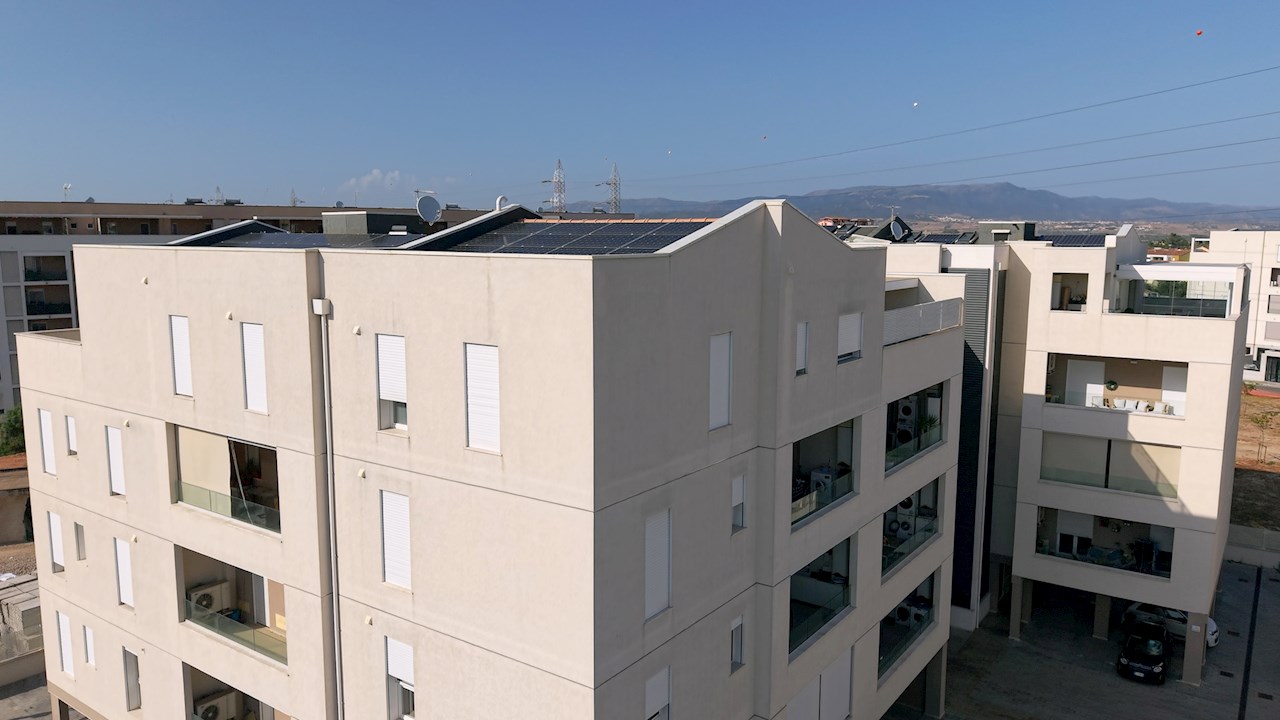
Integrated building energy systems: The first “digital condominium” in Sardinia, Italy, integrates electrical distribution, building automation, photovoltaic generation and a third-party digital management platform, illustrating how partnership-led, interoperable architectures can enable smarter and more flexible energy management in residential buildings.
- Energy communities and microgrids: Projects like our collaboration with Cleanwatts point toward a future where buildings don’t just consume energy, they actively coordinate it, share it, and stabilize local grids.
- Hotels, campuses, and hospitals: Where EV charging, HVAC, storage, renewables, and building automation all need coordinated load management and protection.
- Industrial and manufacturing sites: Where uptime, power quality, and predictive maintenance rely on seamless integration between protection, sensing, and digital platforms.
In every case, the limiting factor isn’t the technology, it’s how well the technology works together.
What building owners should do
Based on global insights and real-world experience, the most future-ready building operators will take five steps:
- Prioritize open, interoperable electrical distribution architectures. Avoid closed systems. Choose partners who collaborate and adopt open standards.
- Design for flexibility, not just today’s loads. Electrification is growing too fast for static designs. Build in headroom and intelligence.
- Make digital monitoring the default. Visibility is now a safety tool and the foundation of optimization and compliance.
- Bring partners together early. Electrical designers, OEMs, integrators, digital providers, and operators should align from the concept stage, not after commissioning.
- Treat electrical distribution as a platform, not a checklist. The buildings that perform best will be those built as ecosystems.
As electrification, digitalization and regulatory requirements converge, the industry is entering a phase where electrical distribution stops being a collection of components and becomes a network of partnerships. Product-led thinking cannot deliver the safety, performance, and flexibility that modern electrification demands. Partnership-led energy ecosystems can.
Today’s smart communities and digital collaborations already show what’s possible. The winners will be those who can make an entire system work together.
About the author
Andrea Menti

Andrea Menti is the Business Line Leader for Energy Distribution within ABB Electrification’s Smart Buildings. In this role, he oversees global operations, driving innovation and efficiency in energy distribution solutions that enhance safety, reliability, and sustainability.
With nearly three decades at ABB, Andrea has held multiple leadership positions across operations, supply chain, and general management, gaining deep expertise in complex, global environments. Before his current role, he served as Head of Operations for ABB’s Electrification Business Area, where he led strategic transformation initiatives and optimized business processes across multiple regions. He has also held key leadership roles within ABB’s Smart Power and Motors & Generators divisions, managing large-scale businesses from innovation, sales and development to manufacturing, logistics, and supply chain operations.
Andrea is passionate about innovation, change management, and people development. He believes that empowerment, collaboration, agility, and customer-centricity are the cornerstones of a successful business. His leadership is defined by a forward-looking approach, turning challenges into opportunities to drive continuous growth and progress.
Andrea is based in Italy and holds a Master’s degree in Mechanical Engineering from Politecnico di Milano.
Sources
[1] https://www.mckinsey.com/industries/energy-and-materials/our-insights/global-energy-perspective
[2] https://www.deloitte.com/us/en/insights/industry/power-and-utilities/power-and-utilities-industry-outlook.html
[3] https://globalabc.org/sites/default/files/2025-03/Global-Status-Report-2024_2025.pdf


