
- 63 percent of industrial leaders have already invested in energy efficiency and a further 29 percent plan to within 12 months - yet results remain fragmented and uneven
- Energy still consumes one quarter of operating costs, and nearly six in ten say rising costs threaten profitability - but barriers have shifted since 2022, from cost to data, skills and organizational silos
- Digital readiness reaches 67 percent globally, and eight in ten agree total cost of ownership should guide investment in energy efficiency – however, only 37 percent consistently apply this approach
Energy efficiency has become a board‑level margin and risk issue, but many industrial organizations are struggling to turn intent into sustained results, according to a new report from ABB.
Based on a survey of 2,700 senior decision‑makers across 15 countries and 15 industries, the study, developed in partnership with Sapio Research, finds that 63 percent have already invested in energy efficiency and a further 29 percent plan to within the next 12 months. Yet, progress is increasingly constrained by execution gaps.
Energy still absorbs around a quarter of operating costs on average, and nearly 60 percent of companies say rising energy costs continue to threaten profitability, despite calmer wholesale markets. The issue is not lack of ambition or funding. For executives, the challenge has shifted from reacting to price spikes to managing persistent price volatility and structural exposure.
"Energy efficiency has become a foundation for business continuity, compliance, and long-term value creation. It’s a condition for market access," explained Erich Labuda, President, Motion Services division, ABB. "Today, leaders care about optimizing energy use. What they struggle with is deployment, at scale, and over time."
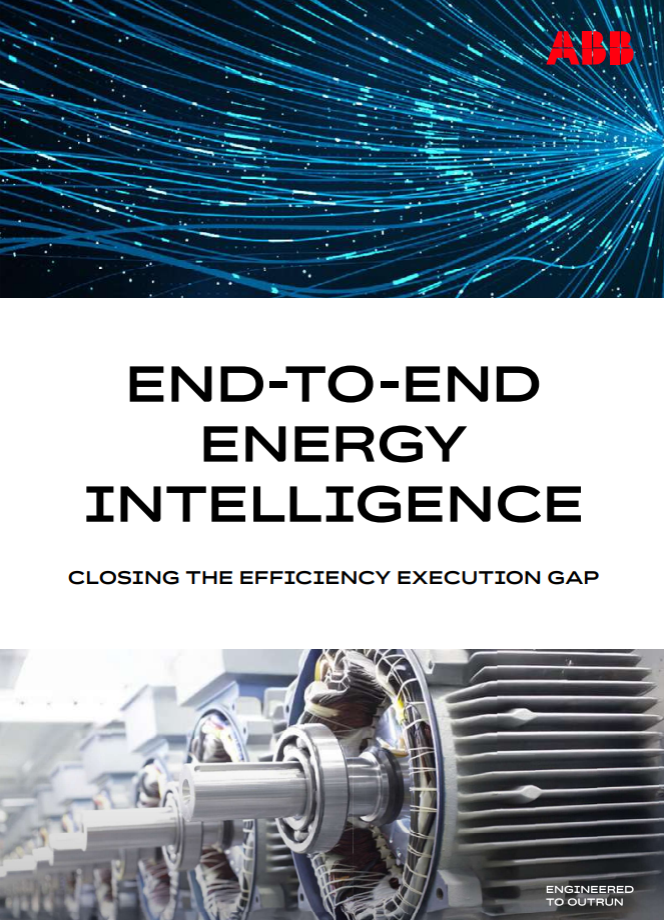
The new ABB global report, developed in partnership with Sapio Research, is based on a survey of 2,700 senior decision‑makers across 15 countries and key industrial sectors 
Erich Labuda, President, Motion Services division, ABB 


Execution, not intent, is now the differentiator
The study shows that digital readiness has gone mainstream, with two thirds (67%) of respondents already using or ready to deploy digital energy‑management tools. However, readiness alone does not guarantee results. Only 37 percent consistently apply total cost of ownership (TCO) when making investment decisions - despite eight in ten (81%) agreeing it should guide purchasing.
At the same time, responsibility for energy efficiency remains fragmented across executive management, operations, sustainability, maintenance and finance, with no single function clearly accountable.
"The barriers to energy efficiency have fundamentally changed,” added Labuda. "Cost is no longer the main blocker - it has fallen from 50 percent to 43 percent since 2022. What’s holding companies back now are organizational silos, skills gaps and a lack of usable data. That’s a critical inflection point. It tells us the challenge is helping businesses turn intent into repeatable execution.”
Renewables alone are not enough
The research also points to a growing risk of ‘post‑renewables complacency’. Among organizations that have switched to renewable energy sources (39% of respondents), more than one third report a reduced focus on energy efficiency.
While renewables lower the carbon intensity of energy, they do not reduce the volume consumed - meaning significant efficiency gains remain untapped, even for companies that have already secured green power. As a result, opportunities to strengthen resilience, control long‑term costs and reduce exposure to volatility are being left on the table.
The next phase of the industrial energy transition will be defined by delivery capability. While activity levels are high across businesses, efforts remain shallow, lacking coordination and long‑term structure.
“To close the execution gap, ABB combines diagnostics with targeted modernization of motor‑driven systems, software‑based optimization tools, outcome‑based financing and lifecycle services,” concluded Labuda. “End-to-end energy intelligence is another way we help industries outrun, leaner and cleaner - turning isolated initiatives into sustained performance gains.”
For the full report, visit this page.
ABB is a global technology leader in electrification and automation, enabling a more sustainable and resource-efficient future. By connecting its engineering and digitalization expertise, ABB helps industries run at high performance, while becoming more efficient, productive and sustainable so they outperform. At ABB, we call this ‘Engineered to Outrun’. The company has over 140 years of history and around 110,000 employees worldwide. ABB’s shares are listed on the SIX Swiss Exchange (ABBN) and Nasdaq Stockholm (ABB). www.abb.com
ABB Motion, a global leader in motors and drives, is at the core of accelerating a more productive and sustainable future. We innovate and push the boundaries of technology to contribute to energy efficient, decarbonizing and circular solutions for customers, industries and societies. With our digitally enabled drives, motors and services we support our customers and partners to achieve better performance, safety and reliability. To help the world’s industries outrun – leaner and cleaner, we deliver motor-driven solutions for a wide range of applications in all industrial segments. Building on over 140 years of domain expertise in electric powertrains, our more than 23,000 employees across 100 countries learn and improve every day. go.abb/motion


