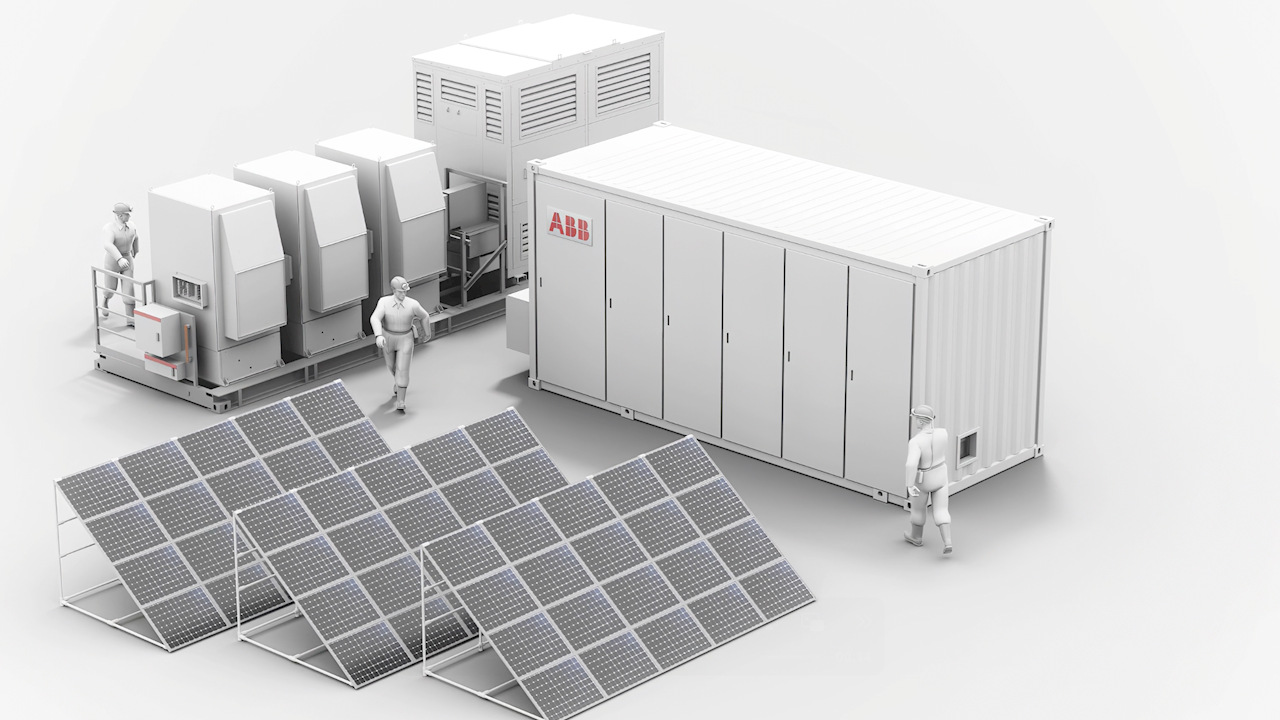
Battery energy storage systems (BESS) are rapidly moving from a niche technology to a foundational element of modern power systems. Global market projections show that the energy storage sector is expanding at a double-digit pace, with forecasts putting the overall battery storage market well into the hundreds of billions of dollars by the end of this decade. To support this growth, costs continue to decline: installed battery storage costs fell sharply in 2024, with price reductions measured in the high-30% range for typical four-hour systems compared with the prior year.
But beneath all of this progress lies an uncomfortable truth: much of our grid resilience architecture is still designed around the assumption that stability requires combustion.
Spinning reserve, which involves keeping fossil-fuel generators running at partial load so they can respond instantly to demand fluctuations, was engineered for a thermal system. It made sense when grids were dominated by coal and gas. Stability came from inertia, and inertia came from rotating mass.
That model made sense when coal and gas were the backbone of electricity systems. Today, it quietly locks us into them.
Instead of fundamentally rethinking reserve capacity for a digital, distributed grid, we are often trying to integrate batteries into market structures originally designed for thermal plants. We debate whether batteries should discharge for one hour or four. We optimize how they fit within legacy reserve products. Meanwhile, in many markets around the world, fossil plants continue burning fuel simply to remain “ready.”
Unpacking the structural barriers
Technically, batteries are not the constraint. Modern battery systems respond in milliseconds. They provide frequency regulation and fast reserve without combustion and without direct emissions. The limitation is structural and embedded in how markets procure and value resilience.
This structural bias becomes even more apparent behind the meter.
Take the biscuit factory – an example I like to use because it reflects the reality of thousands of industrial businesses. The plant manager faces three constant pressures: keeping production costs down, ensuring uninterrupted 24/7 operations and meeting increasingly ambitious carbon reduction targets.
Battery storage could address all three. It could store cheaper off-peak electricity for use during expensive demand periods. It could provide resilience without relying on diesel generators. It could enable greater integration of onsite renewables.
But here’s the problem. The factory has already captured the obvious efficiency wins. Lighting has been upgraded. Heating systems electrified. Solar panels installed. Each additional carbon reduction measure now costs more and delivers less marginal gain.
Now you ask that same factory to invest significant capital in owning and operating a battery system. This is, undoubtedly, an asset outside its core business expertise. And even with compelling ROI modelling, the capital often isn’t available, or the risk is deemed too high. So, the default remains familiar: diesel backup. Exposure to spinning reserve embedded in grid pricing. Accepting demand charges as a cost of doing business.
From a system perspective, this is paradoxical. We are investing billions in renewables and grid-scale storage while maintaining fossil standby capacity at site level because the ownership model hasn’t evolved.
If industries are to outrun rising demand, ageing infrastructure and tightening carbon constraints, resilience must become leaner, cleaner and structurally smarter.
Where the conversation needs to shift
This is why my team at ABB Electrification Service introduced our Battery Energy Storage Systems-as-a-Service (BESS-as-a-Service) offering. In my view, it fundamentally changes the equation because it decouples resilience from asset ownership.
Under a BESS-as-a-Service model, the biscuit factory does not purchase a battery. It purchases performance. It contracts for guaranteed availability, defined power capacity, resilience assurance and measurable carbon improvement.
The provider owns and optimizes the asset. Performance risk, degradation management, maintenance complexity and end-of-life responsibility sit with the entity best positioned to manage them at scale. Market participation, whether that involves balancing services or wholesale opportunities, can be aggregated across portfolios rather than borne by a single industrial site. In practical terms, resilience moves from being a capital-intensive asset to being an operational service.
Diesel generators are pure cost centres. They sit idle until needed. They burn fuel when activated. They emit carbon whether partially loaded or fully engaged. They create no value beyond insurance.
Batteries, delivered through BESS-as-a-Service, can actively generate value while providing resilience, reducing peak exposure, supporting grid flexibility, enabling renewable optimization and lowering overall operating costs.
Reframing energy as a strategic asset
If we continue to define resilience in terms of spinning assets held warm on standby, we will struggle to decarbonize essential industries at scale. But if resilience evolves toward digitally managed, fast-responding flexibility delivered as a service, industries can outrun volatility, outrun carbon exposure and outrun inefficiency.
It’s clear that the global storage market will continue to expand, but scaling capacity is not the same as scaling adoption. In my view, the next phase of the energy transition depends less on incremental improvements in battery chemistry and more on modernizing how we define and procure resilience.
Spinning reserve solved yesterday’s grid problem. BESS-as-a-Service is engineered to help industries outrun tomorrow’s. If we are serious about building leaner, cleaner and more resilient power systems, we need to move beyond combustion as the default definition of security – and start designing reserve models fit for a digital, decarbonized world.


