At ABB, we are empowered to think big and pursue radical innovations that transform industries - or create new categories of services and products – and our maritime business is no exception.
As a company, establishing strategic technology leadership demands continuous, innovative research and product development, a deep understanding of customer needs, both current and future, and the ability to identify and act on emerging technological opportunities for value creation.
Achieving an advanced stage of technology leadership also requires a step-by-step approach, as well as perseverance. In heavy industry, the journey from initial idea to commercial launch can easily take five to 10 years. Continuity and steady, long-term investments in technology and people are key.
Along the way, we should always aim at adding unique value for our customers. In addition, we need to maintain a sharp focus, because no company will excel in everything.
At ABB, we are empowered to think big and pursue radical innovations that transform industries – or create new categories of services and products – and our maritime business is no exception.
Preparing for the future
Predicting the future, however, involves risk: a lot can happen in 10 years. Take the world market price of oil from 2010 to 2020, which plummeted by 50 percent, and by as much as 80 percent during certain periods. Global conflicts, pandemics and financial uncertainty cause individuals and companies to lose confidence, and sometime to act based on fear of the future.
Instead of relying on predictions, which may or may not be accurate, we should embrace foresight. Foresight helps us understand how industry, societies, economies and technology landscape may evolve. By analyzing a wide range of scenarios, including undesirable ones, we can gain insights into thepotential development over the next 10 to 20 years. This prepares us to seize opportunities for value creation, as well as to manage the threats and uncertainties the future will inevitably bring.
It is therefore helpful to create a vision of where we want to be and a step-by-step roadmap that can help us get there. Flexibility should be a feature of this roadmap: experience shows that technologies that are developed without the potential to adapt will more likely fail, while it is never worth ruling out options until it is absolutely necessary. In other words, if you fix requirements and assumptions very early to very far ahead without considering or building any flexibility to the design, it is very likely that these assumptions and therefore the developed technologies will not be fit for purpose when finalized.
Flexibility is also a core requirement of the way we work at ABB: global companies can sometimes find it difficult to gather all of its top technical experts in a given field at one location, for example. In the maritime industries, the benefits of remote working go far beyond work-life balance: in many cases, it is the basis for coordinating key technology leadership projects across different time zones.
For instance, ABB recently supplied autonomous technology to an unmanned, remotely piloted tugboat project in Singapore, with personnel working together from offices in Singapore and Finland, across a six-hour time difference. This worked well; as the working day came to an end in Singapore, the team there reported updates to Finland as the latter team’s day was starting. The Finland team fixed any problems and sent software updates to the Singapore team as they came back online. Rather than restricting the project, the time difference actually added more hours to the clock.
Failure is nothing to fear
For individuals who seek to become strategic technology leaders, it is crucial to overcome the fear of failure. All development activities include the risk of failure. Furthermore, if a product under development never fails, it doesn’t necessarily mean the process is sound. Instead, it could be a sign that the ambition level in research and development is not high enough. Therefore, in today’s environment, such companies are less likely to become global technology leaders.
Failure isn’t dangerous, but the fear of failure is - especially for a technology company. And while failure is obviously not actively encouraged or pursued as the primary goal, technology leaders need to cultivate a working environment that permits it and views it as an opportunity for growth, rather than a problem. After all, many projects, especially research projects, which fail to achieve their initial goal, may produce unexpected results that become the real success story.
Furthermore, sometimes a perceived failure may occur simply because the market is not ready to utilize a particular technology, or its value proposition is unclear at a given time. Strategic technology leadership recognizes the importance of circumspection, analysis and a long-term approach to investment, instead of reactiveness to market cycles.
Collaboration is key
Long development cycles do incur the risk of being outpaced by competitors focusing on short-term gain. At the business level, companies are also likely to review their stance on whether they prefer to ‘make or buy’ a given product or component. Of course, even strategic technology leaders work with partners in developing and maintaining their solution, but they must retain management control and the relevant expertise in-house.
It is crucial to overcome the fear of failure.
Successful technology leaders also strive to build lasting commercial relationships with their customers, suppliers and partners. And collaborating with customers means more than sales and after sales: it means working alongside them to achieve a unified vision of the future and listening to their ideas too.
Technology leaders must be able to influence where their companies are heading and be brave enough to face the future and all its uncertainties. Being a pioneer requires courage, risk-taking, perseverance and determination.
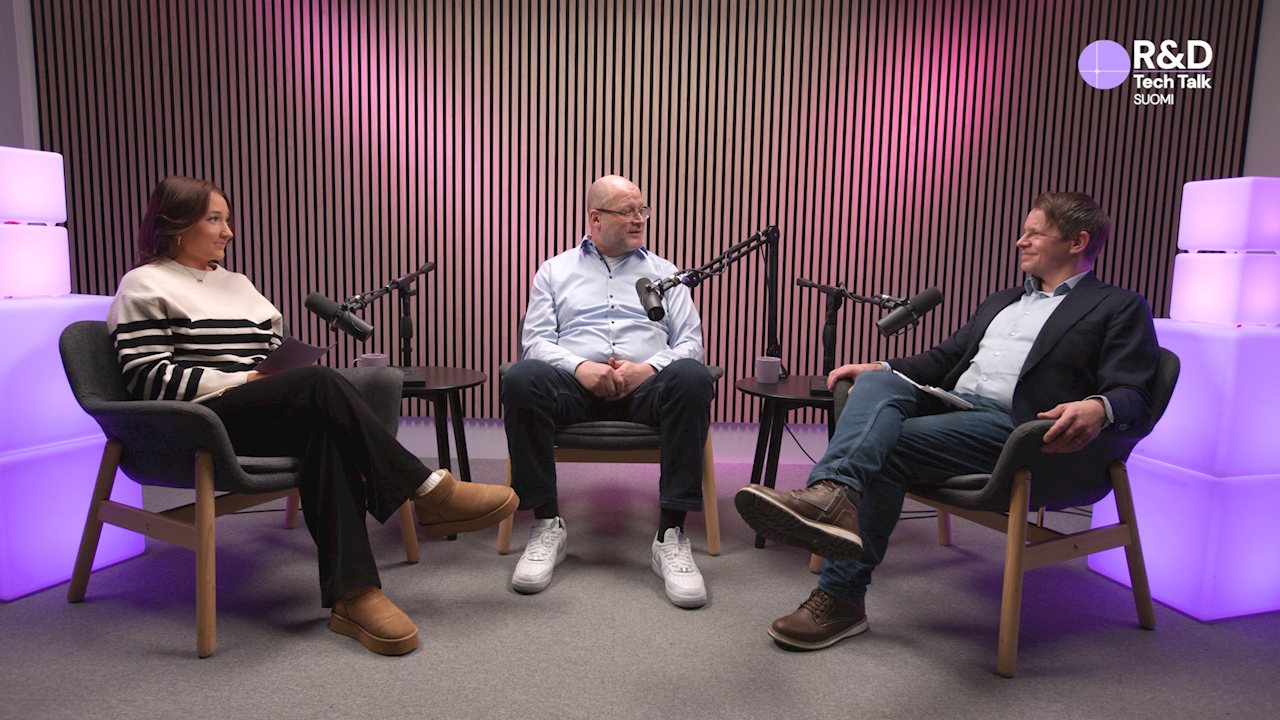
This article is based on a conversation between Kalevi Tervo, Corporate Executive Engineer, ABB's Marine & Ports division, and Janne Repo, CEO, Softability, on the Softability R&D Tech Talk podcast hosted by Katariina Sorkkila, first streamed on 3 February 2026: https://softability.fi/insights/podcast-how-do-you-build-strategic-advantage-through-bold-technology-leadership/ (in Finnish)


