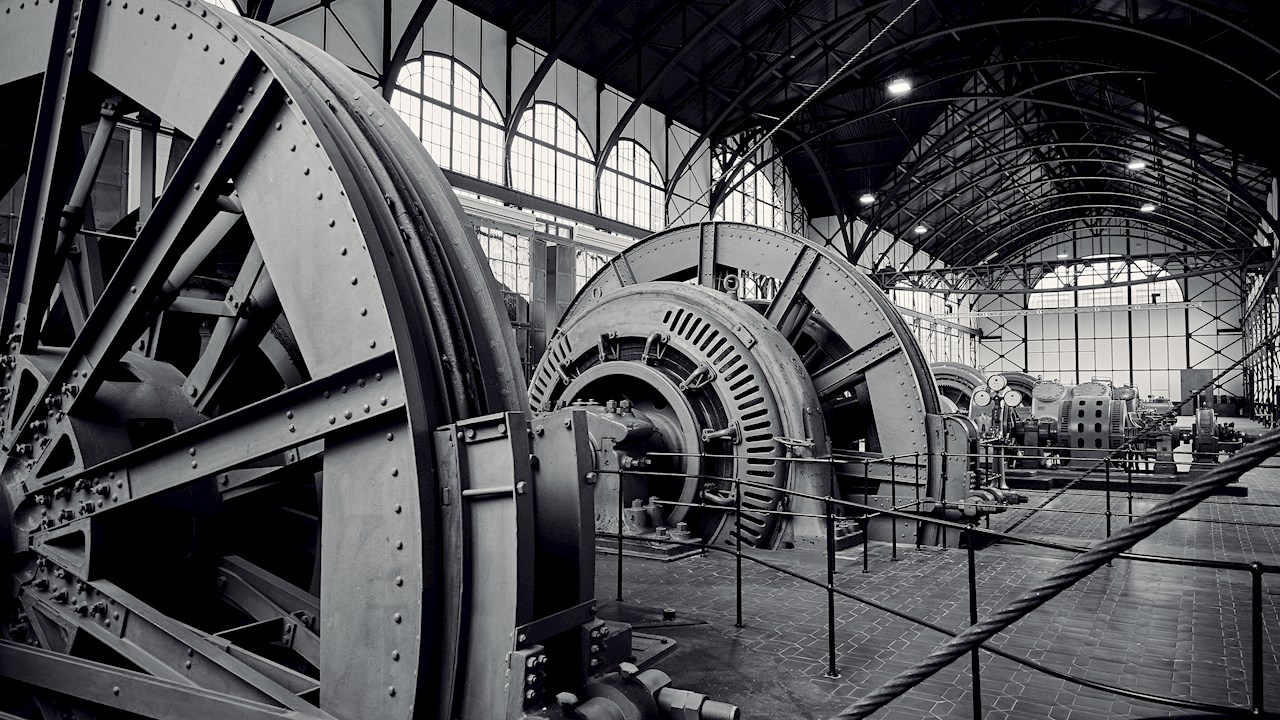
Direct current (DC) motors represent one of the most enduring technologies in electrical engineering. From their beginnings in the early nineteenth century to their critical role in contemporary industrial automation, DC motors have demonstrated remarkable resilience and adaptability. Despite the proliferation of alternating current (AC) motors and advanced semiconductor technologies, DC motors remain indispensable in numerous applications where precise control, high starting torque and responsiveness are essential. Companies like ABB have pioneered innovations in DC motor design, manufacturing more than 70 years of proven durability and performance. DC motors are applied in diverse industries and systems and continue to be vital in the modern industrial landscape.
The development of DC motors traces back to the early nineteenth century when scientists began harnessing electromagnetic principles. In 1832, British scientist William Sturgeon created the first commutator DC motor with the ability to turn machinery. However, it was Thomas Davenport, an American inventor, who built upon Sturgeon's foundation and patented the first working DC motor in 1837. Davenport's motors ran at speeds as high as 600 revolutions per minute and powered machine tools and printing presses. Despite these innovations, early DC motors faced significant challenges. Battery technology was prohibitively expensive, making commercial viability questionable. Davenport and other pioneers could not overcome the economic barrier posed by costly power sources, preventing widespread adoption during their era.
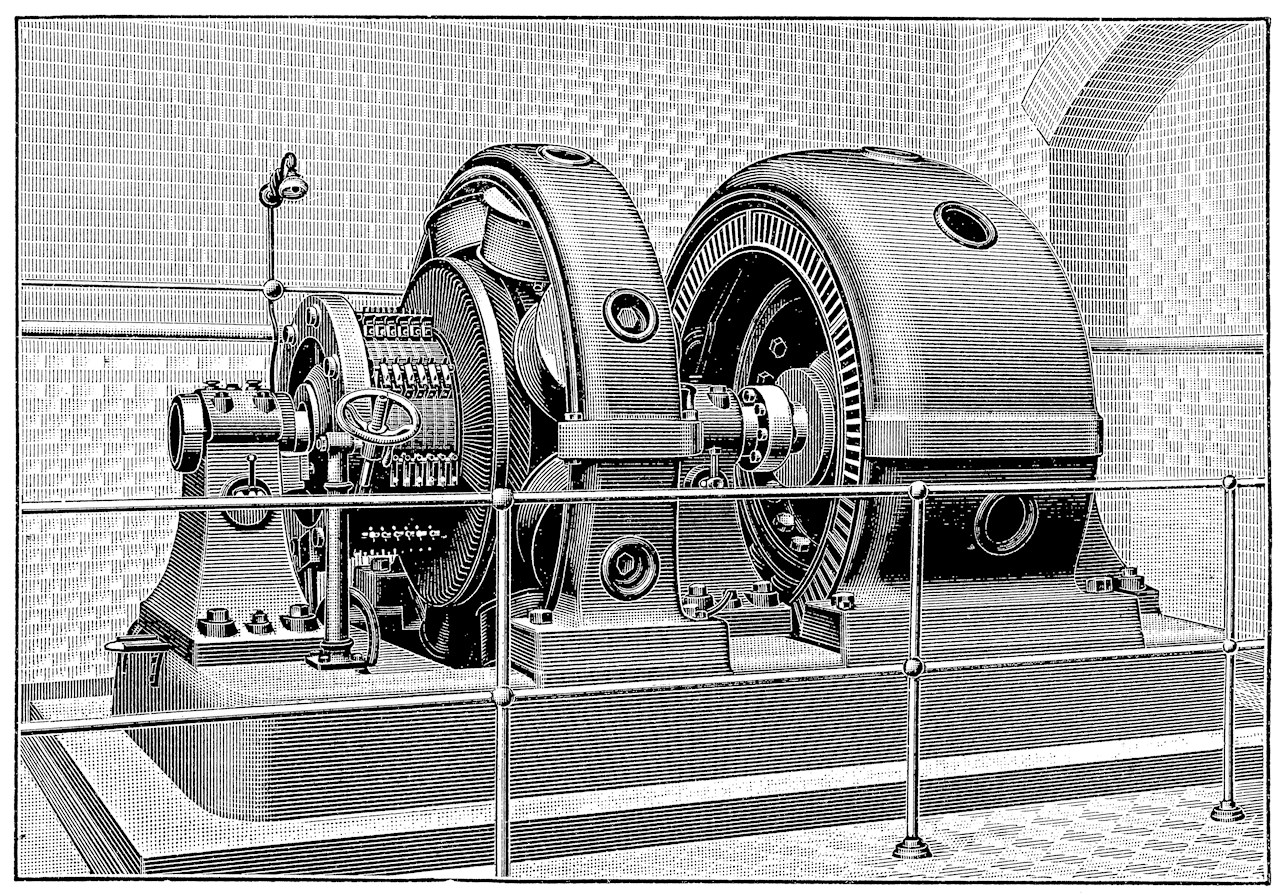
A three-phase direct current motor generator from 1910 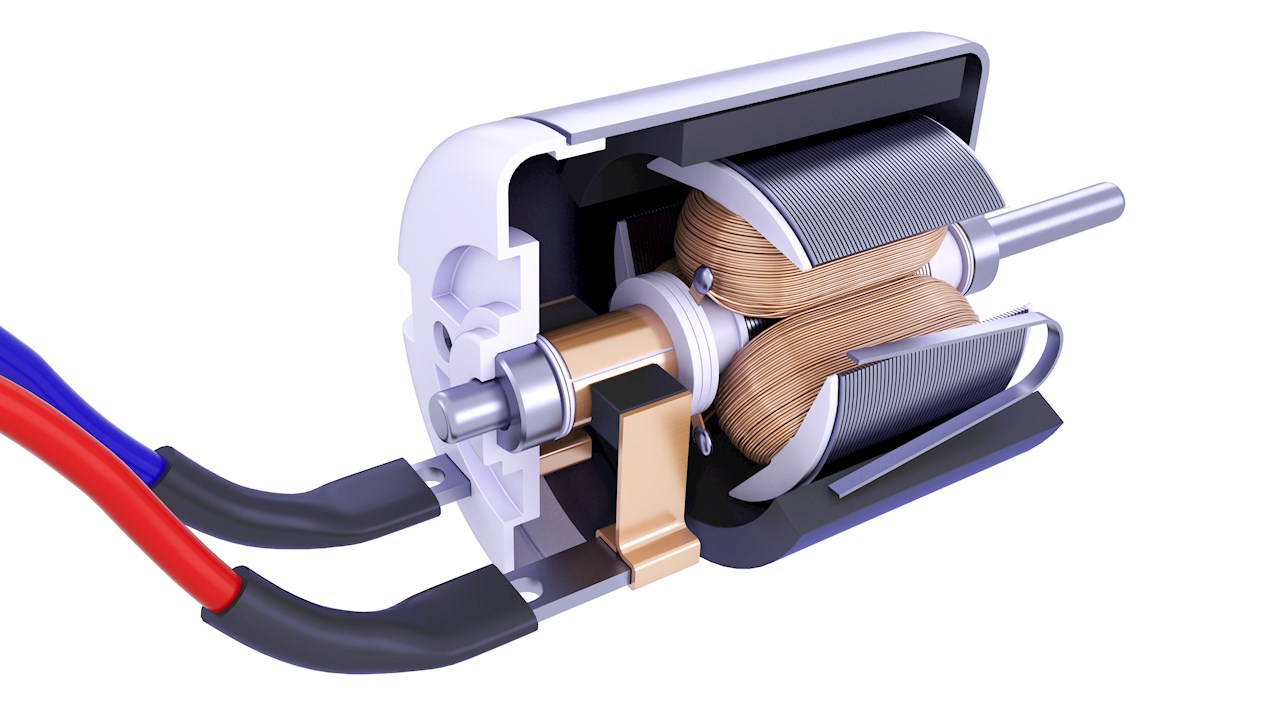
A modern DC electric motor showing stator, rotor, windings, magnets, shaft and brushes
The narrative of DC motor development changed dramatically in 1834 when Russian engineer Moritz von Jacobi invented the first truly powerful rotating DC motor. Jacobi's achievement was remarkable; his motor set a world record for mechanical output power and demonstrated sufficient capability to drive an electric boat carrying 14 people across a river. This demonstration proved that electric motors could perform meaningful work and inspired other inventors to pursue motor development with renewed vigor.
The year 1864 marked another watershed moment with Antonio Pacinotti's development of the ring armature. The ring armature became a vital component in DC motor design, carrying current through grouped coils and enabling more efficient energy conversion. Building on Pacinotti's work, Zénobe Gramme reinvented and refined the design in 1871, creating the first commercially successful DC motor. Gramme's machines demonstrated that DC motors could operate reliably and efficiently in industrial settings.
Between 1872 and 1875, Friedrich von Hefner-Alteneck and Werner von Siemens introduced the drum rotor and laminated magnetic circuits, further improving efficiency by reducing eddy current losses and increasing induced voltages. These innovations represented cumulative refinements that transformed DC motors from experimental devices into practical industrial machines. By 1880, additional improvements to the rotor design introduced slots for housing windings, advancing efficiency even further.
In 1886, Frank Julian Sprague invented the first practical industrial DC motor, a non-sparking device that maintained relatively constant speed under variable loads. Sprague's breakthrough represented the culmination of decades of incremental improvements. His innovation coincided with the development of reliable electrical distribution systems, creating ideal conditions for widespread motor adoption. The combination of Sprague's motor design and advancing grid infrastructure enabled the first commercial applications: the electric trolley system in Richmond, Virginia, in 1887 and the electric elevator in 1892.
The introduction of DC motors and electrical grid systems starting in the 1870s, triggered the Second Industrial Revolution. Unlike earlier mechanization driven by steam power transmitted through line shafts and belts, electric motors provided individual machines with their own power source. This distributed power model revolutionized industrial processes, eliminating efficiency losses from mechanical transmission and enabling unprecedented flexibility in factory layout and production methods. Industrial processes were no longer constrained by physical proximity to central power sources.
As industrial automation advances and energy efficiency becomes increasingly important, DC motors will continue evolving to meet emerging requirements. The fundamental advantages that made Frank Julian Sprague's motor revolutionary in 1886 remain valid today: superior control over speed and torque, high starting torque, rapid response to changing conditions and straightforward implementation. For operations requiring precise control over acceleration, speed and power, or where rapid starts and stops occur frequently, DC motors delivered by ABB remain the technology of choice. Their persistence through more than a century of industrial development stands as testimony to fundamental engineering excellence and adaptability to changing needs.


