One of Japan’s major rail operators, Japan Railway West, or JR West, connects major cities including Osaka, Kyoto and Hiroshima via mainline services running the famed Shinkansen bullet trains as well as local lines. Operating over 50 lines and around 1,200 stations and serving over 1.7 million customers, JR West faces an ongoing need to maintain and modernise its network infrastructure to ensure that customers receive the best possible service.
“Our company faces significant ageing infrastructure, particularly at regional stations. Maintaining and renewing these facilities has become essential,” said Mr. Masueda, First Class Architect in the Facilities Department of Japan Railway West.
Practical and beautiful
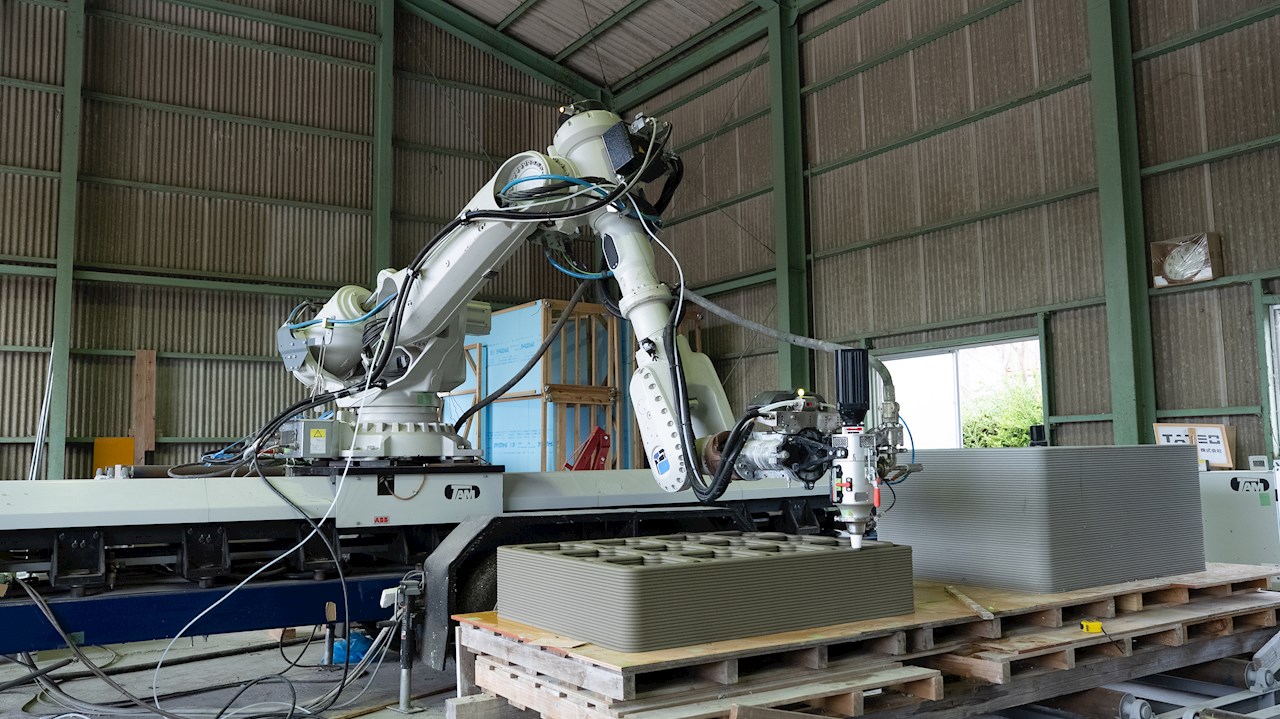
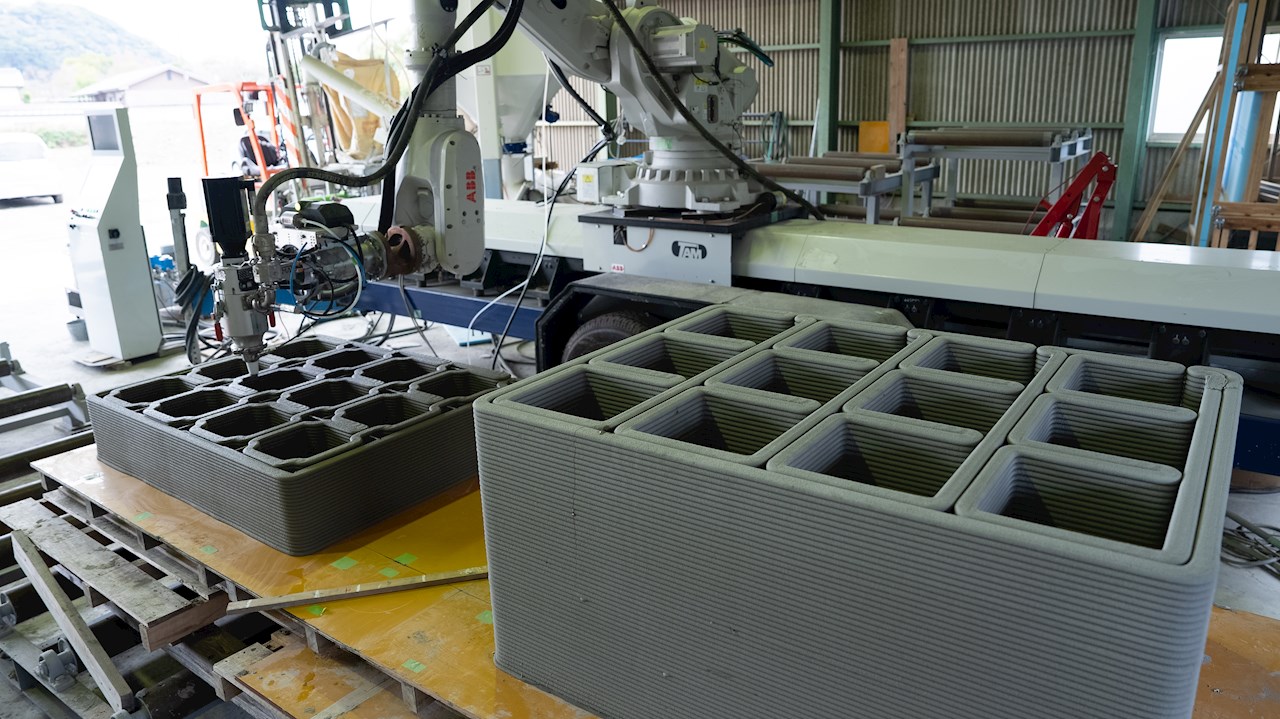
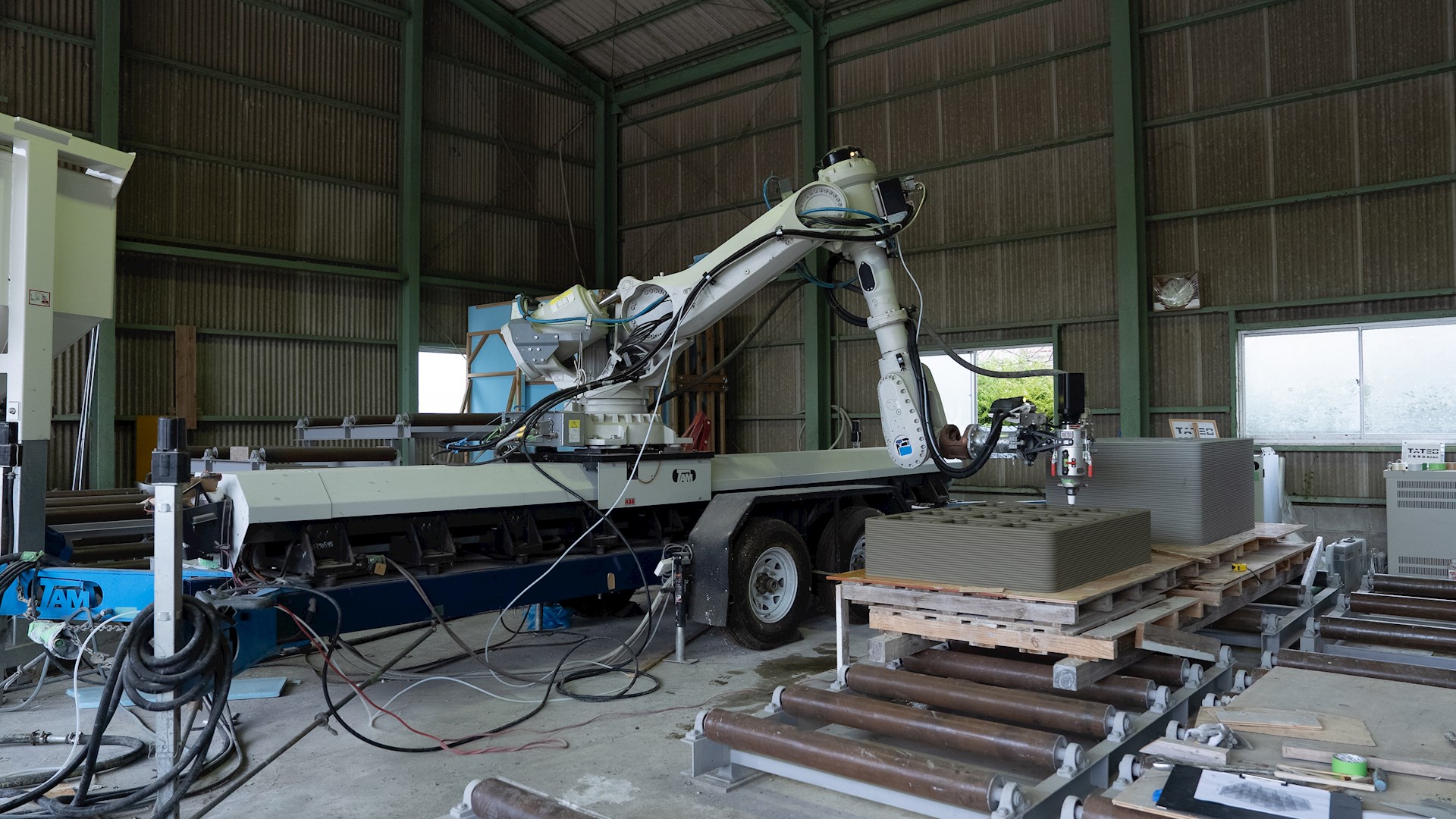
Used by around 270 people per day, the new station building at Hatsushima replaces a deteriorating wooden structure that was erected in 1948. To minimize disruption to passengers, Serendix used robotic 3D printing to create the main structural elements in its factory before assembling them in situ, enabling builders to complete the installation in a single night. In contrast, building a like-for-like wooden replacement would have taken around two months and cost up to twice as much as the new concrete structure.
“By performing structural work in a factory, we were able to significantly shorten on-site construction schedules,” said Mr. Masueda. “Additionally, 3D printers offer the advantage of freeform modelling, enabling exterior designs that incorporate local characteristics. We believe this allows us to create station buildings that reflect regional identity and contribute positively to the community.”
In the case of Hatsushima, the new design incorporates a sculpted image of a mandarin orange, which is farmed locally.
An industry under pressure
Established in 2018, Serendix started using 3D printing to construct simple buildings. Enabling faster construction with less material waste, the approach has proven to deliver cost savings of 30–50% compared to conventional methods.
“The construction industry has been severely impacted by rising labor and material costs, as well as a shortage of skilled workers,” said Mr. Sato, COO of Serendix. “Our 3D printer-based construction approach can reduce labor costs and produce all building materials from mortar. By cutting both labor and material expenses, we believe this initiative can address the challenge of rising prices.”
“The construction industry has been severely impacted by rising labor and material costs, as well as a shortage of skilled workers,” said Mr. Sato, COO of Serendix. “Our 3D printer-based construction approach can reduce labor costs and produce all building materials from mortar. By cutting both labor and material expenses, we believe this initiative can address the challenge of rising prices.”
Accurate performance opens creative possibilities
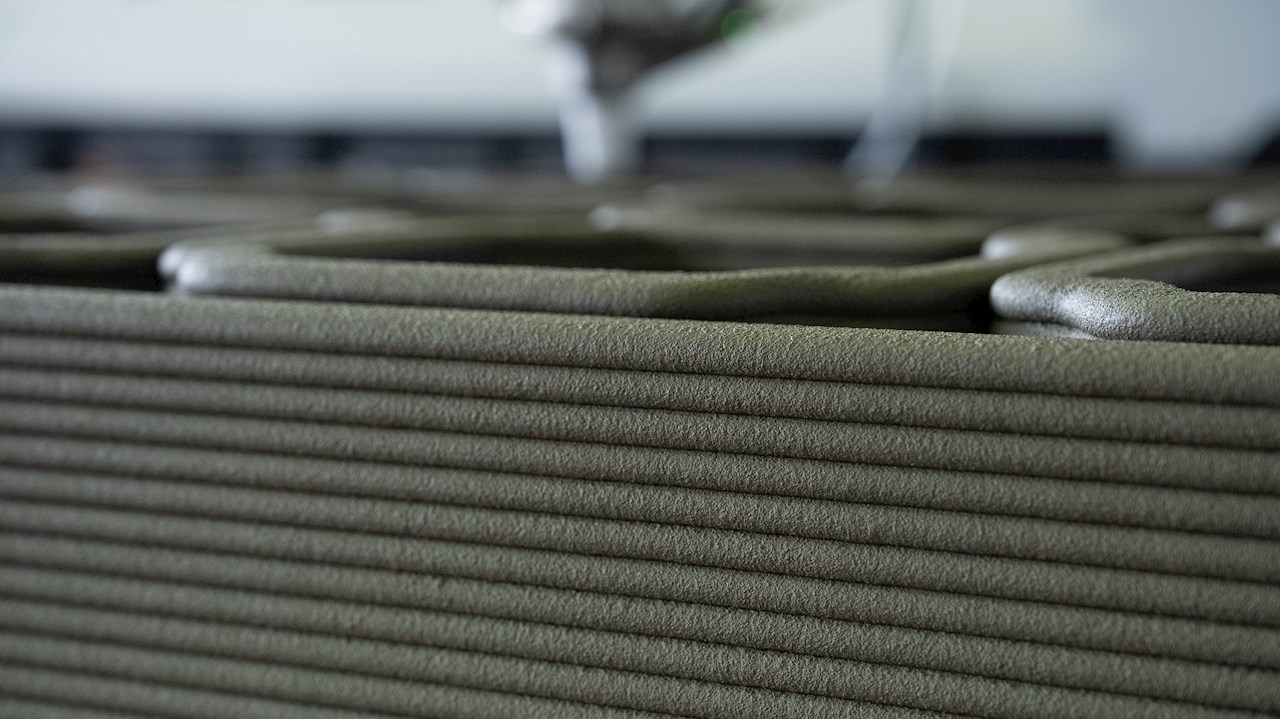
Combining an ABB IRB 6700 robot with its latest 3D printing technology has given Serendix the flexibility to create structures with a range of unique design features such as the Hatsushima mandarin. This creative freedom stems from ABB’s robotic programming expertise paired with Vertico’s advanced two-component (2K) nozzle technology. Offering four times the accuracy of conventional single-component (1K) nozzles, the 2K system enables Serendix to incorporate intricate features in its designs while reducing layer spread by 75% during mortar deposition.
“The robotic arm and nozzle we now use have increased instances where building components can be produced in a single print run. This allows us to deliver products to customers in a shorter timeframe,” explained Mr. Sato. “We've received a lot of positive feedback from the technical staff, who report that the workload has been significantly reduced since introducing this new technology.”
Significant upgrades, continuous innovation
Serendix’s earlier explorations of 3D printing for construction were constrained by limited robot mobility and less advanced nozzle performance, restricting production to relatively simple forms.
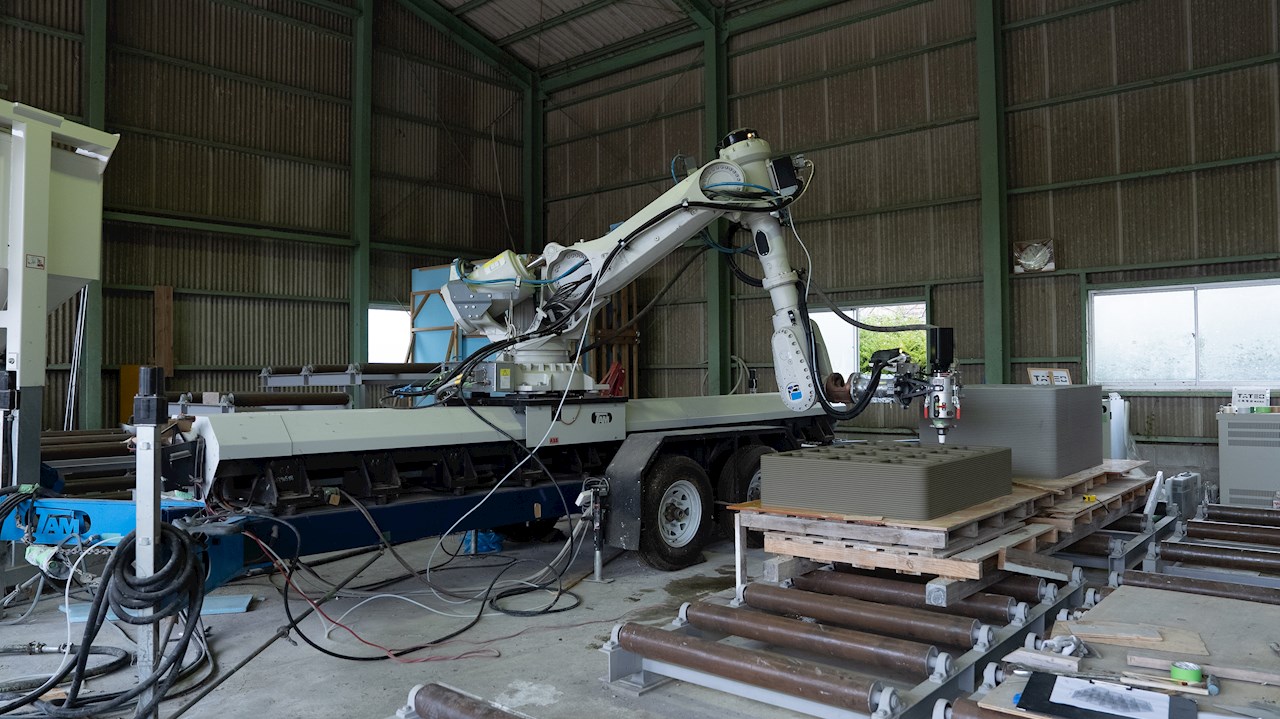
The latest system introduces a mobile robotic arm capable of operating across a wider build area, rather than from a fixed position. Combined with the enhanced control capabilities and improved nozzle precision, this expanded range of motion allows for more sophisticated geometries and surface textures.
“Previously, we mostly built simple structures like standard houses, sheds, and garages. However, our ability to now output complex textures has attracted interest from new sectors like hotels and villas. We now receive many inquiries regarding the production of high-end buildings and objects demanding aesthetic design,” said Mr Sato. “By adding a travel axis, it becomes a 7-axis system, offering a wider range of motion than a typical robotic arm.”
“Furthermore, we find the appeal of ABB robots lies in their ability to build with high precision exactly as programmed. We appreciate ABB's strength in precisely executing complex movements to continuously build up mortar according to the data we design beforehand. I believe this is only possible thanks to ABB's control technology.”
Future ambitions
Looking ahead, Mr. Sato believes increasing the use of artificial intelligence (AI) will enable the Serendix printing process to become even more automated than it is today:
“Our current 3D printer requires minimal human intervention. It can operate continuously without anyone nearby during production, relying solely on the robot to complete the build. Looking ahead, even labor-intensive setup processes could be automated. For instance, by equipping robotic arms with sensors or cameras, tasks currently performed by humans could be handled by AI. This would enable full automation from the moment the initial switch is pressed.”