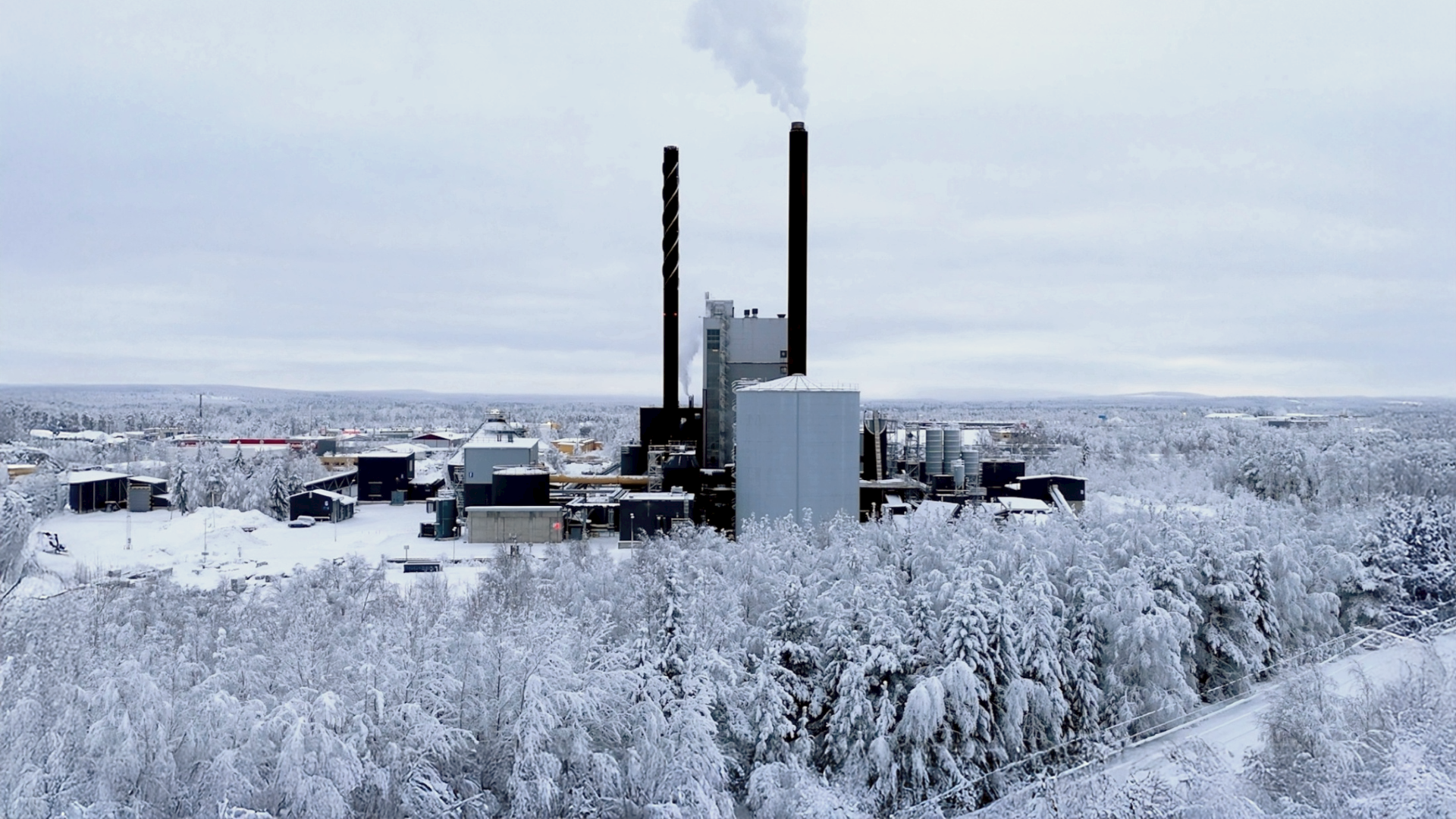
When our ABB film crew arrived in Rovaniemi - just below the Arctic Circle in Finnish Lapland – in February, they could only shoot outdoors in 20-minute bursts. Cameras struggle below -18°C. So do people: interviewees shifted their weight, exhaled clouds of breath, kept answers tight. Twenty minutes, then everyone moved inside.
This is a place where cold shapes everything, including how a power grid operates.
In the depths of winter, the sun stays low for only a few hours and temperatures in Rovaniemi regularly fall well below -20°C. Roughly 60,000 people live here. They need constant heat and constant power.
"Reliable electricity means people won't freeze" says Tuomas Kokkonen, Service Sales Specialist at ABB.
When a transformer fails in Lapland in midwinter, the window to fix it closes fast.
Aging grid. Soaring demand.
The utilities operating here face a challenge that's familiar worldwide, but with Arctic add-ons.
Juhani Ahola has been managing substations for Rovakaira for over a decade. This cooperative distributes electricity across three municipalities in northern Lapland — vast territories, sparse population, long distances. Born and raised in Rovaniemi, he knows exactly what winter demands.
The faults here are shaped by the environment. In winter, ice building on power lines is the main threat: trees buckle under the weight, fall across cables and conductors snap.
Repair crews might drive an hour through darkness and storm to reach a fault, while homes downstream are already cooling.
Meanwhile, the loads those lines are carrying keep growing. Heat pumps are replacing older heating systems across the region. EV charging infrastructure is spreading. Tourism keeps climbing — Rovaniemi’s main attraction, Santa Claus Village, welcomed 789,516 visitors last year. Each new demand lands on a network whose core assets were designed for a different era.
Antti Nikander coordinates operations for Santa Claus Village, a cooperative of 84 companies. "We've had power outages in the area, and then we are basically completely unable to operate," he says. "Practically everything depends on electricity." Heating, lighting, payment systems, guest safety — when power goes, all of it goes.
"Reliable electricity distribution is made up of many smaller things that all come together," Ahola says. "The grid is monitored around the clock, and we respond to all faults as quickly as possible."
Seeing trouble coming
Neve is Rovaniemi's main multi-utility — electricity, district heating, water, and fiber to the city and its surrounding areas.
Erkki Pietilä manages electrical and automation operations there. In winter, he says, everything runs harder — boilers, pumps, trace heating keeping pipes from freezing — and transformer loads climb significantly.
"We need to monitor them all the time and check for abnormalities" Pietilä says. “In the north, these cold spells come at regular intervals. You have to be prepared for them."
For years, that meant scheduled physical inspections and spare-unit agreements.
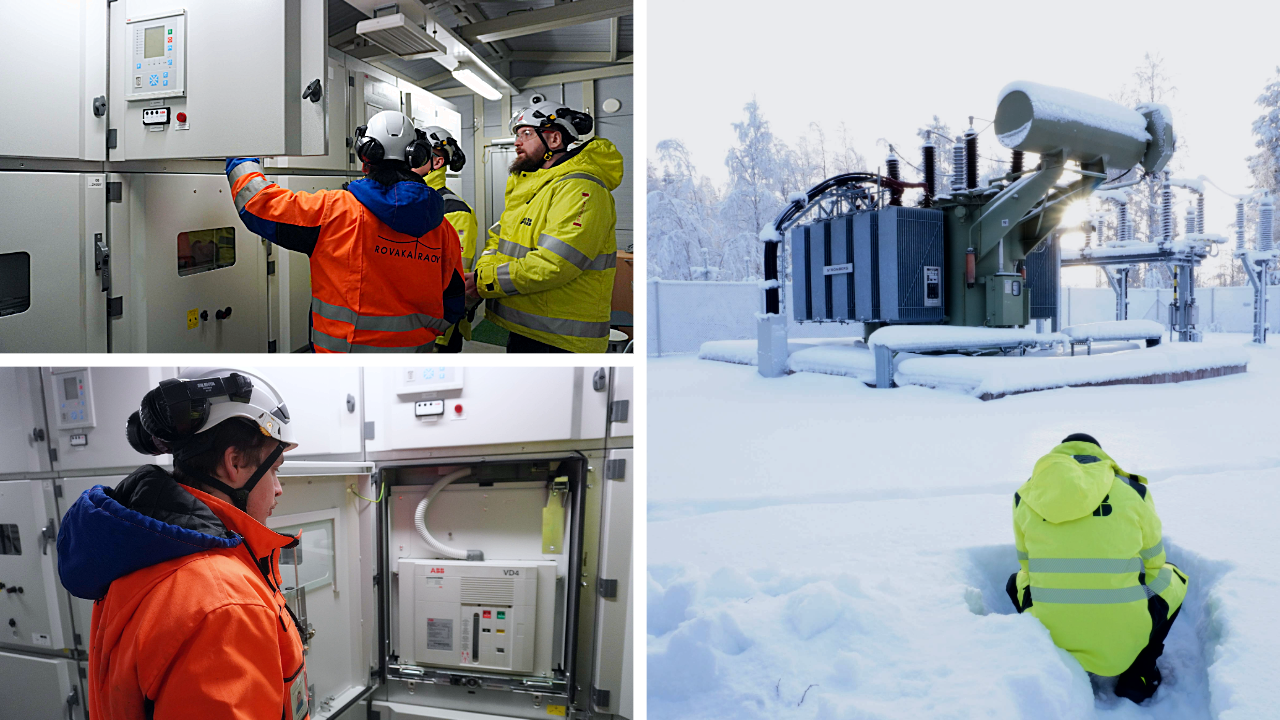
Neve has had a long partnership with ABB: cable distribution cabinets to winterproof EV charging infrastructure, and switchgear with integrated condition monitoring. Now, two key transformers at Neve's heat pump facility are being monitored using ABB Transformer Condition Monitoring — a solution centered on a sensor called TRAFCOM.
TRAFCOM sticks to the outside of a transformer. It is compatible with any transformer regardless of age or manufacturer and installed in under 15 minutes. It tracks temperature, vibration, and electrical discharge in real time, then feeds that data into a dashboard that engineers can watch from the control room.
"If something abnormal happens, it's noticed early enough so we can intervene," Pietilä explains. "Hydrogen levels, moisture, whether something is changing — we can check at all times."
A transformer showing gradual warning signs gets planned maintenance, on a schedule that works. One that fails without warning, mid-January, serves as a crisis instead. That difference — planned versus unplanned — is exactly what predictive monitoring changes.
Less reliance on manual inspection across a network that spans hundreds of kilometers of Arctic terrain.
"I personally check the parameters weekly and look at the trends. It's not comparable to maintenance done every few years — it's much more accurate." Pietilä says.
In Lapland, that's not just good engineering. It's the only way to protect grid operations and everything depending on it.


