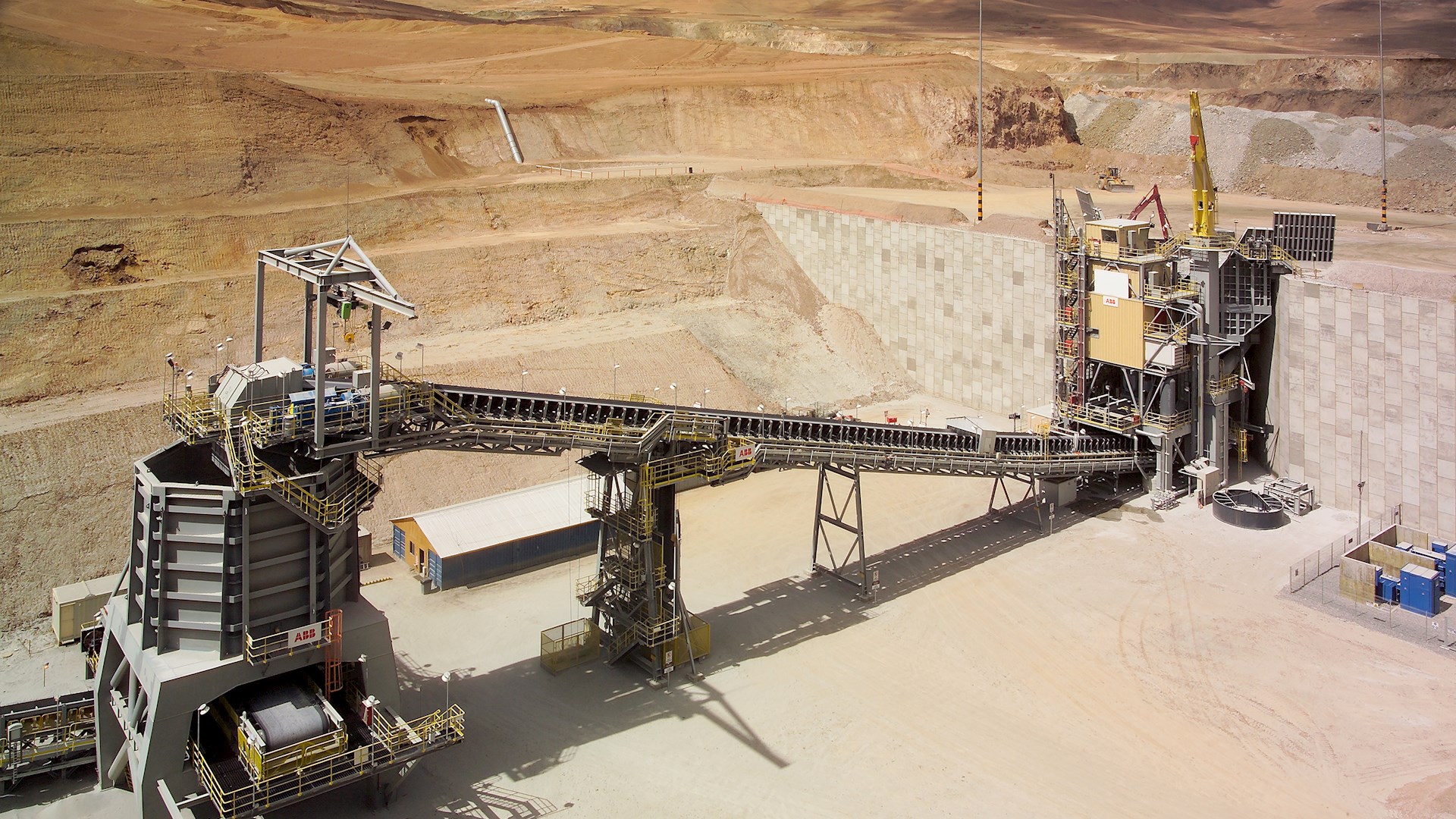
A growing dependence on mined materials
As urbanization accelerates and the global economy shifts toward cleaner energy, demand for minerals and metals has never been greater. The steel reinforcing our buildings, the copper wiring our homes and the lithium powering our electric vehicles all begin the same way: extracted from the earth. Modern infrastructure, clean energy systems and the connected world we depend on would not function without raw materials harvested through mining. The minerals and metals required for wind turbines, solar panels, battery storage and electrified transportation must be produced in growing quantities, even as the industry itself faces pressure to operate more sustainably. Behind virtually every step of that process is an industrial electric motor.
According to published research, the entire mining sector accounts for approximately 12 exajoules (equivalent to 278 billion kilowatt-hours) of energy per year, representing roughly 3.5 percent of total final global energy consumption. Industrial electric motors account for approximately 70 percent of the electricity consumed in industrial applications worldwide. In mining alone, hundreds of motor-driven systems span the full production chain, from drills and shovels at the pit face to fans ventilating underground workings, pumps managing water ingress and conveyors carrying crushed material to the processing plant. These motors must endure extreme dust, moisture, vibration and shock loading, often for years between scheduled maintenance intervals. The performance expectations are high, and the consequences of failure are measured in tons of lost production per hour.
Constant-torque applications: The backbone of mine operations
Among the many motor-driven tasks in a mine, a large share falls into the category of constant-torque applications. A constant-torque load requires the same torque output across a defined speed range, regardless of whether the motor is running at full speed or a reduced speed. Conveyors are the most visible example in mining and aggregate operations, but the category also includes feeders, crushers, hoists, cranes, extruders, mixers, positive-displacement pumps and rotary screw air compressors. Because these applications must maintain full torque at any operating speed, their motors must be capable of delivering that torque without overheating and without compromising service life.
Comminution, the grinding and crushing of ore, alone accounts for approximately 25 percent of a typical mine site's electricity consumption. Conveying systems add significantly to that figure. The energy intensity of these constant-torque applications, combined with the harsh environment in which they operate, makes the selection of the right motor and variable speed drive combination one of the highest-impact decisions a mine operator can make.
Inverter duty motors: Built for the application
Standard general-purpose AC induction motors are designed for across-the-line, fixed-speed operation and are not suited for variable-speed use. Inverter duty motors are purpose-built for variable-speed operation and are rated to NEMA MG1 Part 31, the standard governing definite-purpose inverter-fed polyphase motors. These motors feature enhanced insulation systems engineered to withstand the peak voltage spikes inherent in pulse-width-modulated variable speed drive output, along with provisions for shaft grounding to prevent bearing damage from inverter-induced currents. They are capable of delivering full torque at any speed within their rated range, making them the correct choice for the constant-torque demands found throughout mining operations.
For the harshest mining environments, purpose-designed severe duty motors add cast iron frame construction, enhanced ingress protection and corrosion-resistant finishes. ABB engineered DP200 Crush+ motors specifically for rock crushers, pellet mills and other applications requiring high horsepower and breakdown torque. Rated to NEMA Design A, which exceeds NEMA Design C torque characteristics, these motors are suitable for Class I, Division 2, Groups A, B, C and D and Class II, Division 2, Group F and G. They comply with NEMA MG1 Part 31 for inverter use and feature oversized bearings along with an IP65 ingress protection rating. ABB Baldor-Reliance quarry duty motors serve lower-horsepower, high-torque requirements in aggregate and surface mining environments, while ABB Baldor-Reliance Severe Duty XEX motors address applications across a wider power range, from one to 900 horsepower, where inverter duty constant-torque operation is required. Both the ABB and ABB Baldor-Reliance product lines feature severe duty motors that meet stringent NEMA efficiency standards, contributing to energy savings and operational cost reduction. With a focus on resilience and efficiency, ABB's severe duty motors are ideal for heavy-duty industrial applications where dependability and performance are critical.
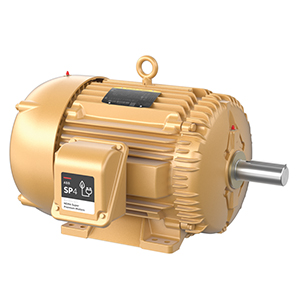
ABB Baldor-Reliance SP4 severe duty motor 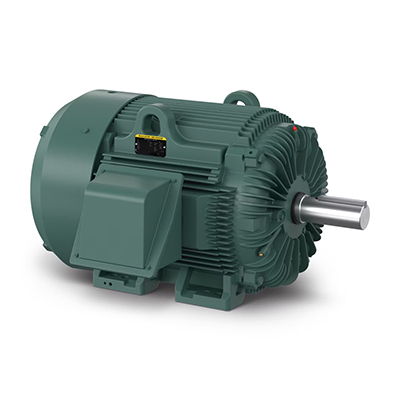
ABB Baldor-Reliance severe duty XEX motor 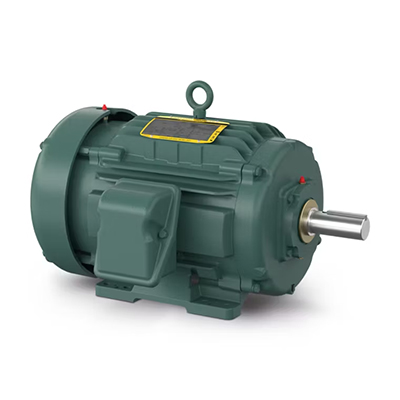
ABB Baldor-Reliance severe duty IEEE 841 motor 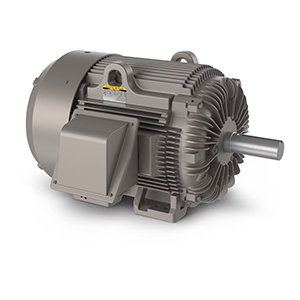
ABB Baldor-Reliance crusher duty motor 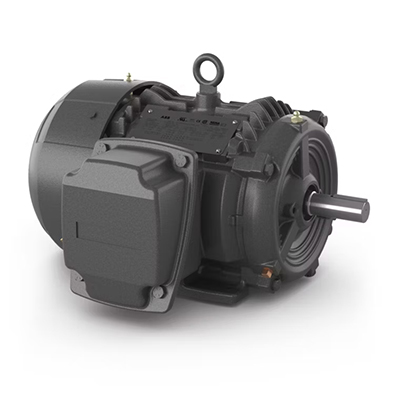
ABB SD100 severe duty motor 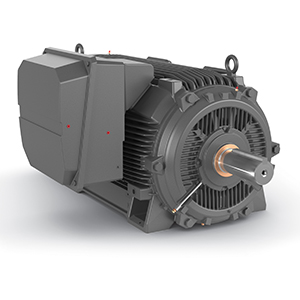
ABB SD200 841 severe duty motor 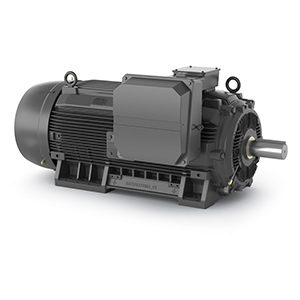
ABB DP200 Crush+ motor
Variable speed drives: Precision control across the mine
Pairing an inverter duty motor with a variable speed drive unlocks significant advantages for constant-torque mining applications. A drive converts the incoming fixed-frequency AC supply to DC, then reconstructs an AC output at the voltage and frequency the application requires. This enables precise control of motor speed, torque and power at all operating points.
The benefits for belt conveyors are particularly meaningful. Soft-starting capability eliminates the inrush current and mechanical shock of across-the-line starting, protecting belts, couplings and other drivetrain components and reducing wear throughout the system. Drives also enable accurate load sharing when multiple motors operate the same conveyor belt, ensuring each motor contributes its proportionate share of the total load. On downhill sections of a conveyor system, regenerative braking returns energy to the plant's electrical network rather than dissipating it as heat in braking resistors, generating further savings. ABB drives incorporating direct torque control technology provide real-time torque response without the need for a separate encoder in most applications, simplifying installation and improving system reliability.
Drives also allow conveyor and feeder speeds to be adjusted to match actual production rates rather than running at full speed regardless of demand. This reduces mechanical wear during low-load periods, extends equipment life and lowers energy consumption across the operating cycle. For crushers, precise torque control prevents harmful torque spikes that can damage mechanical components, while the drive's soft-start function limits stress on the power network and the motor itself at each startup.
Digitalization and predictive maintenance: Knowing before it fails
A well-matched motor and drive combination reduces energy consumption and mechanical stress, but maintaining uptime in a mine demands more than good equipment selection. The ability to detect a developing fault before it causes a production stoppage can mean the difference between a planned minor repair and a costly emergency shutdown that halts an entire conveyor line or crushing circuit.
ABB Ability™ Smart Sensor technology converts conventional motors into wirelessly connected devices capable of reporting bearing condition, vibration levels, surface temperature, speed and supply frequency in real time. The compact sensors can be factory-fitted on new motors or retrofitted on installed motors within minutes, with no additional wiring required. Predictive analytics applied to this data can reduce unplanned downtime by up to 70 percent, extend motor service life by as much as 30 percent and cut energy consumption by up to 10 percent.
For larger mining operations, the ABB Ability Predictive Maintenance service, based on the Asset Vista Condition Monitoring application, aggregates condition data from motors, drives, gearboxes, conveyors, crushers and switchgear into a unified operational dashboard. ABB specialists analyze the combined dataset to identify patterns indicating incipient failure and provide actionable recommendations with enough lead time to schedule repairs during a planned production window. This approach reduces the exposure of maintenance personnel to hazardous conditions by minimizing reactive interventions and supports a transition from time-based maintenance schedules to condition-based strategies that are both safer and more cost-effective.
Energy efficiency and the path to sustainable mining
The mining industry must navigate a set of converging pressures. Rapid urbanization is driving investment in infrastructure and construction that depends on mined materials. The energy transition is creating new demand for copper, lithium, cobalt, nickel and rare earth elements in quantities that far exceed what fuel-based energy systems required. At the same time, mining companies are under increasing scrutiny to reduce their own carbon footprint and contribute to net-zero goals.
Variable speed drives paired with high-efficiency inverter duty motors represent one of the most accessible and cost-effective tools available to reduce mine site energy consumption. By matching motor speed to actual process requirements rather than running equipment at fixed speed with mechanical throttling or bypass circuits, drives eliminate wasted energy at the source. Premium and super-premium efficient motor designs reduce resistive losses further still. ABB's integrated offering, combining energy-efficient motors, drives and digital monitoring tools, enables mining operators to optimize energy use across the full breadth of their constant-torque applications while improving productivity and equipment availability.
The path to a sustainable industrial future runs through the mine. The materials that make clean energy possible must be extracted, and the machinery that does that work runs on electricity. Choosing the right combination of inverter duty motors, variable speed drives and intelligent monitoring is not simply a matter of operational efficiency. It is a contribution to the broader goal of producing what the world needs while using as little energy as possible to do it.


