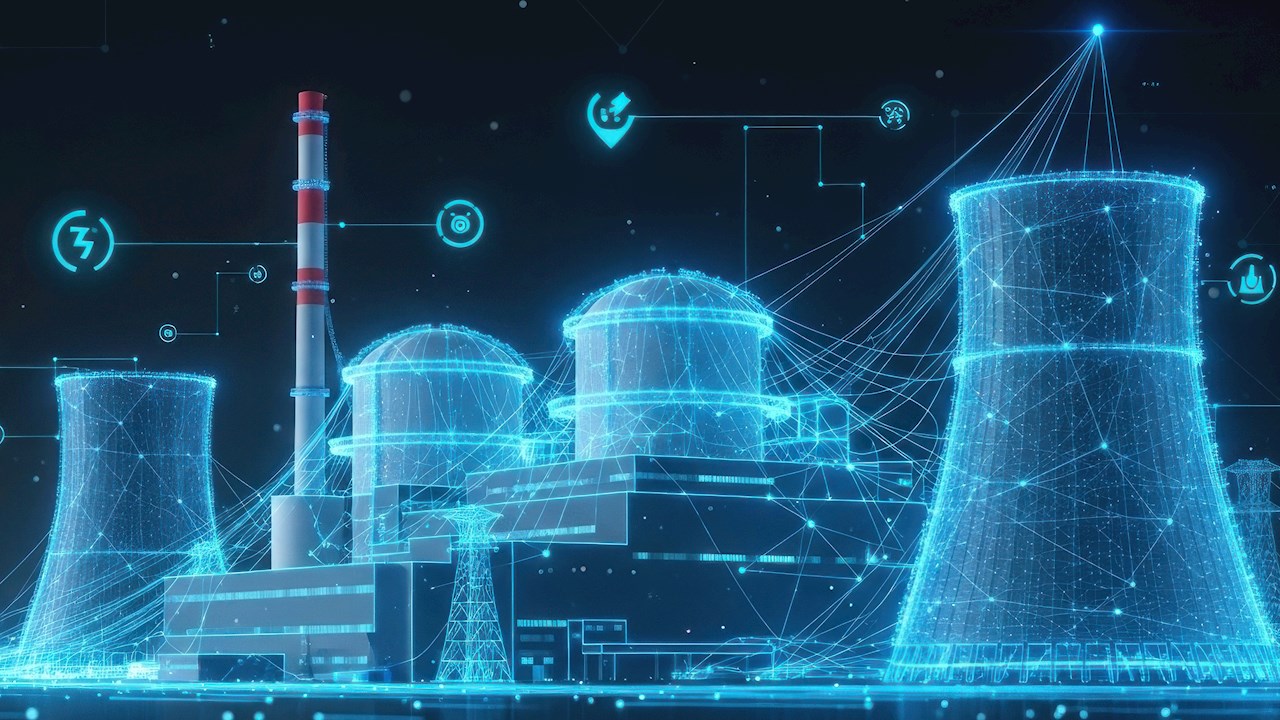
More than two-thirds of the world's operating nuclear reactors are over 30 years old. Across North America, Europe and Asia, many plants are extending their operating lives well beyond their original design expectations. In the United States, much of the fleet is already licensed to operate for 60 years, with some plants pursuing extensions to 80 years and beyond.
From my perspective, the reactor itself is rarely the biggest challenge. What concerns operators most is the aging electrical infrastructure that supports it.
It's not the reactor. It's everything around it.
Nuclear plants were built for longevity. Reactor vessels, containment structures and major mechanical systems were designed to operate for decades.
The same cannot always be said for electrical equipment such as switchgear, protection relays, motor control centers and excitation systems. Much of this infrastructure was installed with a design life of 25 to 40 years. Today, many plants expect those systems to support operations for two or three times longer.
As equipment ages, spare parts become harder to source, product lines are discontinued, and expertise on legacy systems retires alongside experienced engineers. Eventually, the question becomes less about maintenance costs and more about operational risk and safety.
I believe this is one of the most important challenges facing the nuclear industry today.
Why replacing everything is often the wrong answer
A common assumption is that aging infrastructure should simply be replaced. In nuclear environments, that is rarely the most practical or economical solution. Complete replacement can require lengthy outages, extensive redesign work and costly requalification of systems. For plants supplying critical baseload power, prolonged downtime can create significant operational and energy security risks. In many cases, a targeted modernization strategy delivers better outcomes.
At Belgium's Doel 4 nuclear power plant, operators were preparing for an extended operational life while facing growing concerns around aging electrical equipment. Working closely with ENGIE Electrabel, ABB’s Electrification Service team conducted a detailed assessment of the installed base to determine where modernization would provide the greatest value.
The result was a balanced approach that combined retrofit and replacement. Existing infrastructure was retained where it remained fit for purpose, while critical components were upgraded using modern technologies. This approach reflects an important principle: much of the physical electrical infrastructure can continue operating reliably when the active components inside it are modernized, monitored and maintained correctly.
The benefits go beyond cost savings. Modernization reduces downtime, minimizes disruption, supports sustainability goals and helps operators make better use of existing assets.
Data is becoming as important as hardware
The future of nuclear service will depend as much on data as it does on the physical assets it supports. Traditionally, maintenance programs relied heavily on fixed schedules. Components were inspected or replaced at predetermined intervals because operators had limited visibility into their actual condition.
Today, digital monitoring technologies provide a much clearer picture. By continuously tracking equipment health, performance and efficiency, operators can shift toward condition-based maintenance. Decisions are made based on actual asset health rather than assumptions about age alone.
The result is improved reliability, better availability and more efficient use of maintenance resources.
Remote inspection technologies are also helping reduce risks in areas where access is limited or radiation exposure must be minimized. These capabilities allow teams to gather critical asset data while reducing the need for personnel intervention.
As the global nuclear fleet continues to age, I expect data-driven asset management to become increasingly important.
Every upgrade should be designed for the next one
One question I believe every modernization project should ask is: what will the next generation of engineers need from the systems we install today? If plants are expected to operate for 80 years or even 100 years, today's upgrades will not be the last.
Future teams will modernize these systems again. That is why modernization programs must be designed with flexibility in mind. Open architectures, modular designs and scalable digital platforms make it easier to integrate future technologies and avoid creating unnecessary technical debt.
When electrification, automation and digital monitoring systems are planned as part of a unified strategy, operators are far better positioned to adapt over time. Modernization should not be measured by what it solves today, but by how well it prepares a plant for the upgrades of tomorrow.
A 100-year plant requires a long-term mindset
The technology needed to extend the life of existing nuclear plants already exists. The engineering expertise exists as well. What is needed now is the confidence to invest for the long term.
Nuclear power remains one of the world's largest sources of low-carbon, dispatchable electricity. As demand grows through electrification, industrial expansion, and digital infrastructure, the value of these assets will only increase. Many of the nuclear plants operating today were built in the 1970s and 1980s for a very different energy landscape. Our role now is not only to keep them running, but to ensure they are ready for the decades ahead.
As electricity demand continues to grow, extending the life of existing nuclear plants represents one of the energy sector's most strategic opportunities. Every additional year of safe, reliable operation helps strengthen grid resilience, support economic growth, and accelerate the transition to a lower-carbon future. The technology to modernize these assets already exists. The challenge is ensuring we have the vision and commitment to invest in it. The decisions we make today will determine whether the nuclear fleet we inherited becomes the foundation of the energy system we need tomorrow.


