
_____________________________________________________________________________________________
Starting June 1, 2027, the U.S. Department of Energy (DOE) will enforce stricter efficiency standards for specific electric motor categories. Under the new requirements, ODP, TEFC and explosion-proof motors rated 100 to 250 horsepower must achieve NEMA Premium® 4 (IE4) efficiency levels, while certain air-over motor categories will be subject to efficiency requirements for the first time. This article explains the upcoming DOE efficiency requirements and the potential impacts on motor systems and infrastructure. ABB is committed to helping customers confidently prepare for the new requirements while minimizing disruption to their operations. The company recommends engaging procurement, engineering and reliability teams early to assess impacts, evaluate options, and develop a transition plan.
Understanding the 2027 DOE Mandate
The 2027 DOE mandate builds upon two distinct but related regulatory frameworks: the Test Rule and the Medium Electric Motor (MEM) Rule. Understanding the distinction between these two is essential to grasping the full scope of the upcoming changes.
The Test Rule
Published and in effect since October 2023, the Test Rule establishes the foundational methodology for measuring and certifying motor efficiency. Key elements include:
- Efficiency requirements must be met at all voltages listed on the motor nameplate.
- Coverage has been expanded to motors ranging from 0.25-750 Hp (previously 1-500 Hp).
- Testing requirements now apply to both open and enclosed motor types.
Note: The MEM Rule does not initially cover all motors included under the Test Rule; additional motor categories may be incorporated through future rulemaking.
The MEM Rule — Effective June 1, 2027
Starting June 1, 2027, specific motor categories must meet elevated efficiency standards. The key categories and requirements are as follows:
|
Motor Type |
Horsepower Range |
Previous Required |
New Required Efficiency Level |
|---|---|---|---|
|
ODP, TEFC and explosion-proof motors |
100-250 Hp |
NEMA Premium® |
NEMA Premium® 4 |
|
Air-over electric motors |
1-100 Hp |
Not in regulation |
NEMA Premium® |
|
Air-over electric motors |
100-250 Hp |
Not in regulation |
NEMA Premium® 4 |
|
Air-over down-framed motors |
1-20 Hp |
Not in regulation |
Energy Efficient |
|
ODP, TEFC and explosion-proof motors |
500-750 Hp |
Not in regulation |
NEMA Premium® |
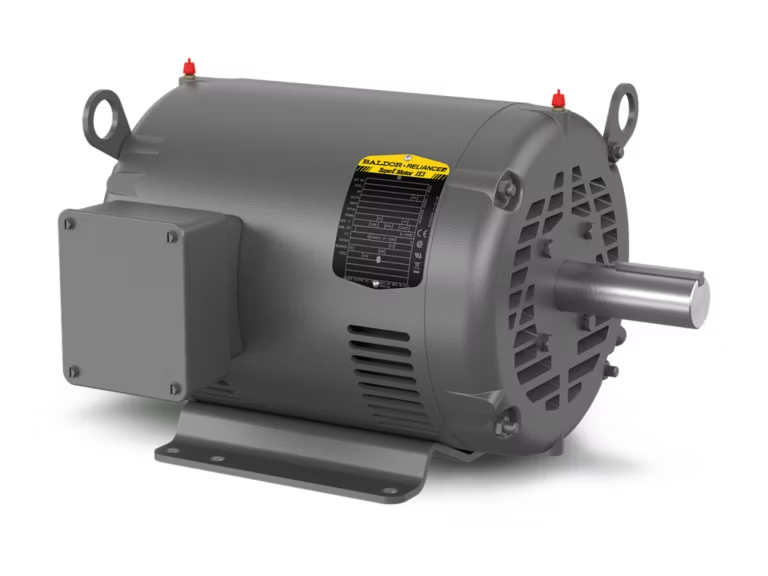
Open drip-proof (ODP) motor 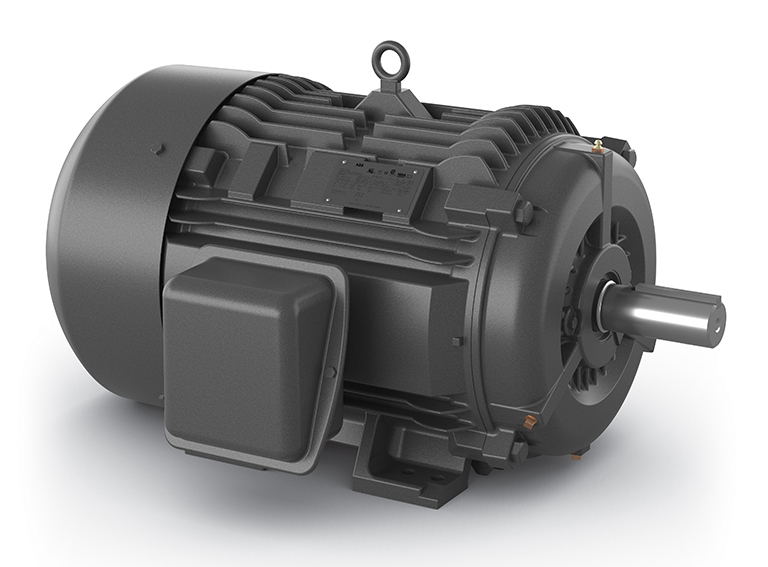
Totally emclosed fan-cooled motor 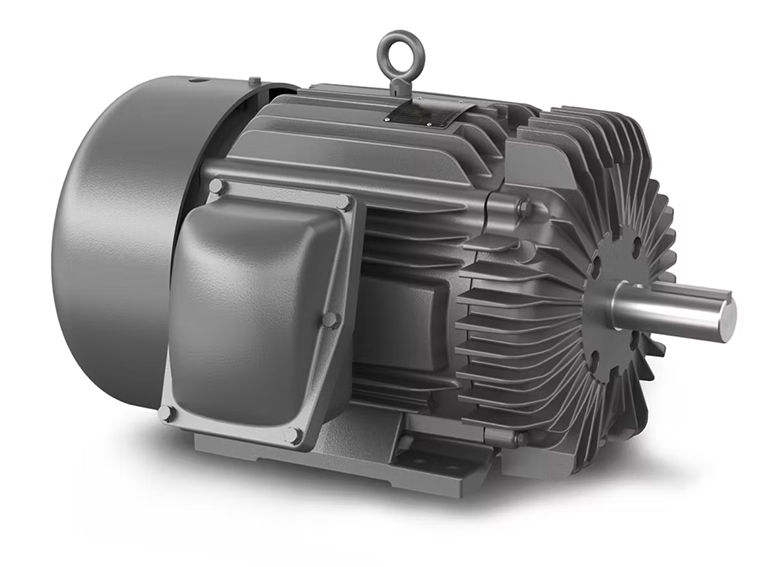
Explosion-proof motor 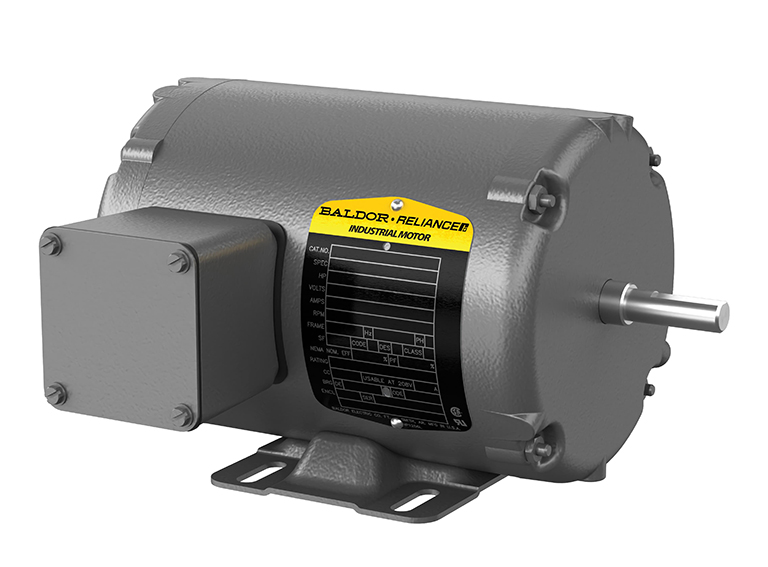
Totally enclosed air-over (TEAO) motor
Understanding the Nomenclature
In 2025, the National Electrical Manufacturers Association introduced the NEMA Premium® program with updated efficiency nomenclature designed to align with international standards and provide clearer performance tiers. The table below maps the legacy naming conventions to the new NEMA Premium® designations and their IEC equivalents.
|
Previous NEMA Nomenclature |
New NEMA Nomenclature |
NEMA MG1 Table |
IEC Equivalent Nomenclature |
|---|---|---|---|
|
Standard |
Standard Efficiency |
-- |
IE1 |
|
Energy Efficient |
Energy Efficient |
12-11 |
IE2 |
|
Premium |
NEMA Premium® |
12-12 |
IE3 |
|
Super Premium |
NEMA Premium® 4 |
12-23 |
IE4 |
|
Ultra-Premium |
(Not yet published) |
-- |
IE5 |
What This Means for Your Operations
Transitioning to NEMA Premium® 4 efficiency motors delivers measurable business benefits. These motors typically reduce energy losses by approximately 15-20% compared to NEMA Premium® designs, resulting in lower electricity consumption and reduced operating costs over the motor's lifetime. This efficiency improvement enables a faster return on investment, with many applications achieving payback within two to five years. Additionally, the transition reduces your facility's carbon footprint, supporting corporate ESG (environmental, social and governance) commitments. Aligning with international efficiency standards (IEC IE4) also simplifies procurement across multiple regions and reduces design complexity for multinational operations.
While these benefits are significant, achieving higher efficiency levels requires fundamental changes to motor design and construction. As a result, customers should understand several mechanical, electrical and system-level considerations before implementing new motor technologies.
Mechanical Changes
One of the most visible impacts of the new efficiency requirements may be changes to motor dimensions. Some motors, particularly at the larger end of a frame size, may be slightly longer to maintain shaft height and mounting compatibility with existing equipment.
Air-over specialized frame (down-framed) motors (1-20 Hp) and air-over electric motors (100-250 Hp) that were previously smaller than standard NEMA sizes (and had no efficiency requirement) may now need to be one NEMA frame size larger to meet new efficiency standards.
Electrical Impacts
One of the most significant consequences of the new efficiency requirements is an increase in locked-rotor (inrush) current. Achieving NEMA Premium® 4 efficiency levels inherently requires motor designs that draw higher inrush current; therefore, it may not be possible to simultaneously achieve NEMA Premium® 4 efficiency and maintain compliance with traditional NEMA Design B or Design C locked-rotor current limits.
To address this, NEMA MG-0001 2024 introduced Design BE and Design CE designations, which establish revised upper limits for locked-rotor current to support proper sizing of conductors, overcurrent protection devices and motor controllers - unlike Design A, which placed no upper limit on inrush current.
System & MCC Compatibility
An increase in locked-rotor current has a direct impact on motor control centers (MCCs), starters, conductors and overcurrent protection devices. Customers can consider the following mitigation approaches by assessing their existing infrastructure:
- Design B motors (where available): The simplest and often most cost-effective solution - no additional equipment or calculations required. Customers gain the benefits of higher energy efficiency with minimal system changes without the added cost or uncertainty from other solutions.
- Capacity evaluation of existing controls: Where Design B is not available, comparing the existing MCC/starter capacity against the new locked-rotor current may reveal that no additional investment is needed.
- Variable speed drives (VSDs): The most effective mitigation strategy. A VSD eliminates the inrush current concern and delivers additional energy savings that can justify the investment.
- Soft starters: Also effective at reducing in-rush current, though they offer limited energy savings compared to VSD operations.
- Contactors and breakers may need to be resized if any of the above options are not available.
Commercial and Supply Considerations
As manufacturers pursue higher efficiency levels, additional copper and electrical steel are often required to reduce electrical losses. While this can increase motor costs, ABB is actively optimizing product designs and manufacturing processes to help minimize customer impact.
From a supply chain perspective, the transition to new efficiency standards is not expected to materially impact motor lead times, provided customers and suppliers plan ahead.
Customers should also evaluate potential dimensional changes for certain air-over motor applications during the planning process.
Understanding the regulation is only part of the equation. Equally important is ensuring that equipment suppliers are prepared to support customers through the transition and help address potential operational impacts.
How ABB is Supporting Your Transition
ABB is fully committed to meeting the 2027 DOE MEM Rule requirements across all relevant product lines ahead of the June 1, 2027 deadline. The approach is centered on three priorities: compliance, customer continuity and innovation.
Full Product Line Compliance
ABB will ensure all applicable motors meet the new MEM Rule requirements before the effective date, and will carefully manage the phase-out of current inventory motors affected by the updated regulation to minimize disruption to our customers.
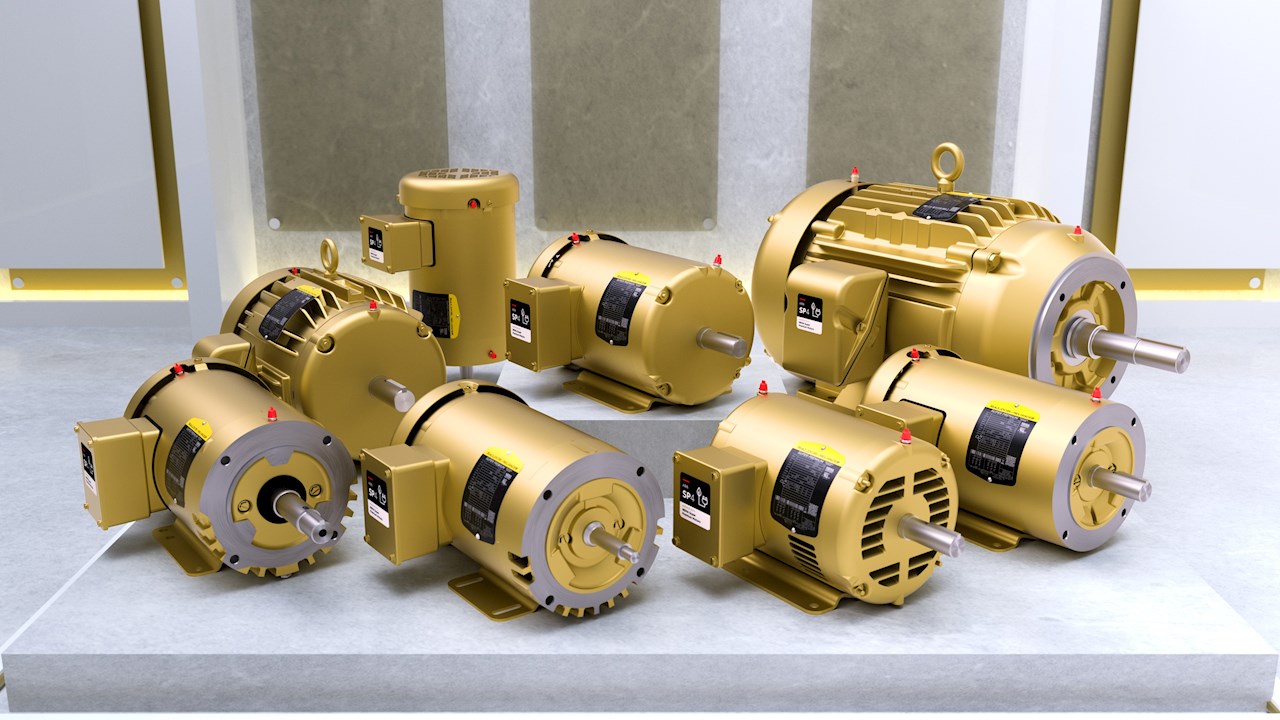
Many of ABB's products have already begun this transition through the SP4 product line offering, which exceeds the minimum 100-250 Hp requirement and demonstrates ABB's commitment to staying ahead of regulatory change.
Minimizing Customer Impact
ABB understands that motor replacements can have downstream effects on mechanical and electrical infrastructure. The company is actively working to:
- Maintain motor length consistency wherever possible to preserve existing mounting arrangements.
- Reduce locked-rotor current through advanced motor design to extend Design B availability.
- Offer Design B variants where technically feasible to simplify system integration.
Support for Complex Applications
ABB is committed to proactively communicating all relevant motor design changes to customers while collaborating to identify optimal solutions for new projects and retrofit applications.
The ABB Partnership Approach
ABB encourages early engagement across customer procurement, engineering and reliability teams to assess potential impacts and develop transition plans. Whether the solution involves a Design B motor, a VSD-driven system, or a frame adjustment, ABB's technical and commercial teams are ready to provide directional guidance and support every step of the way.
For questions regarding the 2027 DOE efficiency mandate or ABB's motor product roadmap, please contact your ABB sales or applications representative.
_____________________________________________________________________________________________________________________________________________________________
Frequently Asked Questions
The following questions address some of the most common topics ABB receives regarding the upcoming DOE efficiency mandate and NEMA Premium® 4 requirements.
When does the new DOE efficiency mandate take effect?
The U.S. Department of Energy (DOE) Medium Electric Motor (MEM) Rule becomes effective on June 1, 2027. Motors manufactured on or after this date must meet the updated NEMA Premium® efficiency requirements. Motors manufactured prior to this date that comply with current regulations may continue to be marketed and sold.
Do I need to replace motors currently in operation?
No. The regulation applies to motors at the point of manufacture, not to motors already in service. Existing motors may continue to operate as long as they remain functional. The new requirements apply only when purchasing new motors within the defined scope of the MEM Rule.
Will all my motors be affected by this mandate?
No. The MEM Rule applies only to specific motor types and horsepower ranges. Affected categories include:
- ODP, TEFC and explosion-proof motors rated 100-250 Hp
- Air-over electric motors rated 1-75 Hp and 100-250 Hp
Motors outside these ranges are not currently covered. A review of installed equipment is recommended to determine applicability.
Will I be able to purchase motors built to the previous efficiency standard after June 1, 2027?
Motors covered under the MEM Rule must meet the new efficiency requirements when manufactured on or after June 1, 2027. However, motors manufactured prior to this date that comply with current regulations may continue to be sold, allowing customers to work through existing inventory. For motor ratings not covered by the MEM Rule, previous efficiency standards remain unchanged.
Do existing regulatory exemptions still apply under the 2027 MEM Rule?
Yes, with one key change. The MEM Rule removes the exemption for Air-over electric motors, which are now subject to efficiency requirements:
- 1-75 Hp: NEMA Premium® efficiency (IE3)
- 100-250 Hp: NEMA Premium® 4 (IE4)
All other existing exemptions remain unchanged.
Will NEMA Premium® 4 motors be larger or heavier than current motors?
In some cases, yes. Achieving NEMA Premium® 4 efficiency requires additional active materials such as copper and high-grade electrical steel. As a result:
- Motor length may increase
- Frame diameter may increase in certain designs
- Motor weight may increase, in some cases up to approximately 20%
Motors remain designed within NEMA standards to maintain mounting compatibility wherever possible.
Will NEMA Premium® 4 motors operate the same as existing motors?
Not exactly. NEMA Premium® 4 motors typically operate with lower slip, which may result in slightly higher full-load speeds. Depending on the application, this may influence system performance and should be evaluated during design or retrofit planning.
Will NEMA Premium® 4 motors draw more current or have higher inrush current?
It depends on the motor design. Efficiency improvements are achieved by reducing internal losses, not necessarily by lowering current draw. As a result:
- Running current may remain similar or increase slightly
- Inrush (locked rotor) current may be higher in some designs
However, certain ABB motor designs are engineered to maintain traditional Design B locked-rotor current limits. A system-level evaluation is recommended to confirm compatibility.
How do I determine if my existing motor control system is compatible?
A system-level assessment is recommended to evaluate compatibility. This includes reviewing motor ratings and comparing locked-rotor current characteristics with the capacity of existing motor control centers (MCCs), starters, conductors and protection devices. In many cases, existing infrastructure may already be sufficient
What options are available if my system does not support the new motors?
Several solutions are available, depending on the application:
- Design B motors (where available): Maintain traditional locked-rotor current limits
- Capacity evaluation: Existing systems may support the new motors without modification
- Variable speed drives (VSDs): Eliminate inrush current concerns and provide additional energy savings
- Soft starters: Reduce inrush current with minimal system impact
- System upgrades: May include resizing contactors, breakers or conductors
What are the benefits of transitioning to NEMA Premium® 4 efficiency motors?
NEMA Premium® 4 motors deliver measurable performance and operational advantages, including:
- Reduced energy consumption and lower operating costs
- Lower operating temperatures, supporting longer motor life
- Potential payback within two to five years, depending on the application
- Reduced environmental impact, supporting ESG objectives
Over the motor's lifecycle, these benefits contribute to a lower total cost of ownership.
Will lead times be affected during the transition?
Lead times are not expected to be materially impacted, provided appropriate planning and early engagement with your motor supplier. Early coordination is recommended to ensure product availability and a smooth transition.
What steps should I take to prepare for the transition?
Preparation should begin with understanding how the MEM Rule applies to your operation. Key actions include:
- Identifying affected motors within your facility
- Evaluating system compatibility and potential infrastructure impacts
- Reviewing available efficiency upgrade options
- Developing a transition plan aligned with operational requirements
Early planning will help minimize disruption and ensure compliance with the new standards.


