India is world's third largest generator of e-waste, after China and the US, producing roughly 1.6 million tonnes annually, according to the Central Pollution Control Board (CPCB). Mumbai and Delhi are the country's largest e-waste generating cities, with Bengaluru close behind in third, per the Ministry of Electronics and Information Technology.
As India addresses the growing challenge of e-waste, creating and strengthening safe, sustainable, and formal systems for collection, refurbishment and recycling is becoming increasingly important. While the formal e-waste ecosystem is developing, the informal sector remains a significant part of India’s e-waste value chain. Many workers in this sector operate without adequate safety, recognition or access to formal livelihood opportunities, and unsafe handling and processing of e-waste can also pose environmental and health risks to workers and communities.
Building women-led enterprises in the e-waste value chain
To address this, ABB partnered with PCI India to launch E-Rozgar, a 16-month initiative designed to create sustainable livelihoods for women from waste-picking communities and support their transition into skilled, entrepreneurial roles within the e-waste sector. The initiative combines business and technical training with the opportunity to establish and operate women-led e-waste enterprises.
Women form an important part of the informal waste economy but are often confined to its lowest-value roles, work marked by limited recognition, social stigma, and economic vulnerability. Helping them move into skilled, entrepreneurial roles creates both social and environmental impact, while opening access to higher-value activities within the circular economy.
At the centre of the model is Naari Circuit, a platform developed with input from the participating communities. It lets women entrepreneurs digitally record collections, track materials and earnings, and connect directly with certified recyclers, while also supporting offline operations across the enterprises, improving traceability and access to formal recycling channels.
The six enterprises established through E-Rozgar operate under the Naari Circuit brand, giving citizens a network of women-led collection points where they can responsibly dispose of their e-waste.
Creating skills and sustainable livelihoods
The E-Rozgar initiative was designed to create sustainable livelihood opportunities for women from underprivileged backgrounds, including those with links to the informal waste collection system.
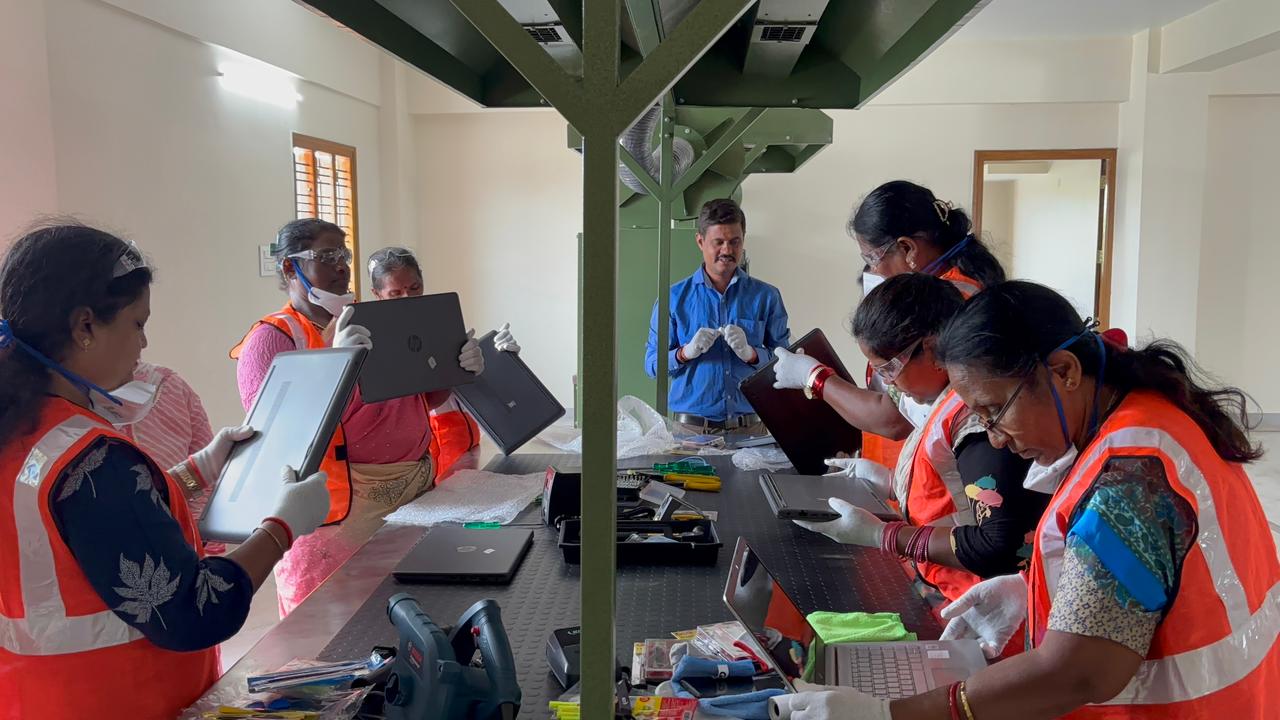
To date, 253 women from waste-picking communities have trained on basic business management and technical skills, equipping them with the skills needed to manage an enterprise and participate in e-waste collection, segregation and refurbishment.
From training to measurable impact
- A key outcome has been the establishment of six women-led e-waste enterprises. In June 2026, Women's E-Waste Management LLP was registered as the sixth, completing the network envisioned under the initiative.
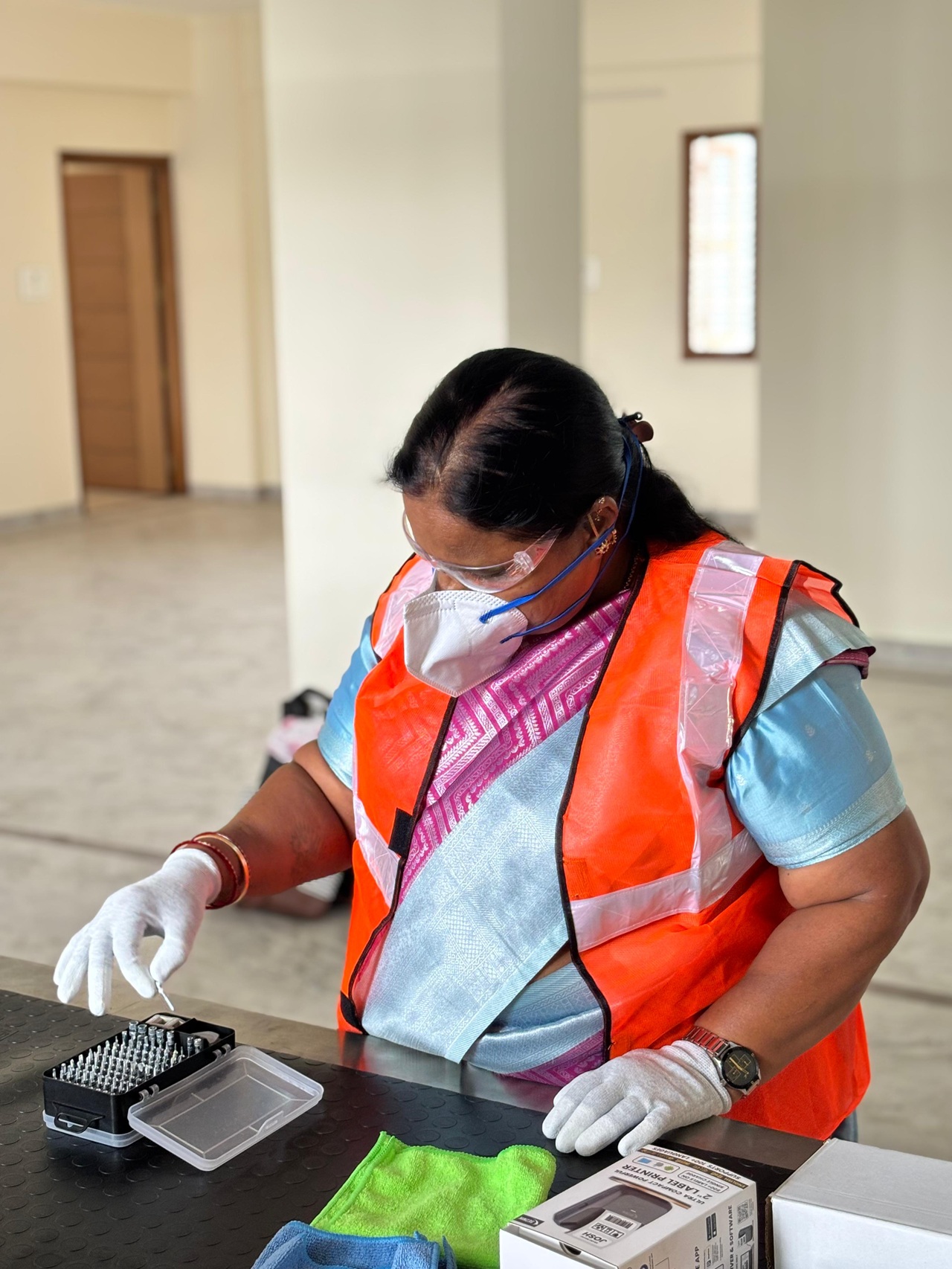
- Another milestone was the inauguration of the Naari Circuit Refurbishment Unit at Kumbalgodu, equipped with refurbishment tools, safety systems, inventory processes and branded electric vehicles. The facility lets trained women entrepreneurs take on higher-value refurbishment activities, including diagnostics, repair and quality inspection of electronic equipment.
- As the project draws to a close, its impact across the six enterprises is already visible: nearly 7 metric tonnes of e-waste has been collected to date. The refurbishment unit adds to this by extending the useful life of discarded laptops and other electronic equipment, generating additional value from materials that would otherwise enter the waste stream.
Turning e-waste into opportunity
E-Rozgar shows how an environmental challenge can also become an opportunity for economic inclusion. By helping women from waste-picking communities develop new skills, establish enterprises and move into higher-value activities, the initiative is building a more inclusive model of participation in the circular economy. With all six Naari Circuit enterprises now operational, it offers women a pathway to sustainable businesses, and citizens a more responsible way to dispose of their e-waste.


