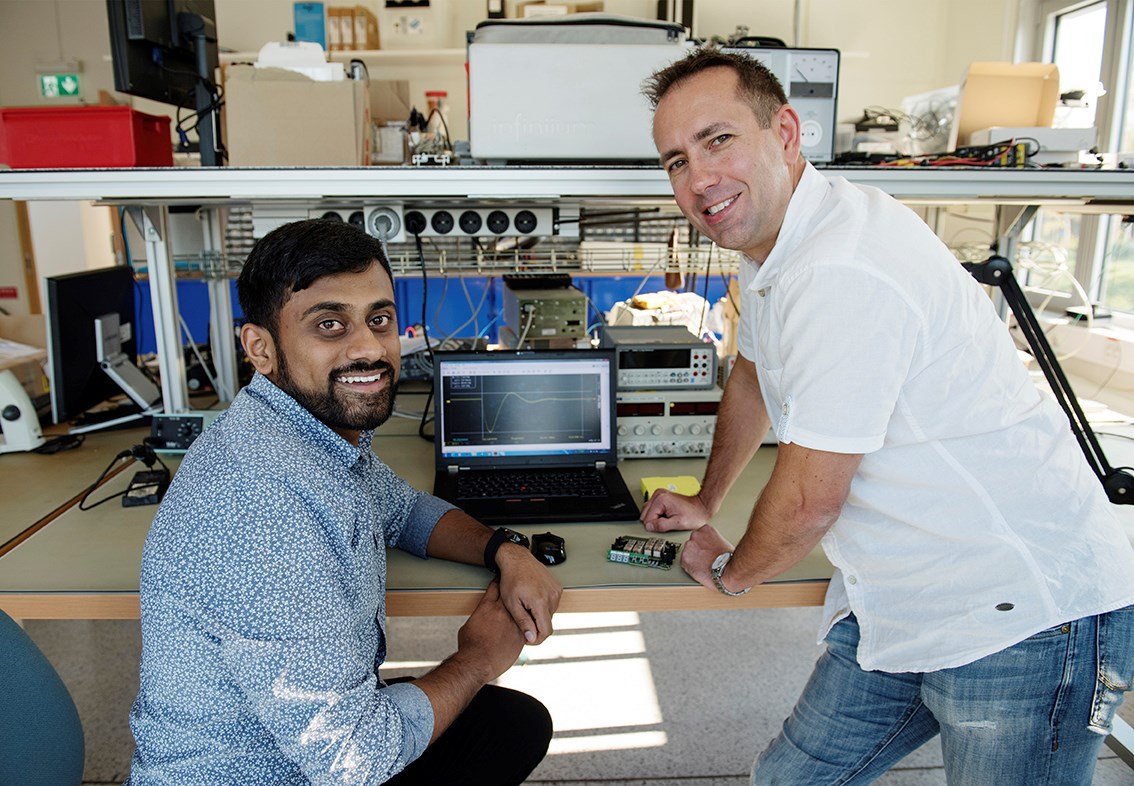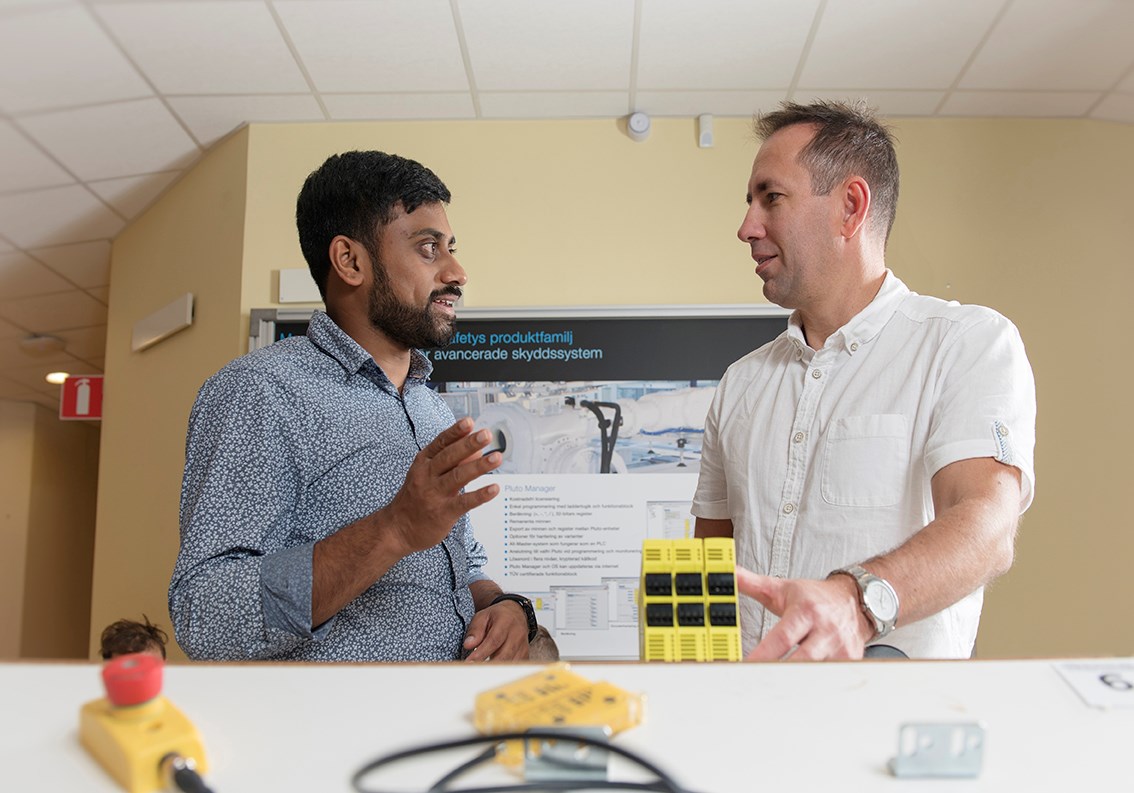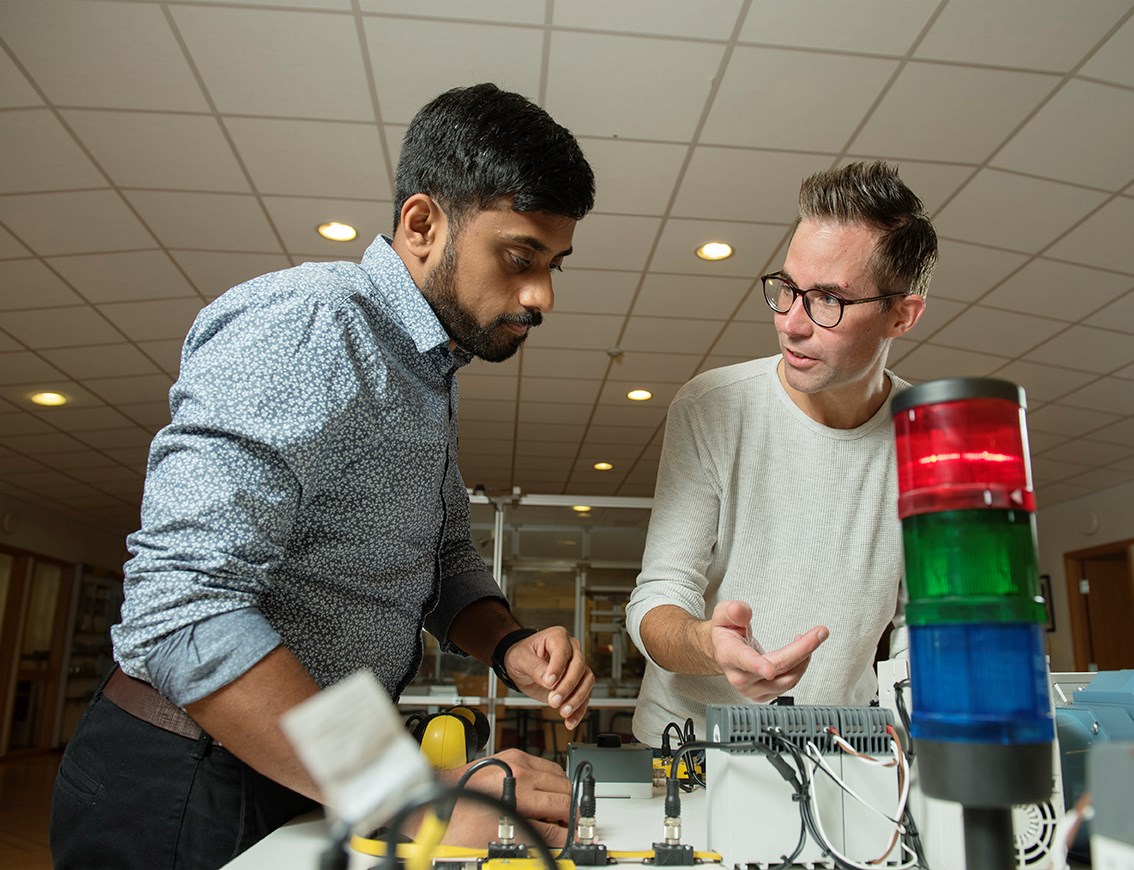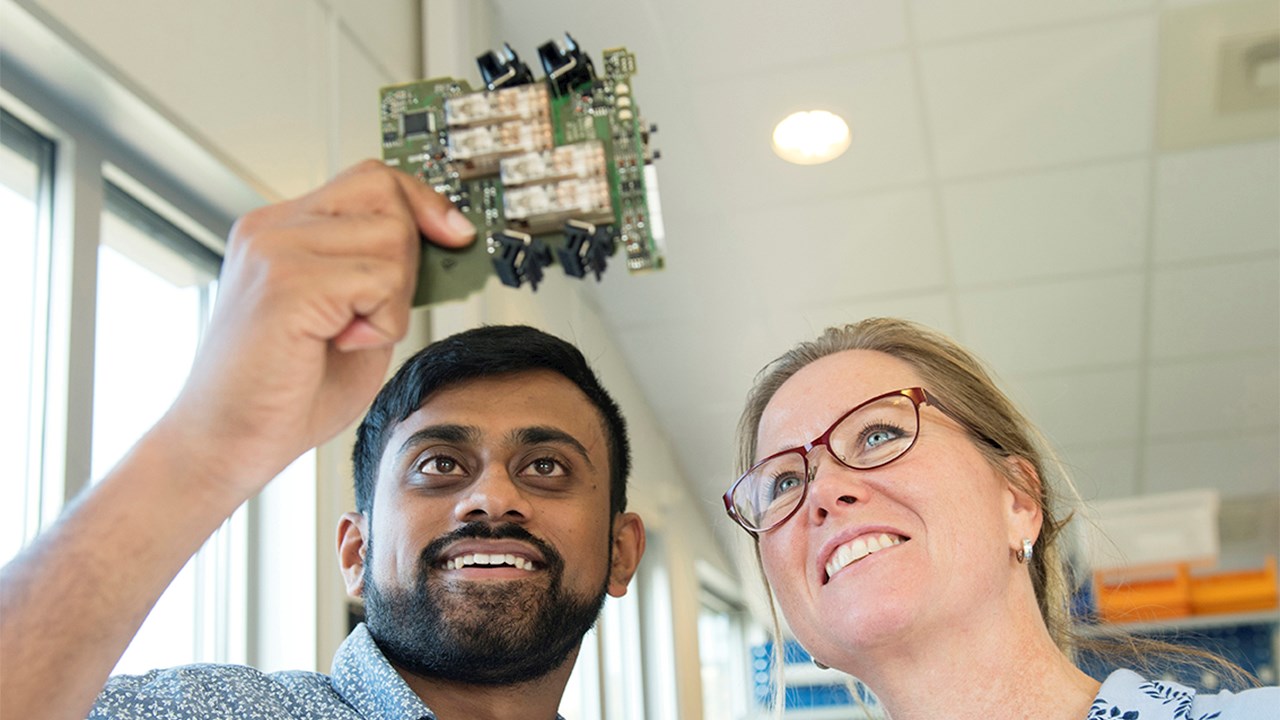
A worst case analysis led to a best case scenario — something both Gurudeep and his manager Stefan Miholic agrees on.
Gurudeep Manjulgud Devraj is 25 years old and has made a long journey from his native Bangalore, India — a city with millions of residents and where he received his bachelor’s degree in Mechatronics— to comparatively speaking tiny Kungsbacka in the western part of Sweden.
“I came to Chalmers in 2016 to get my master’s degree. When it came time to select a topic for my master’s thesis, I read a description for a thesis work on ‘worst case analyses’ that caught my eye.”
Stefan Miholic had written the description. Gurudeep contacted Stefan at ABB and was called to an interview.
“I felt good about Gurudeep from the start at the interview. He was energetic and asked relevant questions,” remembers Stefan Miholic.
Stefan Miholic is head of the research and development department at ABB in Kungsbacka. The factory develops products for machine safety that help prevent injuries to people working in the industry.
“The customer connects our products to a safety system which monitors, for example, a robot cell. You have to be able to trust the functionality and safety of an emergency stop device, for instance, even if it hasn’t been used in five years,” says Stefan Miholic.
Thus rigorous tests and analyses are called for to validate and verify the products. This is where worst case analyses come into the picture. Gurudeep was tasked with producing a new analytical tool which could satisfy ABB’s high demands.
Rewarding for both parties
The two parties got to know one another during the months the thesis work was under way.
“It was a really good experience. I learned new things every day and made a few mistakes along the way, which was also educational,” says Gurudeep.
From his perspective, Stefan gained access to a thesis work student who was responsive, ambitious, down to earth and a good discussion partner — the exact qualities he likes to see in his employees. Stefan believes that accepting thesis work students is better than any job interview.
Gurudeep was offered a job and has been an employee since last summer. What is one piece of advice he has for other thesis work students?
“Remember that an interesting thesis work gives you the chance to learn about an organization from the bottom up. As a student, you have ideas but no resources. The industry has resources but needs ideas,” says Gurudeep.
Stefan Miholic agrees.
“We need to hire young people with a new outlook on our operations — people like Gurudeep who aren’t stuck in old ideas. We need to have agile working methods in place. We work to achieve this, but as a forty year old I might have a less flexible mindset.”
Stefan says the thesis work was also a learning process for the company since they were able to take part in Gurudeep’s work process. In the future he’s hoping to accept at least one thesis project student a year. Accepting thesis work students is one way to increase the chance of hiring the right people.
“I want you to work where you enjoy the job and feel a bit challenged, because that is when you will do your best. Right now you are learning the basics about our products, but eventually I hope to encourage you to seek higher ambitions here in Kungsbacka — and then there is all of ABB,” Stefan says to Gurudeep.
Gurudeep nods enthusiastically. He looks forward to learning something new every day when he wakes up. One day in the future, he hopes to return to the coffee plantation where he grew up and use technology to streamline the physically strenuous work done there. Right now, though, he is happy in Kungsbacka, even though he misses genuine Indian food and finds the combination of cold and darkness a bit difficult to take in the winter months.
“I will continue learning and using my know-how to help the company move forward,” says Gurudeep.
Text and photos: Anna Rehnberg