ABB’s SynerLeap innovation hub in the Nordics demonstrates how close interaction with startups leads to value in terms of new products, knowledge exchange and faster innovation. Collaborations with two SynerLeap members, Graphmatech and Algoryx, illustrate well the benefits of the partnership.
Anthony Byatt External author; ABB Contact: Victoria Lietha, victoria.lietha@ch.abb.com
Nowadays, enterprises have to be nimble so they can harness and exploit the latest technology before that technology is stale or superseded, or before a competitor dominates it. In other words, development has to take place in a fast-moving, dynamic and innovative environment.
ABB has recognized this need to work in an innovative ecosystem and has set up SynerLeap. SynerLeap is an ABB innovation hub based in Sweden, that helps early- and mid-stage companies accelerate and expand in a global market. Members of SynerLeap have fast-growing potential in the area of automation, robotics, energy and industrial digitalization. Entrepreneurs, startups, accelerators and various other partners are likely members of SynerLeap. Some of these may be recipients of a capital investment from ABB.
The SynerLeap idea is to foster and facilitate innovation across the board. The SynerLeap environment can be thought of as being similar to that of an incubator or accelerator, in which potentially profitable ideas are developed and supportive surroundings offered – all within the environs of a big company.
A companion article in this issue of ABB Review offers an interview that covers SynerLeap itself in more detail [1]. Below, work with two member companies – Graphmatech and Algoryx – is discussed to show how SynerLeap encourages innovation to thrive in an environment where an openness and a willingness to share insights from the parties involved is of benefit to all.

Graphene and Graphmatech
If there ever was a material that is all things to all men, it is graphene. Derived from the graphite form of carbon, graphene has the form of a sheet of carbon atoms just one atom thick. It was first isolated from graphite in 2004 – work that lead to a Nobel Prize for the researchers in 2010. Despite its two-dimensional structure of solely carbon atoms, arranged hexagonally, graphene is highly flexible and has 100 times the strength of steel. It is transparent, conductive and impermeable to a wide range of gases and liquids, except – notably and usefully (filtering/desalination) – water, for instance. The substance has potential in more applications than can be listed here.
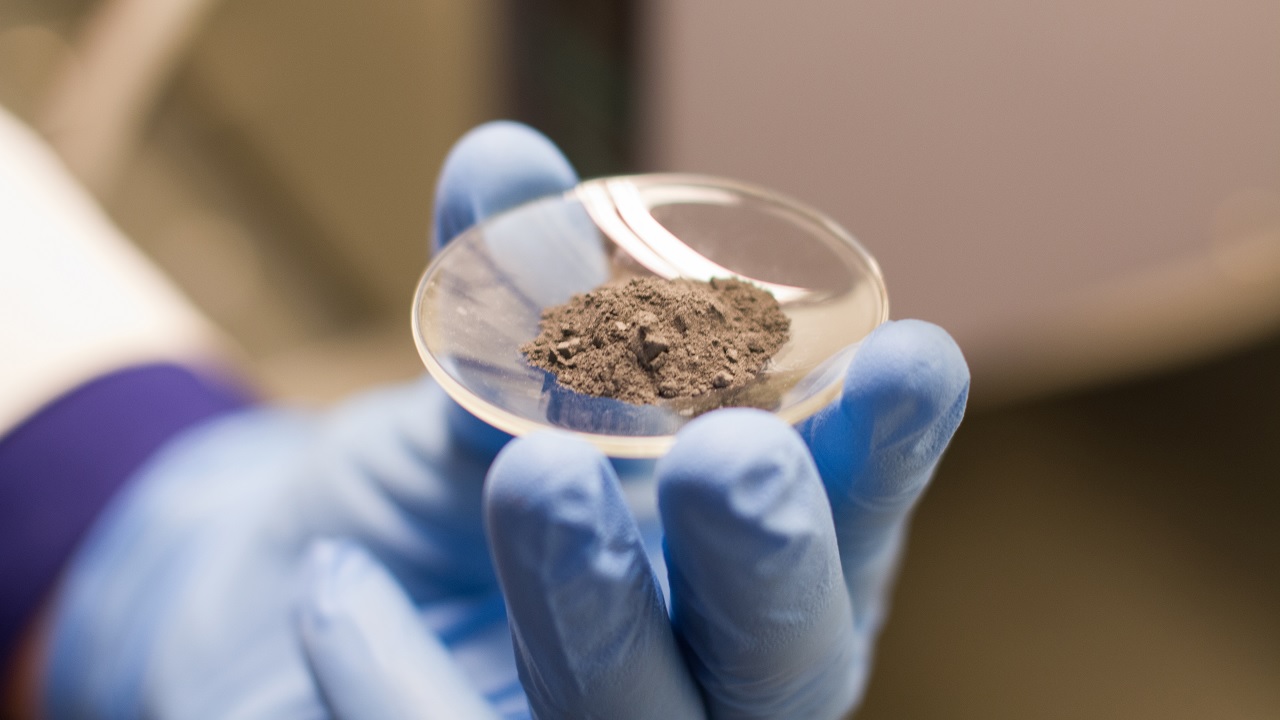
Graphmatech is a Swedish graphene materials technology company that invents, develops and sells novel graphene-based nanocomposite materials and services. Graphmatech has invented a material called “Aros Graphene” as well as processes for implementing graphene at full industrial scales →1–2.
This work will contribute substantially to bringing the world into the graphene age. Aros Graphene displays extreme thermal and electrical conductivity as well as very low dry friction →3–4. It is self-lubricating, self-cooling and lightweight. Aros Graphene is a solution to the upscaling issues that graphene technology faces and can be used in many different ways: It can be applied as a coating, used as an additive to a matrix and can even 3D printed. So useful is this novel material that Graphmatech comes up with new applications for it on a monthly basis.
How Graphmatech found SynerLeap
Mamoun Taher, founder of Graphmatech, worked as a researcher at Uppsala University in Sweden on a project together with ABB. Just as SynerLeap started, Mamoun’s university project was finishing and he heard of the enterprise through his ABB contacts. The timing was therefore perfect for Mamoun to take the leap, appropriately, with SynerLeap and learn how to turn the knowledge and experience gained from his university work on graphene hybrid materials into innovation that would underpin a viable business.

Bureaucracy in multinationals can often be wearisome. However, Graphmatech found that the SynerLeap processes were smooth and efficient, which was largely down to the SynerLeap management, who placed great emphasis on making the path to ABB for entrepreneurs and startups an easy one. For instance, recognizance was taken of the fact that small companies do not have extensive legal or intellectual property resources and care was taken to simplify this end of the business, while at the same time appropriately safeguarding the interests of both parties.
ABB’s venture capital arm, ABB Technology Ventures (ATV) led an investment round in Graphmatech, during which ABB assisted the company with the due dilligence process regarding their technology roadmap, product/market fit, etc.
Mamoun says, “I’d heard about SynerLeap via my contact with ABB at the university and made the good decision to meet up with them. They mentored me all the way through, arranged for me to meet with decision makers at ABB and introduced Graphmatech to ATV, which was critical from the funding point of view. Not only that but they opened doors into relevant ABB business units and facilitated access to the ABB laboratories that helped us develop and test our graphene technologies.”
The long road to productization and market acceptance was shortened by the collaboration. ABB contributed its extensive experience in this area by, for example, helping Graphmatech to carefully analyze the business case and the market for their product, and to closely collaborate with different partners at different points on the value chain – eg, to ensure early involvement of sub-suppliers and end users as well as exercising the right timing in the right market.
The Graphmatech collaboration with ABB is mutually beneficial as ABB can exploit Graphmatech’s state-of-the-art materials technology in its products. One example from the Graphmatech-ABB collaboration is the development of new sliding electrical contact materials with a lifetime an order of magnitude longer than silver. This extended lifetime arises from the much higher wear resistance of the new materials. This advance, in turn, enables a dramatic reduction of silver content in ABB products, safer and more reliable products and a significant lengthening of maintenance intervals.
Mamoun has ideas, too, concerning the next big material trends that will come into play in the next ten years: “Changes are happening everywhere – and quicker than we think. From the materials perspective, more new and smart materials are under development. When development is sufficiently advanced, those materials will revolutionize industries. Very lightweight, flexible, even more high-power-density electronics, lubricant-free engines and gearboxes, self-sensing and healing materials, programmable composite materials, and local manufacturing at customer sites via high-productivity additive manufacturing – these are just some of the ways I see materials technology supporting Industry 4.0 and associated movements in the coming decade.”
Algoryx
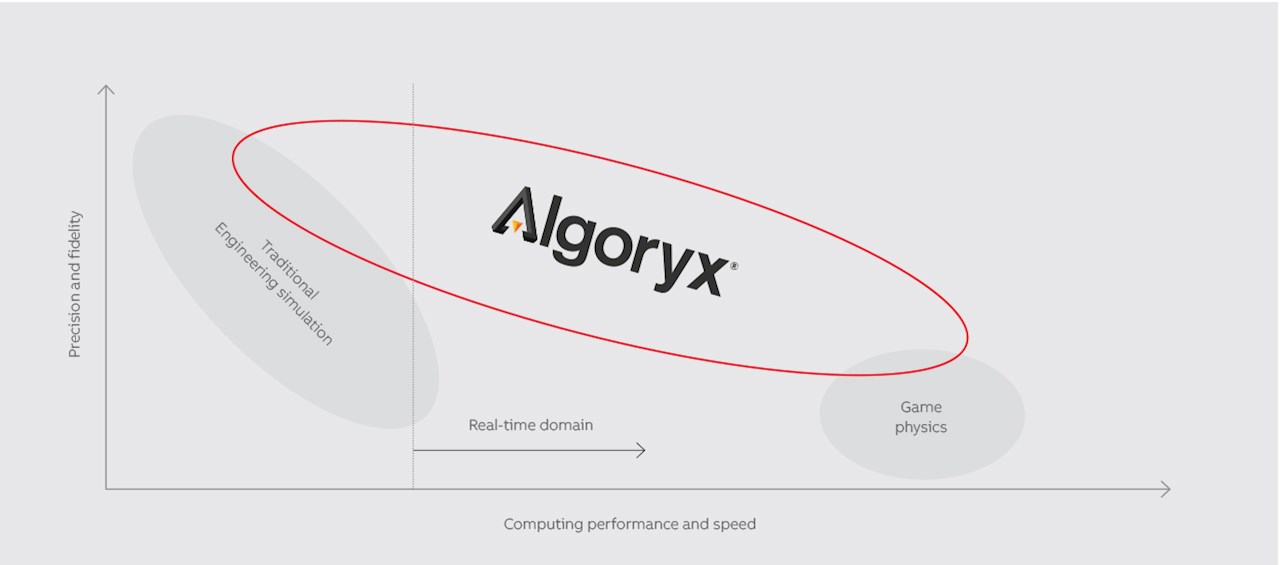
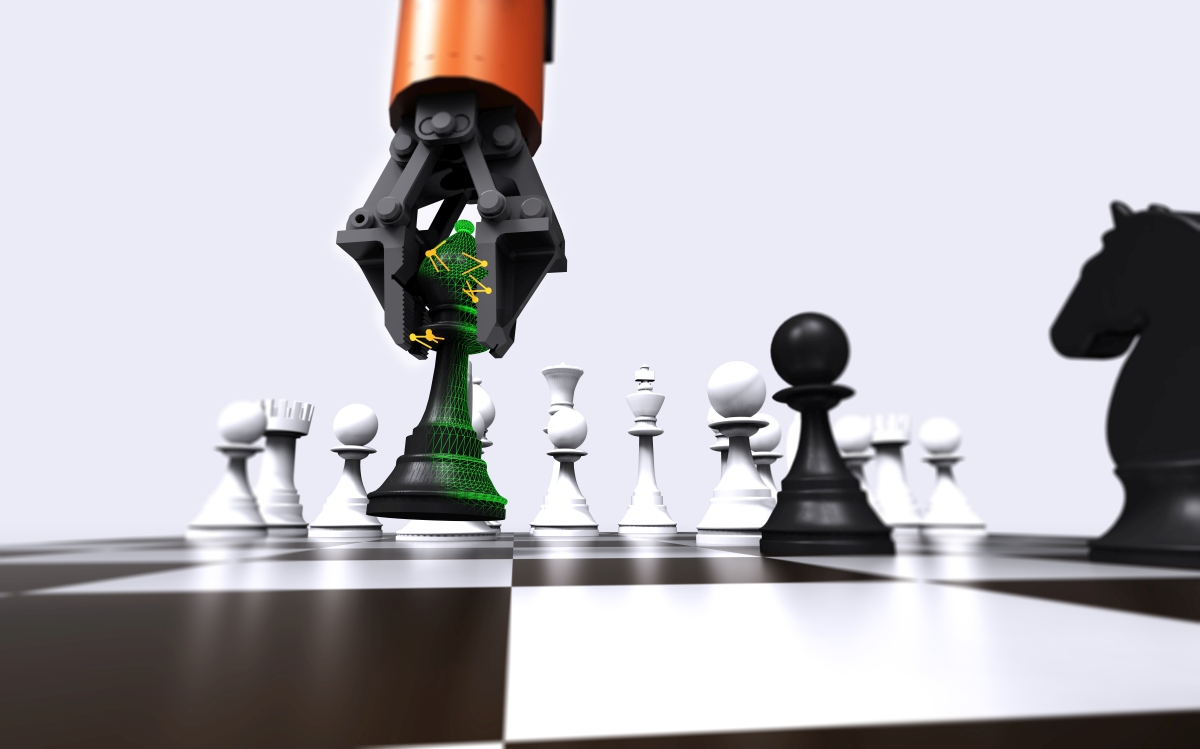
Algoryx specializes in physics-based simulations of motion dynamics of multibody, complex systems→5. What makes Algoryx unique is that they can combine high precision, complex modeling and very high computing performance. They also make all simulations highly available and interactive using 3D graphics.
Engineers who design machines and control systems need this type of capability for virtual prototyping and optimization. Further, physics-based simulation is a key enabling technology for training machine learning systems.
Algoryx had worked with ABB for several years and heard about SynerLeap from ABB contacts. Not only that, but SynerLeap took an interest and contacted Algoryx directly. Participation in SynerLeap was made easy for the company and they were signed up in a very short time. Algoryx is more of a client-venture model and, at this point, no ABB investment in Algoryx has been found to be necessary.
Kenneth Brodin is the CEO of Algoryx: “ABB is a huge corporation and getting in contact with the right decision makers and specialists had been rather difficult. However, SynerLeap provides efficient guidance and door opening. SynerLeap also provides a strong level of mutual trust.”
As with the Graphmatech example above, Algoryx brings value for ABB: The Algoryx simulation software, AGX Dynamics, is used inside ABB RobotStudio and thus creates end-user value for automation engineers who perform offline programming of ABB industry robots in RobotStudio →6–7. In addition, Algoryx technologies are also used in the research and development of new and improved robots. In a general sense, Algoryx simulations enable engineers to do efficient virtual prototyping, which is often considered to be one of the most important methods for bringing better solutions faster to the market.
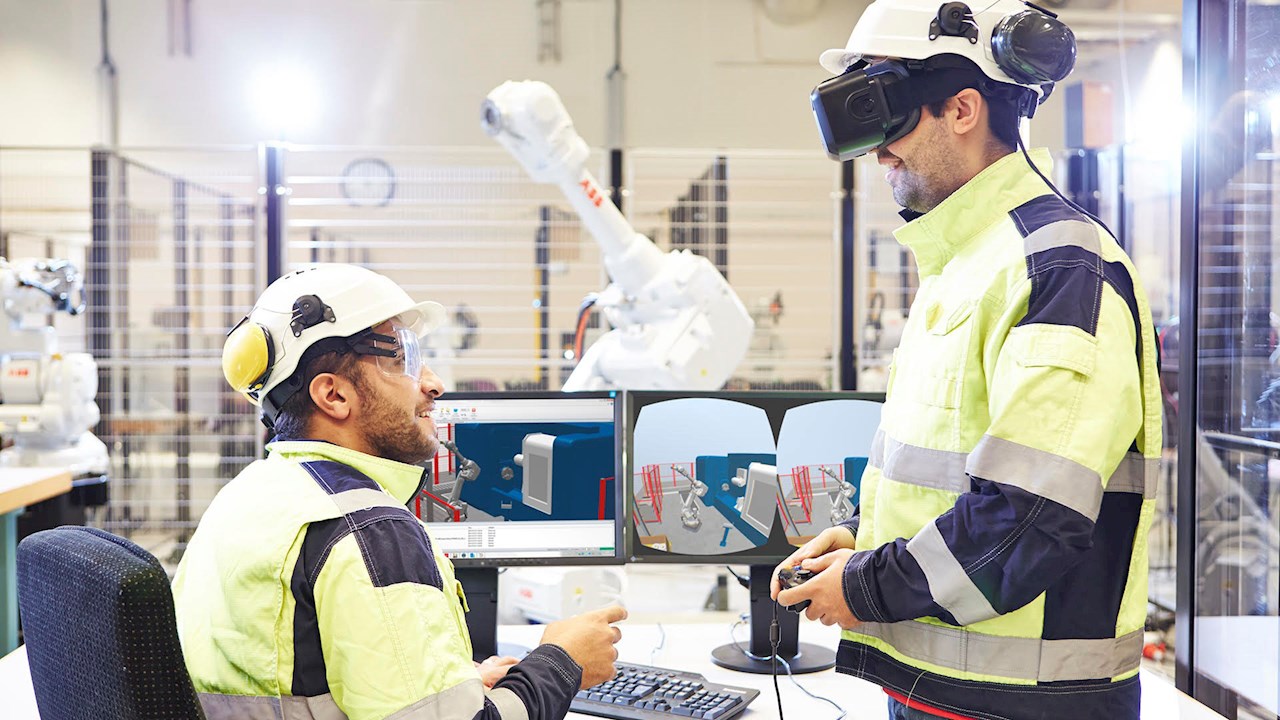
Besides the mutual business benefits, ABB also guides Algoryx in their own continued research and development by providing requirements, expectations and expertise.
The collaboration has many fertile areas for future growth. Kenneth Brodin: “Obviously the big thing is machine learning so we see a lot of activities there. We‘re also looking at full system simulations of even more complex processes, such as the virtual commissioning of entire factories and mines, where we have software solutions that have not yet been employed in the Algoryx-ABB relation”→8. Kenneth sees the collaboration with ABB in a very positive light: “SynerLeap is a brilliant idea. Large corporations are dependent on innovation in SMEs but generally have a very hard time coordinating the relationship. SynerLeap solves this conundrum and I expect other companies to follow SynerLeap’s example.”
Kenneth also has ideas about the future: “Digitalization and autonomous systems will transform everyday life for everyone and we need to make sure everyone can have meaningful lives during and after the transformation. This requires additional innovation! Looking at the overall development of society and the impact of digitalization in social media, we need to work very hard to defend humanism and democracy. We also need to promote education and science even more than today – an undertaking in which industry has a key role to play.”
This forward-looking attitude underlines how important it is for ABB to partner with startups in a way that embraces open innovation. It remains to be seen how these trends will play out, but in the meantime, the collaborations with Graphmatech, with its disruptive materials technology, and Algoryx are exactly the type of mutually beneficial exercise that ABB, via SynerLeap, is so keen to foster.
Reference
[1] “Interview with SynerLeap,” ABB Review, 1/2019, pp. 24–27.


