Data centers account for around 3% of global electric power consumption, and that figure is set to triple by 2030 according to industry analysts. The sector’s carbon footprint is accordingly the subject of much attention. So, it’s not surprising that data center owners are seeking to make their facilities more energy-efficient and to make their energy supply chain as green as possible.
Several of the largest data center operators have invested heavily in renewable energy: Apple and Google are 100% renewable-powered while Amazon is at 50%. Facebook and Google have both invested in solar PV projects, the latter representing the world’s first on-site solar facility at a data center.
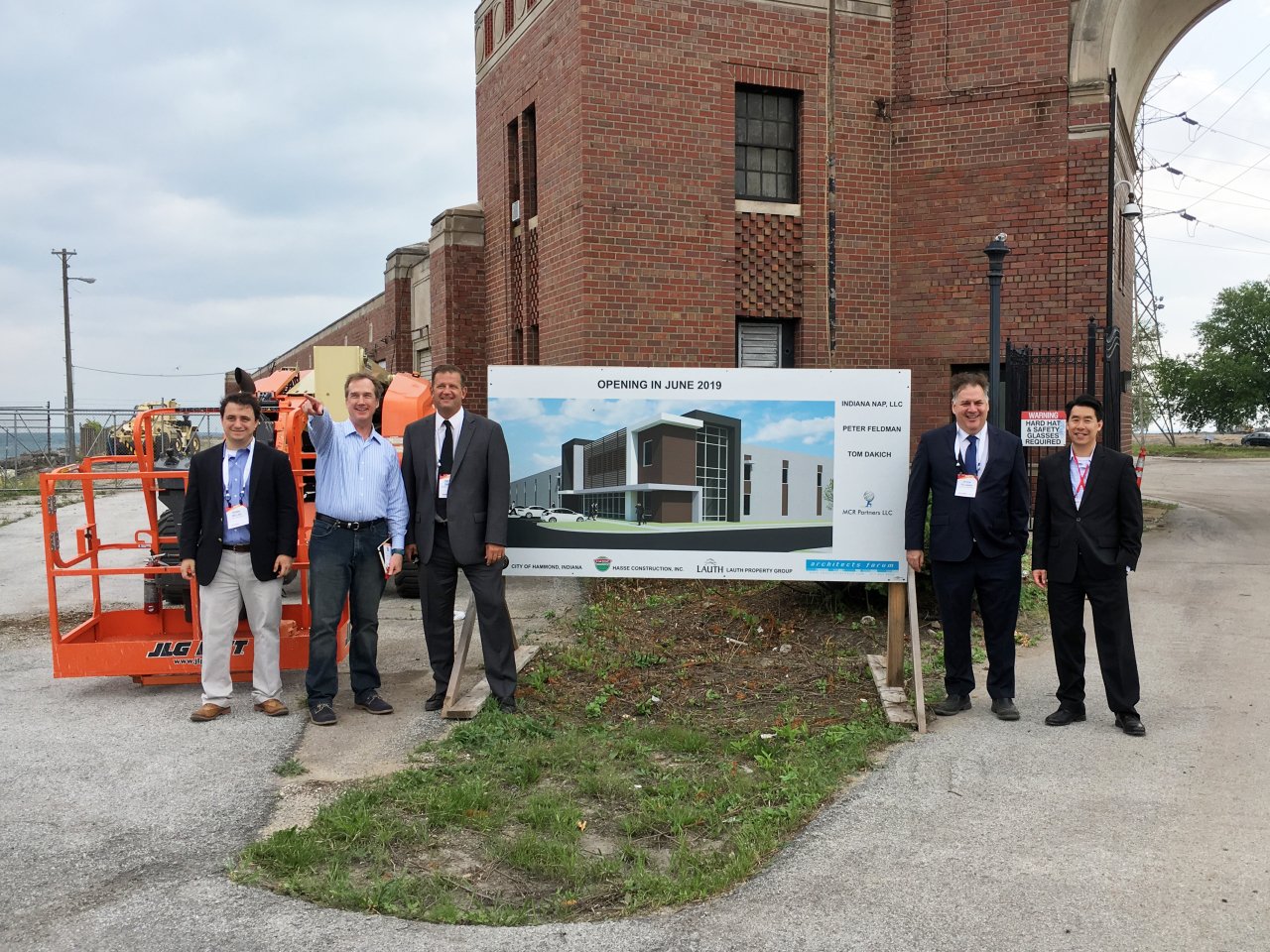
Against this backdrop, Peter Feldman, CEO of Digital Crossroads, presented the energy bona fides of his new data center on March 7 at ABB Customer World in Houston. Digital Crossroads is being constructed on the site of a retired coal-fired power plant in Hammond, Indiana on the shores of Lake Michigan and takes advantage of several of the site’s features. Two wind turbines take advantage of the site’s breezy conditions and cooling is provided by lake water.
The facility will also feature solar panels on the roof and an energy storage system that offsets grid power costs, maximizes the use of on-site renewables, and provides additional standby backup power to the UPS systems. It also allows the facility to capture energy from the backup generation units when they’re run for monthly reliability testing purposes. This stacking of use cases is instructive for other data center operators as it is often the difference in building a business case for energy storage.
On the demand side, the building is constructed with a ceiling that is pitched toward the outside walls, allowing convection to direct hot air to intake vents. The HVAC units themselves are located outside on the ground, maximizing free cooling in winter and freeing up roof space for the solar array and floor space inside for more server racks. All these measures earn Digital Crossroads a PUE of 1.18 in summer and 1.10 in winter, putting the facility far below the industry average for similar facilities.
It’s important to note that the performance of any data center depends in part on the kinds of applications running on its servers. Some tasks (e.g., batch processing) are easily time-shifted whereas others must be always-on. Data centers running more of the former and less of the latter will find more opportunities for peak shaving, demand charge reduction and optimizing on-site generation.
At a macroeconomic level, the inevitability of renewable energy is becoming clearer. Since 2010, nearly all the new generation capacity installed in the US has been gas-fired or renewable. Solar PV is attracting about the same level of investment as gas and current auction prices for onshore wind and utility-scale solar are hovering around $20/MWh—and that’s without any subsidies. Coal capacity growth, meanwhile, is expected to go negative on a global basis by 2025 when retirements will outweigh new construction.
Storage is getting cheaper, too. In 2010 a commercial-scale battery energy storage system clocked in at around $1,000/kWh. By 2018 the cost had fallen to $150 and industry observers now see it dropping below the $100 mark by 2025.
With the energy density of new data centers continuing to rise, the industry’s appetite for energy will only increase, particularly at hyperscale facilities whose demand is already measured in the hundreds of megawatts. Given the trends noted above, it’s clear that the data center industry is poised to play a larger and larger role in the deployment of new wind, solar and storage projects, if not on-site then via investments in greening the industry’s energy supply.


