ABB’s Berlin training center is developing skilled employees for the digital era
It is known as the Fourth Industrial Revolution – the melding of robotics, the Internet of Things, new energy technologies and other digitally enabled marvels of modern automation and manufacturing
But as with the industrial revolutions before it, the same question applies: how to keep the workforce’s skills in line with the changing technology?
At ABB, which has been a driving force of technological change throughout its more than 125-year history, the answer has long been consistent: Give workers the skills they need to master each new era of machines.

That corporate commitment to education and training is evident at the ABB Training Center in Berlin, where the company is helping prepare the workforce of tomorrow. Even in Germany, world-renowned for its dual vocational education apprenticeship programs, the center is one of the region’s largest and most successful facilities of its type, with nearly 5,000 square meters of workspace and almost 800 trainees.

“Industry is changing, and the skills also have to change,” says Gerd Woweries, director of the ABB Berlin center. “World class products and world-class technology need world-class experts and we train them here.”
Located in what was previously a massive factory for electronic devices and munition in the northern industrial district of Berlin, and opened 65 years ago, the center is equipped with a mix of mainstream and cutting-edge industrial technology, ranging from lathes and milling machines to 3D printers and robotic equipment.
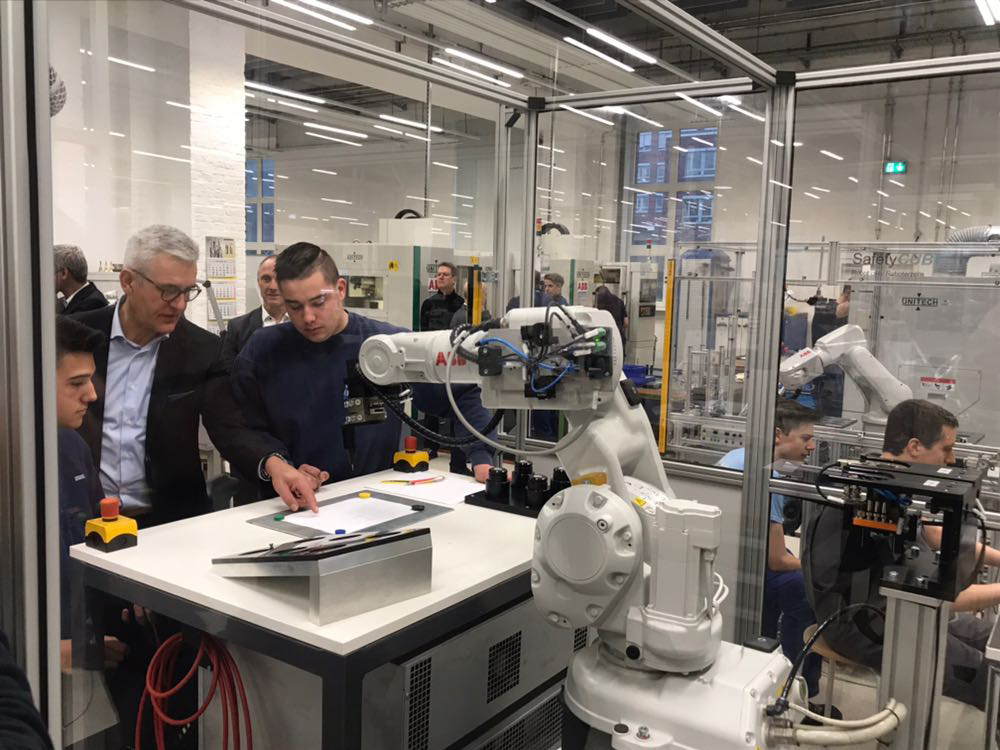
Trainees may choose one of the 24 professions that are offered at the ABB center which include, for example, electronics technicians for automation technology, mechatronics engineer or industrial mechanics
But the training is more than hands-on. It is also minds-on, combining classroom theory with factory-floor experience. The approach assumes that these trainees – most are between 16 and 23 years old – must be professionally adept to keep pace with changing technologies over the course of their careers and intellectually prepared to help design and develop some of those new technologies.
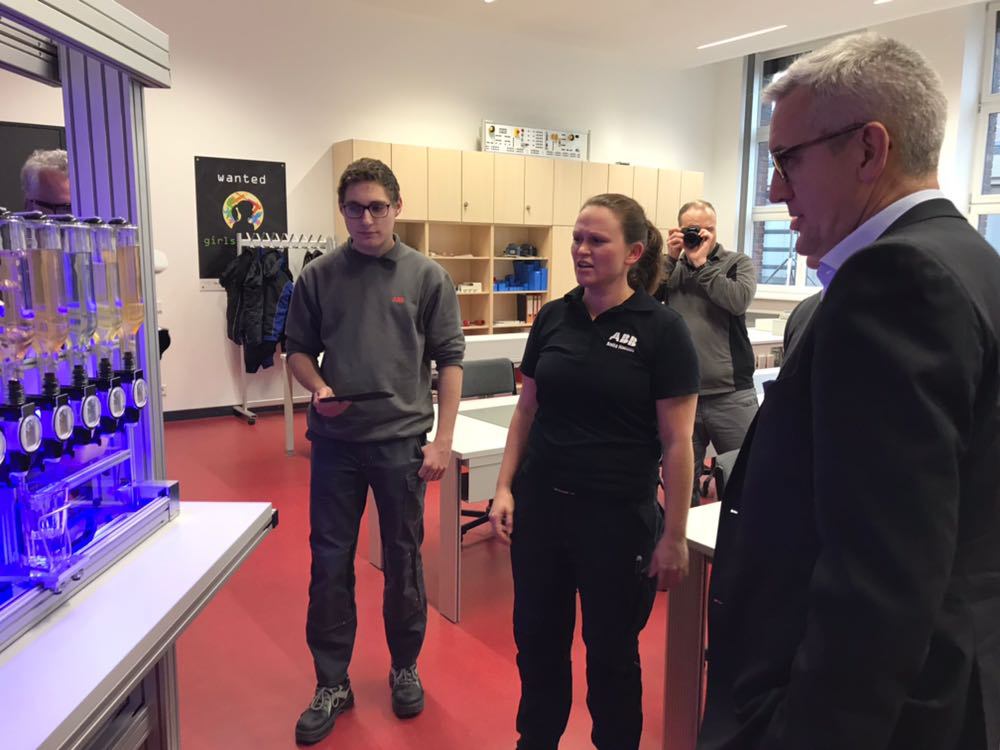
While most of the training programs, which typically take three and a half years to complete, are geared to apprentices, the center also offers training for further professional development.
Nor do the trainees come only from ABB. As many as 160 other companies from Berlin and the federal state of Brandenburg have placed trainees in the ABB center.
Underpinning all the professional training programs at the Berlin training center is a fundamental understanding of information technology – the digital understanding that is a prerequisite for success in the Fourth Industrial Revolution.
“I believe that in the future IT-components will be integrated into many of the “traditional” activities at work” Woweries says. For that reason we have started integrating IT-competences into the training. In fact, a new profession has been added - IT specialist for system integration. And of course existing occupations are being adapted to the new conditions.
“We have also developed additional qualifications for digital competences including a specific learning and teaching concept. This concept develops special skills in our trainees like interdisciplinary cooperation (e.g. tandem learning) as well as learning with digital media and communication tools (e-learning platforms).’’
In 2019, a new building will be opened that focuses on more in-depth training in the area of Industry 4.0.


