When only the best is good enough
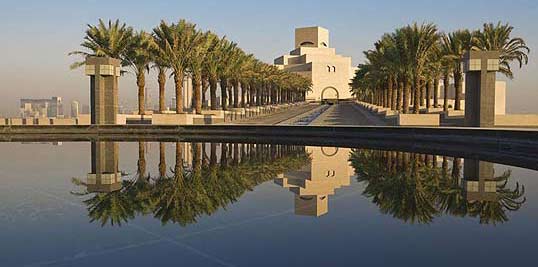
Officially opened in November 2008 the Museum of Islamic Art in the Qatari capital of Doha is the first of its kind in the Persian Gulf and a pioneering project in every sense of the word.
Conceived to be the world's foremost museum of Islamic art and to house the masterpieces of a cultural heritage spanning 13 centuries and three continents, the museum is itself an architectural landmark intended to establish Qatar as the cultural capital of the Middle East.
Designed by architect I.M Pei, who is best known for the Louvre Pyramid in Paris and the iconic Bank of China Tower in Hong Kong, it is built of the finest materials and equipped with the best engineering equipment available.
This includes ABB dry-type distribution transformers, which were singled out by the government-run Qatar Museums Authority - which commissioned the museum - as the only transformer to meet its requirements for the safe and reliable delivery of electric power from the grid to the museum.
ABB's vacuum cast resin dry-type distribution transformers are used throughout the world in museums, sports arenas, shopping malls, hospitals, cruise ships, subway stations and other densely populated buildings where public safety and transformer reliability are vital.
Made of vacuum-cast epoxy resin and reinforced with fiberglass the transformers have exceptional mechanical strength, high resistance to short circuits and a high capacity to support overloads. They are non-flammable, self-extinguishing and designed to operate virtually maintenance free for several decades.
They are also singularly compact and space-effective. The transformers can be positioned close to the point of consumption, which reduces the need for costly cables and civil works. And, a remarkable 90 percent of the transformer is recyclable when its long operating life comes to an end.
ABB dry-type transformers are installed in numerous buildings and complexes in Qatar, including the huge and prestigious Education City campus of universities and research institutes, the 52-storey Tornado Tower which was voted Best Tall Building in the Middle East and Africa 2009, and the 150,000 sq m Gate Development complex of shopping malls, offices and leisure facilities in Doha.
Less fuel, more power in the Panama Canal
Everyday about 40 ships make the 8-10 hour journey through the 80-kilometer system of artificial lakes, locks and channels that make up the Panama Canal and link the world's two largest oceans and continental seaboards, the Pacific and the Atlantic.
A large number of these ships are equipped with ABB turbochargers, a technology that ABB developed in the 1920s and in which it has been the market and technology leader for almost 90 years.
Container ships, cruise ships, tankers, ice breakers, ferries - they all rely on ABB turbochargers, as do many of the world's diesel and gas power plants, diesel locomotives, and the huge mining trucks that transport minerals and rocks in open-pit mining.
What is it that makes ABB turbochargers and ABB turbocharging technology so important to all of these essential industrial sectors?
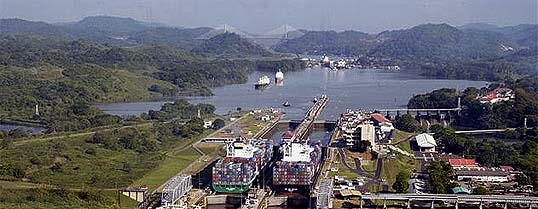
ABB turbochargers recycle the exhaust gas emitted by gas or diesel engines to achieve a huge fourfold increase in engine output. In other words, 75 percent of the total engine output is dependent on this single ABB component.
With this magnitude of efficiency and the resultant drop in fuel consumption and exhaust emissions, it is not surprising that ABB turbochargers have become standard components in diesel- and gas-powered engines the world over.
Of compact and robust design, ABB turbochargers have consistently set the industry benchmark in terms of key performance indicators like efficiency, pressure ratio, compact size, low weight, minimal number of components, long service life and times between overhaul (TBO).
As the global industry leader ABB supports engine manufacturers and end users with an extensive global service network in more than 100 locations. One of the most recent additions to the network is a service station at the Panama Canal, where ABB engineers respond to emergencies or perform standard maintenance while ships wait to cross the canal.
ABB produces a comprehensive range of state-of-the-art turbochargers for diesel and gas engines in the 500 kW to 25 MW power range - from units for small medium- and high-speed engines to the ultra-powerful turbochargers for the huge 2-stroke marine diesel engines that power large ocean-going vessels.
Monitoring planet earth with ABB instrumentation
ABB is the world's leading supplier of advanced analytical solutions to measure gases and chemicals in the earth's atmosphere and monitor the dynamic processes that create the world's weather and the forces that create our climate.

Many of the world's space agencies and meteorological offices rely on ABB analytical solutions to take these vital measurements in ground-based, airborne and space applications.
Often orbiting in satellites hundreds of kilometers above earth, the solutions provide unique, accurate data on critical phenomena such as ozone depletion and greenhouse gas concentrations, as well as the presence of toxic chemicals during and after natural and manmade disasters.
The cutting-edge ABB solutions are based on Fourier transform infrared spectroscopy (FTIR) and are the main analytical components on the satellites and aircraft that carry them. Among the many high-profile installations are:
Polar-orbiting U.S. satellite system for weather forecasting
ABB has designed and manufactured the interferometers on the Cross-track Infrared Sounder (CrIS), one of the key instruments on the United States National Polar-orbiting Operational Environmental Satellite System (NPOESS). NPOESS satellites monitor the entire planet from an altitude of about 850 kilometers. The ABB interferometers will provide highly accurate data on temperature, pressure, humidity and presence of chemicals in the troposphere (the lowest part of the earth's atmosphere). This data will vastly improve the accuracy of weather forecasting. The first NPOESS satellite is expected to be launched in 2013.
First satellite to measuring greenhouse gas emissions
An ABB spatial interferometer is the main component on the newly launched Japanese satellite GOSAT (Greenhouse gases Observing SATellite). The interferometer will collect and transmit precise measurements of the atmosphere's carbon dioxide and methane levels at 56,000 observation points from 666 kilometers above the earth. GOSAT will be the world's first satellite to measure and monitor the sources of global greenhouse gas emissions.
Accurate measures of ozone depletion
The main instrument on board SciSat, a satellite operated by the Canadian Space Agency, is an ABB Fourier transform spectrometer. Every day it takes some 2,700 high-resolution spectra of the atmosphere. The instrument provides the most accurate measurements to date of upper atmosphere chemicals and help improve our understanding of the chemical and dynamical processes that lead to the destruction and creation of stratospheric ozone. The measurements also make an important contribution to international environmental policy-making aimed at protecting the ozone layer.
Emergency responses to environmental disasters
The United States Environmental Protection Agency (EPA) operates an emergency response airplane containing a spectrometer made by ABB. The device measures - from a safe distance - the presence of hazardous chemicals in the atmosphere emitted during natural and manmade disasters. The airplane has been deployed more than 60 times since 2001 as part of the U.S. government's frontline response to catastrophes like the destruction of the Colombia Space Shuttle in 2003, the fire at a Texas petrochemicals facility in 2005, the aftermath of hurricanes Katrina and Rita in 2005, and the vast wildfires that often sweep across states like California.
ABB technology will help bring drinking water to millions in Algeria
The solution is a complete and highly optimized electrical package that will power the Magtaa desalination plant in Algeria at an unprecedented level of energy efficiency and significantly reduce the length of scheduled plant shutdowns for maintenance.
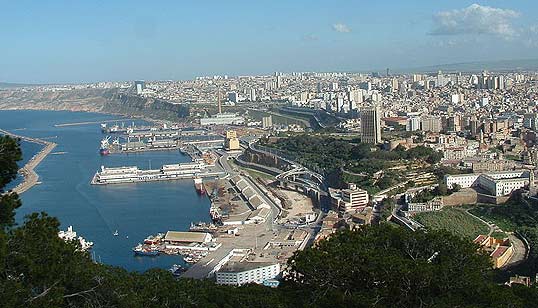
Located at Oran, Algeria's second largest city, the reverse osmosis seawater desalination plant will produce up to 500,000 cubic meters of drinking water a day, enough to meet the daily requirements of about five million people.
When completed in 2011, Magtaa will be the largest seawater desalination plant in the world using reverse osmosis technology - built, owned and operated for a period of 25 years by Asia's leading technology-driven environmental company, Hyflux.
Electrical power consumption is one of the biggest single running costs of desalination, so making the process more energy efficient directly translates into affordable potable water.
ABB is supplying a complete electrical solution for the entire desalination plant and a 220 kV outdoor substation that will connect the facility to the Algerian power grid and ensure that the plant receives a reliable supply of electricity without impacting grid stability.
The solution includes 33 medium voltage drives that will reduce plant electrical losses from the benchmark target of 5 percent to only 3 percent - a huge improvement in energy efficiency compared to accepted industry standards.
In addition the drives will speed up the long plant startup process after maintenance or power-failure related shutdowns, reducing the length of plant downtime compared with the more traditional method of mechanical control.
Over the course of Hyflux's 25-year operation of the plant these improvements in energy efficiency, plant productivity and reduced wear and tear made possible by the ABB solution will provide a huge and sustained boost to plant profitability.
ABB is a leading supplier of power and automation solutions to the water sector, with a complete capability in integrated and optimized ICE (instrumentation, control and electrical) systems as well as a range of automation products that improve the energy efficiency, productivity and reliability of plant assets.
ABB (www.abb.com) is a leader in power and automation technologies that enable utility and industry customers to improve their performance while lowering environmental impact. The ABB Group of companies operates in around 100 countries and employs about 117,000 people. ABB has a full range of business activities in China, including research and development, manufacturing, sales and services, with 15,300 employees, 30 joint ventures and wholly owned companies, and an extensive sales and service network across 60 cities.


