Motorcar racing is in the genes of the French driver, a pioneer of the ABB FIA Formula E Championship series.
Nicolas Prost of the Renault e.dams team is a pioneer of the ABB FIA Formula E Championship, having joined the series in its inaugural year, 2014. In fact, he was the fastest qualifier at the series’ first race.

Born in Saint-Chamond, France, Nico began competing in motorsports only after his graduation from Columbia University in New York, where he was a standout golfer. At the age of 36, he brings vast experience to the Renault e.dams team from his previous years in Formula 3 racing, as a class-winning driver at the 24 Hours of Le Mans endurance race and as a test driver for the Lotus Formula 1 team. Nico is a son of Alain Prost, the four-time winner of the Formula 1 driver’s championship.
Formula E, with its focus on e-mobility and the electric-power management technologies that make the series the perfect partner for ABB, has emerged as a fully-fledged motorsport. That’s why Prost believes it deserves to retain its own identify, separate from Formula 1.
Q: You’re a French driver competing for the Renault team in a race that’s taking place in Paris. Should we expect a huge turnout of fans from your hometown cheering you on?
A: I don’t know about that! I am not Parisian and my hometown is far and very small! For sure there are always a lot of fans in France, which is really nice. But they come from all over the country and not especially from my hometown.
Q: You’ve been in the ABB FIA Formula E Championship, and with the Renault e.dams team, since the series began. What have been the areas of greatest improvement and development since 2014?
A: I think the great thing is that everything has improved. The racing, the venues, the organization, the media. For me it’s not one point, but just everything has gotten better.
Q: Many fans feel that the rules of the ABB FIA Formula E Championship– identical chassis, no tire changes, limited aerodynamic devices – make the series more of a driver’s contest. Do you agree with that? Or does the flexibility in motor and transmission choice make it as much a contest of team engineers?
A: I think the ABB FIA Formula E Championship has the right balance between technology and sport. The teams and manufacturers have a great input, but their influence is controlled and within limits. The driver still makes a difference.
Q: Your father is a household name among those who follow racing – a champion at the top level of motorsports. What kind of guidance can he offer that’s especially valuable to you, considering that he has not driven in a fully electric racing series?
A: In the end, in terms of driving, a petrol car and an electric car are not so different, except for energy management. So every piece of advice coming from him is interesting.
Q: It’s common among top level drivers to have started racing at a very young age, often in go-karts. Your chosen form of competition in those years was golf – you were in your 20s when you started driving competitively. Are there aspects of the competitiveness in golf tournaments that also apply to motorsports?
A: Well, before golf I actually reached a quite respectable level in skiing. For me skiing is much closer to motor racing than golf, and I think it helped me a lot to learn more quickly. In the end the goal is the same, to go as quick as possible. Mentally, the two sports are very close.
Q: You’ve been very successful in different types of racecars, particularly endurance racing. Does your experience at events like the 24 Hours of Le Mans, where making sure that the equipment lasts for the whole race is paramount, give you an advantage in the ABB FIA Formula E Championship?
A: For sure I have learned a lot in endurance racing. But the ABB FIA Formula E Championship is very different because you are going for ultimate performance. The car is strong and reliable. You need to push it all the time.
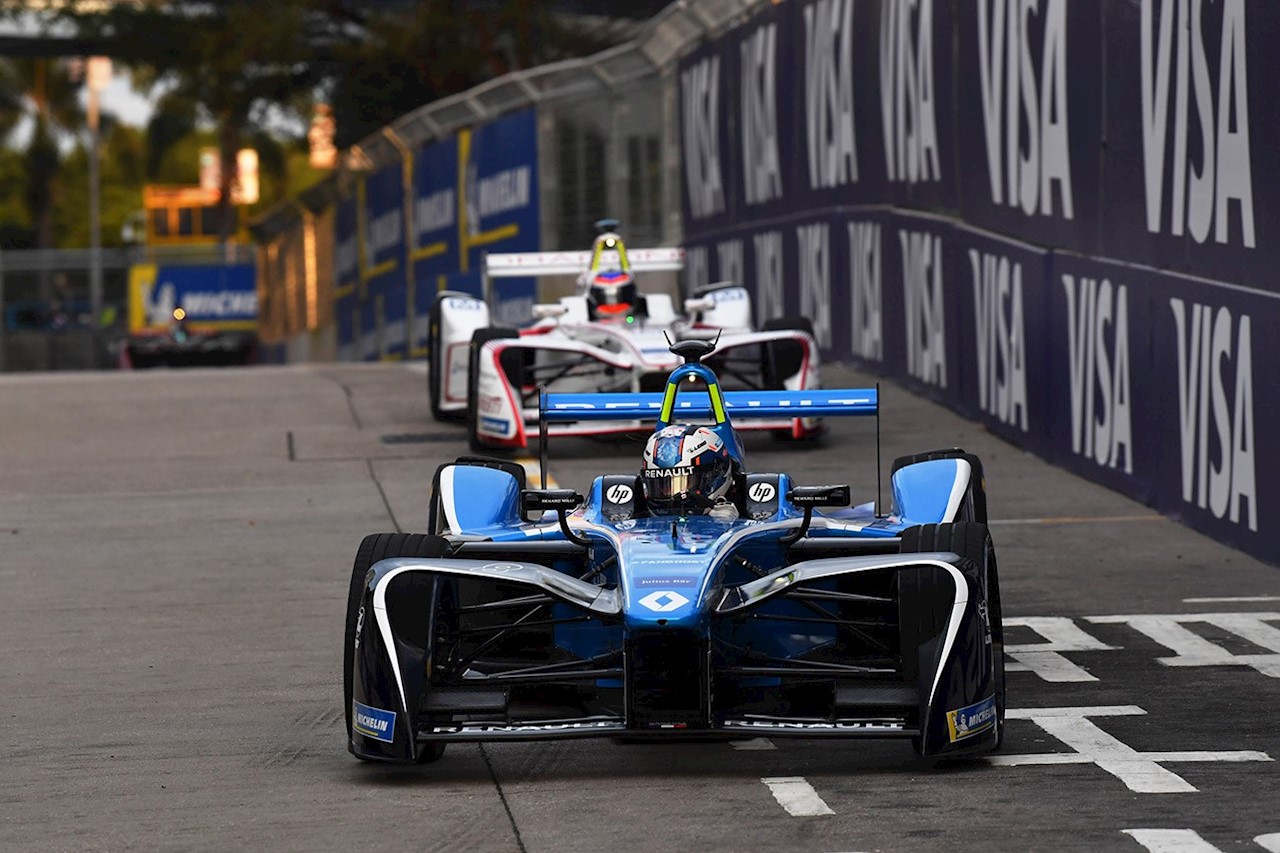
Q: Drivers of conventional racecars get a lot feedback about the car’s condition from the sound and feel of the engine. What do you actually hear during a race? Can you hear the crowd cheer when you make a pass, for instance?
A: The engine still makes some noise and covers most of the other noises for us. Before the start sometimes, when all cars are stationary, we can hear the crowd cheering indeed.
Q: What’s the biggest adjustment you have to make when you switch from piston-powered cars to electric power? With the battery charge you get from regenerative braking being so vital, do you sometimes have to remind yourself to slow down by coasting rather than using the wheel brakes?
A: Everything has become quite natural now. In terms of driving I am quite used to jumping from one car to another. The biggest stress is to remember all the systems and buttons.
Q: Do you think that fans will someday be ready for Formula 1 to become a fully electric series, as Bernie Ecclestone – the former chief executive of Formula One Group – has suggested?
A: I think Formula 1 should remain the reference for petrol engines and the ABB FIA Formula E Championship the reference for electrical engines. The growth of the ABB FIA Formula E Championship has been beyond expectations, but Formula 1 and the ABB FIA Formula E Championship are different. The two series should be distinct and co-exist.


