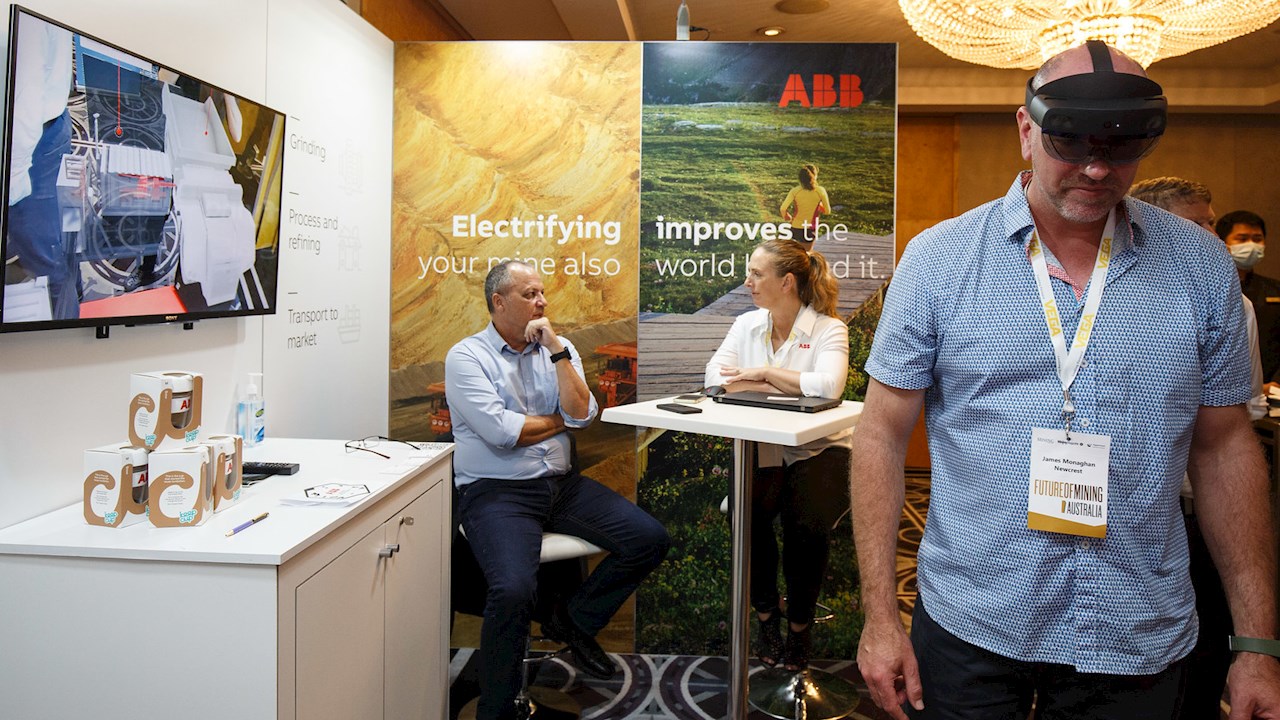
As pressures mount for mining companies to meet sustainability targets, the world-leading mining event Future of Mining returned to Sydney, Australia this week with a focus on zero harm, zero entry, and zero emissions.
The event saw hundreds of senior decision-makers from the mining sector participate in discussions about how to get on the front foot with sustainability goals. Among them, was ABB Australia’s Head of Mining Nik Gresshoff, joined by fellow panelist Martin Sonogan, Group Principal Mining Engineer at Evolution Mining. Both spoke with Mining Magazine Editor, Craig Guthrie about the benefits and challenges of electrifying loading and hauling methods in underground mines.
ABB was founded on electrification – and with more than 130 years of this type of work behind them – it stands to reason that they were listed among the AFR BOSS Most Innovative Companies in 2021. A big draw of electrification is the environmental benefits that come from eliminating the need for diesel by transitioning to renewable resources, which contributes heavily to reducing a mine’s carbon footprint.
The demand for viable electrification technologies has come in strong with ESG trending in the mining sector, according to Nik. But rather than looking too far over the horizon to plan, many companies have left things too late.
The move to transition to renewable energy has been a slow wind-up, he says. Now suddenly, with the pressure of ESG commitments, many mining companies are looking to implement these solutions with immediacy.
In the panel event, Nik and Martin addressed some of the pain points for underground and open-pit mining operations, including fleet management, battery storage, charging points, and the renewable energy implications for ventilation.
There is an equal amount of effort being expended right now in both the underground mining space and open-pit mining operations on electrification, says Nik, But many mining operations are still facing marked challenges generating sufficient energy to power the larger pieces of equipment on site.
There are certainly limitations with electrifying mobile fleets. For example, it is difficult to run a battery-powered truck that weighs 200-250 tons on a steep decline spanning several kilometers, he notes.
A common misperception about electrifying loading and haulage fleets is that it is a distant concept – when in fact, gains can be made right now.
There is a wide range of electrification solutions available to market right now that are being embraced by forward-thinking companies, says Nik. The work we have done at the Gold Fields Granny Smith Gold Mine is demonstrative of how certain companies are leading the way as early adopters of these technologies.
When it comes to implementing electrification on a mine site, Nik has one question for senior decision-makers within the mining ecosystem: “Will you be an early adopter, a fast follower, or sit on the sidelines?”
By taking part in these discussions, ABB is looking to engage fast followers by helping them identify the more manageable electrification opportunities on site. In doing this, ABB hopes to narrow the gap between the mining industry’s net-zero goals and growing demands for viable energy alternatives.


