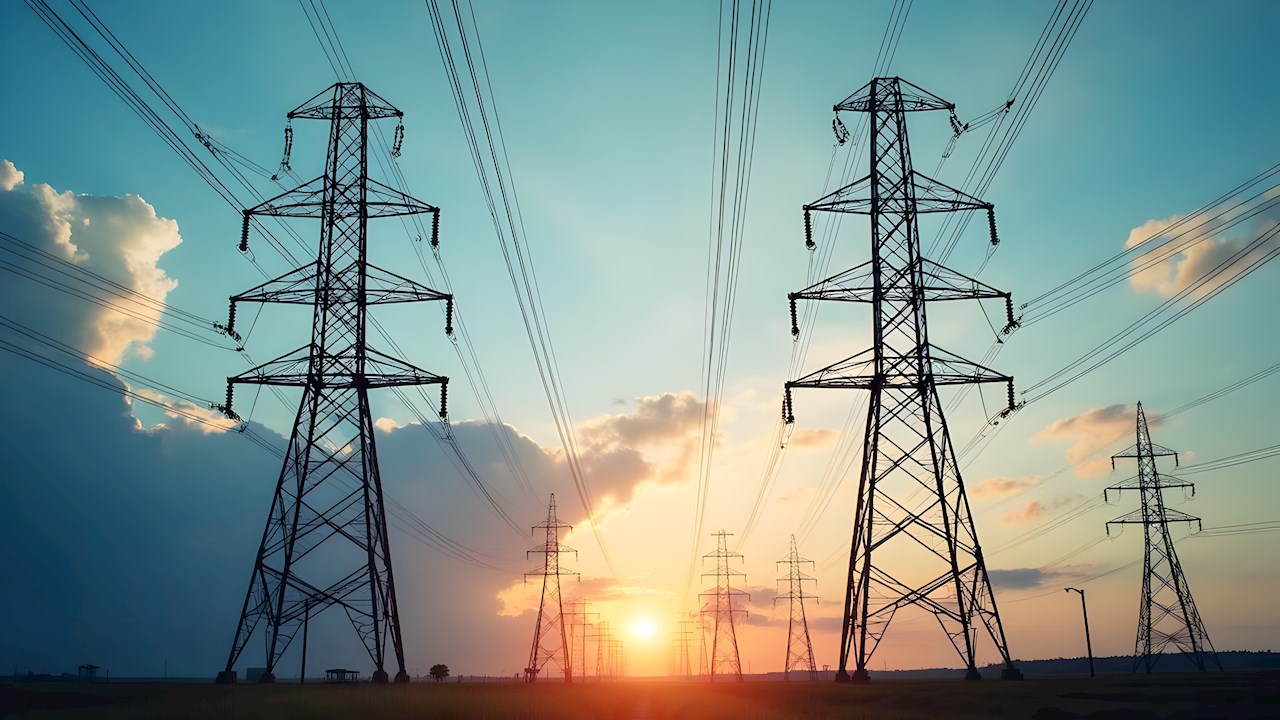
You might never think about grid stability. But perhaps you should. Because maintaining a stable power grid round the clock, every day of the year, is vital for everyday life. At the personal level, it keeps your lights on, it ensures your fridge keeps running, that your internet service is available and there is power to recharge your phone. For society in general, stable power is crucial for essential services like hospitals, transportation and communications, and it also ensures that industry runs smoothly. Kristina Carlquist, Head of Synchronous Condenser Product Line, ABB Large Motors and Generators, explains what grid stability means and why it matters.
When we talk about grid stability it’s a question of maintaining the balance between supply and demand. This enables power networks to ensure a reliable flow of electricity to consumers – to the keep the lights on – even should an unexpected event occur, such as a large power plant suddenly going offline or millions of consumers turning on their air conditioning in a heatwave.
There are three key elements to the overall stability of a grid: Frequency, voltage and resistance to transient events:
Frequency – The grid must operate at a constant frequency within safe, tightly controlled limits. This varies in different parts of the world, for example it is 50Hz in Europe and 60Hz in the US. Should power supply and demand get out of balance, the frequency can deviate from the set limits. This can cause equipment to start tripping offline or even become damaged, and if not quickly corrected, frequency variations can result in widespread power outages.
Voltage – A stable voltage is essential to prevent overloading equipment and ensure that power can be transmitted efficiently over long distances.
Resistance to transient events – The grid must maintain its stability even when impacted by a sudden disturbance such as lighting strikes, damage to powerlines or loss of a major power plant.
While a lack of grid stability may be seen as an issue that can mainly cause outages or damage to equipment, it also presents a broader economic challenge that affects consumers indirectly. This is because an inherently unstable grid requires more resources to bring it within balance, and that increases operating costs that are ultimately reflected in energy bills.
Traditionally, large rotating power plants, fueled by coal, oil, gas and nuclear energy have made a very important contribution to keeping grids stable. This is because they contain large rotating masses in the form of their turbines that naturally contribute spinning inertia to the grid– which helps resist any change in frequency. They work on a grand scale rather like a child’s top that, once spinning, resists any attempt to push it over.
However, the situation is now changing fast. The drive for net zero means that large, centralized plant is being phased out across grids worldwide and replaced by wind and solar resources. While this move is great for the environment, it also presents a challenge since these renewable resources cannot provide the needed inertia. So, with this new energy mix, we need to find new ways to provide inertia.
A further consideration is that, unlike a fossil fuel plant that once fired up will keep generating a steady flow of electricity, renewable energy is volatile, since its output can vary considerably depending on the weather. That means the generation resources within the grid can themselves be responsible for the sudden losses of production that we need the inertia to overcome.
Overall, as more renewables come online, we need to ensure that power grids across the world can stay in balance and react fast to any changes in supply or demand. This will keep the electricity flowing no matter what. Key to this is an array of tried and trusted technologies that provide essential functions such as voltage support, inertia, and fault response.
Stable grids are the foundation for a reliable, clean energy future—and we already have the tools to reshape them. We will learn more about how ABB helps make renewable grids reliable in our next article in this series.
In case you missed it, we covered in a previous article what happens when we add renewables to the grid and the impact it can have—and why this is a good thing, but one that requires adaptation.


