Safety switches and circuit breakers play crucial but contrasting roles in preserving household electrical safety. A manually operated safety switch disconnects power to protect people from electric shock. This contrasts with circuit breakers that trip automatically in the event of short circuits and overloads, safeguarding electrical systems from the risks of fire or equipment damage.
Different roles, one safe home
Together, safety switches and circuit breakers make an essential contribution to electrical safety, and modern homes typically require a combination of both devices. Let’s take a closer look at the complementary roles played by safety switches and residential circuit breakers.
What is an Electrical Safety Switch?
A safety switch is a device that allows electrical circuits to be manually disconnected, preventing people from the risks of electric shock.
Why safety switches exist: protecting people
In homesteads and farms, they’re commonly specified as an extra safety measure where the regular mains electrical supply is augmented by other sources of power, such as back-up generators, or for off-grid households generating their own power from renewable sources.
Safety switches are also widely used in industrial facilities and utilities, allowing circuits to be isolated by the operation of a lever or switch to isolate equipment during service or maintenance. Here, they play a critical role in emergency situations, allowing rapid power shutoff to safeguard workers and equipment.
In factories and other commercial environments, safety switches are typically positioned where they are instantly identifiable and readily accessible by workers, at an officially stipulated distance of no more than 50ft (15m) from machinery.
How a safety switch works
An electrical safety switch gives householders or industrial workers manual control over the energization status of an electrical circuit, either open with no power flowing, or closed with power flowing.
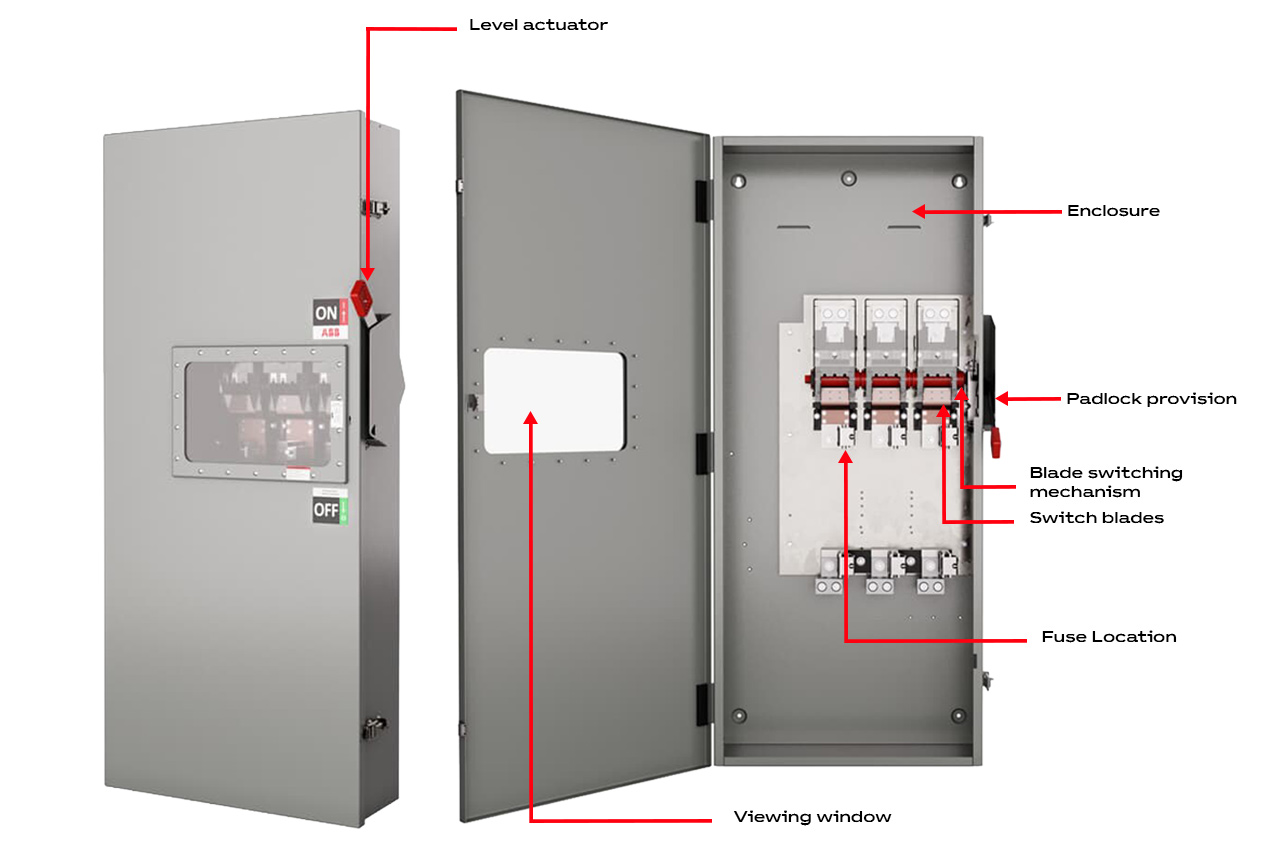
Moving a manual lever or switch physically opens or closes the internal blades of the switch. In its open position, a non-conductive air gap between the switch’s metal blades ensures that no current flows, keeping the circuit safely isolated while providing visual confirmation of the switch’s open state.
When an operator closes the switch, the blades make contact and current flows through the circuit. Some safety switches, such as ABB’s award-winning Spec-Setter line, feature an optional viewing window that provides instant visual confirmation of whether switch blades are open or closed, as well as the corresponding isolation status.
Common residential and commercial uses for safety switches
HVAC Units
Heating and cooling systems often require routine servicing, seasonal maintenance, or emergency shutdowns. A dedicated safety switch allows technicians to isolate power at the unit itself, rather than relying solely on the main electrical panel. This improves safety during maintenance and ensures the equipment can be quickly de-energized if something goes wrong.
Outdoor Equipment
Electrical equipment installed outdoors, such as air conditioners, pool pumps, irrigation systems, or exterior lighting, faces higher exposure to moisture and weather-related risks. Safety switches provide a clear and accessible means of isolating power before servicing or repairs, helping to reduce shock hazards in environments where conditions are less controlled.
Utility service entrances
At the point where electrical service enters a building, safety switches are often used to provide a single, visible means of disconnect. This is particularly important for emergency responders, utility workers, or electricians who may need to shut off power quickly without navigating interior panels or equipment.
Backup power transfer
Homes and facilities that use generators or alternate power sources commonly rely on safety switches to manage power transfer. These switches help ensure circuits are fully isolated during transitions between utility power and backup sources, reducing the risk of backfeeding and protecting both equipment and personnel.

What is a Circuit Breaker?
Why do circuit breakers exist? Protecting wiring and devices
A circuit breaker is an automatic switch that safeguards electrical wiring, equipment and systems from overloads or short circuits that may lead to overheating, fires or other damage.
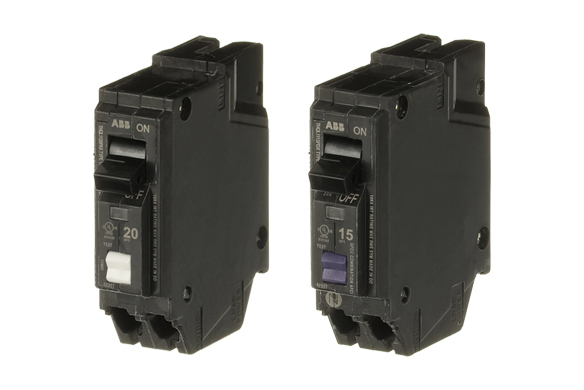
When the breaker senses higher-than-normal current levels, it trips to interrupt the electrical circuit and prevent power flowing until the underlying problem is fixed. Unlike a fuse that must be replaced when it blows, a circuit breaker is reusable.
Once the fault has been cleared, the breaker can then be reset, either manually or automatically. While the capital cost of a circuit breaker is higher than a fuse, this is offset by its reusability over a long period of time.
How do circuit breakers work?
Most household circuit breakers combine an electromagnetic mechanism to guard against sudden short circuits and a thermal mechanism that trips the breaker in response to overcurrent or short circuits.
Higher-than-normal current flow releases a sprung latch, separating the breaker’s electrical contacts and instantly opening the circuit. The thermal component features a bimetallic strip that bends due to high current in an overload situation, causing the breaker’s contacts to open and preventing current from flowing.
This combination ensures that the circuit breaker gives comprehensive safety protection in the event of short-term or persistent fault conditions.
Where are circuit breakers used?
Circuit breakers are most commonly installed on the main household electrical panel. In some properties’ electrical systems, they additionally feature on individual branch circuits. Breakers can also provide additional safety in high-risk areas such as kitchens and laundries.
Safety Switch vs Circuit Breaker – What’s the Difference?
What do they protect?
The primary role of a safety switch is to protect people from the risk of potentially fatal electrocution. Circuit breakers are designed to safeguard household wiring and appliances from fire risks and damage caused by electrical faults and short circuits.
What triggers them both?
Safety switches are manually operated devices that allow electrical circuits to be quickly isolated by a human operator in hazardous situations. Circuit breakers, in contrast, are automatic devices that are triggered by short circuits and other electrical faults.
What do they prevent?
A safety switch reduces the risk of dangerous and potentially fatal shock hazards. A circuit breaker can prevent fires and damage to electrical systems and equipment due to arc faults and short circuits.
What can’t they do?
While a manually operated safety switch protects people from the dangers of electrocution, it cannot prevent overloads to home electrical circuitry. An automatic circuit breaker isn’t intended to permit manual emergency cut-off. Nor does it provide visible confirmation that a circuit is safely isolated.
Why You Need Both
Complementary protection layers
Safety switches and circuit breakers are designed to minimize different risks. One doesn’t replace the other: they’re both equally important parts of a comprehensive home electrical strategy.
Examples of protection provided by safety switches and circuit breakers
- Shock risk during equipment servicing: a safety switch isolates electrical circuits and connected equipment, eliminating the dangers of electrocution during repair work, servicing or replacement of equipment.
- Faulty space heater overload: A circuit breaker will detect current overload situations due to a faulty electrical device, tripping automatically to isolate the circuit and prevent damage or fire risk.
- Arc fault in bedroom circuit: Arc faults can occur when wiring is damaged or deteriorating, causing intermittent sparking behind walls or inside outlets. These faults may generate enough heat to start a fire without drawing sufficient current to trip a standard breaker. Arc Fault Circuit Interrupters (AFCIs), including dual-function devices such as DFCIs, are designed to detect these arc patterns and shut off power before ignition can occur.
- Water contact in bathroom: Bathrooms carry a higher shock risk due to the presence of water. If a person comes into contact with a live electrical source while grounded, such as with wet hands or standing on a damp surface, a Ground Fault Circuit Interrupter (GFCI) or a DFCI where installed will quickly cut power. This fast response helps reduce the risk of serious or fatal electric shock.
Choosing the Right Device for Your Home
Assessing circuit types and hazards
Ensuring comprehensive electrical protection for your home’s occupants and electrical systems starts with understanding the types of risks present on each circuit. Some hazards are best addressed through manual isolation, while others require automatic fault detection. In most homes, this means using safety switches and circuit breakers together, each in the roles they are designed for.
People protection (wet areas, maintenance). Areas such as bathrooms, kitchens, outdoor circuits, and equipment that requires servicing present a higher risk of electric shock. In these situations, safety switches provide a clear and reliable way to manually isolate power before maintenance or in an emergency. Ground fault protection provided by appropriate circuit breakers may also be used to automatically disconnect power when unsafe conditions are detected.
Wiring protection (all circuits). Every circuit in the home must be protected against overloads and short circuits that can damage wiring and create fire hazards. Circuit breakers perform this role automatically by interrupting power when current exceeds safe limits, protecting the electrical system as a whole.
Fire prevention (AFCI / DFCI). Some fire risks can arise without an overload. Damaged wiring, loose connections, or aging insulation can create arc faults that generate heat behind walls or inside outlets. In living areas such as bedrooms and family rooms, arc fault protection using AFCI breakers or dual-function DFCI breakers helps reduce the risk of electrical fires by detecting these conditions early and disconnecting power.
Different Roles, One Safe Home
Complementary functions, total safety
ABB safety switches and residential circuit breakers play complementary and essential roles in safeguarding people and household electrical systems. The safer the better: ensure you’re covered with both forms of protection, properly installed and regularly tested for total peace of mind.
Explore ABB residential circuit breakers
Frequently Asked Questions
Does a safety switch replace a circuit breaker?
No. Safety switches and circuit breakers have distinct but complementary roles. It’s the essential job of a safety switch to save lives by protecting people from electrocution risks. Circuit breakers, in contrast, are designed to protect appliances and wiring systems from damage due to electrical faults and overloads.
Should every home have both devices?
Protecting your home with a combination of safety switches and circuit breakers safeguards household occupants as well as your electrical systems. Don’t think of safety switches and circuit breakers as alternative options: see them as complementary parts of a comprehensive whole-home electrical safety solution.
Where should a homeowner expect to find safety switches and circuit breakers?
Safety switches are often found next to the household electrical breaker box or fuse box that may be located under the stairs, in a utility room or below ground in a basement.
Important Disclaimer
This article is intended for general informational and educational purposes. Electrical work should be performed by licensed electricians in compliance with local codes and regulations. Consult with qualified professionals for assessment of your specific electrical system needs.


