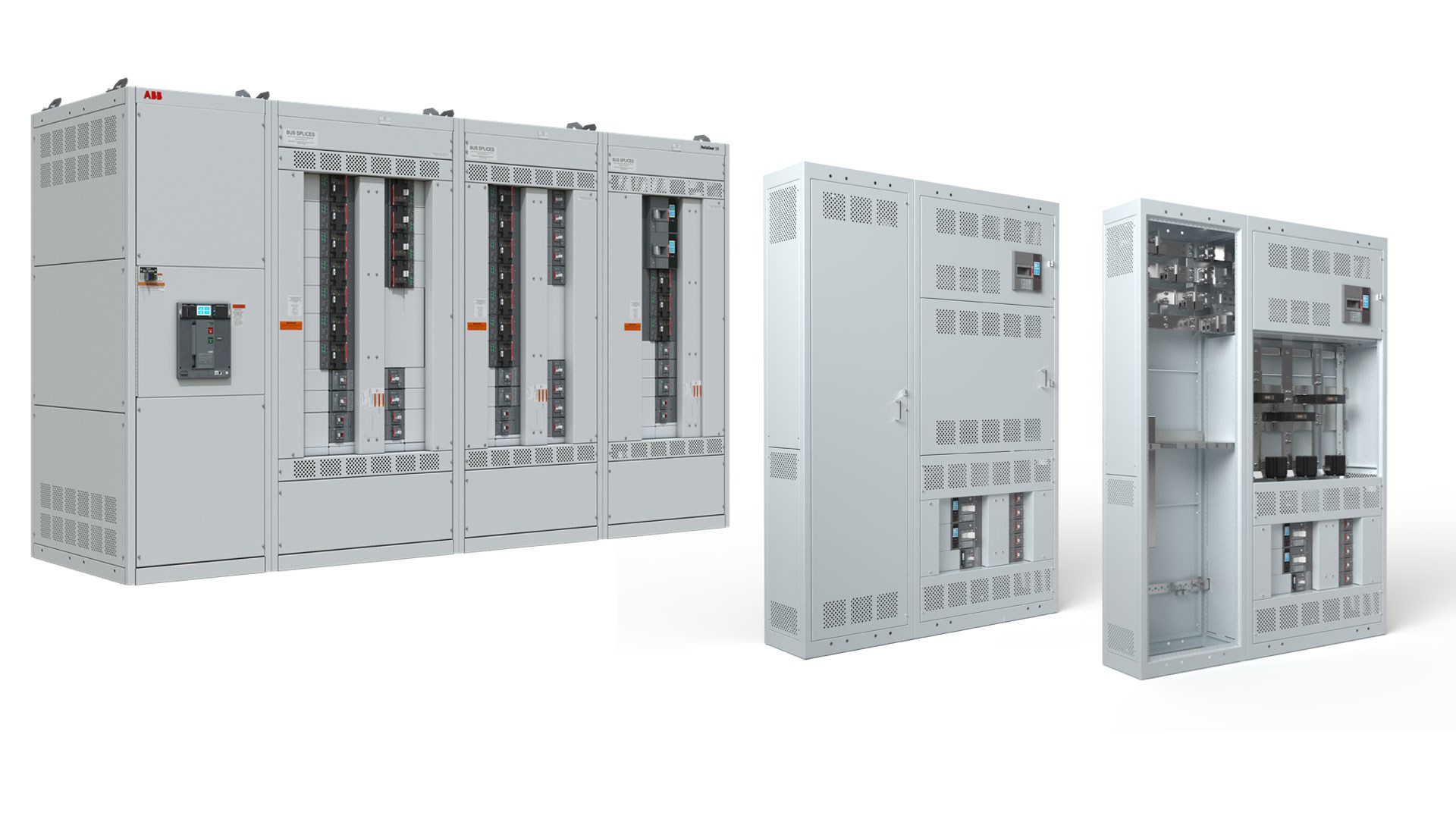
In commercial and industrial buildings, the switchboard is often out of sight until capacity, reliability, or maintenance becomes an issue. When a facility expands, adds high-draw equipment, or needs better monitoring, the switchboard becomes a key part of the conversation.
Understanding how a switchboard works makes those decisions easier. It helps facility managers, contractors, and building owners think more clearly about capacity, protection, components, upgrades, and the role the switchboard plays within the wider electrical distribution system.
What Is a Switchboard?
Switchboard definition and basic function
When utility power enters a commercial or industrial building, it doesn't go straight to the lights, the HVAC, or plug sockets. It goes to an electrical switchboard first.
These freestanding, floor-mounted units are made up of an assembly of panels that receives incoming electrical power and distributes it to smaller branch circuits. Each circuit is protected by a breaker or fuse to ensure power is distributed in a controlled, safe way.
Electrical switchboards are typically rated up to 600 Vac with bus capacities up to 6,000A, covering most commercial and industrial applications. Beyond amperage and voltage, switchboards feature two other important performance ratings that define how well they handle fault connections:
kAIC (Kilo-Ampere Interrupting Capacity) – This rating is for circuit breakers and fuses. It tells you the maximum current in kA that they can safely stop without damaging the surrounding electrical system. If a fault exceeds this rating, the protective device can fail altogether rather than isolating the problem.
Short-circuit current-rating(SCCR) - This is the maximum fault current in kA that a switchboard can safely withstand or interrupt without a fault occurring and causing damage to surrounding systems.
Bus Bracing – While also rated in kA, this describes the mechanical strength of the bus bars to withstand the powerful magnetic forces generated by short-circuit faults. Undersized bus bracing means that bus bars can bend, crack insulation, and turn a recoverable fault into a much larger failure.
Switchboards for North American and Canadian installations are designed and tested to UL 891 and CSA C22.2 No. 244. These standards define the construction, performance, and safety requirements of electrical equipment. ABB ReliaGear® Switchboards, for example, are available up to 6,000A and 600 VAC and carry the cUL label, meaning they meet both UL and CSA standards for Canadian installations.
The role of a switchboard in a building's electrical system
Think of a switchboard as the point where one main supply is divided into many circuits. It is the central hub of electrical distribution within a facility, receiving power from the utility service or on-site generation and distributing it between panelboards, equipment, and other large electrical loads throughout the facility.
Crucially, it also provides overcurrent protection for all branch circuits, centralised control of the facility’s electrical systems, and supports monitoring and metering of power usage.
How Does a Switchboard Work?
The path of electricity
Electricity enters a building from the utility and moves through each stage of the distribution system before reaching everyday loads. Understanding this overall path helps frame where the switchboard fits within that flow, as shown in the diagram below.
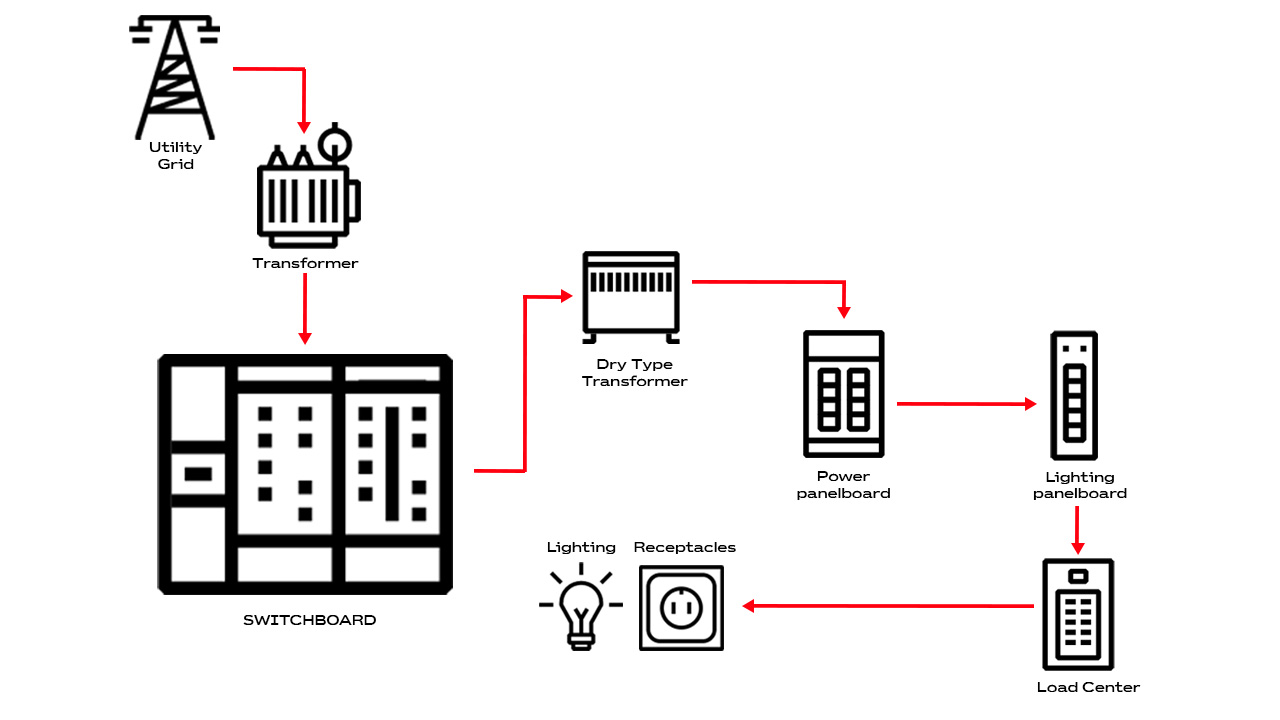
It can be useful to know how power flows through a switchboard when sizing equipment, planning for future capacity, or diagnosing problems. The steps below traces that path from incoming supply to individual branch circuits.
See how:
- Power enters the facility from the utility service or generator
- Enters the switchboard through the main disconnect or main circuit breaker, which serves as the master shutoff and primary overcurrent protection
- Passes through the electric meter (only if it’s a service entrance switchboard)
- Power then flows to bus bars – copper or aluminium strips that distribute the electricity through the switchboard
- Branch circuit breakers or fusible switches tap power from the bus bars
- Each branch circuit feeds downstream distribution, such as panelboards, large equipment, lighting panels, etc.
Key Switchboard Components
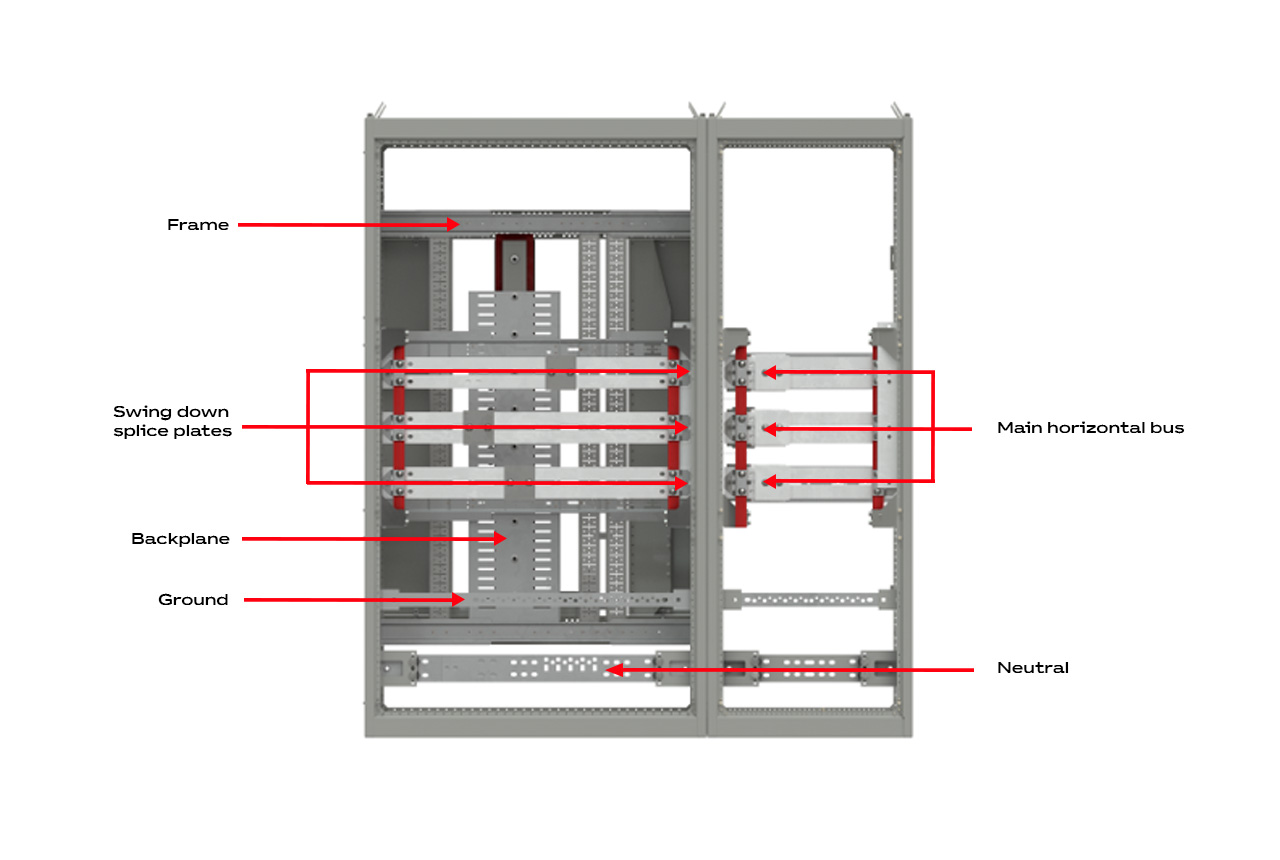
Understanding what’s inside a switchboard helps when evaluating specifications, comparing solutions, or diagnosing products. The following diagram illustrates what you’ll find in a typical switchboard configuration. It highlights:
- Main Disconnect / Main Breaker: Controls all incoming power and provides primary overcurrent protection
- Bus Bars: Copper or aluminium conductors that carry current through the switchboard and connect to branch devices.
- Bus Stack: Modern designs like ABB's ReliaGear SB feature improved finger-safe bus stacks meeting IP20 standards for added safety
- Branch Circuit Breakers / Fusible Switches: Individual protection devices for each outgoing circuit. Plug-in designs (such as the SACE Tmax XT breakers used in ReliaGear Switchboards, as well as some ACB and MCCB designs) allow breakers to be installed anywhere on the bus bar, which gives contractors more flexibility during installation
- Metering Section: Voltmeters, ammeters, or digital displays for monitoring voltage, current, and power consumption
- Ground Bus Bar: Provides a connection to earth ground for safety and voltage stability
- Enclosure: Heavy-gauge metal housing that protects internal components, often with ventilation for heat management. Enclosures use a NEMA rating to define the level of protection they provide, such as NEMA 1 for general-purpose installations, and NEMA 3R for your typical outdoor installation
- Surge Protection: Protects the switchboard and downstream equipment from voltage spikes
Types of Switchboards and Common Applications
Most switchboards are not distinct product categories or “types” but rather variations of a general-purpose design configured for a specific role or application.
General purpose switchboards
The most common configuration. General-purpose switchboards typically include circuit breakers, metering, and surge protection to handle standard power distribution across commercial buildings, offices, and light industrial facilities. If you’re specifying distribution equipment for a building without unusual power requirements, this is the starting point.
Service entrance switchboards
In smaller commercial or light-industrial buildings, the switchboard often serves double duty as the first point of distribution and the utility interface – known as a service entrance switchboard. These configurations typically combine metering, a main disconnect, and branch distribution within a single assembly; however, local utility requirements often influence required design and configurations, so there’s no single standard configuration.
In Canada, for example, ABB's ReliaGear CompaXT is specifically designed to meet utility requirements, combining a distribution panel, main service disconnect, and utility metering compartment in a compact footprint. Only 15 inches deep, their compact design is ideal for locations where space is at a premium.
Generator quick connect switchboards
These configurations provide facilities with a safe, pre-engineered method to quickly connect to temporary or backup generators without modifying the permanent electrical system. They’re commonly found in healthcare, data centres, and critical infrastructure where uninterrupted power is essential, and the cost of even the smallest pause justifies the investment.
Switchboard vs Panelboard: What's the Difference?
Key differences at a glance
If you're specifying distribution equipment and unsure which applies to your situation, the amperage requirement may settle things quickly. While both switchboards and panelboards are rated up to 600V, switchboards handle significantly higher currents and serve as the upstream source that panelboards draw from, sitting one level above panelboards in the distribution hierarchy of most buildings.
Switchboards | Panelboards | |
Mounting | Freestanding, floor-mounted | Wall-mounted (surface or flush) |
Access | Accessible from front, rear or sides | Front access only |
Current capacity | Handle higher amperage (up to 6,000A) | Maximum 1,200A |
Typical applications | Commercial, industrial and large facility applications | Residential, commercial and light industrial use |
Standards | UL 891 / CSA C22.2 No. 244 | UL 67 / CSA C22.2 No. 29 |
Breaker types | Insulated case breakers (ICCBs), power circuit, bolt-on, and plug-in breakers | Plug-in or bolt-on breakers only |
When Should You Consider Upgrading Your Switchboard?
Signs your switchboard may need attention
There are several practical indicators that your switchboard may require upgrading or replacement. Frequent breaker trips under normal operating conditions, or any visible signs of overheating, discolouration, or corrosion, are clear signals that current systems are struggling.
Age is a subtler but equally important factor. Older switchboards should be formally evaluated as part of a preventive maintenance and asset-management plan, especially where maintenance records are limited, replacement parts are difficult to source, or the facility’s load profile has changed. An obsolete switchboard that can't be serviced is a liability.
Facilities also often grow in ways the original electrical design didn't anticipate, leading to insufficient capacity for current or planned electrical loads. Likewise, adding new high-draw equipment, such as data center racks, EV charging stations, or heavy-duty manufacturing equipment, can push load requirements well beyond what the original switchboard was designed to handle.
Modern facilities demand more
The demands placed on modern commercial electrical infrastructure have grown substantially. Increased loads from HVAC, automation systems, EV charging, and data center infrastructure require much higher capacities, more advanced monitoring, and energy controls than equipment from only a decade ago. Backup power integration is also increasingly expected rather than optional. These dependencies, in turn, come with far more comprehensive arc flash protection and safety compliance conditions.
When specifying a replacement, look for switchboard designs that reduce installation time and ongoing maintenance. Plug-in breaker designs, modular construction, and integrated Bluetooth monitoring (as found in ABB's ReliaGear switchboards line) can meaningfully reduce labour costs and simplify long-term upkeep.
Working with your electrical contractor
When working with your electrical contractor, it’s important to review both your current and future electrical load requirements to ensure the system is properly sized. Planning for future expansion at this stage helps avoid costly upgrades later and keeps your new switchboard fit for purpose. Contractors must also adhere to the guidance found in the installation manuals provided by equipment manufacturers.
You should also ask your contractor about:
- Arc flash analysis: These provide valuable insight into system performance and help determine the appropriate PPE
- Code requirements: Confirm that all equipment and installation plans meet the applicable requirements for your province
- Maintenance schedules: Establishing routine maintenance with your contractor helps keep systems running reliably and safely
Canadian Electrical Standards for Switchboards
What the CEC and CSA say
In Canada, switchboards must comply with recognized standards such as CSA C22.2 No. 244 or be certified to cUL (UL 891). These standards are harmonized in their design and testing requirements, so equipment certified to one is typically acceptable under the other.
The Canadian Electrical Code strictly requires:
- Proper sizing based on load calculations
- Adequate working clearance around the switchboard (dimensions vary by voltage and equipment type)
- Proper grounding and bonding
- Circuit directory and labelling
- Arc flash labelling and documented risk assessment
All ABB switchboards are cUL certified and labeled for use in Canadian installations.
Why professional installation matters
It’s vital that a licensed professional installs your switchboard. As well as conducting proper load calculations and ensuring everything is installed and sized properly, they also carry the professional liability coverage that makes the installation insurable. What’s more, they're authorised to certify that the work is code-compliant, which most commercial building inspection and insurance policies require as standard.
Why Switchboards Matter in Modern Power Distribution Systems
Switchboards form the backbone of commercial and industrial power distribution. As facilities become more complex and energy demands increase, having the right switchboard capacity and configuration is essential for safety, efficiency, and reliability. Understanding what a switchboard is and how a switchboard works allows you to make informed decisions about your electrical infrastructure, whether you're designing a new facility or upgrading an existing one.

Frequently Asked Questions
What is the difference between a switchboard and switchgear?
Scale and application are the key differences. Switchboards manage power distribution within commercial and industrial facilities, typically at voltages up to 600V. Switchgear, on the other hand, operates at significantly higher voltages used for heavy-duty systems such as those found in power plants or substations, and includes more advanced protection and controls.
This distinction carries through to standards and construction. Switchboards follow UL and CSA standards and come with more flexible, group-mounted configurations, whereas switchgear follows different standards, has stricter code requirements, a larger physical construction, and is tested to withstand higher fault conditions.
Can a switchboard be used as a service entrance?
Yes. A service entrance switchboard receives power directly from the utility and distributes it throughout the facility, often combining metering and a main disconnect in a single assembly. Local utility requirements vary, so confirm the specific configuration requirements with your utility before finalising designs.
Where should a switchboard be installed in a commercial building?
Switchboards are typically installed in dedicated electrical rooms with the appropriate working clearance, ventilation, and access for maintenance, as required by the Canadian Electrical Code. The specific clearance dimensions depend on the equipment voltage and configuration. Confirm requirements with a licensed professional before finalising designs.
What size switchboard do I need for my facility?
The required size depends on total load demand, future expansion plans, and system design. Always use a licensed electrician to perform load calculations and determine the correct rating.
What are the differences in NEMA enclosure ratings for switchboards?
NEMA ratings define the level of protection an enclosure provides against environmental conditions such as dust, moisture, and corrosion. They range from NEMA type 1 to type 13, with each type providing a different level and/or combination of protections. General-purpose applications typically use NEMA 1 rated enclosures, and general outdoor installations often use NEMA 3R. Selecting the appropriate rating depends on where the switchboard is installed and what it will be exposed to. Costs typically increase the more protection an enclosure provides.
What is the difference between kAIC and bus bracing in a switchboard?
They measure different aspects of fault performance. kAIC refers to the maximum fault current a switchboard can safely interrupt, while bus bracing refers to the ability of the bus bars to withstand the physical forces of a fault without deforming. Both are critical for system safety.
Where can installation instructions for ABB switchboards be found?
ABB provides two key documents for the ReliaGear SB range:
- Technical Application Guide (TAG): Supports system design and configuration decisions
Need help selecting the right switchboard?
Important Disclaimer
This article is intended for general informational and educational purposes. Electrical work should be performed by licensed electricians in compliance with local codes and regulations. Consult with qualified professionals for assessment of your specific electrical system needs.


