
By Fabio Mercurio, Business Line Leader for Emergency Lighting, ABB Electrification's Smart Buildings Division
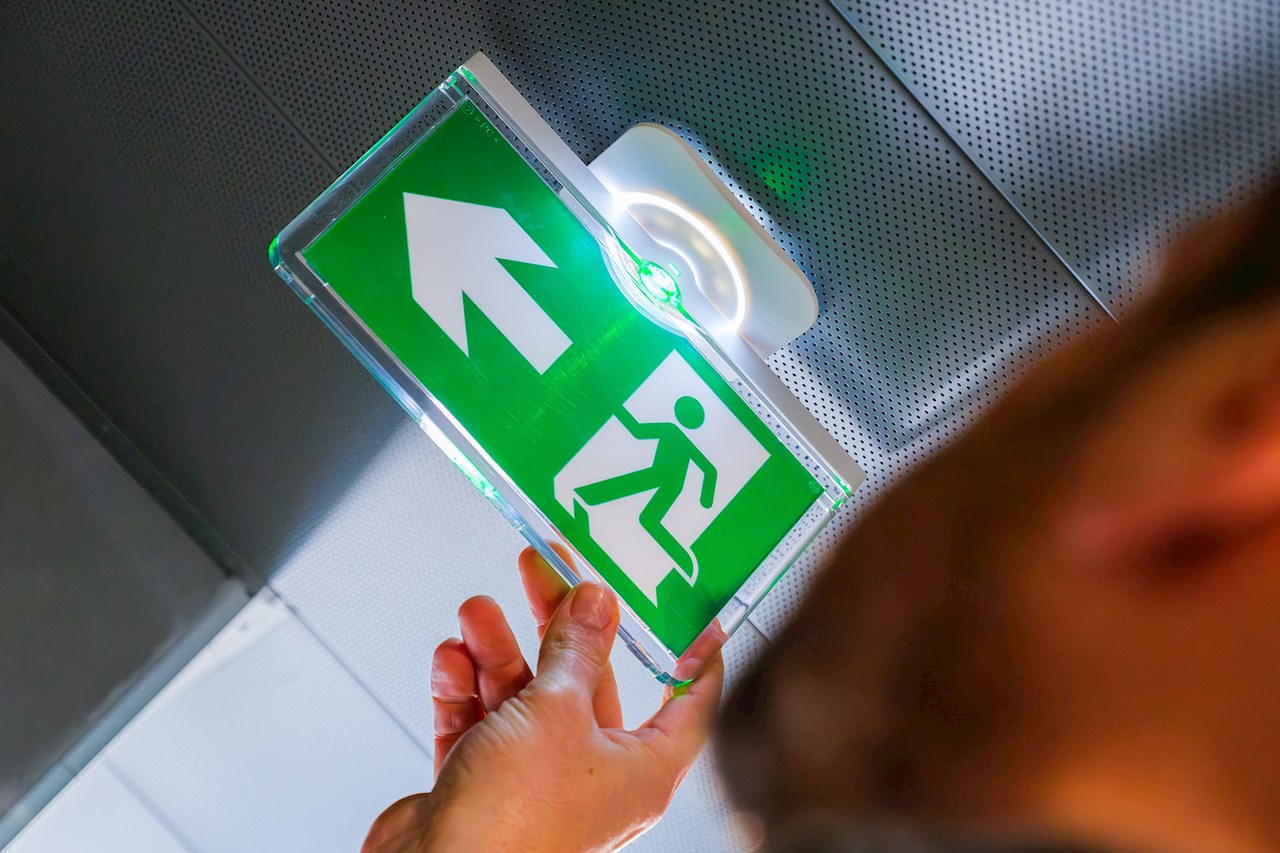
Some of the most important systems in buildings are the ones people rarely notice. Emergency lighting is one of them. Installed quietly above doorways and along corridors, it often sits in the background of building design – visible but rarely discussed as part of how buildings actually perform.
For decades, emergency lighting has largely been treated as a compliance requirement. A system installed to satisfy regulations, periodically tested, and hopefully never needed. But as buildings become more complex, electrified and digitally connected, that mindset is starting to change. Emergency lighting is beginning to play a more strategic role in how buildings protect people and operate safely.
Fire safety remains a global challenge
Worldwide, fire incidents cause more than 180,000 deaths each year1, with many casualties caused by smoke or disorientation during evacuation.
And while safety measures have improved dramatically – fire fatalities in Europe are falling by around 65% over the past 30 years thanks to stronger regulations and prevention measures2 – incidents still occur across every region of the world.
Emergency lighting plays a critical role in these situations. Safety codes across Europe, North America and much of Asia require it in almost all commercial and public buildings, ensuring occupants can find safe exits when normal lighting fails.
Recent tragedies around the world serve as a reminder that safe evacuation during emergencies cannot be taken for granted. In many cases, investigations show that visibility, wayfinding and clear exit routes can make a critical difference when seconds matter.
A system hiding in plain sight
Despite its importance, emergency lighting has often been seen as a ‘tick-the-box’ technology. In fact, emergency lighting is one of the few building systems that is legally required in almost every commercial building in the world – yet it is still rarely discussed as part of the smart building conversation.
But the expectations placed on buildings are changing.
Building operators today are managing more complex portfolios, larger facilities and stricter compliance requirements. Safety systems are expected to be more reliable, easier to manage and more transparent.
The industry itself is evolving. The global emergency lighting market is projected to exceed $10 billion by 20303, driven by tightening safety regulations and the growing adoption of connected lighting systems.
And this is where connected technologies are beginning to transform emergency lighting.

From manual checks to digital visibility
In most jurisdictions, emergency lighting must be tested monthly and annually to ensure compliance. In large facilities such as hospitals, universities or airports – where hundreds or even thousands of luminaires may be installed – this can create a significant operational burden for facility teams.
Connected emergency lighting platforms are changing that.
By linking systems to digital monitoring platforms, building operators can gain real-time visibility into system performance. Testing can be automated, compliance reporting simplified, and maintenance teams alerted immediately if something isn’t functioning correctly.
Solutions such as ABB’s NaveoPro and NexusPro allow operators to monitor emergency lighting across entire building portfolios rather than relying solely on manual inspections. The result is not only greater efficiency, but also greater confidence that systems will perform when they are needed most.
A shift in safety culture
Perhaps the most important change, however, is not technological. It is cultural.
Across the industry, we are seeing a gradual shift away from a compliance mindset towards a more proactive approach to building safety. Instead of asking “What is the minimum we need to install?”, building owners are increasingly asking:
How can safety systems contribute to the overall intelligence and resilience of a building?
This shift is particularly visible in complex environments where the people responsible for operating the building also have a long-term responsibility for occupant safety. In these spaces, emergency lighting is no longer just infrastructure. It becomes an operational system.
Emergency lighting as part of the smart building ecosystem
Another important development is integration.As buildings become smarter, systems that were once isolated are becoming connected.
Emergency lighting can now interact with wider building management systems, fire safety infrastructure and digital platforms. This connectivity enables building operators to manage safety alongside energy performance, automation and operational data.
In other words, emergency lighting is no longer a standalone product. It is becoming part of the digital nervous system of the modern building.
Looking ahead
Innovation in emergency lighting is also evolving.
Installation simplicity is becoming increasingly important in a world facing skilled labour shortages. New systems are designed to install faster and more intuitively, helping project teams deliver complex projects under growing time pressure.
At the same time, advances in connectivity, cybersecurity and battery technology are opening new possibilities for safety systems. All of this points to a clear conclusion: emergency lighting is evolving alongside the buildings it protects.
And in truly smart buildings, even the systems people rarely notice must be intelligent, connected and ready to perform when it matters most. When safety systems work as they should, they remain invisible – but their impact can be profound.
About the author
Fabio Mercurio

Fabio Mercurio leads ABB's Emergency Lighting Business Line within ABB Electrification's Smart Buildings Division, which provides reliable and complete solutions for safe evacuation for a number of applications, from office buildings, hotels, schools, hospitals, to stadiums, factories and train stations. Fabio oversees the Emergency Lighting Business Line, ensuring its strategic direction and operational success. His responsibilities include defining and implementing business strategy, portfolio and financial management, and directly leading the Europe and Rest of the World (RoW) region for the Business Line.
Fabio previously led Strategy, Sustainability and Portfolio Management for ABB’s Smart Buildings Division.
He initially joined ABB in 2019 as Vice President of Strategy and Corporate Development. Prior to that, he served a 12-year tenure at Kearney, a management consulting firm. He spent over a decade in Asia and China, where he headed the firm’s innovation practice, focusing on strategy and innovation for international and Asian groups across energy, automotive and electronics. Fabio has mentored several startups and has worked for the United Nations Development Program (UNDP) in Beijing (China) and the Italian Consulate in Miami (USA). He holds a master’s in business administration (MBA) from China Europe International Business School (CEIBS), as well as a master's degree in economics from University of Tor Vergata, Rome. Fabio speaks Italian, English, Mandarin-Chinese and Spanish.
Sources
[2] Fire Safety Statistics - Modern Building Alliance
[3] Temperature Monitoring System Market Size | Growth [2034]


