By Jean-Philippe Garzon, Global Product Manager, People Protection at ABB Electrification’s Smart Buildings Division
Modern electrical installations are under increasing pressure: more circuits, more devices, and stricter safety requirements, all competing for limited space inside panelboards. The evolution of Residual Current Device (RCD) protection technology tells a powerful story of innovation driven by these real-world constraints.
The evolution of RCD protection
Generation 1: MCB + RCCB – The traditional approach
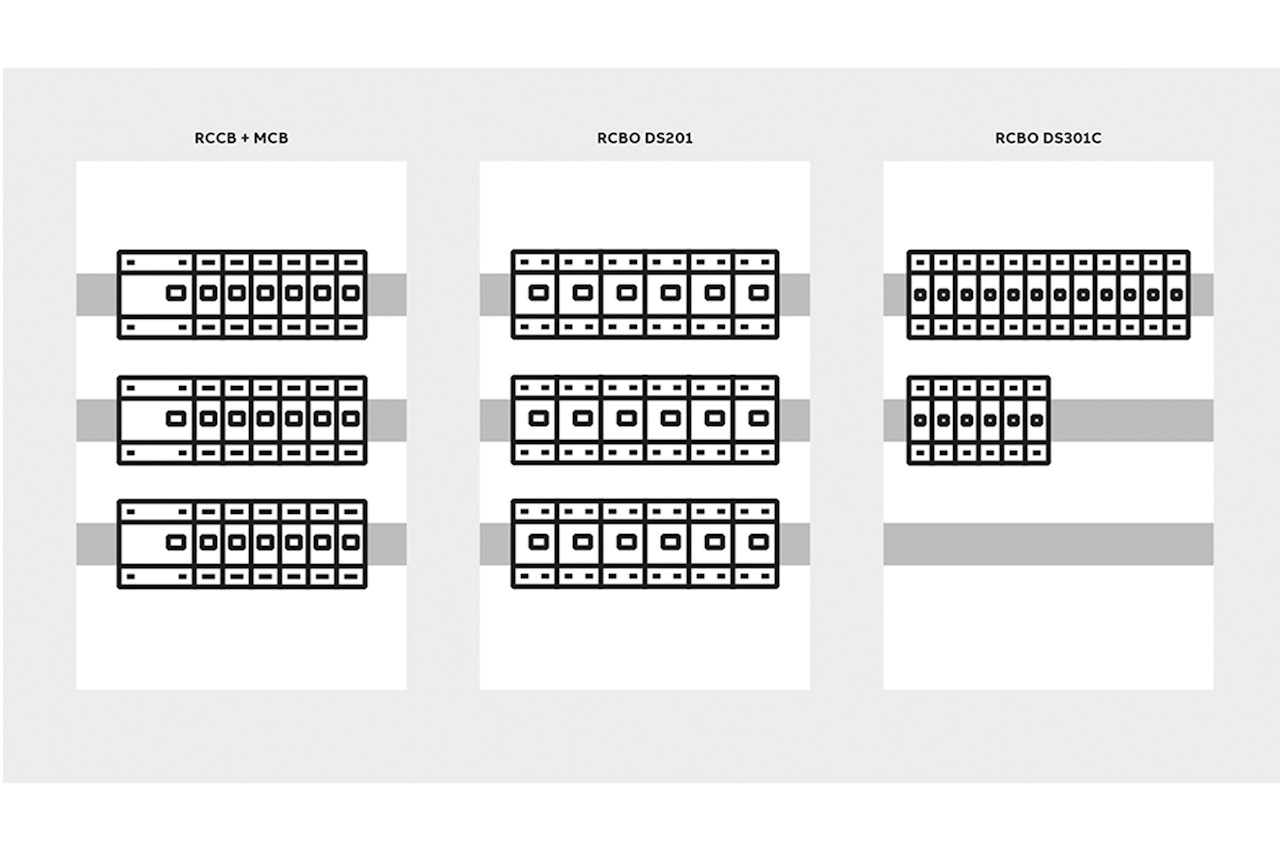
For decades, electrical protection followed a straightforward formula: combine separate Miniature Circuit Breakers (MCBs) for overcurrent protection with Residual Current Circuit Breakers (RCCBs) for earth fault protection. In a typical installation with 18 branches, this traditional approach required grouping circuits into sets of six. Each set needed one RCCB (at least two modules wide) plus six individual MCBs (one module each). This took three full DIN rails just to accommodate the equipment, and when an earth fault occurred in one branch, the shared RCCB would trip, taking down all five other healthy circuits in that group. In hospitals, commercial buildings, or industrial facilities where continuity matters, this lack of selectivity was more than inconvenient, it was risky and costly.
Generation 2: RCBO – Integration brings selectivity
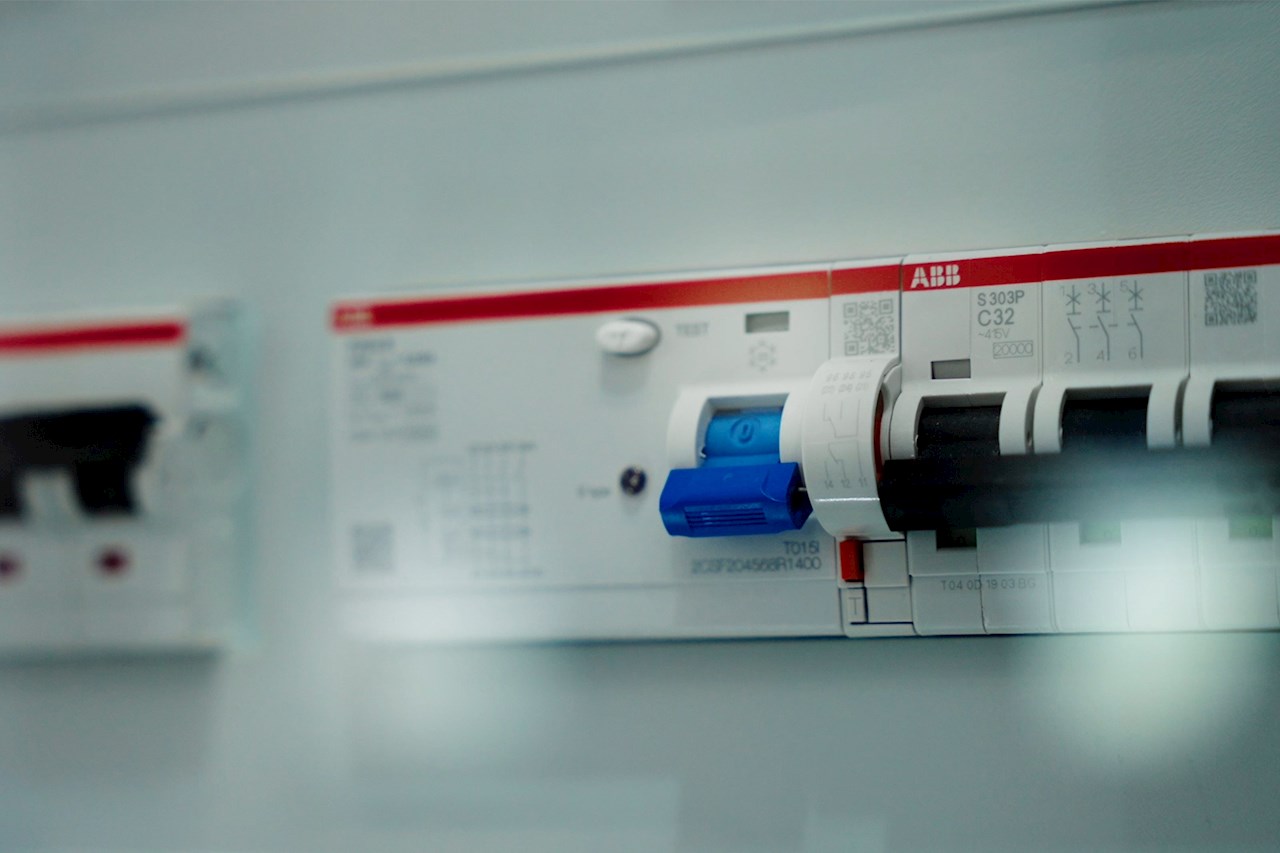
The RCBO made a significant leap forward by combining MCB and RCCB technologies into a single device. This innovation introduced selective protection: each branch now had its own earth-fault, short-circuit, and overload protection. When a fault occurred, only the affected circuit tripped. However, traditional RCBOs occupied two module widths. For that same 18-branch installation, you'd still need three DIN rails – space savings were minimal, even though selectivity improved dramatically.
Generation 3: Single-module, voltage-independent RCBOs – Slim solution, big protection
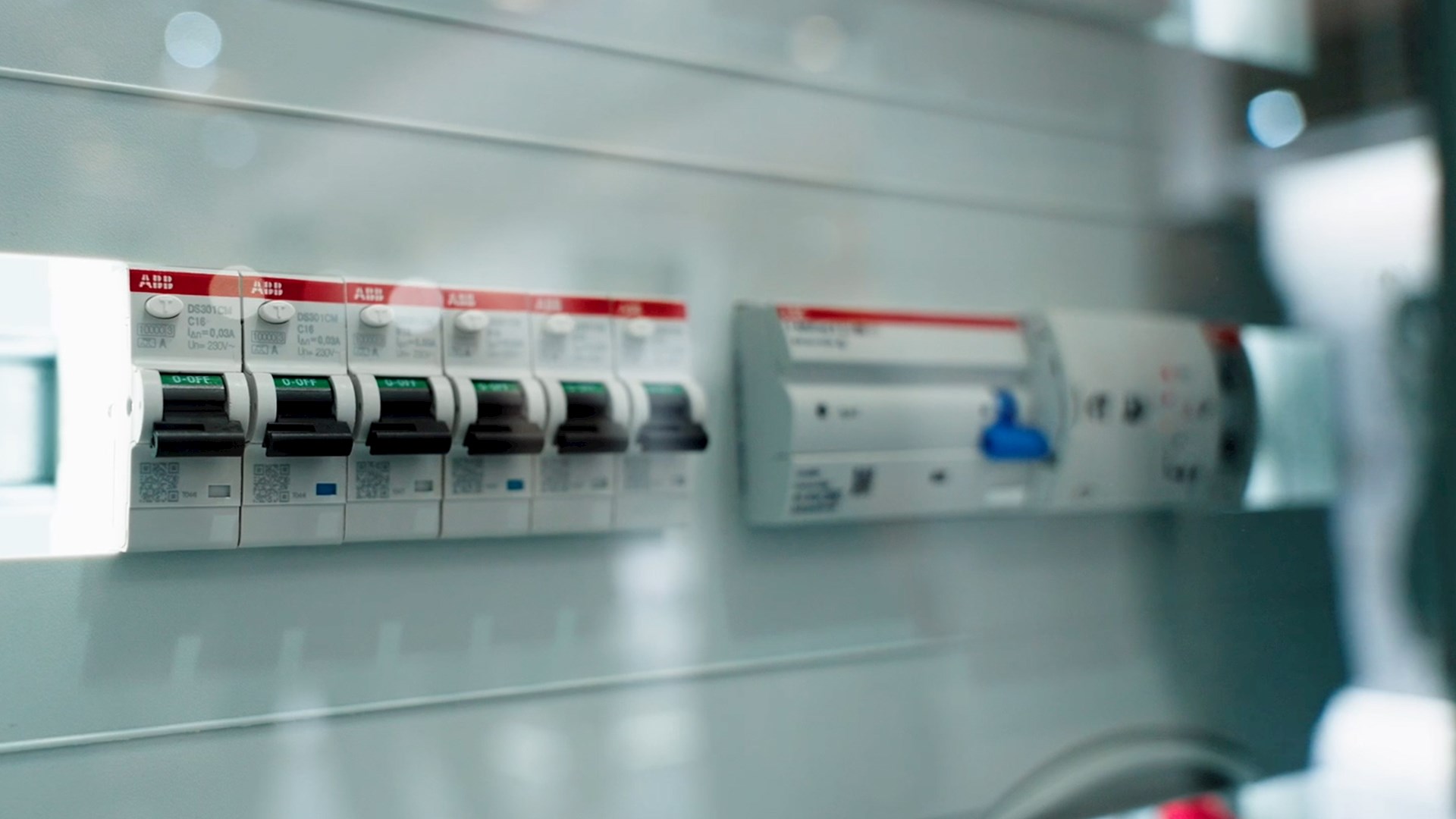
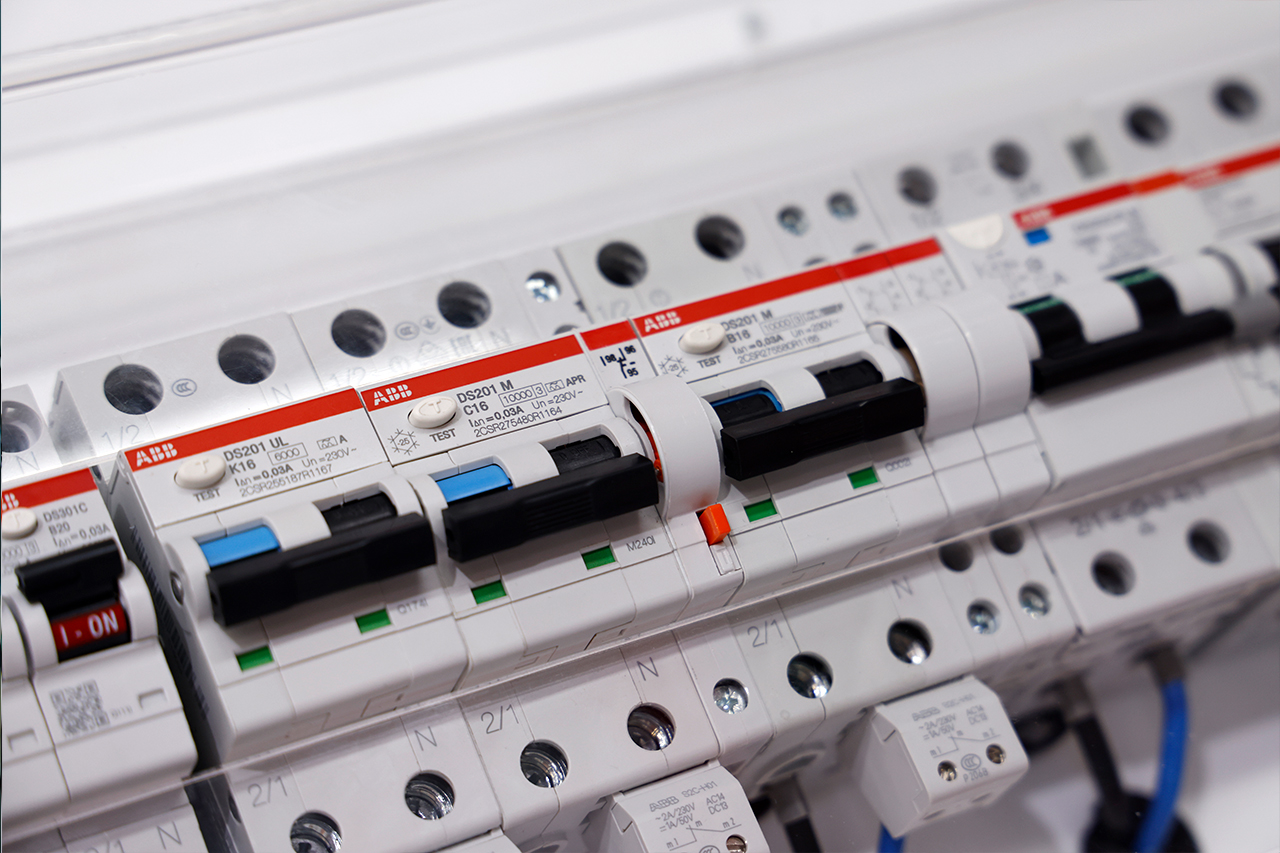
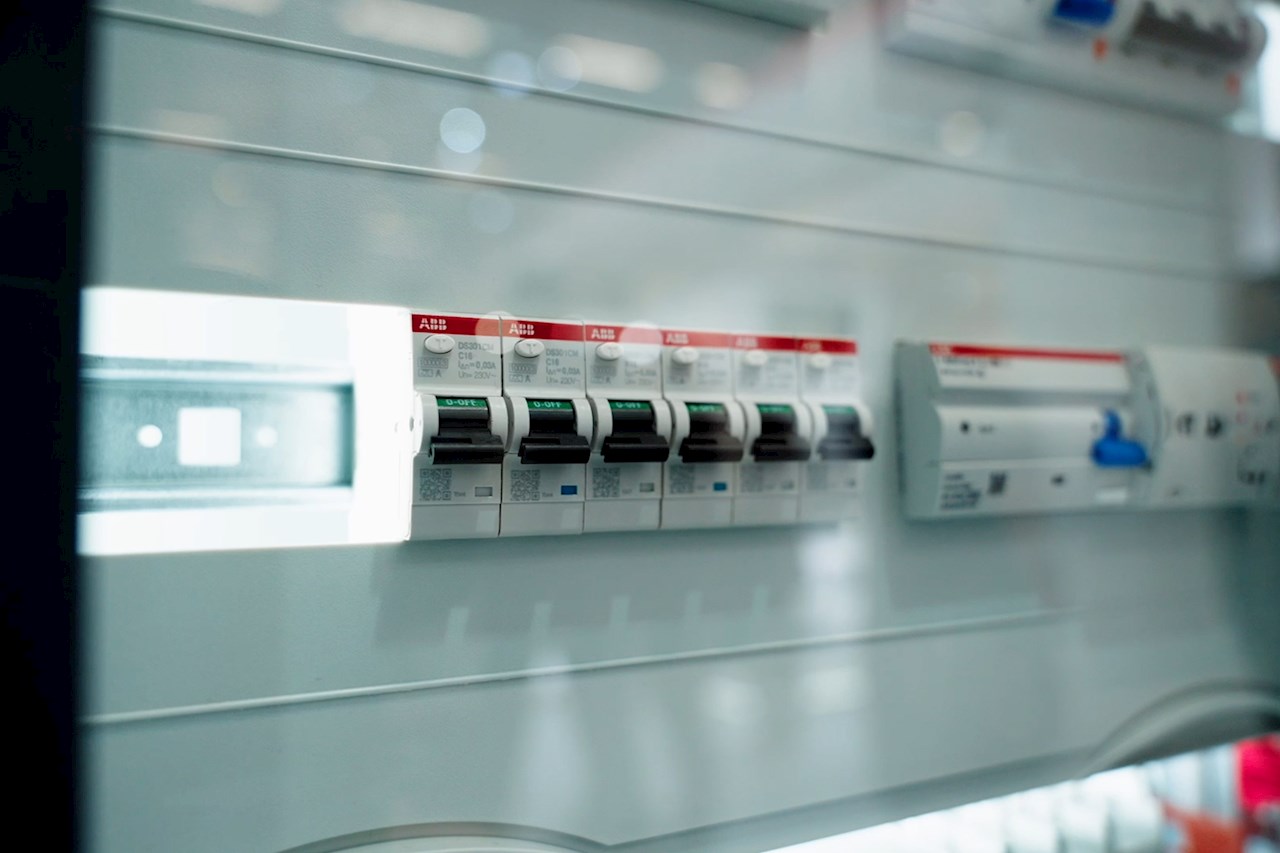
The breakthrough came with single-module, voltage-independent RCBOs like ABB's DS301C. By miniaturizing all components, including differential transformers, trip mechanisms, arc chambers, and sensing circuits, engineers were able to reduce size while maintaining full RCBO functionality in a single module width (17.6 mm). Those same 18 branches now occupy just one-and-a-half DIN rails instead of three, while maintaining complete selectivity for each circuit.
Generation 3.5: The 10kA game-changer
The latest evolution pushes boundaries even further. ABB's DS301C M with 10kA breaking capacity delivers protection levels previously available only in larger, two- or three-module solutions – all while maintaining a single-module footprint. This is the world's slimmest electromechanical RCBO with 10kA capacity according to EN 61009 -2-1, voltage-independent operation, suitable for demanding commercial and industrial applications.
Why compact size matters: Industry trends driving miniaturization
The push toward more compact protection devices reflects broader changes in how buildings are designed, used, and retrofitted.
1. Space constraints in electrical panels
As Andrea Menti, Energy Distribution Business Line Leader at ABB's Smart Buildings Division, notes: “As more electrical circuits and technologies are added to buildings, space in electrical panels is becoming increasingly limited. Protection devices still need to deliver high levels of safety in that space.”
2. Retrofit and renovation projects
The 50% space saving compared to traditional RCBO or RCCB+MCB configurations is particularly valuable in renovation projects where existing electrical distribution panels have limited space. Instead of expensive panel replacements, compact single-module RCBOs allow:
- Extra circuits to be added without expanding the panel
- Future system upgrades as building needs evolve
- Space for smart home, building automation, and energy management systems to be added
3. Increased circuit density
Modern buildings have more electrical branches than ever before. The need for granular control, increased safety, and the proliferation of connected devices mean final distribution lines continue to multiply. Compact protection devices play an increasingly important role in managing this density without expanding infrastructure.
4. Critcal applications
In hospitals, data centers, and industrial facilities, selective protection combined with space efficiency enables better system continuity and reduced downtime. When faults occur, only affected circuits are interrupted – critical for operations that can't afford widespread outages.
What not to overlook: Voltage-Dependent vs. Voltage-Independent RCBOs
One distinction that remains critical is voltage independence.
- Voltage-Dependent (VD) / Electronic RCBOs: These devices require voltage between phase and neutral to power their electronic components. They work correctly under normal network conditions, but if the supply voltage fails, their ability to detect and trip for earth faults may be compromised.
- Voltage-Independent (VI) RCBOs: These electromechanical devices operate using only the energy from the unbalanced current flowing from Phase to neutral – no external power supply required. They continue protecting even when the supply voltage is unstable. Consider a scenario where the neutral conductor is interrupted upstream, and a user comes into contact with the phase conductor downstream.
With a voltage-dependent RCBO, there's no voltage difference between phase and neutral to power the device. The RCBO cannot detect or trip for this potentially lethal earth fault.
With a voltage-independent RCBO, protection remains active. The device detects the current leakage and trips immediately. Dependability is critical, especially during faults – it needs to work when everything else fails.
Not all compact RCBOs are created equal
ABB's DS301C achieves voltage-independent operation despite its compact design. Many smaller format RCBOs rely on electronic (voltage-dependent) designs to achieve this. The DS301C demonstrates that this level of miniaturization can be achieved without compromising on safety performance. The device uses a differential transformer to detect current imbalances, a sensitive relay to trigger trips, and careful signal filtering to prevent unwanted trips from surges – all powered by the fault current itself, with no external supply needed.
Regulatory and Safety Considerations: In some regions, particularly in Europe, voltage-independent designs are recommended or required to ensure reliable tripping regardless of voltage conditions. This helps ensure installations meet compliance requirements and that protection systems perform reliably when it matters most.
Compact protection, complete performance
Today's compact protection devices address space constraints and selectivity challenges, while maintaining reliable performance under adverse conditions – including supply voltage loss or neutral interruption – through their voltage-independent design:
- 50% space savings for retrofits and expansions
- Selective protection that maintains system continuity
- Reliable safety through voltage-independent operation
- Sustainability benefits through reduced material use and lower power losses
The evolution of RCBO technology reflects changing building demands. As electrical complexity increases, protection devices must do more within increasingly constrained environments. This requires solutions that combine selectivity, reliability, advanced performance and compact design. Selecting the right specification is critical – ensuring protection strategies align with installation needs and local regulatory requirements.
About the author
Jean-Philippe Garzon

Based in France, Jean-Philippe brings a strong electrotechnical background combined with a Master's degree in Marketing from ESG Business School. He joined ABB in 2012 and in his role as Global Product Manager, he has built deep expertise across Lightning Protection, Surge Protection, Miniature Circuit Breakers and Residual Current Devices. Since 2024, he has been leading the People Protection team within ABB Electrification's Smart Buildings Division.


