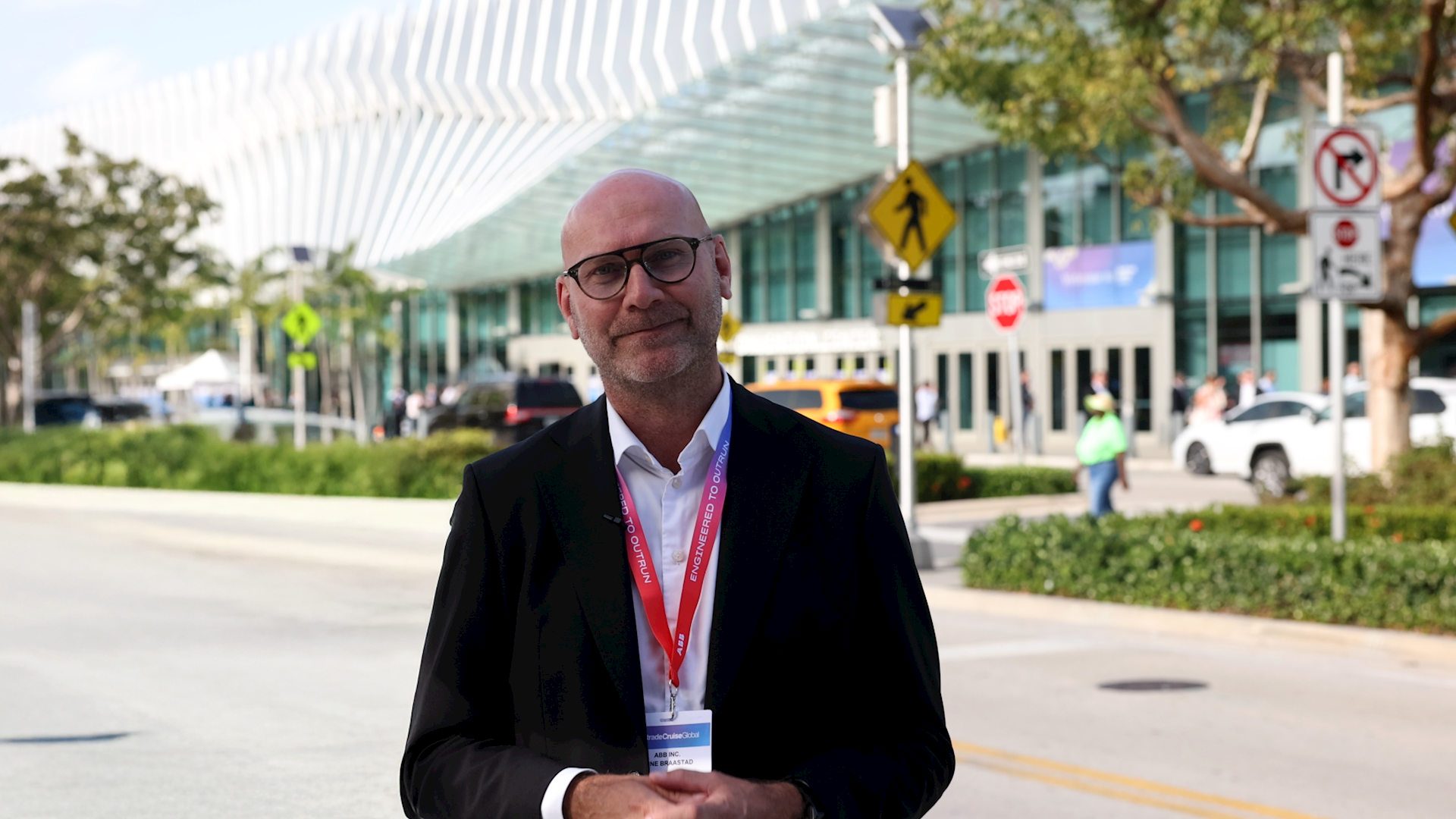
As the new President, Rune Braastad has taken charge of Marine & Ports at a moment when getting to grips with conditions on the ground across the global division has seldom been so essential.
Closeness to staff and markets is critical for a leader who takes over at a time when the division is experiencing record financial results while also facing the disruptions and regional conflicts any global business faces in 2026. In the latter case, ongoing conflicts affecting ports and shipbuilding in the Middle East require particular attention.
“The safety and wellbeing of our personnel always come first and go beyond day-to-day business management. This is especially important when the assets we provide support and service for are in vulnerable locations” he comments.
Fully conscious of this duty of care after 25 years with Marine & Ports, Braastad took over from predecessor Juha Koskela towards the end of 2025. The first quarter of 2026 brought “a continuation of the fantastic record 2025 financials” in the near term and the headwinds of volatility which once more confirm that global maritime is best served by technology partners with the scale to invest for the long term, says Braastad.
“The safety and wellbeing of our personnel always come first and go beyond day-to-day business management.”
Speaking about 100 days after his appointment at the Seatrade Cruise Global event in Miami, Braastad’s immediate focus is understandably on ABB’s role as the leading provider of propulsion technology to the cruise industry. Europe’s cruise ship building yards are more or less full, he notes, with ABB benefiting from orders for power, control and automation systems, and Azipod® propulsion continuing as the preferred solution for a wide range of vessel types and segments.
But even in what he describes as a “booming cruise market”, shipping customers increasingly seek input from their technology partners to support longer term thinking.

Seatrade Miami, April 2026 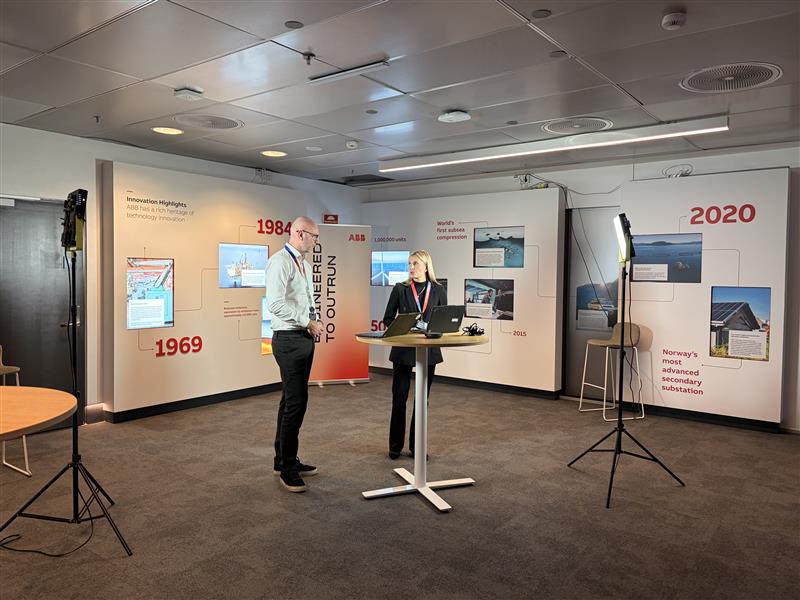
Rune Braastad and Saara Kuusisto during a virtual town hall for Marine & Ports employees
Energy-agnostic by design
The “longer view” is also enabled by ABB’s “energy agnostic” position, Braastad says. “Markets are hard to predict, but we can be sure that the demand for energy efficiency will continue. ABB provides the electrical infrastructure that works with the ship’s power sources, where efficiency is a key requirement regardless of the technology or fuel used.”
Braastad makes his point at a time of highly volatile fuel pricing but also draws a link to the uncertainty of the adoption of IMO’s Net Zero Framework. While the global regulator’s goal for Net Zero greenhouse gas emissions from ships by around 2050 remains in place, the funding mechanism proposed to drive change has stalled.
Technology leaders must offer solutions that satisfy a range of possible scenarios, says Braastad.
"Markets are hard to predict, but we can be sure that the demand for energy efficiency will continue."
“While regulatory clarity is important for long-term planning, our existing solutions are flexible enough to help customers meet the sustainability and cost efficiency goals they have today and be fully prepared for tomorrow.”
A recent contract with Cochin Shipyard to supply power and propulsion systems for two Polestar electric tugs under Phase 1 of India’s Green Tug Transition Programme highlights readiness to serve customers committing to electrification outright, he says. However, by establishing a foothold for permanent magnet shaft generators in a range of cargo ship markets, ABB is also driving greater efficiency across more conventional power trains.
"As providers of electric power, distribution and propulsion solutions for ships, we work as partners across the full range of energy options and focus on the integration and control around them, but our responsibility to look to the longer horizon is only increasing Investment decisions must be business-led as we are problem solvers for customers, but experience also shows we need to look more than five years ahead to anticipate what they will need in a fast-changing world. With assets built to last 20, 30 or even 40 years, customers are entitled to expect systems which can adapt.”
Look ahead for human users
Serving the relationship between human users and fast-developing digital technologies to design for safety and resilience in seagoing conditions also demands deep marine experience and accumulated engineering knowledge. “We know about the information overload and fatigue that seafarers can experience, so part of our responsibility is to base our developments on the operational realities of the human in the loop.”
Braastad cites development work over several years covering ABB’s new generation dynamic positioning solution as a prime example. Designed for DP2, it has been developed around insights from DP operators, studies of accident logs and model-based control algorithms, for integration into ABB Ability™ Marine Pilot Control. First deliveries formed part of control systems on board the wind turbine installation vessels (WTIV) Norse Wind and Norse Energi1.
“That’s an example of technology that will disrupt the market because it overcomes shortcomings that DP operators know all about and enhances vessel safety and operational decision making,” says Braastad. “It unifies DP, maneuvering and transit in one intuitive solution.”
Braastad adds that ABB has scaled up solutions in its digital portfolio, such as the ABB Ability™ OCTOPUS Marine Advisory System and ABB Ability™ Routing Service voyage optimization to reach beyond niche applications.
Marine & Ports synergies
While his most recent ABB experience comes from leading the Marine Systems business line, Braastad has also made a concerted effort to get up to speed quickly with the division’s substantial global ports business.
“ABB is a long-established market leader in crane control and automation technology, and today the scale of that business is extraordinary, while its scope extends across terminal operations and terminal electrification. The customer relationships we build are also often career-long on both sides.
“We are also exploring other ways of leveraging ABB’s digital expertise to advance defined marine and ports products and services. For example, remote support, system monitoring, and cyber security are critical solutions throughout the maritime industry and synergies can be found across the division. The exceptional work our port technology team has done to enhance crane efficiency using AI, sensor fusion and optical character recognition (OCR)2 offers a new option for camera-based situational awareness at sea.”
ABB’s Ports business also increasingly recognizes how electrification creates opportunities for adopting new handling equipment and technologies. These deliver higher levels of automation and productivity, systems reliability and efficiency, while reducing emissions and noise.
“I’ve been very encouraged by the way ports are seeking to get away from diesel gensets as a power source, to tap into the grid to harvest opportunities to use renewables. It’s exciting to see this paving the way to more advanced automation and energy management solutions that help reduce energy consumption.” says Braastad.
Braastad says that he made sure his early travel schedule as division President included a visit to Panama, which has been built up by the company as a center of production for containerized ‘e-houses’ for terminal electrification in the ports industry. These are also part of the scope in one of ABB’s recent contracts, the world’s largest shore power project to date, for Rotterdam Shore Power3.
Powering opportunities
The new role has also brought wider engagements for Braastad. Beyond ABB’s market-leading position in shore power, systems integration, and its pioneering collaboration in developing marine fuel cells4, his team of experts is now more involved in advancing ship-based nuclear-electric propulsion5.
"Advanced nuclear technology with its inherent safety features is a great opportunity for marine."
Many believe that advanced 4th generation nuclear technology will be an essential ingredient if shipping is to meet the decarbonization plans regulators have in mind. In September 2025 ABB signed a memorandum of understanding (MoU) with Swedish nuclear energy company Blykalla to support and accelerate the deployment of small modular lead-cooled reactors (SMR) in the maritime industry.
“Everyone understands that nuclear propulsion will not happen tomorrow, and that long-term development is ahead on the regulatory and technology sides,” says Braastad. “But advanced nuclear technology with its inherent safety features is a great opportunity for marine, which also aligns with ABB Group strategy to cross-collaborate through the ABB Nuclear Competence Cluster. The level of interest on the cargo ship side is very high and we see the early 2030s as a realistic horizon for the first order for a commercial vessel with a nuclear reactor.”
Engineering for AI
For a global engineering group at the forefront of technology across so many areas, it is hardly surprising to learn that artificial intelligence is a priority in current and future planning. ABB makes its divisions accountable for their own R&D investments as a basis for sustaining market position.
The combination of AI and multi-sensor fusion technology is already offering a decisive opportunity for container terminal operators to overcome barriers to further automate crane operations over the ship – a well-known industry challenge. ABB’s decades-long track record in crane automation systems for container terminals has also yielded the operational experience to benefit from AI and is also essential for success in waterside automation.
In a comparable way, the rich operational data ABB has gathered on ship electrical systems and linked technologies over multiple decades has provided the basis for predictive diagnostics and maintenance, adds Braastad. “There is an especially powerful case for Maritime AI as a tool for reducing risk and improving efficiency where predictive maintenance is concerned, because the data is evidence-based.”
Combining the ABB Ability™ Genix Industrial Analytics and AI suite with ABB’s established remote diagnostics and support portfolio, and expertise ashore, had been pivotal in developing OVERSEA™ – the combined digital solution and ‘fleet-support-center-as-a-service’ established with Wallenius Marine in September 2025. Having opened its first service center in Stockholm, the partners are currently “scaling up” vessel numbers. Braastad points out that AI-powered configurator tools can help engineers to enhance their 3D designs at an early stage by integrating data from operational experience and predictive maintenance to simplify complex customization work.
The bigger picture
But beyond the fine detail of design, technology leaders also need to make sure they keep the big picture of what customers need within view at all times, Braastad adds.
ABB needs to demonstrate the maturity and depth of its research on key issues when called on by customers.
“The significant work we have done on underwater radiated noise (URN)6 comes up more and more as part of our customer engagements – and not only the cruise and ferry companies,” says Braastad. “Reducing the impact of global shipping on marine species has been a ‘deep dive’ area for ABB. Mitigating URN is part of our mission to deliver measurable environmental benefits while supporting efficient, reliable operations."
Also looking ahead, but based on more than a decade of research, ABB Dynafin™7 – the revolutionary propulsion system inspired by the dynamic motions of a whale’s tail – offers another example. Introduced to market as a concept, the work has continued with model tests at MARIN8 with our customers OCEANCO9 and LD Armateurs10.
“ABB Dynafin™ is a long-term innovative development that we believe can have a significant impact on the maritime market. It will be the high efficiency option for specific vessel types e.g. in passenger and cargo segments, with each performance test we undertake strengthening the case,” says Braastad.
Markets will keep shifting, but ships and ports last for decades. In some ways, while geopolitics, energy choices and regulations can get complicated, the power of Braastad’s point lies in its simplicity: technology has the power to help. Because electric, automated and digital solutions that optimize energy efficiency and systems designed to adapt and evolve–will help in both the short and the long term.

References:
[1] ABB’s new DP2 functionality delivers major improvement in vessel control during DEME sea trials
[2] AI accelerates productivity and safety in the world of ports | News center | ABB
[3] Rotterdam Shore Power selects ABB for world’s largest shore power project
[4] ABB and HDF Energy to develop high-power fuel cell unit for large seagoing ships
[5] Covering the distance to shipping’s nuclear opportunities
[6] Diving deeper into underwater noise
[8] MARIN tests verify groundbreaking efficiency of ABB Dynafin™ propulsion
[9] OCEANCO tests verify ABB Dynafin™ propulsion efficiency as future of yachting
[10] MARIN verifies ABB Dynafin™ propulsion performance after trials for LD Armateurs


