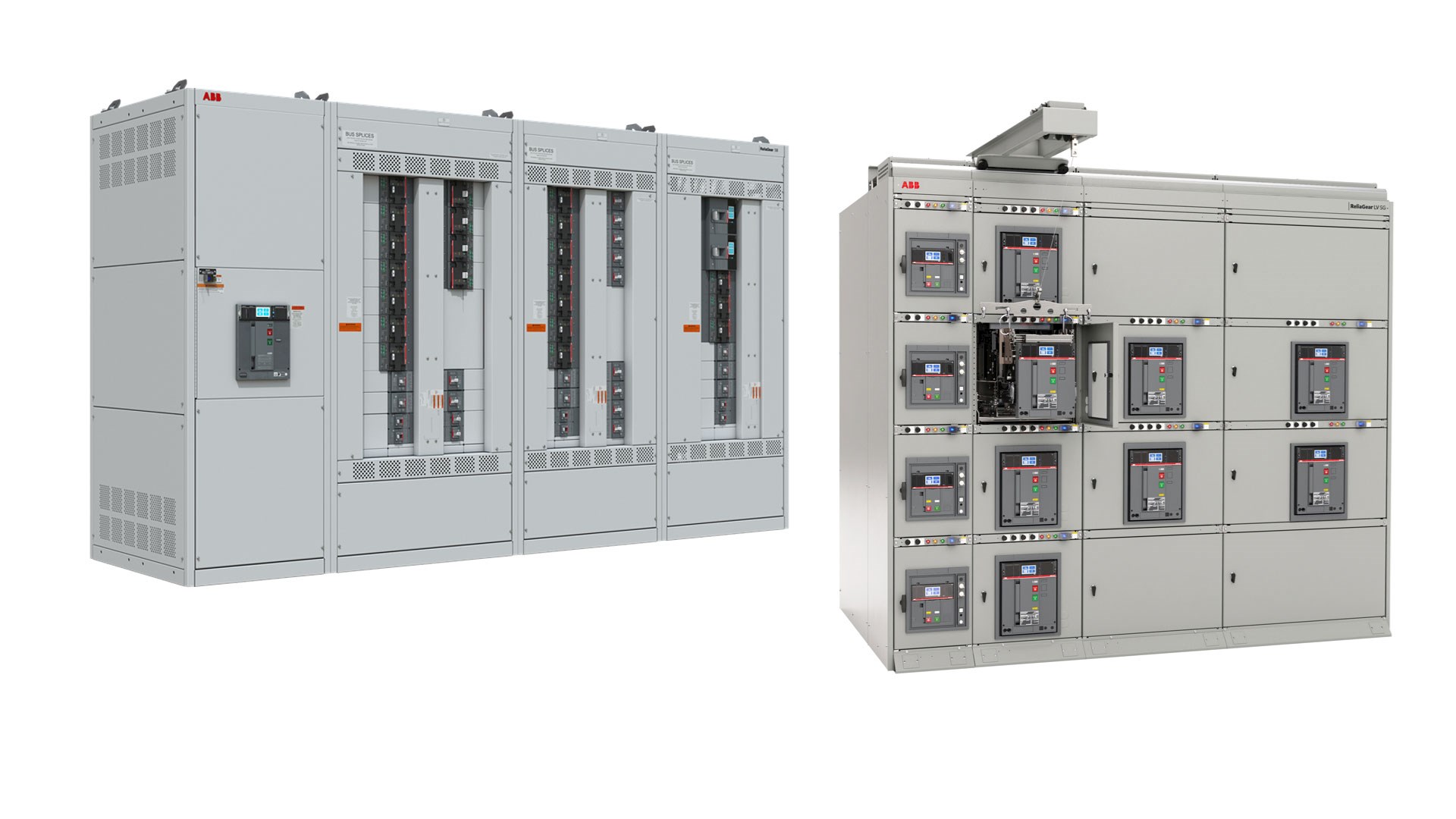
At a glance, switchgear and switchboards can look like two versions of the same thing: large electrical assemblies that receive power and send it where it needs to go. In practice, they are specified for different jobs.
A switchboard is often the right fit when a building needs safe, efficient distribution from a main service point to downstream circuits. Switchgear comes into play when the stakes are higher, such as mission-critical uptime, higher fault levels, coordinated protection, or maintenance without shutting down adjacent circuits.
This article breaks down the practical difference between switchgear and switchboards, including standards, breaker types, construction, voltage and current ratings, fault withstand, typical applications, and where each one fits in a Canadian commercial or industrial facility.
What Is Switchgear?
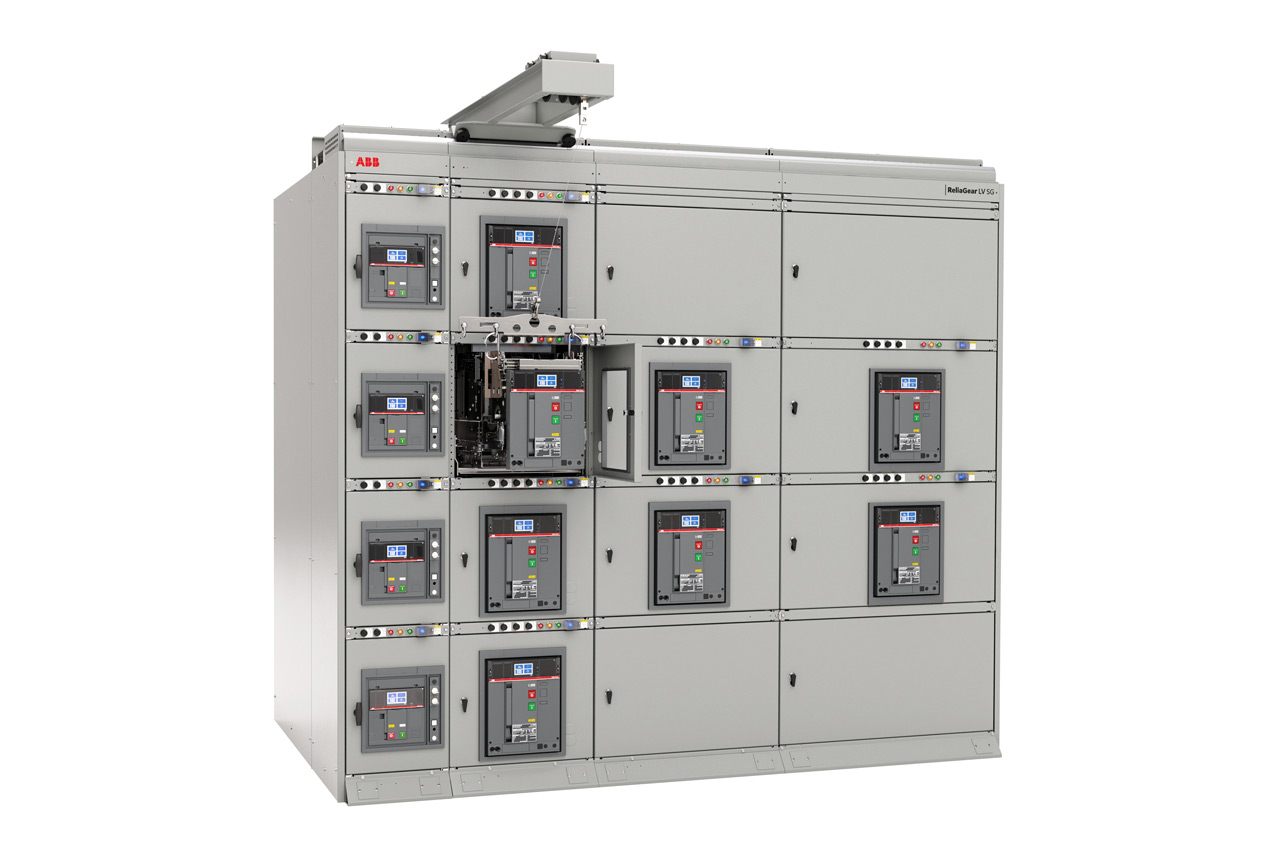
When an electrical fault occurs at a mission-critical facility, switchgear makes the difference between controlled shutdown and cascading system failure. These units are a collection of switching and protective devices designed to control, protect, and isolate electrical circuits. They are built for environments where reliability, fault management, and continuous operation are non-negotiable, so you’ll commonly find them in data centres, large manufacturing plants, and utility substations.
A defining feature of switchgear is its compartmentalized construction. Each breaker is physically isolated from the bus bars and neighbouring components by internal barriers. This limits the spread of any fault to a single section, reduces arc flash risk, and supports coordinated protection, enabling teams to isolate only the affected circuit while the rest of the system stays live. Switchgear is designed to withstand fault currents for up to 30 electrical cycles, allowing coordinated protection systems time to operate selectively.
Switchgear uses individually mounted power circuit breakers tested to UL 1066 standards. These are draw-out breakers, meaning a technician can remove and service any breaker without interrupting power to adjacent circuits. This is a critical feature for facilities where downtime is not an option.
The breakers include automatic protective functions with the option for manual override when operators need direct control. In practice, this means maintenance teams can perform breaker testing or replacement during live operation.
Low-voltage switchgear is built to CSA C22.2 No. 31, UL 1558, and IEEE C37.20.1 standards, covering equipment rated up to 1,000V AC, though the majority of Canadian installations operate at 600V or below. For higher-demand applications, medium-voltage switchgear extends this capability to systems up to 38kV.
In Canada, ABB’s ReliaGear LV Switchgear offers main bus ratings from 2,000A to 8,000A using SACE Emax Air Circuit Breakers (ACBs), with additional options like MNS-SG for metal-enclosed configurations.
What Is a Switchboard?
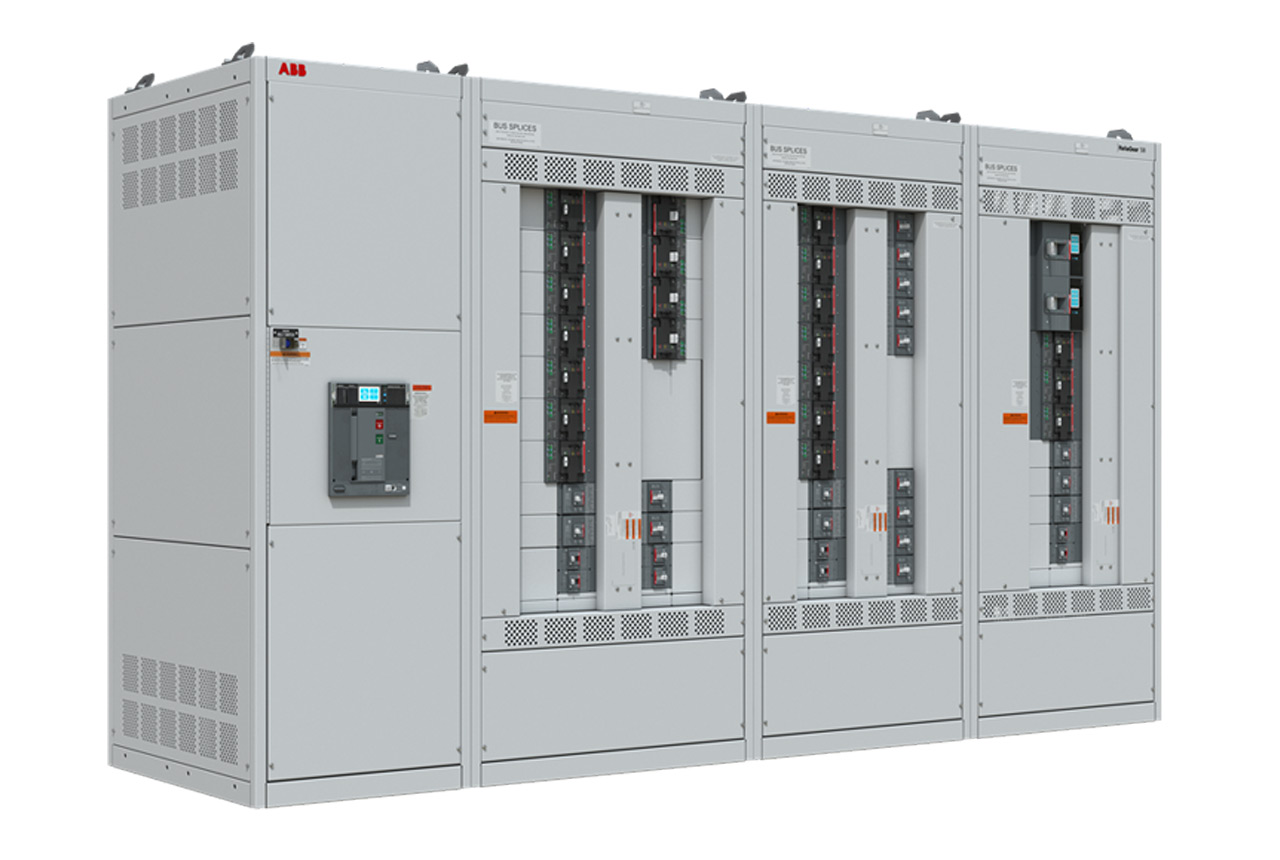
Most commercial buildings in Canada, be they offices, retail developments, or residential towers, distribute power through a switchboard.
A switchboard is a freestanding assembly that generally takes power from a single source and routes it to multiple downstream circuits. Under certain specific conditions, such as Main-Tie-Main configurations, power can arrive from multiple sources. Either way, a switchboard is the standard choice when power distribution is required, but extreme fault conditions are unlikely.
Unlike switchgear, switchboards are generally front-access units by default, with rear access available depending on the configuration. Their construction is simpler, with fewer internal barriers, which contributes to a more compact physical footprint and lower installed cost.
They may use group-mounted circuit breakers, typically moulded case (UL 489) or insulated case designs, which are either fixed or plug-in rather than individually compartmentalized. Air Circuit Breakers (ACBs) are also widely used as the main breaker (or main switch), acting as the primary control for all electrical supply to the facility.
Built to UL 891 and CSA C22.2 No. 244 standards, switchboards are rated up to 600V with bus capacities reaching 6,000A. They are designed to interrupt faults quickly, typically withstanding fault currents for only 3 cycles, rather than sustaining them for coordination purposes. This makes them well-suited for applications with standard power distribution requirements.
Modern switchboards often include metering, surge protection, and service entrance configurations. ABB’s ReliaGear Switchboards, for example, use SACE Tmax XT ACB plug-in breakers and can also incorporate SACE Emax ACB breakers for higher-performance applications above 1200A.
Differences Between Switchgear and Switchboards
Standards and testing
The standards that govern switchgear and switchboards reflect a meaningful difference in intended performance. Switchgear undergoes 30-cycle fault withstand testing, temperature testing across all bus ratings, and seven required production tests before equipment leaves the factory - meaning it has been verified to perform under fault conditions.
Switchboards must meet the well-established safety standards of UL 891 and CSA C22.2 No. 244, but are tested to a minimum 3-cycle fault withstand with three required production tests. For most commercial applications, this is entirely appropriate.
|
Switchgear |
Switchboard |
|
|
Primary standard |
UL 1558 |
UL 891 |
|
Design standard |
IEEE C37.20.1 |
NEMA PB-2 |
|
Canadian certification |
CSA C22.2 No. 31 |
CSA C22.2 No. 244 |
|
Fault withstand testing |
30 cycles |
3 cycles |
Circuit breaker types and mounting
The breaker specification drives much of the difference in cost, footprint, and performance between the two equipment types.
|
Power Circuit Breaker |
Insulated Case Breaker |
Moulded Case Breaker |
|
|
Standard |
UL 1066 |
UL 489 (e.g., ABB SACE Tmax XT insulated case breakers) |
UL 489 (e.g., ABB SACE Tmax XT moulded case breakers) |
|
Typical rating |
100% |
80% or 100% |
80% |
|
Mounting |
Individual, draw-out |
Fixed or draw-out |
Group-mounted, fixed or plug-in |
|
Serviceability |
Designed to be maintained and serviced over time |
Limited serviceability depending on design |
Typically replaced rather than repaired |
|
Used in |
Switchgear & Switchboards (main) |
Switchboards (main) |
Switchboards (branch) |
|
Fault behaviour |
Can withstand up to 30 cycles |
Trips immediately |
Trips immediately |
Both switchgear and switchboards use power circuit breakers (UL 1066) for demanding applications, such as serving as the main switch within a switchboard. These are 100% rated, meaning they can operate continuously at their full nominal current without tripping. 80% rated breakers can only be applied at their maximum (i.e. 100%) rating if the load lasts for less than 3 hours; for continuous use, systems must be sized to 80%.
These power circuit breakers are individually mounted in separate compartments and feature a draw-out design which allows for maintenance and testing without de-energising adjacent circuits. Their instantaneous trip can be turned off to allow coordinated protection, with breakers able to withstand and operate through a fault for up to 30 cycles.
Switchboards also use moulded case breakers (UL 489) or insulated case breakers, which are replaced rather than repaired when they reach end of life. Most are 80% rated, group-mounted, and either fixed or plug-in design. They also trip immediately during a high fault with no intentional delay.
Plug-in breaker designs in modern switchboards (like those in ABB's ReliaGear SB) allow field installation and repositioning on the bus stack. This closes some of the installation flexibility gap between the two product types for projects with moderate uptime requirements.
Construction and fault withstand
Fault withstand refers to how long equipment can safely handle a short circuit before protective devices interrupt the current. In testing, this is measured in electrical cycles, where 1 cycle = 1/60th of a second.
A 30-cycle fault withstand means the equipment can hold through roughly half a second of fault current, long enough for coordinated protection systems to identify and isolate the affected circuit before tripping.
Switchgear achieves this through its compartmentalized design. Physical barriers between each breaker and the bus system contain fault energy and limit arc flash propagation, allowing the equipment to sustain 30 cycles of fault current while protection systems operate.
Switchboards have no internal barriers. Their design prioritises compactness and cost-efficiency rather than extended fault endurance, handling 3 cycles of fault current. For most commercial buildings, this is the appropriate specification.
Voltage and current ratings
Both switchgear and switchboards cover the low-voltage range used in most Canadian commercial and industrial buildings. Specifying in that overlap zone is rarely about voltage; it usually comes down to uptime requirements, fault current levels, and maintenance strategy.
Low-voltage switchgear covers up to 1,000V AC, with most installations operating at 600V or below, and supports a maximum of 8,000A. Medium-voltage switchgear extends these capabilities up to 38kV.
Switchboards are limited to 600V and a maximum bus rating of 6,000A.
Cost
Switchgear may cost more than a switchboard. The price reflects its heavier construction, compartmentalization, draw-out breakers, and the more demanding testing and performance requirements the equipment must meet.
Switchboards offer a cost-effective solution where those performance levels are not required. It comes down to calibration. Over-specifying switchgear in standard commercial set-ups can unnecessarily add costs without any meaningful benefit, while under-specifying a switchboard in a high-fault, high-uptime environment can create real reliability and safety risks. A qualified electrical engineer should help determine the appropriate choice.
Switchgear vs Switchboard: When to Use Each
When to specify switchgear
Switchgear is the specification of choice where uptime and fault management are critical. Hospitals and continuous manufacturing operations commonly rely on it, as any unplanned outage has immediate operational, financial, or safety consequences.
Switchgear’s draw-out breakers allow maintenance teams to service individual breakers without de-energising adjacent circuits, which is essential in 24/7 operations. Coordinated protection systems, enabled by switchgear’s 30-cycle fault withstand, allow precise fault isolation rather than tripping the entire distribution system.
Any medium-voltage application above 600V also requires switchgear, as does any system specifying 100% rated breakers for continuous loading at full capacity.
When a switchboard is the right choice
Switchboards are appropriate for most commercial and light industrial buildings. You’ll find them in offices, retail spaces, mixed-use developments, and standard manufacturing facilities where uptime is important but not mission-critical. Data centres increasingly choose switchboards for their price and lead time advantages.
Switchboards are the standard choice for service entrance applications, where power enters the building directly from the utility. Solutions like ABB’s ReliaGear CompaXT are designed specifically for Canadian service entrance requirements, including support for utility metering and both CSA certification and cUL labelled (CSA 22.2 244 equivalence).
For projects with budget constraints, limited floor space, and standard reliability requirements, switchboards offer a practical and well-proven solution.
Where panelboards fit in
Panelboards sit downstream of both switchgear and switchboards in the power distribution hierarchy. In a typical setup, either switchgear or a switchboard handles the main (and often secondary) distribution, while panelboards are used to distribute power to individual branch circuits such as lighting or HVAC units. Some panelboards are incorporated into switchboard lineups. Panelboards are typically rated up to 1,200A and built to UL 67 and CSA C22.2 No. 29 standards. They are a complement to switchgear and switchboards, another part of the overall system, not a substitute.
Quick-Reference Decision Guide
The choice between switchgear and switchboards often depends on application requirements, reliability needs, and budget. Many modern installations use a combination of both.
|
If your project involves... |
Consider... |
|
Mission-critical uptime (hospitals, data centres) |
Switchgear or switchboard with draw-out breakers, depending on reliability requirements |
|
Medium-voltage applications (above 600V) |
Switchgear |
|
Need for maintenance without full shutdown |
Switchgear or switchboard with draw-out breakers |
|
High fault current environments |
Switchgear (30-cycle withstand) |
|
Standard commercial buildings and offices |
Switchboard |
|
Service entrance / utility metering |
Switchboard |
|
Budget-conscious projects with standard reliability needs |
Switchboard |
|
Light industrial / manufacturing |
Switchboard or switchgear, depending on uptime requirements |
Switchgear vs Switchboard Comparison Table
The table below provides a top-line comparison between switchgear and switchboards, highlighting key features and ratings.
|
Feature |
Switchgear |
Switchboard |
|
Standards |
CSA 22.2 31 / UL 1558 / IEEE C37.20.1 |
UL 891 / CSA C22.2 No. 244 |
|
Breaker type |
Power circuit breakers (UL 1066) |
Moulded case / insulated case (UL 489 & UL 1066) |
|
Breaker mounting |
Individually mounted, draw-out |
Group-mounted, fixed or plug-in, draw out |
|
Fault withstand |
30 cycles |
3 cycles |
|
Voltage rating |
Up to 1,000V AC (LV); up to 38kV (MV) |
Up to 600V |
|
Max bus rating |
Up to 8,000A (low voltage) |
Up to 6,000A |
|
Internal barriers |
Required between compartments |
Not required |
|
Access |
Front and rear |
Front standard, rear optional |
|
Breaker serviceability |
Maintainable, draw-out |
Replace (moulded case) or limited service (insulated case) |
|
Relative cost |
Higher |
Lower |
|
Typical applications |
Hospitals, data centres, manufacturing, utilities |
Commercial buildings, offices, retail, light industrial, data centres |
Canadian Standards and Code Considerations
Both switchgear and switchboards must meet Canadian certification requirements. Switchboards are certified to CSA C22.2 No. 244, while low-voltage switchgear assemblies follow CSA C22.2 No. 31. Switchboard equipment may also carry cUL certification, which is widely accepted across Canada as the two standards are harmonized. This is not the case for switchgear.
Installation requirements are governed by the Canadian Electrical Code (CEC), which dictates the appropriate working clearance, grounding, bonding, and arc flash labelling.
Requirements can at times also vary by province and by the Authority Having Jurisdiction (AHJ), which is the body responsible for enforcing electrical safety standards at the local level. It is essential to confirm that all specified equipment meets CSA or cUL standards for your province and that installation is performed by a licensed electrician.
Choosing the Right Solution for Your Facility
Switchgear and switchboards both play essential roles in power distribution, but they are built for different levels of performance and reliability.
Switchgear is designed for environments where fault tolerance, uptime, serviceability, and coordinated protection are required. Switchboards, on the other hand, cover a broad range of standard commercial and light industrial applications where standard distribution performance is sufficient and cost efficiency matters.
Many facilities use a combination of both, applying each where it makes the most sense within the distribution system. Consult with a qualified electrical engineer or contractor to determine the right equipment for your project.
ABB supports both approaches in Canada, with switchgear available for mission-critical applications and switchboards for commercial and light industrial distribution.
Explore ABB’s Switchboard and Switchgear solutions for Canada to find the right fit for your project.

Frequently Asked Questions
Can switchgear and switchboards be used together in the same facility?
Yes, and they often are. Many facilities use switchgear at the main distribution level and switchboards downstream for branch distribution. This combination balances reliability requirements against installed cost.
Is switchgear always more expensive than a switchboard?
In most cases, yes, switchgear will be more expensive. The higher cost of switchgear reflects real differences: heavier construction, individual compartmentalization, draw-out breakers, and more demanding certification requirements. In facilities where unplanned downtime carries a high operational or financial cost, the investment is straightforward to justify. In standard commercial applications, it typically is not.
Can I replace a switchboard with switchgear during an upgrade?
It is possible, but it depends on space, budget, and system requirements. Switchgear typically requires more room and different installation considerations. A detailed assessment is needed before upgrading.
What is the lifespan difference between switchgear and a switchboard?
Both can last decades with proper maintenance. Switchgear often has a longer service life due to its components, particularly its draw-out breakers, which are designed for in-service maintenance and periodic refurbishment. Switchboard moulded-case breakers are typically replaced rather than serviced, which can lead to more frequent component turnover.
Do I need switchgear for a data centre?
Not always. While switchgear has traditionally been used in data centres for its high fault withstand and reliability, modern switchboard designs have narrowed the gap and can now also support many data centre applications.
Advanced configurations featuring draw-out breakers and improved protection can provide a cost-effective alternative with shorter lead times. In many cases, facilities use a combination of switchgear and switchboards, depending on the level of criticality within different parts of the system. The right choice depends on factors such as uptime requirements, fault current levels, maintenance strategy and project budget.
Important Disclaimer
This article is intended for general informational and educational purposes. Electrical work should be performed by licensed electricians in compliance with local codes and regulations. Consult with qualified professionals for assessment of your specific electrical system needs.


