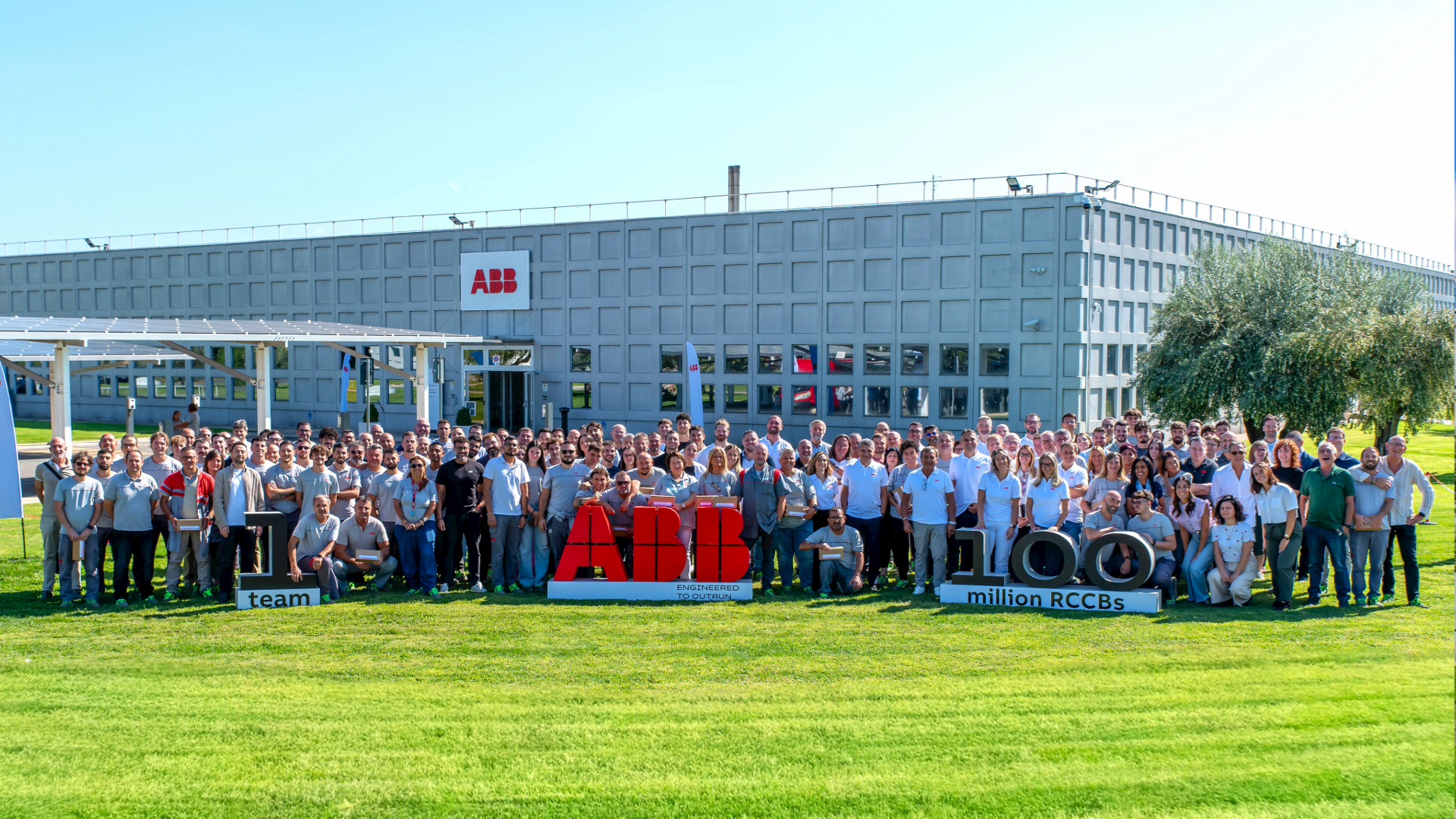
At ABB's Santa Palomba facility near Rome, where Residual Current Circuit Breakers (RCCBs) are used in applications such as homes, schools, hospitals, offices and public buildings around the world, a design decision made more than 40 years ago is still shaping the site's sustainability performance today.
When architect Marco Zanuso designed the factory in the early 1980s, he put more than a thousand transparent domes on its roof. They were intended to bring daylight into the factory and reduce the need for electric lighting. More than four decades later, that original design is still helping as the site works to cut its energy use and emissions.
This month, the site produced its 100 millionth Residual Current Circuit Breakers (RCCBs).
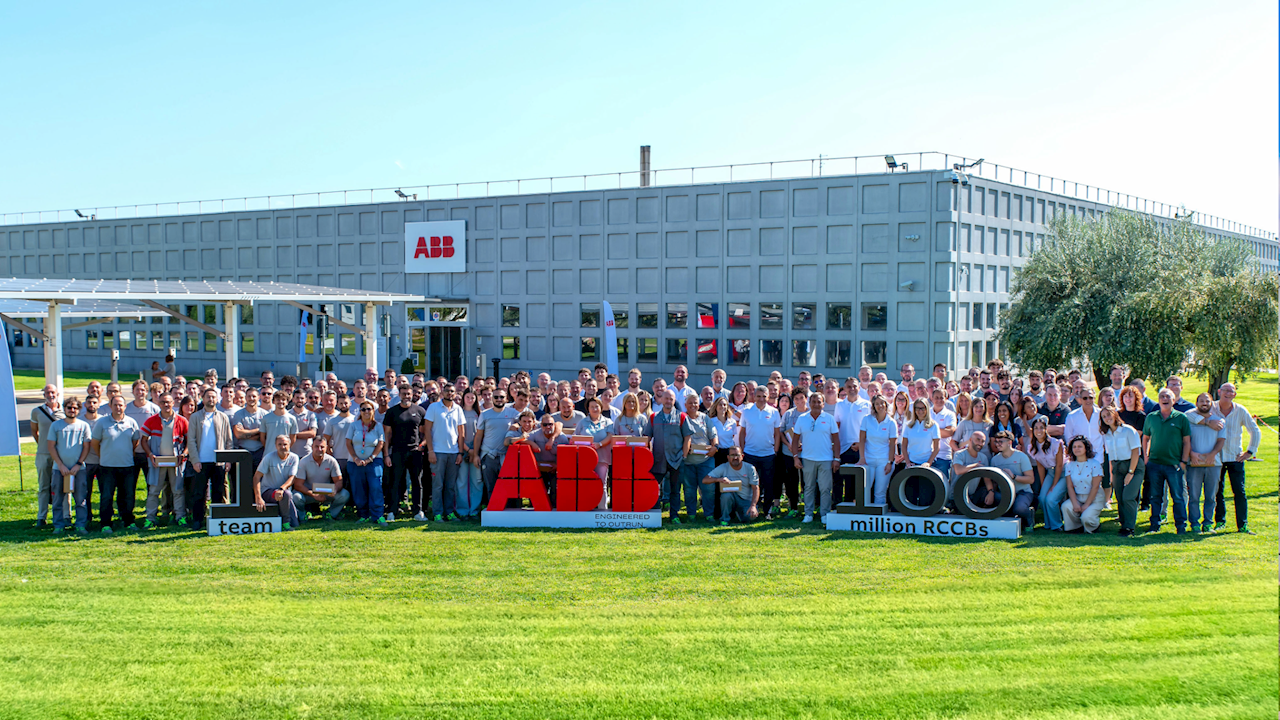
Milestone celebration at the Santa Palomba factory 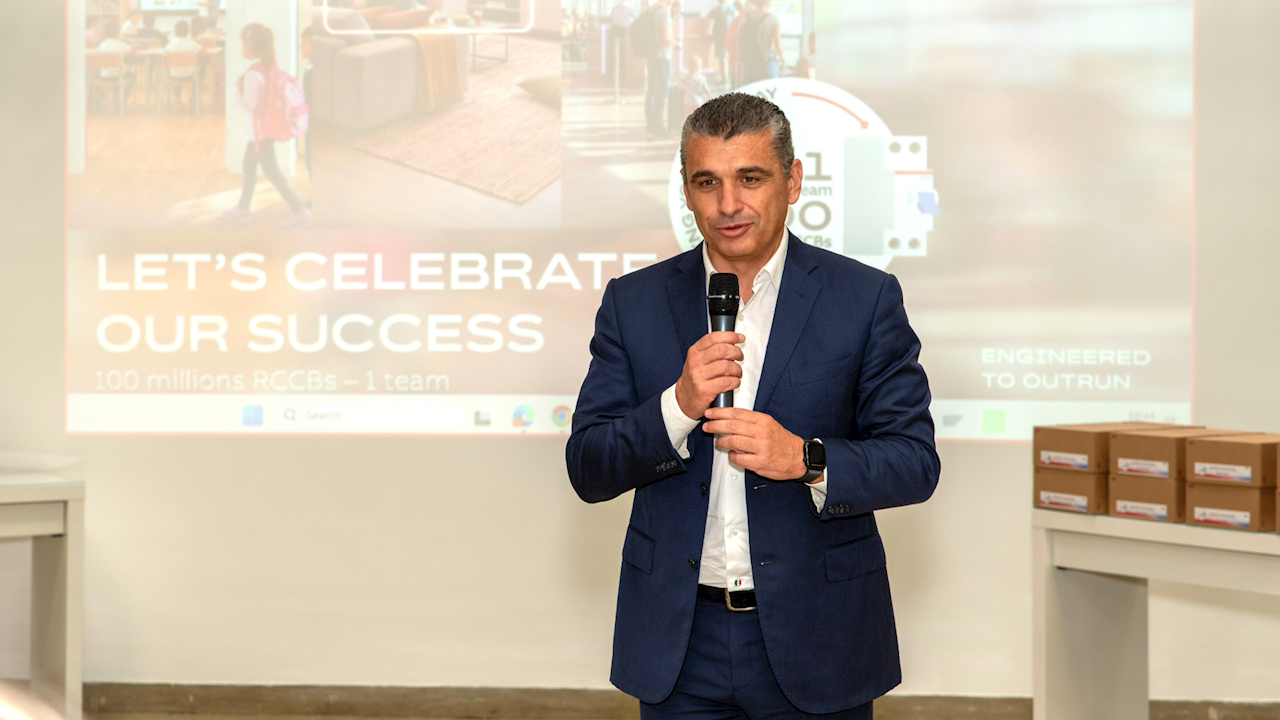
Andrea Menti, Business Line Leader, Energy Distribution, ABB Electrification’s Smart Buildings Division 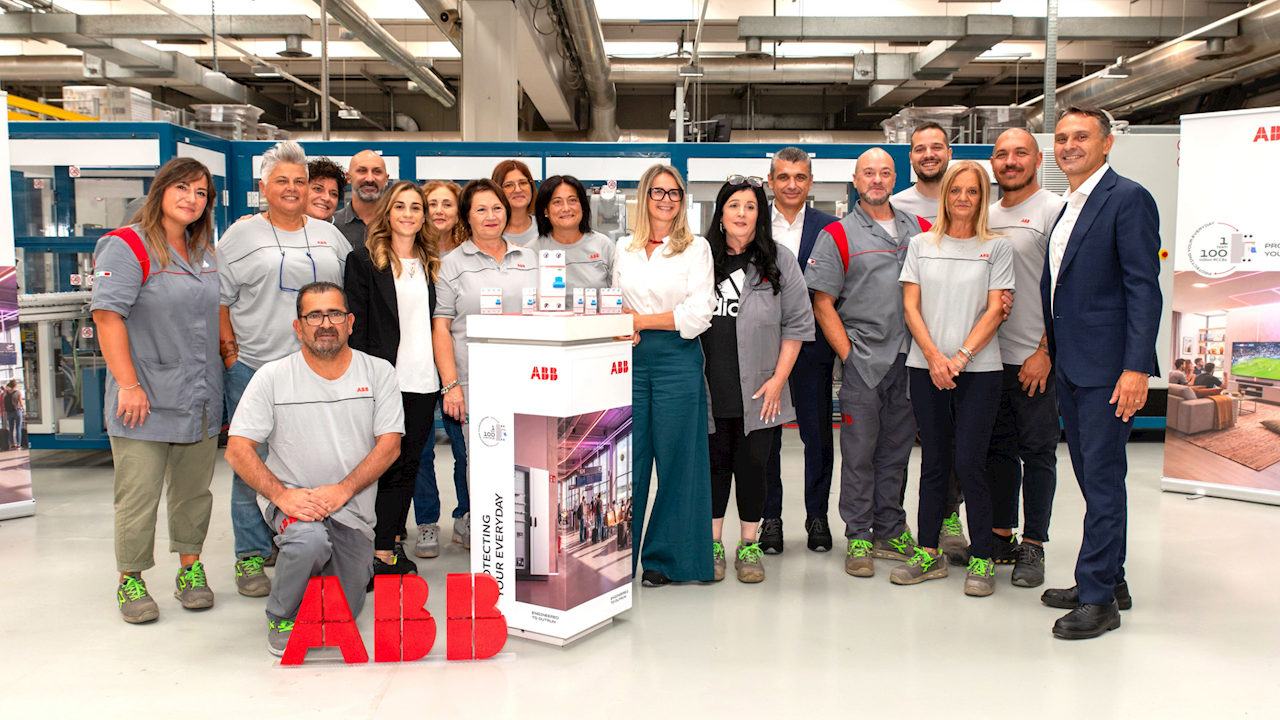
Milestone celebration at the Santa Palomba factory 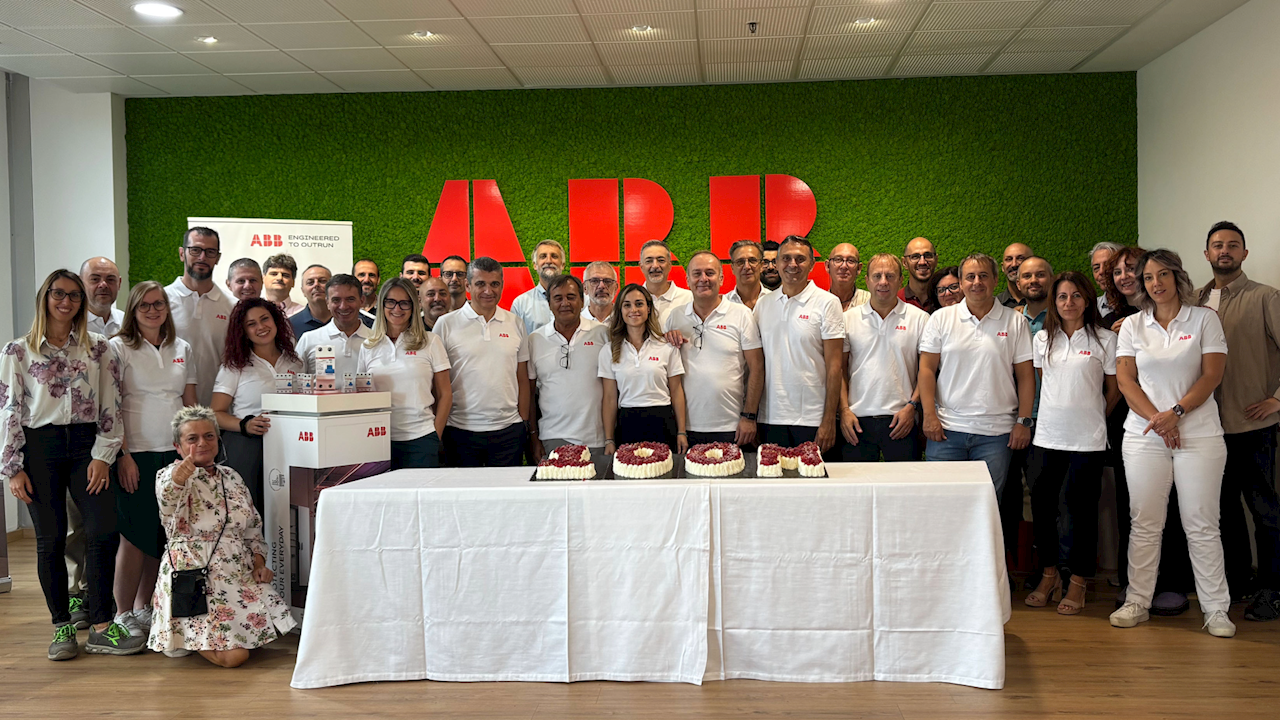
Milestone celebration at the Santa Palomba factory
Residual Current Circuit Breakers disconnect within milliseconds from the power supply when an earth leakage current is detected, helping to protect people from electric shock. They are commonly used in applications such as homes, schools, hospitals, offices, and public buildings.
One hundred million of them, made at a single site near Rome, are now installed across the world. The milestone marks more than four decades of production at Santa Palomba. ABB is one of the world's leading manufacturers of RCCBs.
Designed for daylight and flexibility
Zanuso, whose work is held in the collections of New York's Museum of Modern Art, designed Santa Palomba as a modular, single-level building without architectural barriers. Technical systems were concentrated in towers around the perimeter, leaving the production floor open and flexible. The domes bring daylight deep into the building.
The original design has also made the building relatively straightforward to upgrade. The open floor plan allows production layouts to change without major structural work, while the natural daylight reduces the need for artificial lighting.
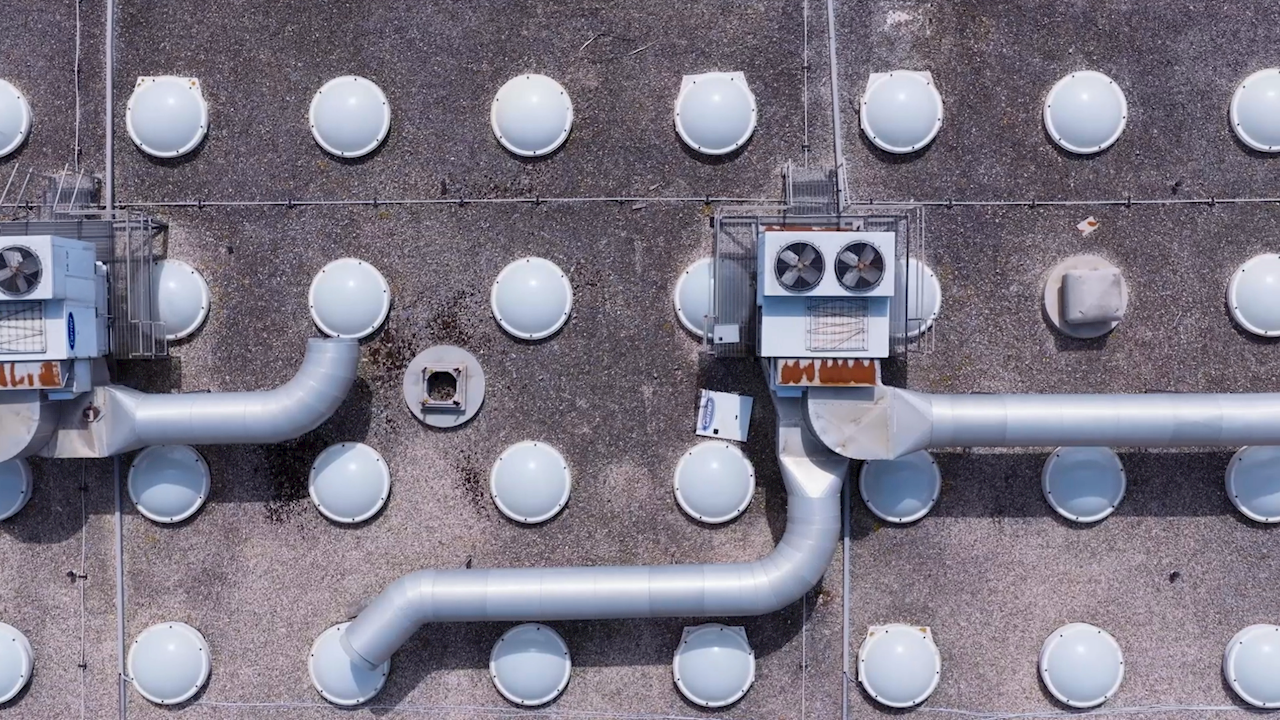
More than 1,000 transparent domes on the factory roof 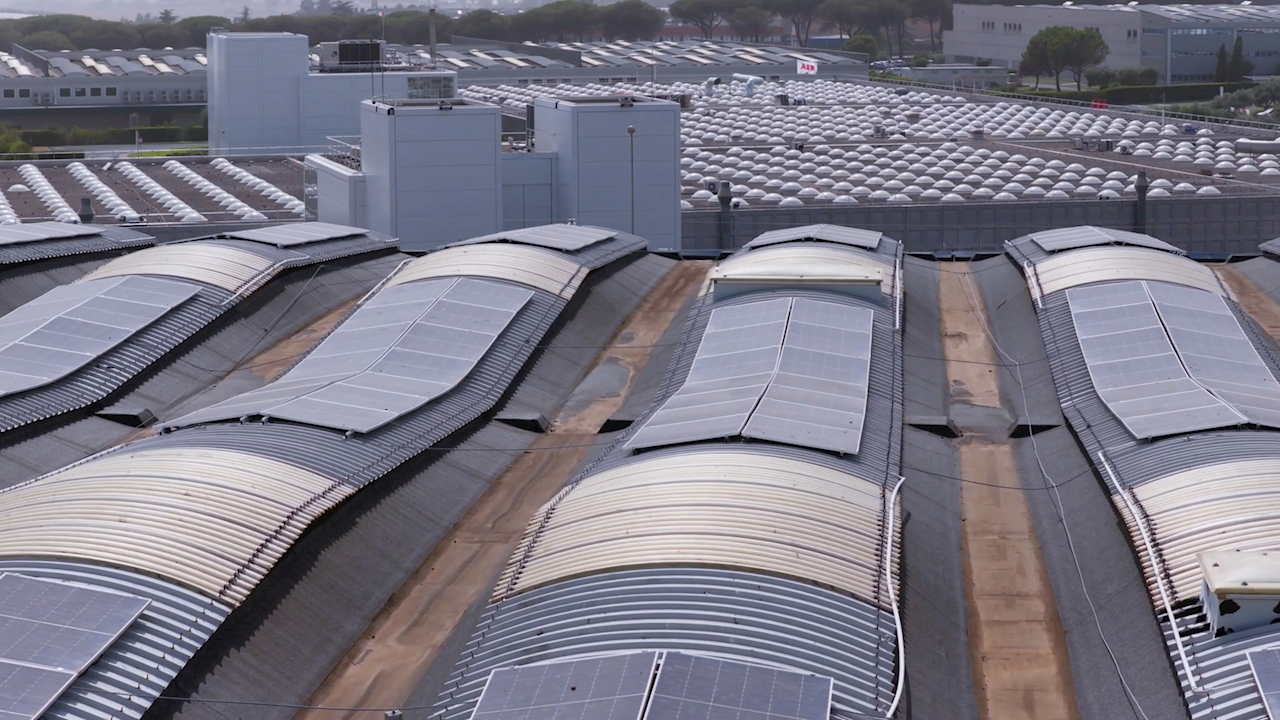
Over 3,000 photovoltaic panels installed on the nearby warehouse rooftops 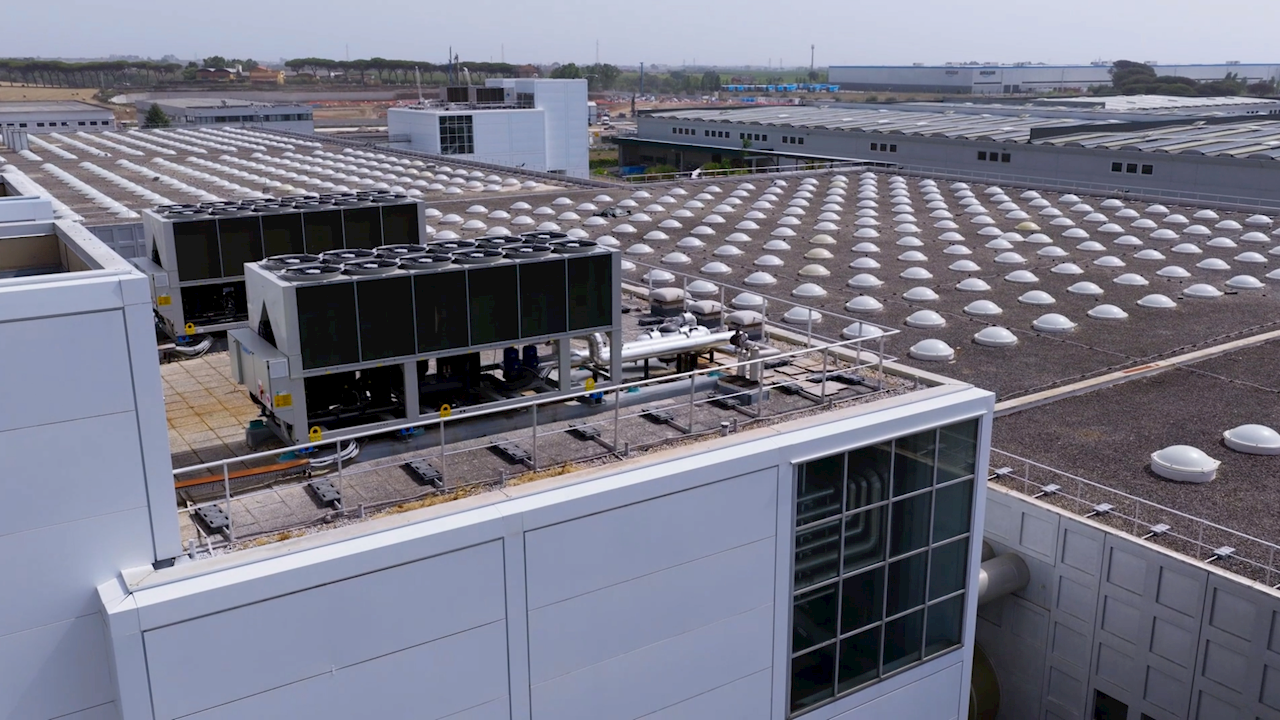
View across the Santa Palomba factory rooftops 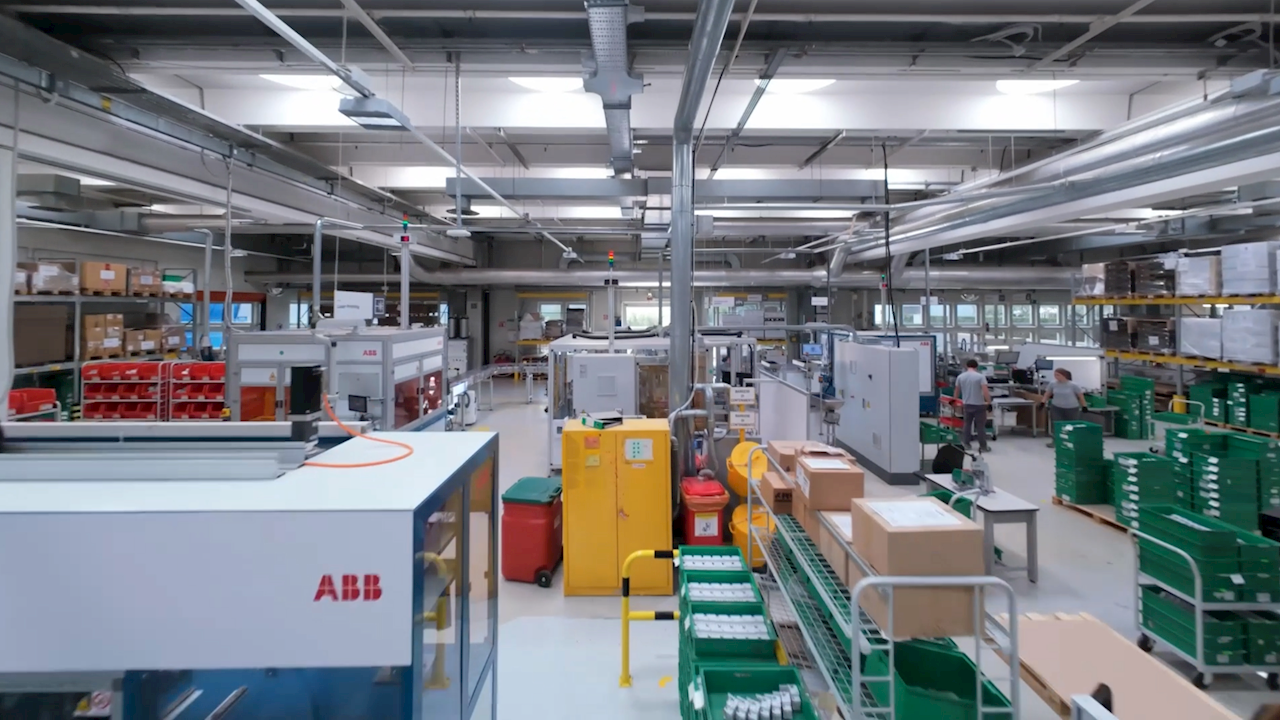
Open floorplan and transparent domes on the roof reduce the need for artificial lighting
Cutting energy use
Since 2019, the Santa Palomba team has been working on the site's main energy use.
A partnership with a neighboring logistics operator has enabled more than 3,000 photovoltaic panels to be installed on nearby warehouse rooftops. These now supply around a quarter of the site's electricity, with the remainder purchased from renewable sources.
Energy consumption is monitored in real time through ABB’s InSite energy management system and InSite Energy Pro cloud platform. Lighting has been fully converted to LED. In 2025, the site installed two high-efficiency heat pumps, saving approximately 44 metric tons of CO₂ a year. Together, these measures have reduced the site's emissions by around 720 metric tons a year.
“These results show that it is possible to increase production and reduce environmental impact at the same time,” said Daniele Dominicis, Business Manager Operations at ABB Smart Buildings Division in Italy. "The journey that brought us here started with a clear vision and long-term objectives. Turning that strategy into real results has only been possible thanks to the commitment and expertise of the people working at this facility."
The next phase
The site plans to remove natural gas completely by 2027, which is expected to save a further 280 metric tons of CO₂ a year.
On waste, the facility holds UL Solutions' Platinum Zero Waste to Landfill certification. All waste generated on site is recovered for future use, with none sent to landfill, thermal treatment or energy recovery.
Upgrading an existing factory
Santa Palomba is one of ABB's Mission to Zero™ sites, a global program in which local teams combine ABB digital solutions with renewable energy to cut emissions and improve efficiency. The program now spans more than 40 sites worldwide.
Much of Europe's industrial building stock is decades old and will still be in use in 2050. For many manufacturers, the challenge is how to upgrade those buildings without replacing them.
Santa Palomba shows what that can look like in practice. A building designed in 1980 for daylight, flexibility and efficient use of space has become proof that scaling production and reducing environmental impact are not competing goals. For manufacturers facing ageing infrastructure and rising sustainability expectations, that is a practical and replicable model for what comes next.


